


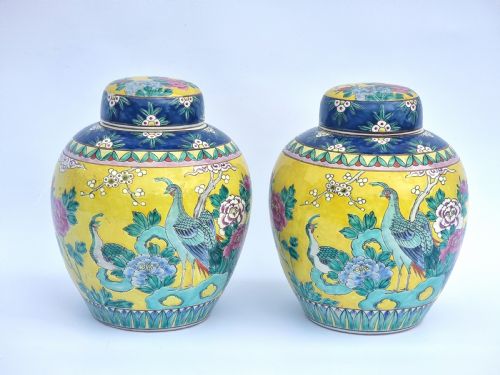


A 2026 Guide by Sellingantiques
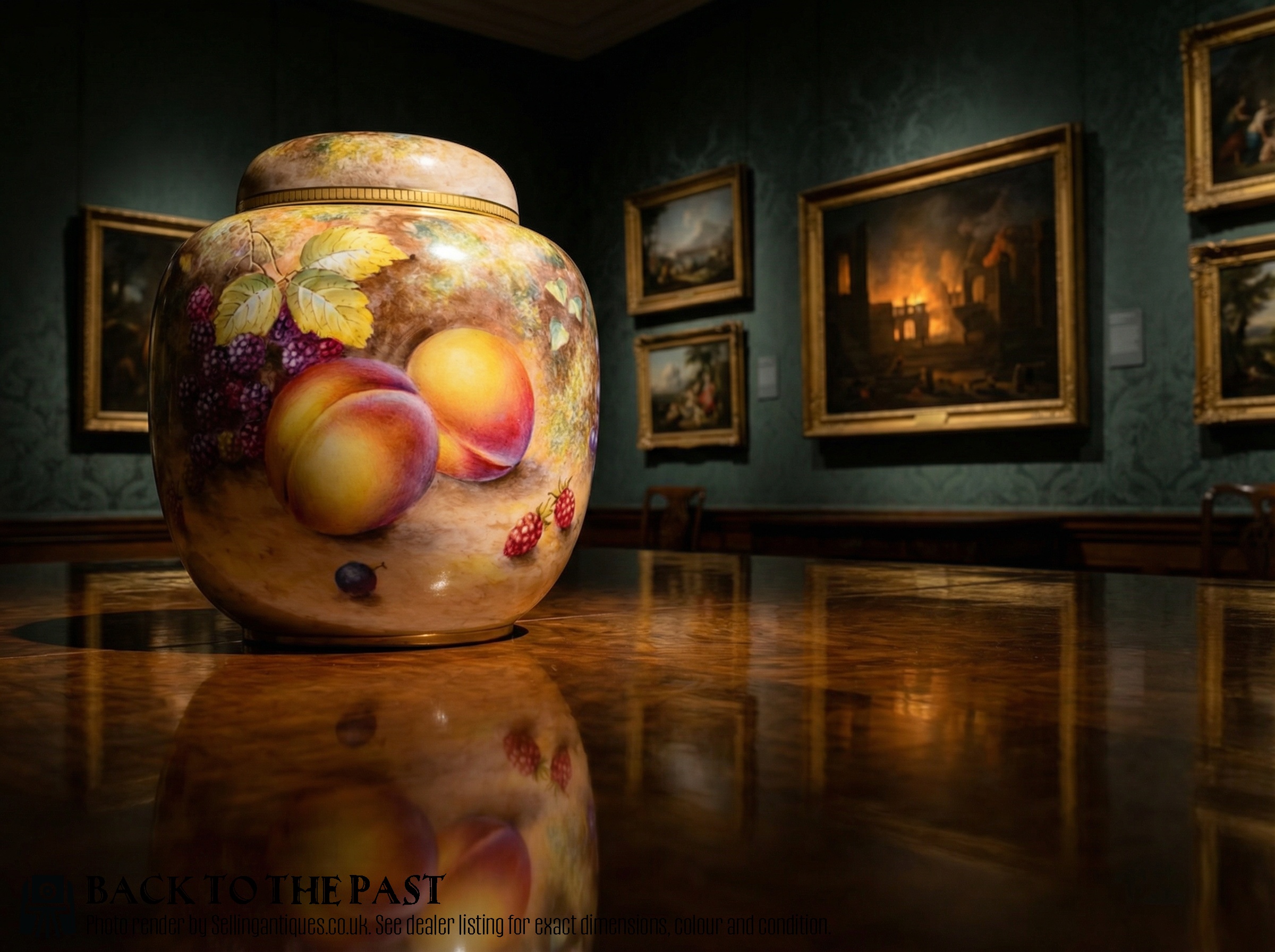
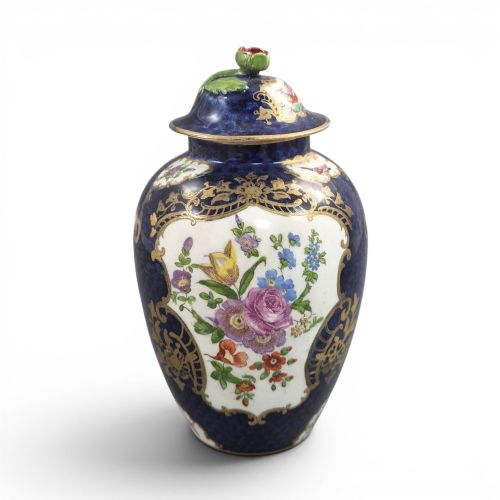
Royal Worcester Painted Fruit Ginger Jar by Freeman, 1950
Priced at £2,550 from Valerie Main Ltd
They started as utilitarian storage in ancient China. Used to keep spices, herbs and salt dry.
Export routes brought antique ginger jars to Europe by the eighteenth century. Western buyers quickly repurposed them as decorative objects.
Wealthy European households displayed them on mantelpieces. The original contents were often discarded or used up long before display.
Look at the transition in use. They moved from the ship's cargo hold straight to the drawing room.
Nineteenth-century export demand pushed production into higher gear. Factories turned out vast quantities specifically for Western markets.
Individual maker names rarely appear on these jars. Production relied on vast networks of artisans working in regional kiln towns.
Jingdezhen served as the primary ceramic centre for centuries. Thousands of potters specialised in different stages of the potting and painting process.
European factories eventually copied the shapes. Delft and Meissen produced their own variations once the Chinese imports became popular.
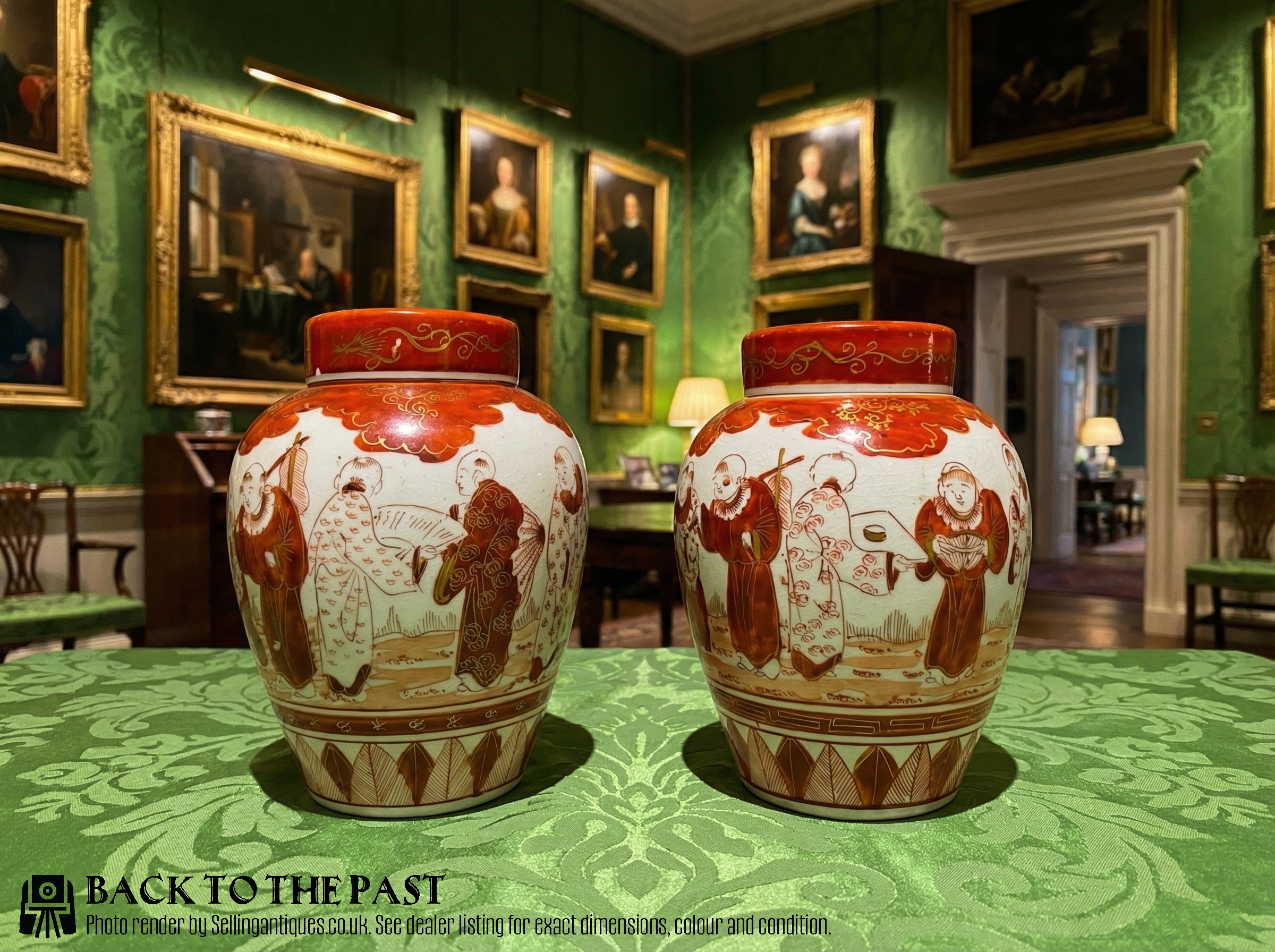
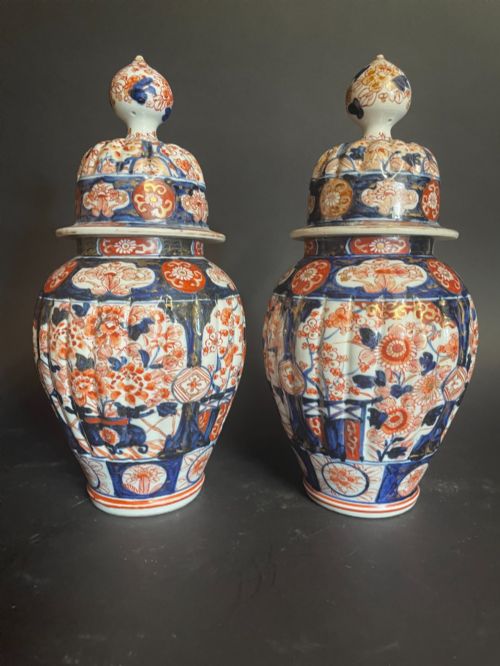
Pair Antique Japanese Kutani Ginger Jars, 19th Century
Priced at £225 from In A Nutshell Antiques and Interiors
The 2026 retail price guide for Antique Ginger Jars is drawn from a proprietary archive of over 1.1 million retail prices indexed by Sellingantiques since 2003. This guide relies exclusively on their own internal data; no external sources or auction records are used.
Analysing nearly 25 years of UK antique market history alongside current retail values, the data indicates that typical UK retail prices for Antique Ginger Jars range between £300 and £3,800. Entry-level prices generally fall under £300 and premium examples upwards of £3,800.
The high shoulder drops away to a narrower flat base. This bulbous shape gave them stability on ships.
Fitted lids sit flush against the collar. Many have flat tops, though some feature raised finials.
Surface decoration often dominates. Blue and white landscape scenes or continuous floral motifs wrap entirely around the vessel.
Potters threw the main body on a wheel. You can often feel the horizontal throwing rings inside the jar.
Painting was a division of labour. One person outlined the landscape, another filled the washes, and a third painted the borders.
Firing happened in large wood-fuelled dragon kilns. Temperature variations sometimes caused iron spots to burst through the surface.
"They often acted as traditional wedding gifts in China. The double happiness character would be painted on the side to grant good fortune."
"The cracked-ice pattern represents the end of winter. It signals the arrival of spring and new growth."
"Some jars held oil or wine rather than dry spices. The versatile shape worked for almost any household storage need."
Based on almost 25 years of Sellingantiques UK antique market data, Antique Ginger Jars appeared 475 times (out of 1,100,000 antiques) which gives it a rarity score of 91/100.
This score measures scarcity within the Sellingantiques archive only and is not a survey of the entire antiques market, so these statistics may not be indicative of the general availability of Antique Ginger Jars elsewhere.
Most antique ginger jars will hold water just fine. The hard-paste porcelain and interior glaze create a waterproof barrier.
It pays to check the base for hairline cracks first. Even a tiny star crack on the bottom can cause a slow leak onto your furniture.
Wooden lids are almost always later replacements. When an original porcelain lid broke or went missing during the nineteenth or twentieth centuries, owners often commissioned a carved wooden cover to complete the silhouette.
These carved replacements are quite common and have become an accepted part of the antique's history. Some are finely made from hardwoods like rosewood, featuring intricate fretwork.
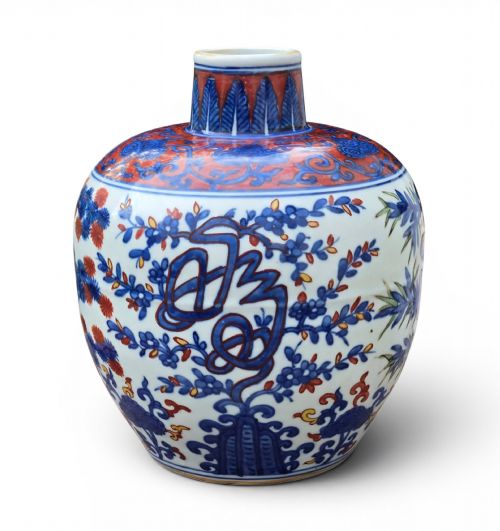
Blue and white is the most common colourway you'll encounter. The cobalt underglaze was durable and highly popular for the export market.
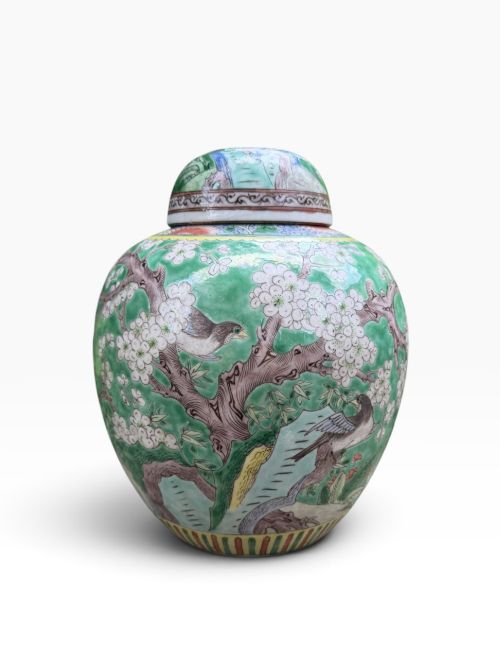
Other palettes exist. Famille rose, famille verte and monochrome glazes turn up frequently. The decorative style usually depended on the specific decade and the intended market.
Metal stapling was a standard repair technique before modern adhesives existed. A craftsman would drill small holes on either side of a crack and tap a brass or iron staple in to hold the tension.
It takes considerable skill to drill into porcelain without shattering it. Many collectors appreciate these old staple repairs as part of the object's social history.
Today restorers use epoxy resins. The old staples remain a reliable indicator of an early approach to keeping household goods in service.
Please note: This Antique Ginger Jars guide and its associated pricing data are provided for general informational purposes only. It does not constitute formal financial, investment, or appraisal advice and should not be relied upon as the sole basis for any commercial activity, purchasing, or sales decisions. Sellingantiques.co.uk accepts no liability for any actions taken in reliance on this information. Always consult with a qualified professional or independent appraiser.
