

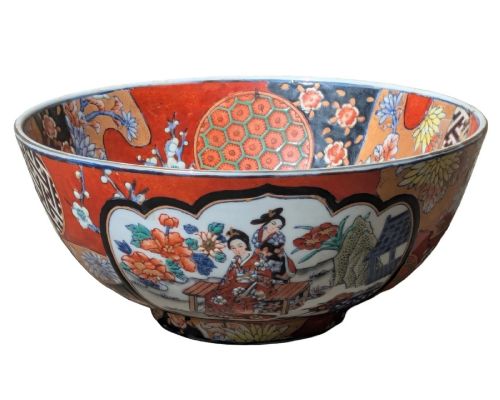


Antique Bowls
A bowl, in ceramic terms, covers anything from a three-inch 18th-century tea bowl to a metre-scale dairy pancheon, made for eating, mixing, washing and serving.
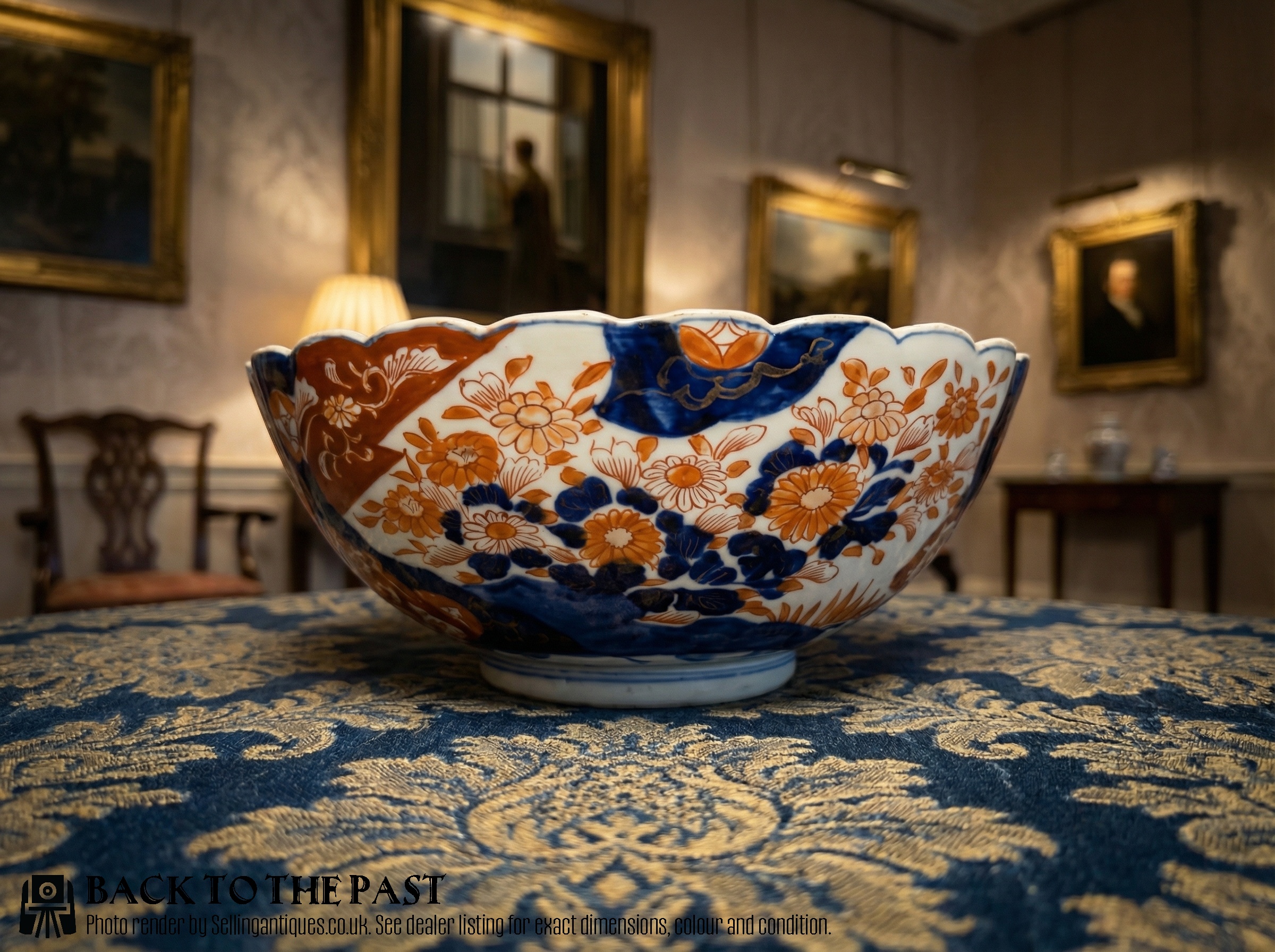
Antique Bowls
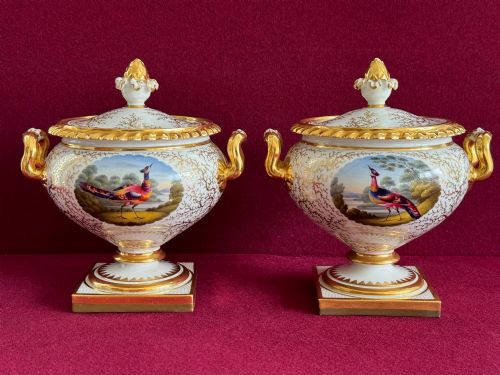
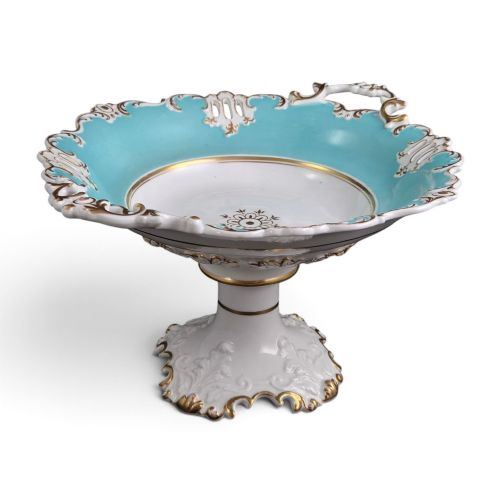
The heading is broad. Alongside bowls proper you'll find dishes, tureens, sucriers, baskets, comports, punch bowls, jardinières and centrepieces, because that's where dealers file them. Around 136 are listed a year on Sellingantiques, and 171 different dealers have listed them, one of the widest dealer bases in ceramics.
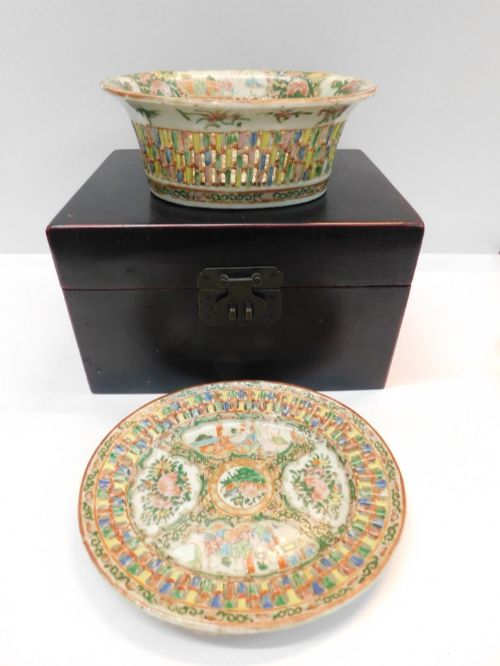
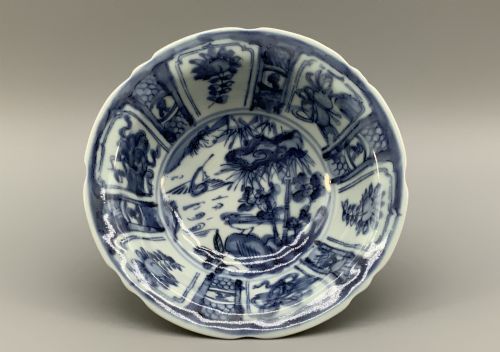
Porcelain is the single most common body word, in 284 titles. Pottery, ironstone, creamware, pearlware, delftware, stoneware, faience and terracotta all appear in smaller numbers. Two blocks share the ground: East Asian wares (Japanese 158 titles, Chinese 138, imari 136) and English factory pieces (worcester 133, wedgwood 61, moorcroft 49). Neither block dominates the other.
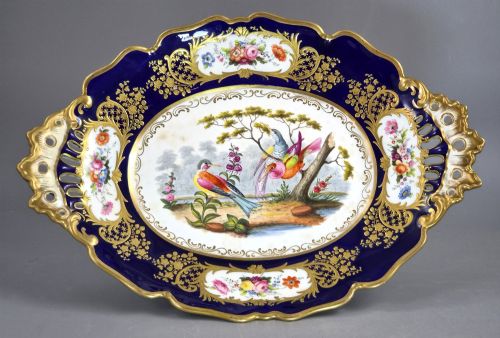
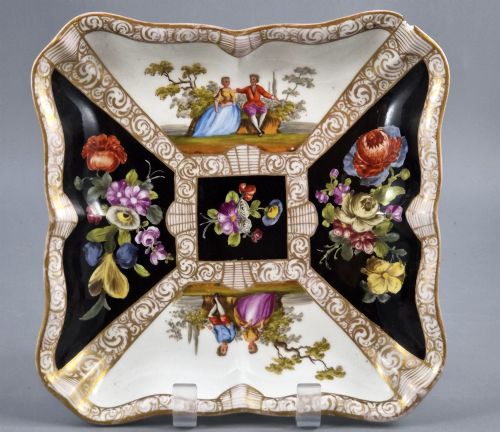
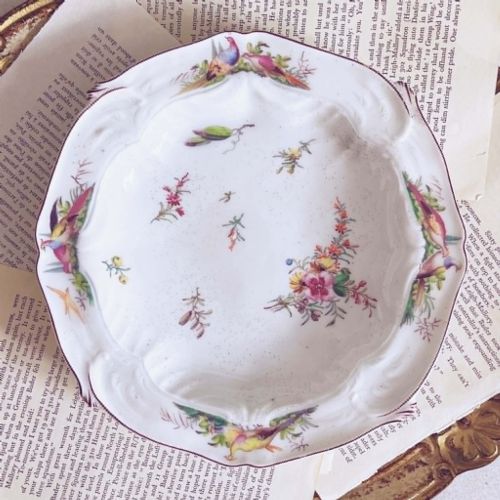
The likeliest thing you'll meet is a single decorated ceramic bowl, either Japanese or Chinese in origin, or from an English factory. Within that, 18th-century English tea bowls and saucers form a distinct block of their own, with 'tea' in 91 titles and 'saucer' in 58. 'Large' is the commonest adjective in the whole category, in 185 titles, and 48 titles are pairs.
Dates run 1700 to 1960 in the dealer's dated field, though the two biggest buckets are the vaguest: 205 listings say only '19th Century' and 179 only '18th Century'. After that the profile tilts 20th century, with the 1900s, 1920s, 1930s and 1910s all well represented. A scattering sits outside the field altogether, filed as 'Before 1700' or by century.
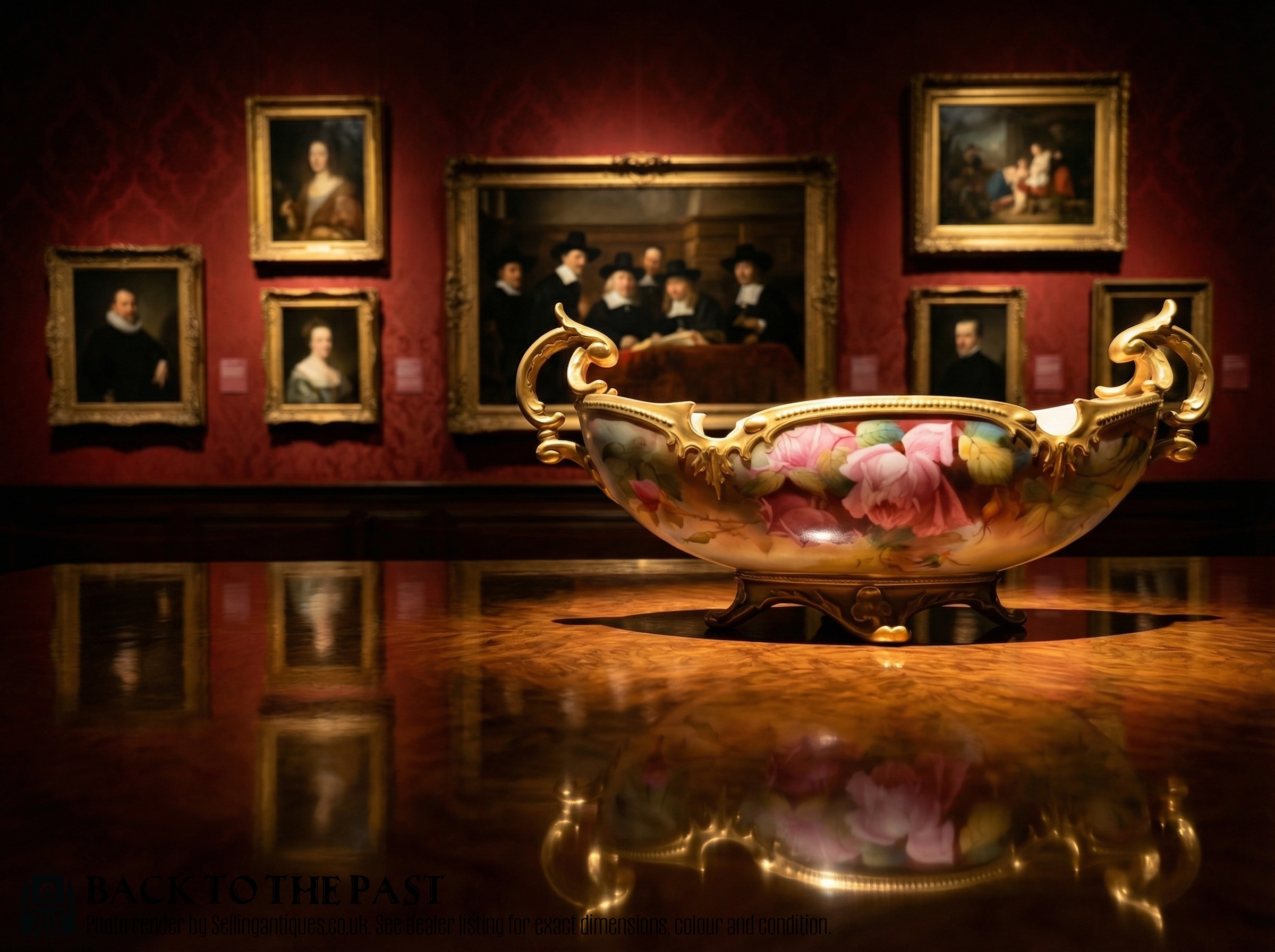
Where The Range Splits
A name on the piece does most of the work. Royal Worcester bowls credited to individual fruit and flower painters, and Satsuma bowls carrying a workshop signature, sit at the top of the range; 'signed' appears in 27 titles and 'painted' in 51. Factory period matters the same way, with Worcester titles spelling out First Period, Dr Wall, Flight, Flight & Barr, Barr Flight & Barr and Chamberlain.
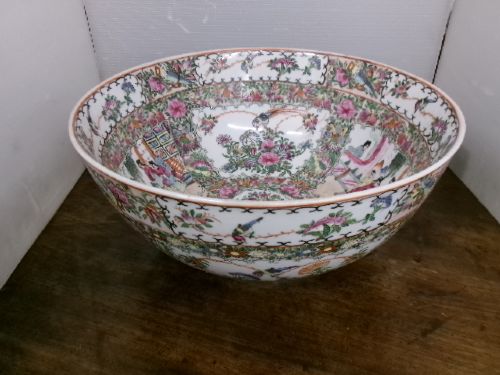
With Chinese pieces the distinction titles draw is between mark and period together and a later piece in the earlier style. 'Guangxu Mark and Period' reads differently from 'Kangxi Mark, 19th Century', and 19th-century French copies in Chinese export famille rose style are described as such. Documented provenance pushes up too: Nanking Cargo and Teksing Shipwreck bowls, and old collection labels, are used as title-level selling points.
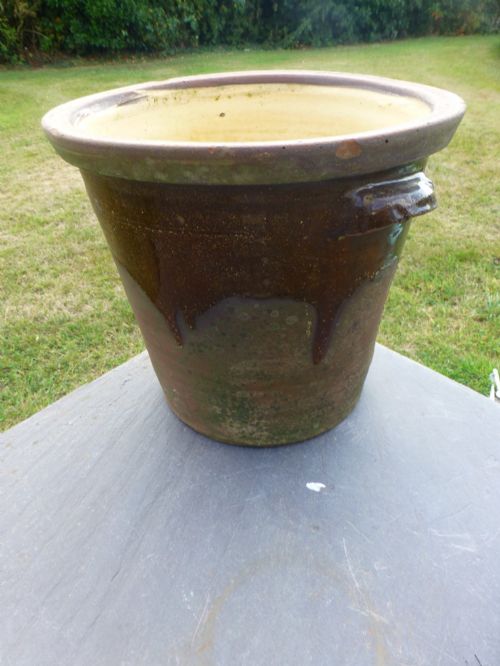
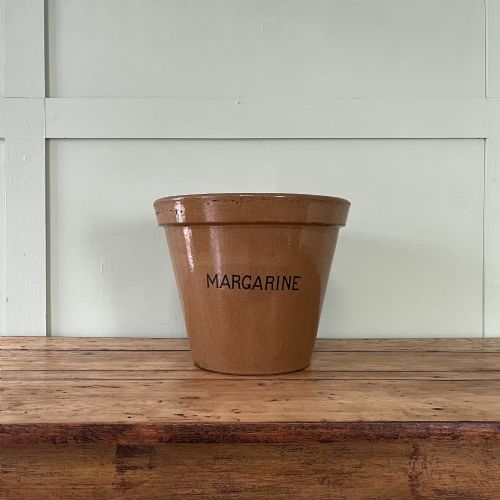
Size and completeness fill in the rest. Big pieces cluster at the upper end, though the largest measured examples are utilitarian rather than decorative, a French terracotta tian and a glazed dairy bowl among them. A cover, a saucer, a hardwood or plated stand, a tureen's ladle, a matching pair or a set of six to twelve soup bowls all count in a bowl's favour.
Antique Bowls Retail Price Guide 2026
Typical UK retail prices for bowls, calculated from the Sellingantiques database of over a million retail prices indexed since 2003. This retail price guide relies exclusively on Sellingantiques data; no external sources or auction records are used, so the figures do not describe the wider market.
About 136 bowls are listed on Sellingantiques each year, from 171 different dealers - one of the widest dealer bases in ceramics.
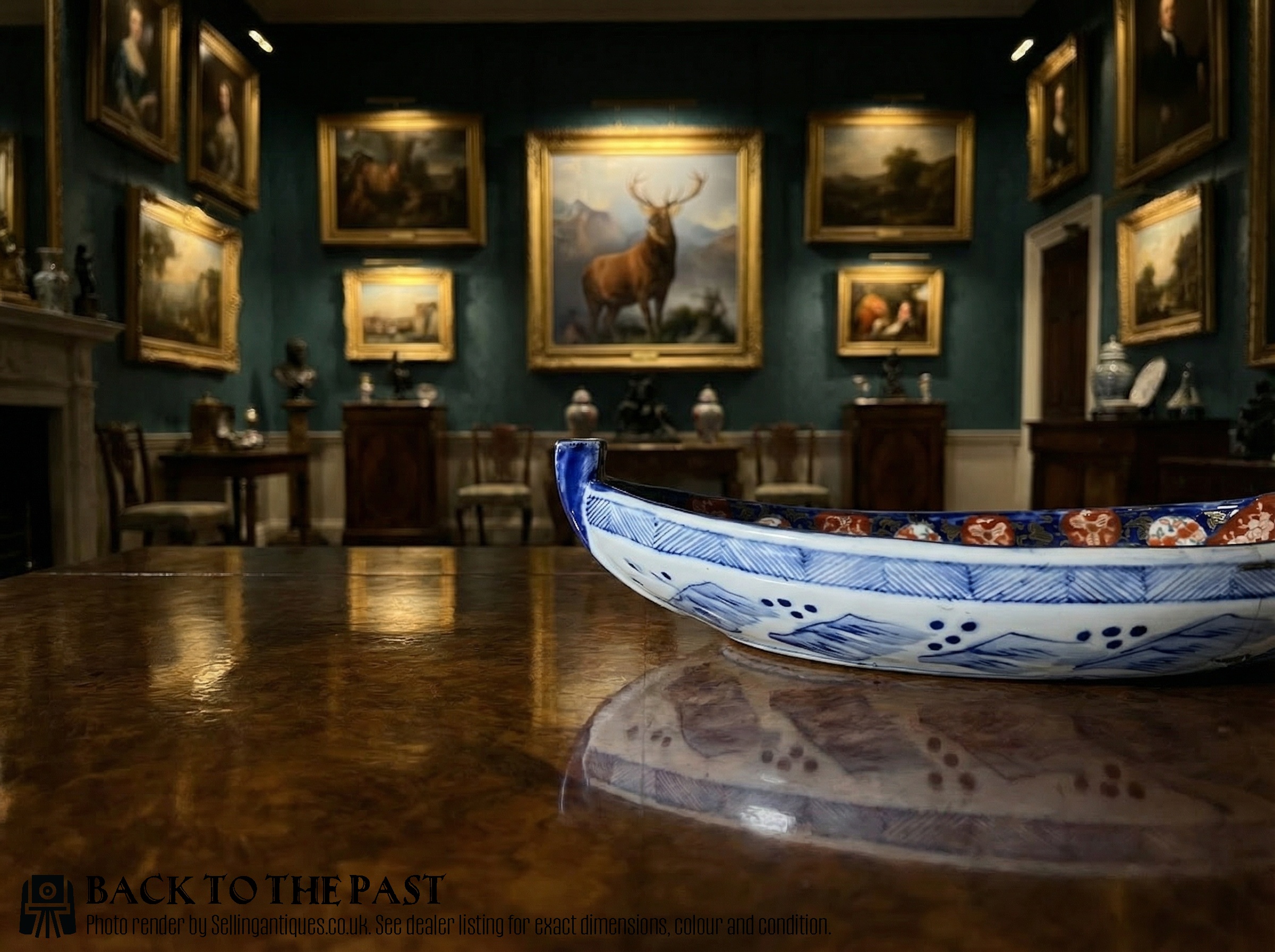
The Antique Bowls Glossary
- Tea bowl
- Small handleless bowl for tea, usually 18th century and often sold with its saucer. The word 'tea' turns up in 91 titles.
- First Period
- Worcester made before 1783, also called the Dr Wall period. 'First' appears in 43 titles, and slop bowls from tea services recur in the same listings.
- Imari
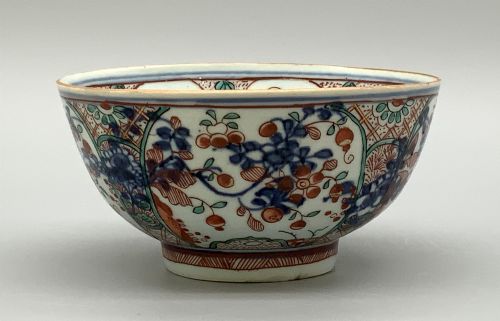
- Blue, iron-red and gilt palette, Japanese in origin and copied in China and England. In 136 titles, making it one of the most repeated words in the category.
- Satsuma
- Finely crazed Japanese earthenware with dense enamel and gilding, in 50 titles. Signed examples name the workshop.
- Sucrier
- Covered sugar bowl from a tea or dessert service; 'sugar' appears in 38 titles. Fluted, meaning ribbed or spiral-moulded, is another service word, in 28.
- Pancheon
- Wide shallow earthenware dairy or dough bowl, a North Country and Welsh country form. Klapmuts is its Chinese export opposite number, a bowl with a broad flattened rim cut to suit European soup plates.
Antique Bowls: Frequently Asked Questions
What kinds of bowls turn up most often?
Porcelain leads on the body word, in 284 titles. The two big origin blocks are East Asian, covering Japanese Imari, Arita, Satsuma and Kutani alongside Chinese export and Qing wares, and English factory pieces from Worcester, Wedgwood and Moorcroft.
A fifth or so of the category is 18th and early 19th century English tea bowls, saucers, slop bowls and sucriers, with Caughley, New Hall, Lowestoft, Liverpool, Coalport and Plymouth all appearing.
How old are these bowls?
The dated field runs 1700 to 1960, and 553 of 1,142 listings carry a clean year. Beyond that, 205 listings give only '19th Century' and 179 only '18th Century'.
Some pieces sit outside the field entirely, filed as 'Before 1700', '16th Century' or '17th Century'. Song Longquan celadon, Ming Swatow and Wanli kraak, and Persian buffware and lustre bowls given as 10th to 13th century all appear that way.
Are country pottery bowls part of this category?
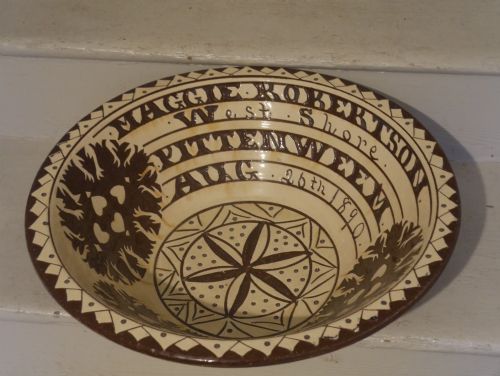
Yes, as a modest but persistent minority. Dairy bowls, pancheons, spongeware, slipware, Spanish lebrillos, French tian and Wemyss dog bowls all sit under the same heading.
They account for the biggest measured pieces in the whole category. A French terracotta tian and a glazed dairy bowl both come in at 53 to 54cm across.
Which named designers appear as sub-groups?
Two blocks are large enough to read as categories in their own right. Daisy Makeig-Jones lustre bowls for Wedgwood appear in 48 titles, and Moorcroft in 49, the latter including Liberty's-retailed and Macintyre-era pieces.
Royal Worcester runs alongside them in 55 titles, often with an individual fruit or flower painter credited.
Do any bowls come with shipwreck provenance?
Shipwreck cargo is a recurring provenance rather than a one-off. Nanking Cargo bowls and tea bowls appear repeatedly around 1750 to 1751.
A Teksing Shipwreck pair is dated around 1822. Old collection labels are used the same way in titles, as a documented history attached to the piece.
What are the more unusual forms in this category?
Barber's and shaving bowls recur, in Dutch delft, Chinese Imari and Japanese Imari, one of them described as a bleeding dish.
Scholar's brush washers, cress strainers, junket dishes and porringers also turn up. Single appearances include a Nupe tribe terracotta bowl from Nigeria, Kashmir painted bowls and Ewenny clay pit pottery from Wales.