

Antique Porcelain
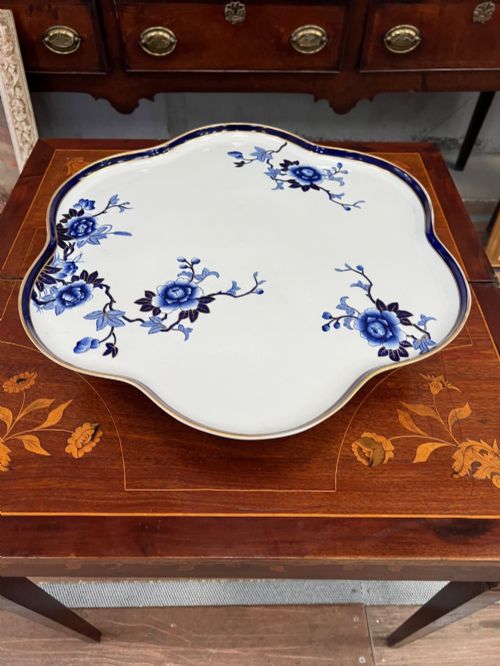
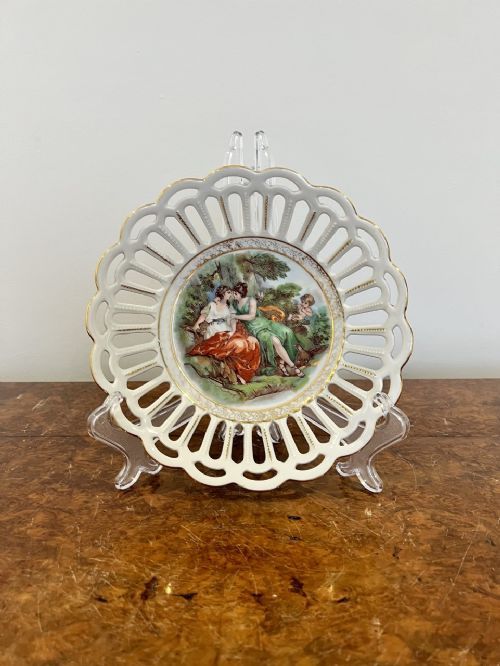
Porcelain made for tea and coffee drinking, dining and display, from English, Chinese, Japanese and Continental factories, running from small cups and dishes to figures, chargers and jardinières.
Antique Porcelain
Porcelain came out of China long before Europe worked out its own hard-paste and soft-paste recipes in the early eighteenth century. From the start it served as a luxury material as much as a practical one, and the archive reflects that: tea and coffee wares, dining pieces and things made purely to be looked at. Bone china, parian, bisque and ironstone get filed alongside it by dealers.
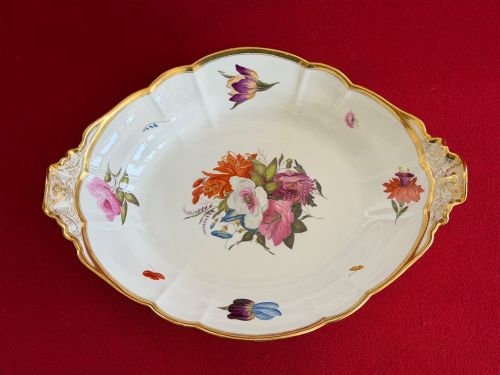
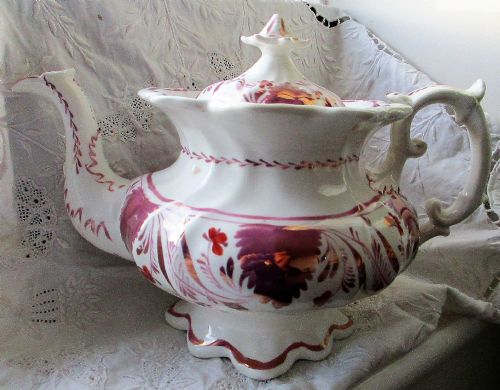
Two strands dominate. English factory tablewares are the largest, with bowls, dishes, coffee cans, tea bowls, saucers, sucriers and dessert wares carrying a factory name and a pattern number. Worcester is the most quoted name in the archive, in 413 titles, and dealers split it into First Period, Dr Wall, Flight, Barr Flight & Barr, Chamberlain, Grainger and Royal Worcester, which works as a dating system in itself. Derby follows, with Caughley, New Hall, Coalport, Lowestoft, Bow, Chelsea, Minton, Spode and Davenport all turning up.
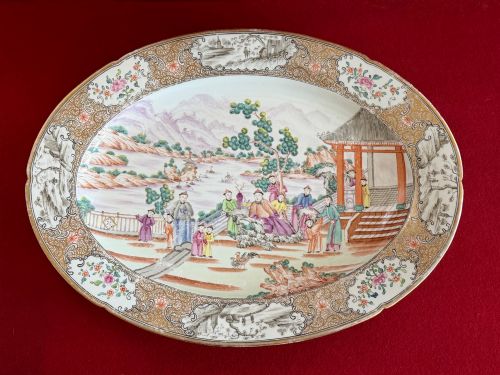
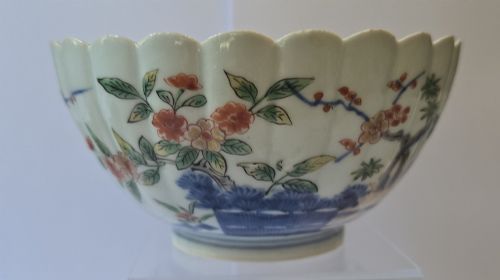
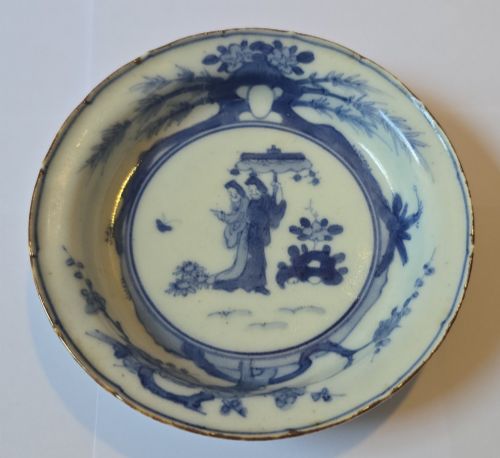
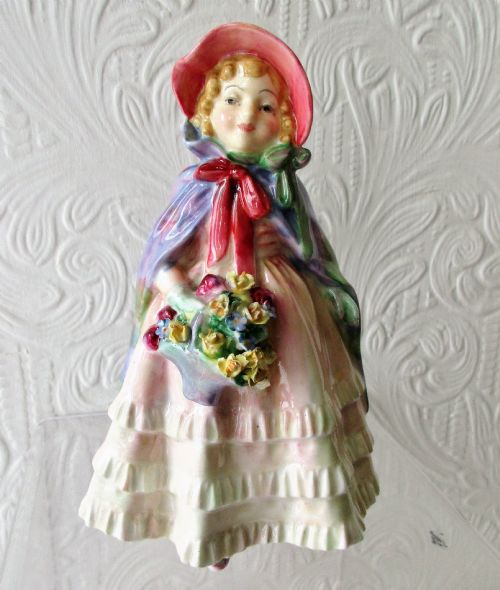
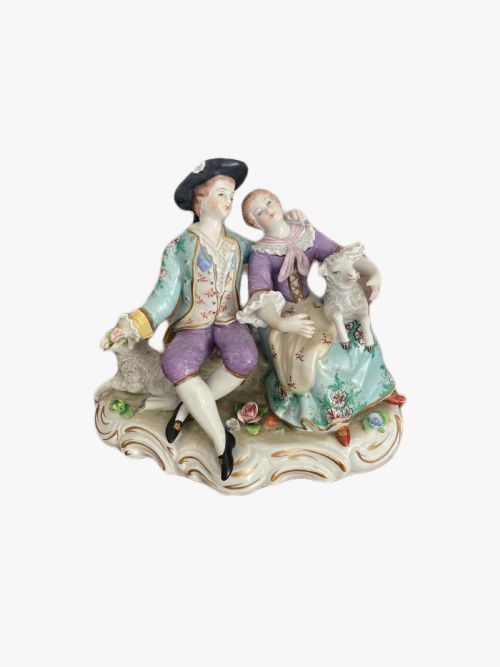
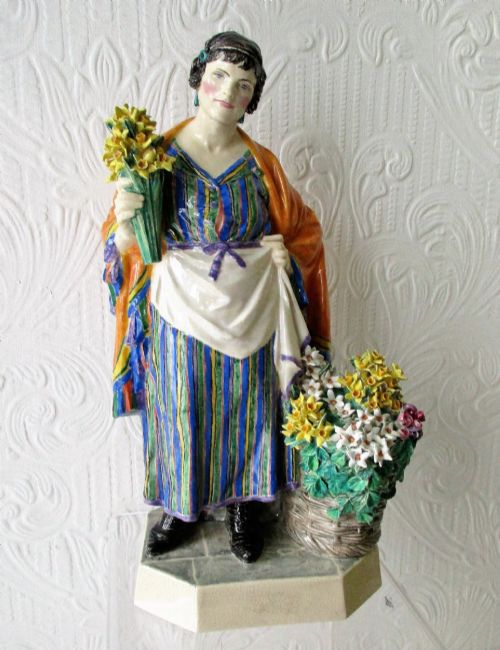
The second strand is figural: single figures, figurines and groups, from eighteenth-century bocage groups through Meissen, Dresden, Sitzendorf, Volkstedt, Royal Dux, Royal Doulton HN models and Staffordshire animals. Chinese porcelain forms a strand of its own, with famille rose and famille verte, Kangxi, Qianlong, Canton, Nanking and shipwreck cargo pieces. Japanese work runs to Imari, Arita, Kutani, Satsuma, Fukagawa and Hirado. Continental factories add Dresden, KPM, Vienna, Sevres, Limoges, Ludwigsburg, Doccia and Capodimonte.
Dating is loose more often than not. Nearly a thousand listings carry a clean year, spanning 1700 to 1960, but the biggest buckets are the vague ones: '19th Century' at 694 titles outnumbers '18th Century' at 427, with Georgian, Victorian and Regency used as style labels rather than dates. Decade-level dating clusters in the early twentieth century. Pairs are a defining habit, in 403 titles, from Staffordshire poodles to Vienna urns.
What Separates Them
Attribution does most of the work. A title that names a factory and a narrow date sits far above one that offers a century and a shape, and the gap is wide. Add a named hand to the decoration or the modelling and it climbs again: Stinton, Chivers, Kitty Blake, Freda Doughty, Daisy Makeig-Jones, Kändler, Paul Scheurich and Pierre Stephan all appear credited in titles, while unattributed painting sits at the quieter end.
Number and scale matter next. Pairs run through the whole archive and rise as a share of live stock, and pairs of chargers, figures, urns and jardinières recur near the top, as do sets, services and collection lots. Size is quoted when it flatters: a 43cm Meissen parrot, a 51cm Dresden figure, a 56cm famille rose pheasant, Canton bowls of 16 and 19 inches.
Form sorts the rest. Single coffee cans, tea bowls, lone saucers and small dishes occupy the bottom of the range, often only a few inches across. Urns, jardinières, chargers, ice pails, inkstands and large figure groups occupy the top, along with the earliest Chinese things catalogued: a Wanli Kraak charger, a Jiajing-marked jar, a Longquan celadon censer.
Antique Porcelain Retail Price Guide 2026
Typical UK retail prices for porcelain, calculated from the Sellingantiques database of over a million retail prices indexed since 2003. This retail price guide relies exclusively on Sellingantiques data; no external sources or auction records are used, so the figures do not describe the wider market.
The earliest porcelain catalogued on Sellingantiques is Chinese: a Wanli Kraak charger of 1573-1619 and a Longquan celadon censer given as 15th or 16th century.

James Hadley·Samson
The Antique Porcelain Glossary
- Coffee can
- A small straight-sided cylindrical coffee cup, usually early nineteenth century. 'Coffee' appears in 123 titles.
- Tea bowl
- A handleless cup for tea, the standard eighteenth-century form before handled cups took over.
- Trio
- A matched tea cup, coffee cup and single saucer sold together as a set.
- Pattern number
- A factory's own numbered decoration scheme, quoted as 'Pattern 319' or 'pattern 1166'. Used constantly in titles to pin down date and factory.
- First Period / Dr Wall
- The earliest Worcester production. 'First' turns up in 113 titles, and Flight and Barr work the same way as later Worcester partnership shorthand.
- Bocage
- The moulded leafy backdrop behind an eighteenth-century figure group.
Antique Porcelain: Frequently Asked Questions
What does Imari mean in a porcelain listing?
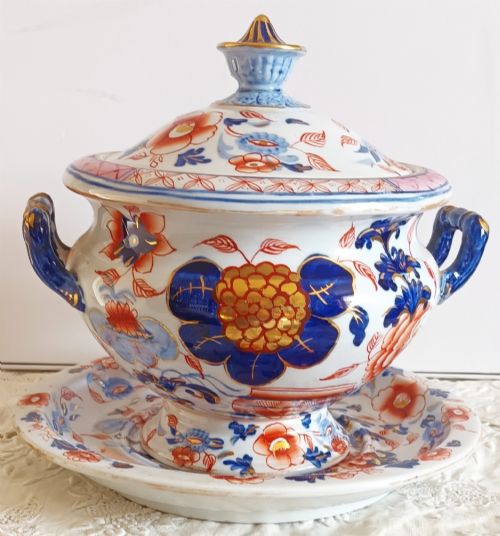
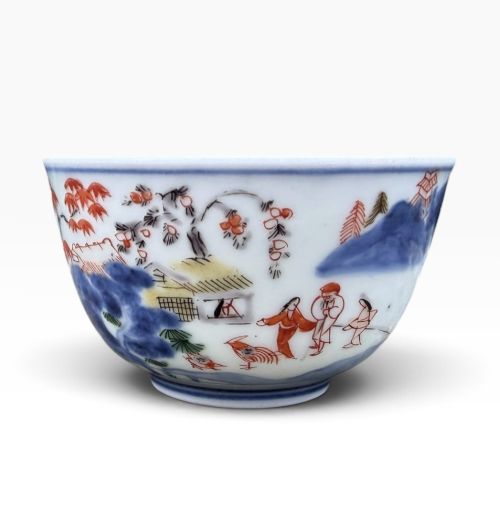
It's a palette rather than a factory: iron-red, cobalt blue and gilding. Japanese in origin, and copied by Chinese and English makers.
The word sits in 188 titles on Sellingantiques, running from Genroku-period Arita bowls through to Taisho chargers, with 'meiji' in another 84.
Why do so many titles say 'pair'?
Because pairs are how a great deal of decorative porcelain was made and sold. Figures, urns, chargers and jardinières were conceived as two.
One in seven titles in the archive describes two objects rather than one, and pairs sit consistently at the upper end of the range. Sets, services and collection lots behave the same way.
How old is the porcelain listed in this category?
The dated field spans 1700 to 1960, with 995 listings carrying a clean year.
The rest use style labels. '19th Century' is the single biggest bucket at 694 titles, ahead of '18th Century' at 427, with Georgian, Victorian and Regency used loosely alongside them. A Georgian coffee can might be catalogued c.1785 or c.1820.
A handful of Chinese pieces are catalogued earlier, into the sixteenth and seventeenth centuries.
Is famille rose Chinese or European?
Chinese. Famille rose and famille verte are enamel palettes named for their dominant pink or green.
'Famille' appears in 80 titles, part of a Chinese strand that also takes in Kangxi, Qianlong, Ming, Swatow, Canton and Nanking wares.
What are the smallest and largest pieces sold?
At one end, single coffee cans, tea bowls and lone saucers a few inches across.
At the other, dimensions get quoted because they impress: a 43cm Meissen parrot, a 51cm Dresden figure, a 56cm famille rose pheasant, Canton bowls of 16 and 19 inches. 'Large' turns up in 245 titles.
Does shipwreck cargo porcelain appear?
Occasionally. Nanking Cargo bowls of around 1751, a Tek Sing dish of about 1822 and a Ming cargo bowl of around 1645 have all come through.
They're catalogued by cargo name in the title, which is how these pieces are usually identified.