


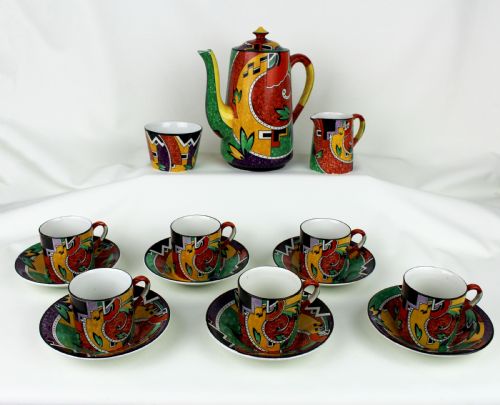

Antique Coffee Set
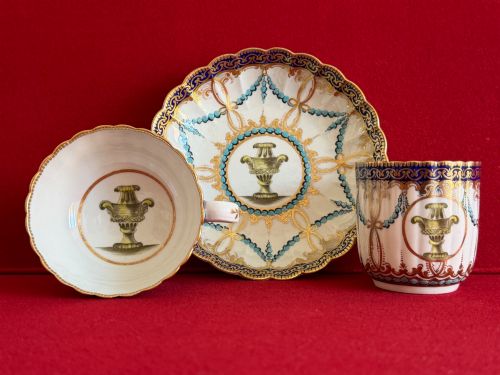
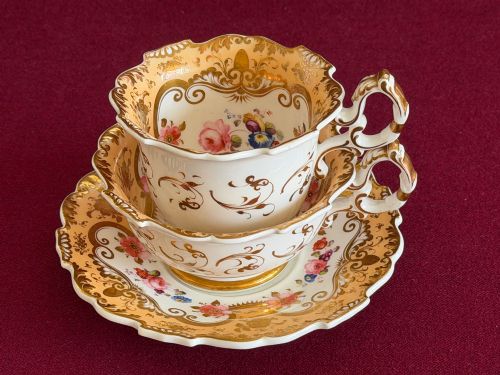
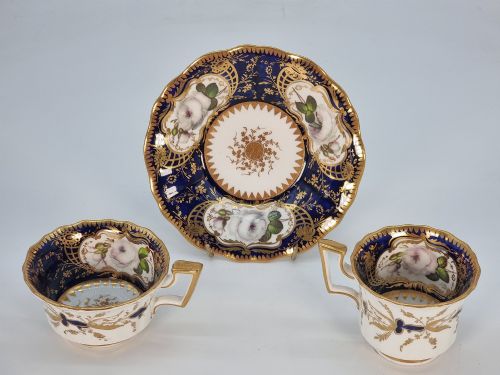
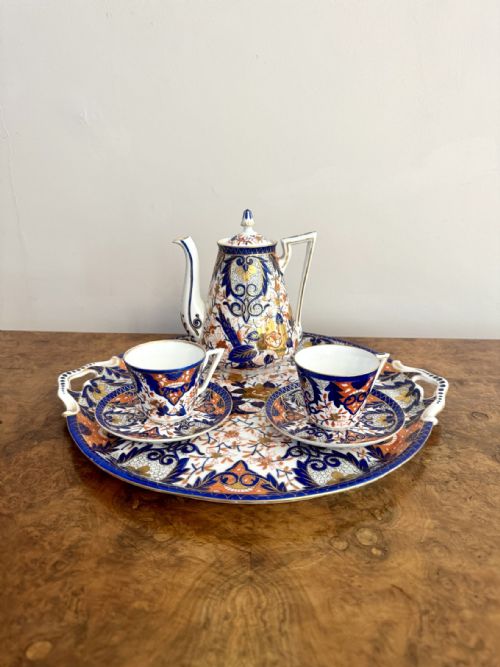
A small ceramic service for coffee after dinner: cups or straight-sided cans with saucers, sometimes a pot, jug and sugar, and often supplied in a fitted case.
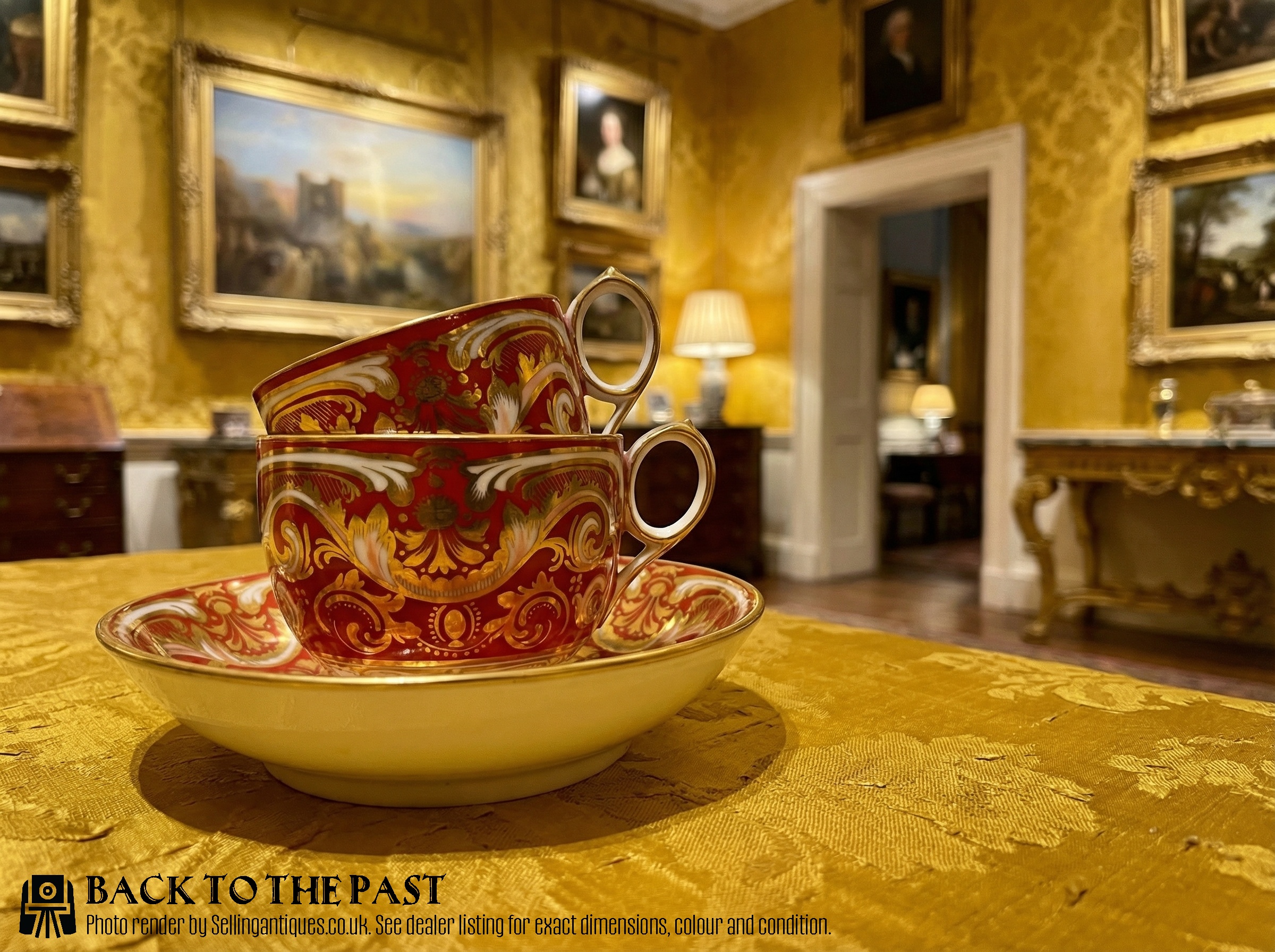
Antique Coffee Set
Coffee reached Europe in the seventeenth century, and by the later eighteenth century porcelain factories were making cups sized for it, since coffee was served stronger and in smaller quantity than tea. The straight-sided can came from the same thinking. Matched services with pot, jug and sugar followed, then fitted cases holding cups and coffee spoons.
The form you meet most on Sellingantiques is a porcelain or bone china cup-and-saucer service, hand-decorated. Titles run from a single three-piece trio up to twelve-piece services for six. A ten-piece set for five persons is the largest counted service in the archive; the smallest thing sold as a set is the three-piece trio, and six of those have turned up.
Four strands account for nearly everything. Cased or boxed painted sets, often demitasse cups with spoons, take up the whole top of the range. Trios and cabinet trios are roughly one in seven. Art Deco and interwar factory sets of six cups and saucers, with or without pot, make up close to half the dated pieces. Continental sets, German, Austrian, French and one Russian, are about one in six.
Dating spans 1750 to 1960, with 32 of the 44 listings carrying a clean year. Two-thirds of those fall in the 1920s and 1930s. Earlier material appears as isolated pieces, and where a listing says only "19th Century" that is the dealer's approximation, with several descriptions carrying a tighter circa date in the text. Outliers include an Ottoman copper-and-ceramic set, the only one not principally porcelain, and a silver-mounted set of six coffee cans with saucers and spoons.
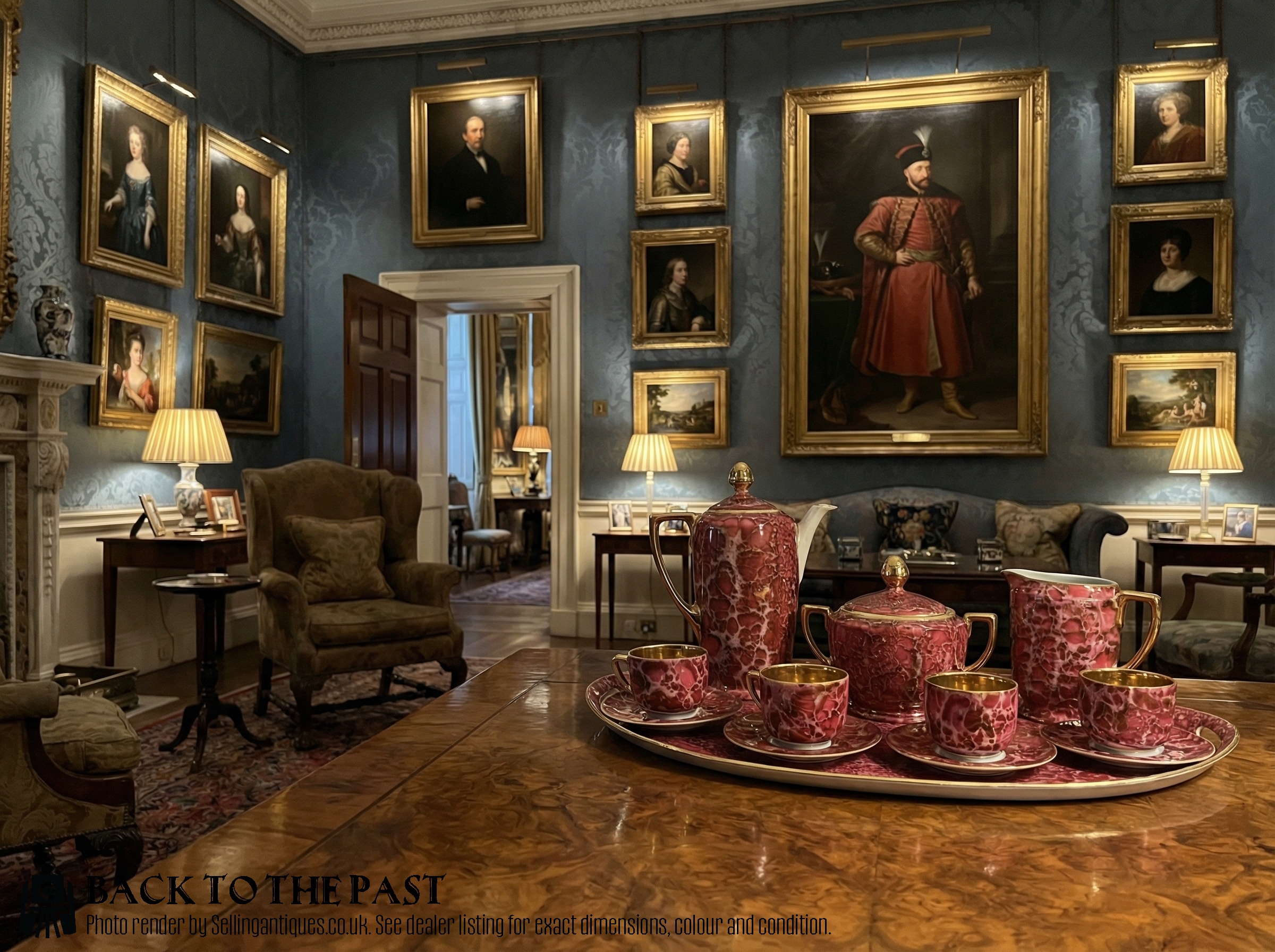
Where The Range Splits
Hand painting drives the top of the range, and it climbs again when the painter is identified. "Painted" sits in nine of 44 titles, and the four listings that credit or signal a decorator, by signature or by name, all sit near the top. Named patterns and subjects do similar work: fruit on a mossy ground, castles, grouse, a comic cow.
The case matters as much as the china. Every listing that says cased or boxed sits in the upper half of the range, and loose sets simply do not carry the word. A fitted box with its coffee spoons keeps a service together and keeps it presentable, which is why the format recurs rather than surprising anyone.
Size pushes value up, but not reliably. Titles count what is present, from sets of four cans to ten pieces for five persons, and completeness reads well. Yet two miniature painted sets sit near the top, and the highest-priced entry in the whole archive is an eighteenth-century Russian service made for two. A factory name in the title also lifts a set above the ones described only as quality porcelain.
Antique Coffee Set Retail Price Guide 2026
Typical UK retail prices for coffee set, calculated from the Sellingantiques database of over a million retail prices indexed since 2003. This retail price guide relies exclusively on Sellingantiques data; no external sources or auction records are used, so the figures do not describe the wider market.
The largest counted service on Sellingantiques was a ten-piece set laid for five people; the smallest was a three-piece trio.
The Antique Coffee Set Glossary
- Coffee can
- A straight-sided, flat-bottomed coffee cup, without the flare of a teacup. Four titles in the archive use the term, for sets of four to six.
- Demitasse
- A small coffee cup, literally half-cup. It appears in four titles, always on continental porcelain or on cased English painted sets.
- True trio
- A coffee cup, a teacup and one saucer made to serve both. Three titles name it as such, and it is the smallest thing here sold as a set.
- Cabinet trio
- A trio decorated for display rather than daily use, generally painted and gilded to a higher standard than a table service.
- Painted fruit
- Naturalistic fruit decoration on a mossy ground, a recurring description on the cased English painted sets and on both miniatures.
- Tête-à-tête
- A service made for two only. One listing uses the term, an eighteenth-century Russian coffee service.
Antique Coffee Set: Frequently Asked Questions
How many pieces are in a coffee set?
It varies more than the name suggests. Listings run from a three-piece trio to twelve-piece services for six, with a ten-piece set for five persons the largest counted service in the archive.
Titles usually spell out the count, whether that is a set of four cans, six demitasse cups or a set with its coffee pot.
What is the difference between a coffee can and a cup?
A can is straight-sided and flat-bottomed, without the outward flare of a teacup. It was the eighteenth-century shape for coffee and stayed in use afterwards.
Four titles here use the word, covering an imari-pattern set of four, five gilded European cans and six silver-mounted cans with saucers and spoons.
Why are so many sets from the 1920s and 1930s?
Interwar English factories turned out coffee services in quantity, and Art Deco pattern is part of the appeal. The 1920s account for eleven dated listings and the 1930s for nine.
Together that is two-thirds of the 32 listings with a clean year. Everything else is thinly spread: Edwardian, 1900s, 1910s, 1950s and one 1960s set.
Are coffee sets usually sold in a box?
Cased and boxed sets are a recurring format rather than an exception in this category, often holding demitasse cups and their coffee spoons in fitted recesses.
Every listing that carries the word cased or boxed sits in the upper half of the range.
Do coffee sets come with a pot?
Sometimes. Some titles say coffee set and coffee pot, or list jug and sugar alongside the cups, and coffee service is used interchangeably with coffee set in these descriptions.
Plenty of others are cups and saucers only. That is the commonest shape of the category, six cups with their saucers.
Is silver ever part of a coffee set?
Twice in this archive, and as structure rather than trim. A set of six coffee cans with saucers came with silver mounts and spoons, and two further sets are described as china and silver.
Silver mounting means the porcelain cup sits in a pierced or plain silver holder.