






Antique Chargers
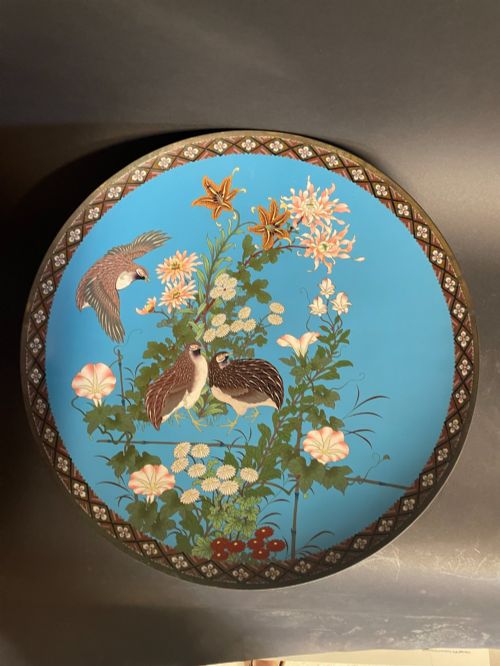
A charger is an outsized shallow dish, usually 30 to 70cm across, made to carry food to table and, from the seventeenth century on, bought mainly to be propped on a dresser or hung on a wall.

Antique Chargers
Two traditions split this category almost down the middle. Japanese Imari porcelain appears in 155 of 491 titles, tin-glazed delftware in 151. Everything else, Chinese porcelain, Vienna painted plaques, English pottery platters, sits around those two.
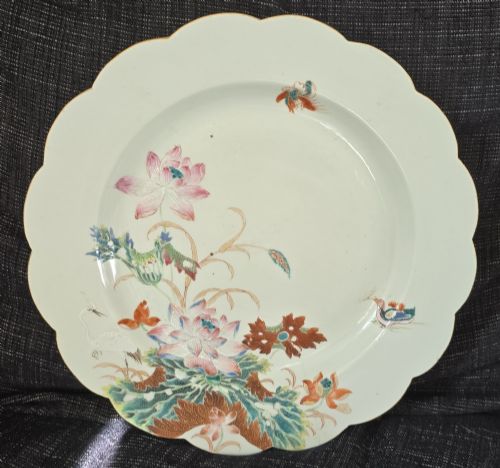
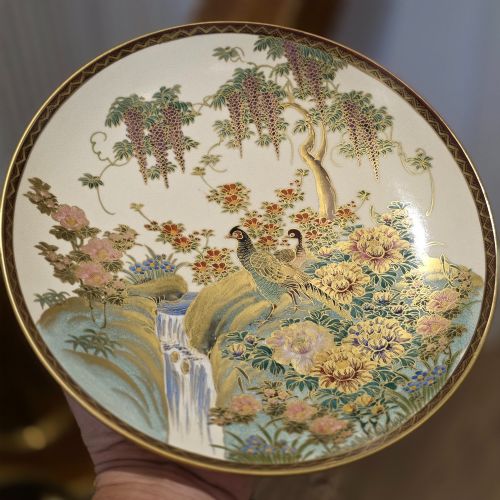
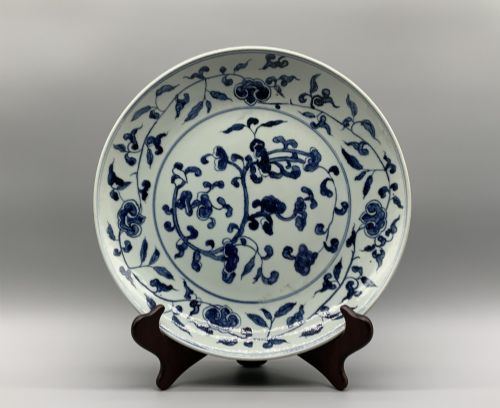
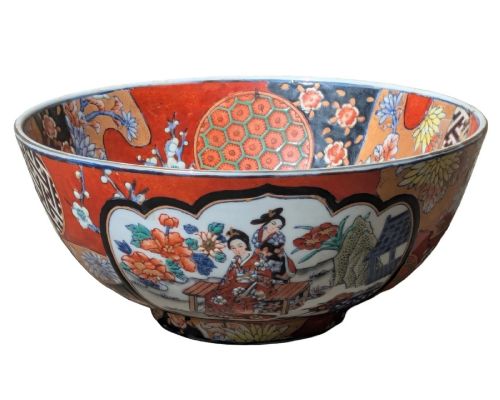
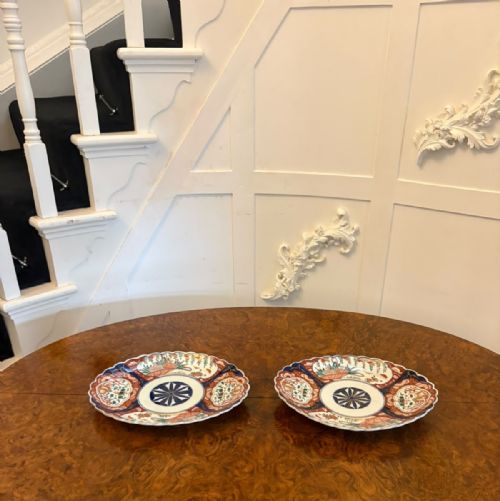
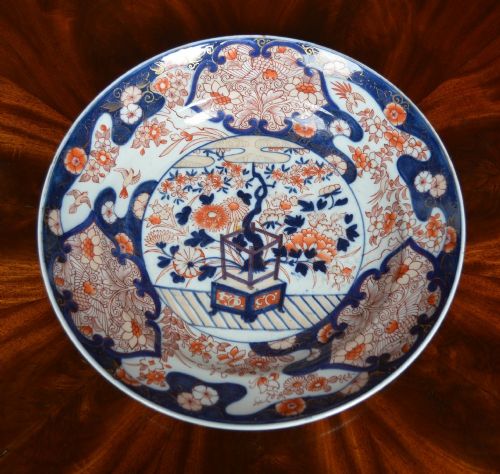
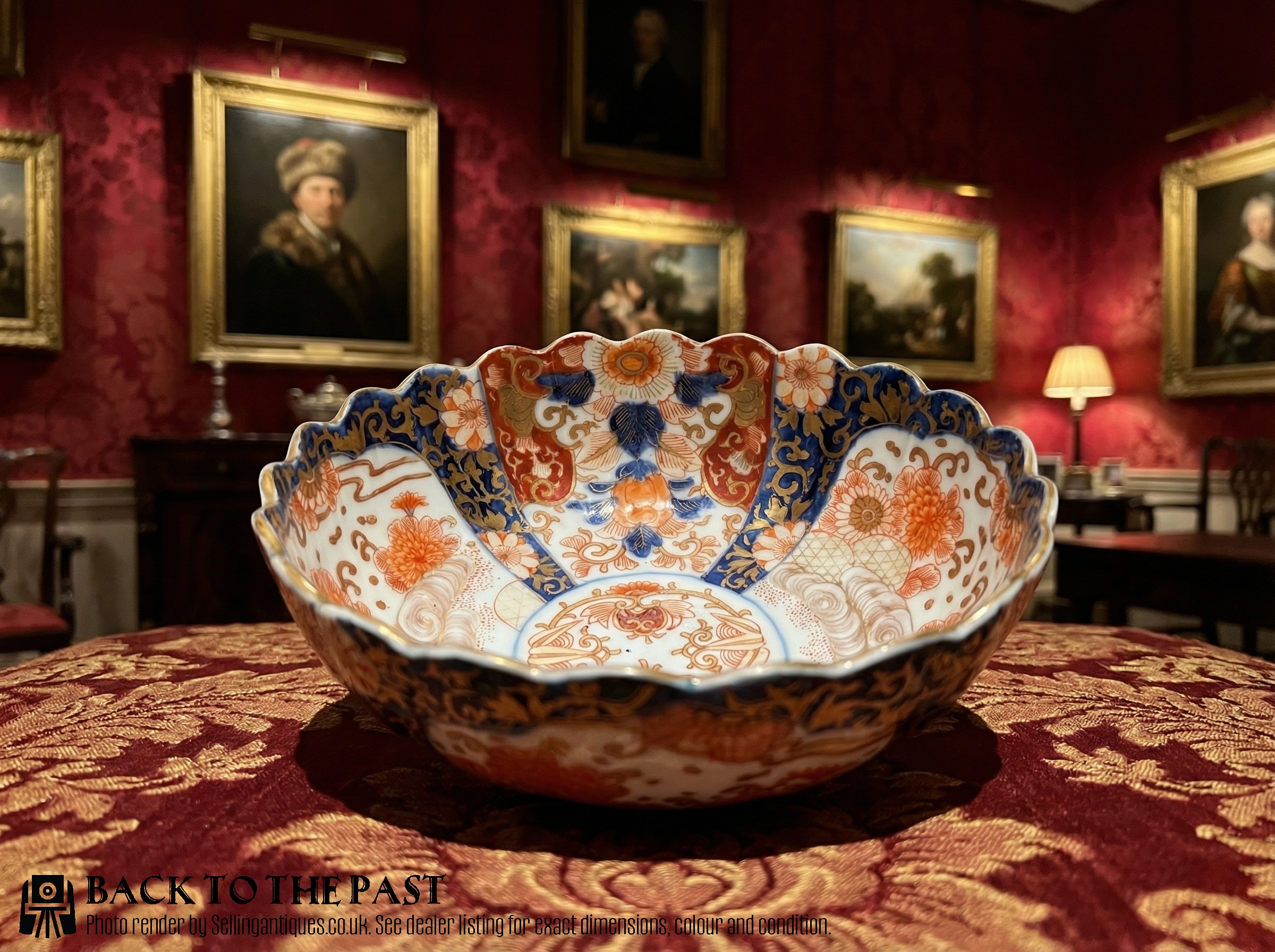
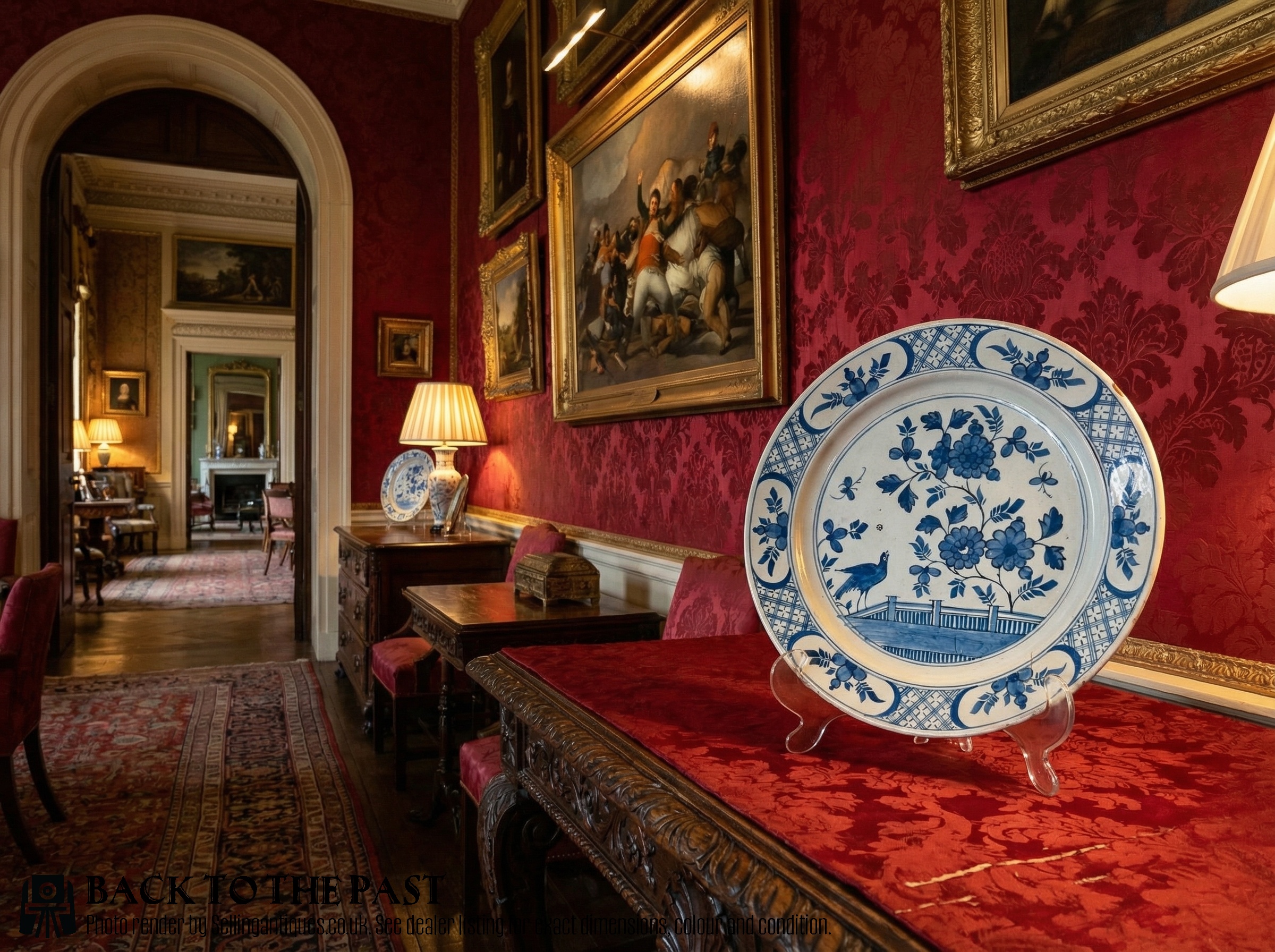
The commonest thing a buyer meets is a Japanese Imari charger of the later 19th century: underglaze blue with iron-red and gilding, round or fluted, often with a scalloped rim. Meiji is the usual dating, with Arita and Kutani named less often. Its near-equal counterpart is the 18th-century delft charger, English or Dutch, painted blue and white or in polychrome, with Bristol the most frequently named source.
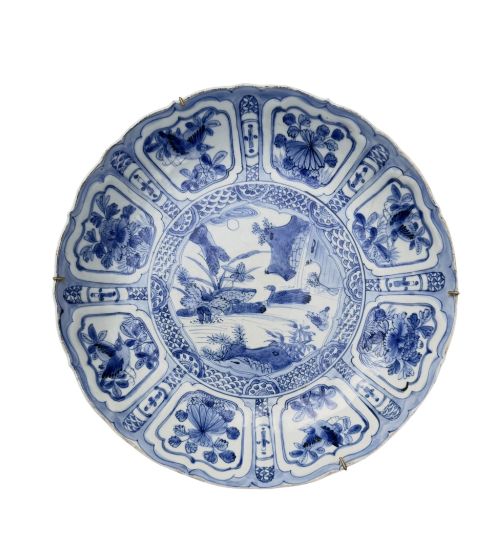
Dating in the listings tends to be broad rather than precise. "18th Century" and "19th Century" are the two largest buckets and carry no decade; where a decade does appear it clusters around 1750 for delft and the 1870s to 1900s for Imari. A handful of pieces run earlier still, Ming Kraak of the Wanli period, a 17th-century Genroku Arita, a Nishapur buffware and a Sukhothai fish dish.
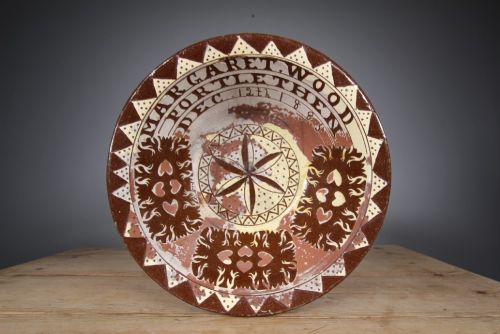
Titles use dish, bowl, plate and platter for the same object, and "large" leads more than a quarter of them. One in nine listings is a pair rather than a single, and the archive also holds groups of three and one collection of twelve. Around 61 chargers come to market on Sellingantiques in a year, listed by 95 different dealers, so it is a form most ceramics dealers touch rather than a specialism.
Where Values Sit
Size does much of the work. The word "large" leads a good many titles, and dealers quote a figure when it flatters the piece: 37cm, 47cm, 55cm, 58cm, 63cm, then a Japanese blue and white charger at 73cm and two Imari examples at 71cm. The biggest stated diameters gather at the top of the range.
Painting matters more than palette. A repeating floral or basket motif is the Imari default, and the chargers that climb above it name a subject: the nine Vienna porcelain pieces, scene-painted with Othello, Bacchus and Ariadne, the Birth of Adonis, hold most of the top of the European end. Chinese porcelain is a small slice of the category but reaches the highest ground of all.
Then attribution and number. Marks carry weight, character marks, Kangxi and Guangxu six-character marks "and of the period", Minton date marks, signed Japanese pieces, and a plain unmarked Imari title sits lower. Within delft, a named town or kiln lifts a charger above the anonymous run, and pairs, trios and larger groups sell above singles.
Antique Chargers Retail Price Guide 2026
Typical UK retail prices for chargers, calculated from the Sellingantiques database of over a million retail prices indexed since 2003. This retail price guide relies exclusively on Sellingantiques data; no external sources or auction records are used, so the figures do not describe the wider market.
The most expensive chargers ever sold on Sellingantiques were a collection of twelve Hispano-Moresque earthenware chargers, 16th to 19th century, sold in July 2022.
The Antique Chargers Glossary
- Charger
- An outsized shallow dish, generally for display. Titles here swap in dish, bowl, plate and platter for the same object, so all four are worth reading as the same form.
- Imari
- The underglaze-blue, iron-red and gilt palette of Japanese export porcelain. It is the single commonest term in the category, in 155 titles.
- Delft
- Tin-glazed earthenware, in 151 titles. The word covers both English and Dutch production, so "english delft" and "dutch delft" both turn up as qualifiers.
- Tin-glazed
- An opaque white glaze laid over earthenware, giving delft, faience and maiolica their painting surface. Faience is the continental term, French or Italian.
- Polychrome
- Painted in several colours rather than blue and white alone. Around 32 titles use it, mostly of delft.
- Kraak
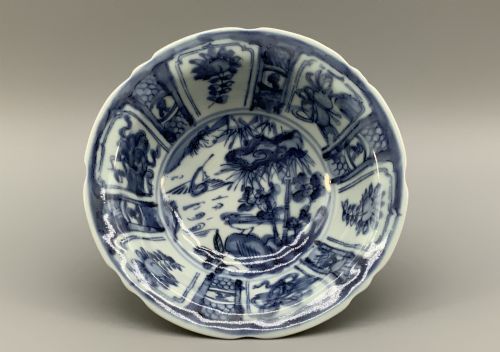
- Late Ming Chinese export porcelain with panelled borders. The design was copied in delft, so the word appears on European pieces too.
Antique Chargers: Frequently Asked Questions
What size is an antique charger?
The usual span is 30 to 70cm across. Stated diameters in the listings run through 37cm, 39.5cm, 41cm, 47cm, 50cm, 55cm, 58cm and 63cm.
The largest recorded are a Japanese blue and white charger at 73cm and two Imari examples at 71cm.
Were chargers used for food or for display?
The form began as an outsized serving dish, used to carry or present food at table.
From the seventeenth century onward chargers were increasingly made and bought to be seen, propped on a dresser or hung on a wall. That is what the size and the painting are for.
Which types turn up most often?
Japanese Imari porcelain and tin-glazed delftware, in near-equal numbers, and together they account for most of the category.
Behind them come Chinese porcelain dishes, European painted porcelain and faience, and English pottery platters and plaques. Chinese examples are a small group by count but reach the top of the range.
Are chargers sold in pairs?
One in nine listings on Sellingantiques is a pair. A few are offered as threes or trios.
The archive also holds a group of three Dutch delft chargers, a trio of Kangxi dished chargers and a collection of twelve Hispano-Moresque earthenware chargers spanning the 16th to 19th centuries.
What shapes do chargers come in besides round?
Fluted, ribbed, scalloped, lobed and barbed rims all appear, as do hexagonal, octagonal and fan-shaped bodies.
One Dutch delft barber's bowl is recorded, with the neck cut-out in its rim.
How old are the oldest examples listed?
The dated field starts at 1700, but that is a limit of the field rather than the stock. Several pieces are filed as "Before 1700" or "16th Century".
Those include Ming Kraak of the Wanli period, a 17th-century Genroku Arita, an eleventh-century Nishapur buffware and a fourteenth to fifteenth-century Sukhothai stoneware fish dish.