


Antique Sevres
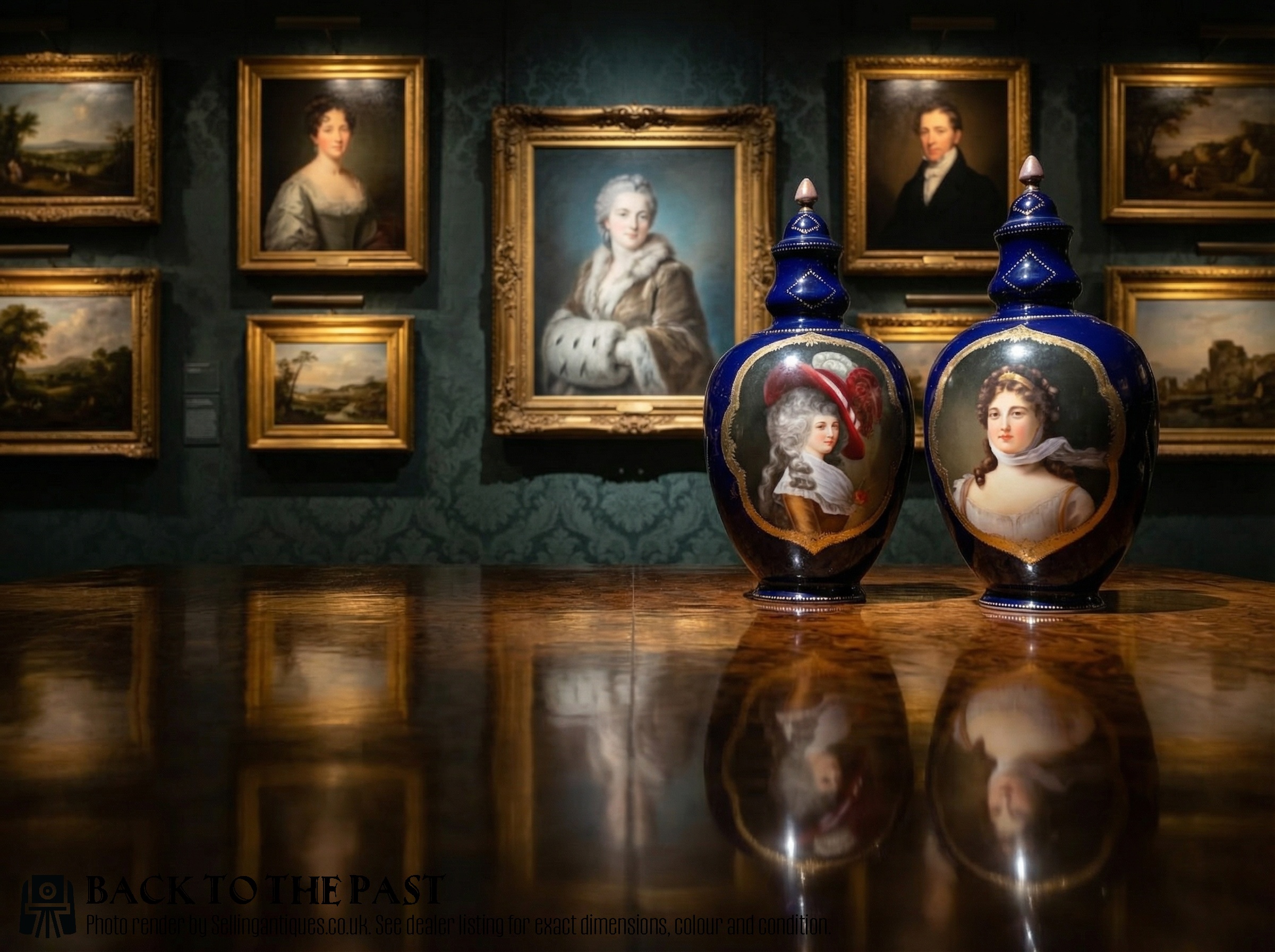
French porcelain in the Sevres taste, mostly 19th-century, made for the mantel, the table and the writing desk: blue-ground urns and vases, tazzas and comports, jardinieres, plaques and small useful wares.
Antique Sevres
Porcelain has been made at Sevres, near Paris, since the mid-18th century, when the royal manufactory moved there and became the leading French maker of luxury table and cabinet wares for the court. Coloured grounds, heavy gilding and painted panels were the house look, and that look was copied in quantity through the 19th century in France and in England.
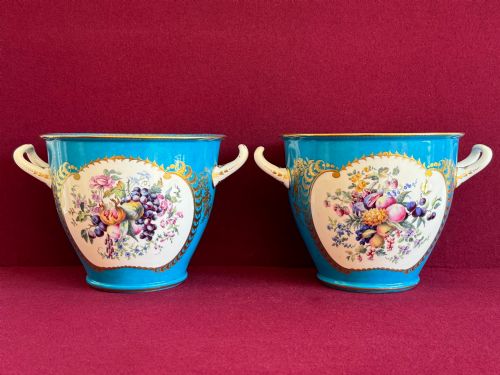
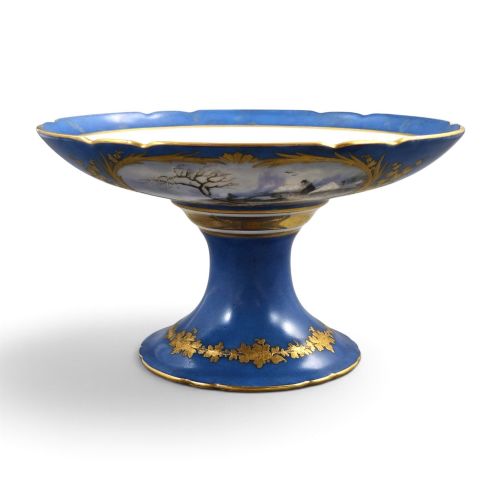
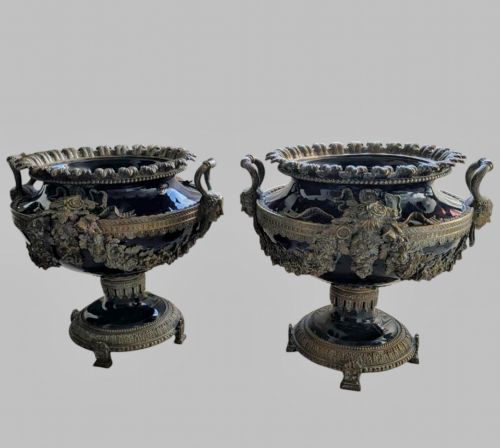
The piece you are most likely to meet on Sellingantiques is a 19th-century French vessel with a blue ground and gilding, often mounted in gilt bronze and often sold as a pair. "Porcelain" appears in two thirds of titles and "french" in nearly a third. Urns and lidded vases, tazzas, comports and centrepieces, jardinieres and cachepots, oval dishes and plaques are the forms that keep coming round.
A large share of the archive is titled not as Sevres itself but as "Sevres style" or "manner of Sevres", and some listings are Paris or English porcelain decorated in that taste. Those pieces run the whole range, from the cheapest sampled titles to the two highest, so the wording is a statement about attribution rather than a rank.
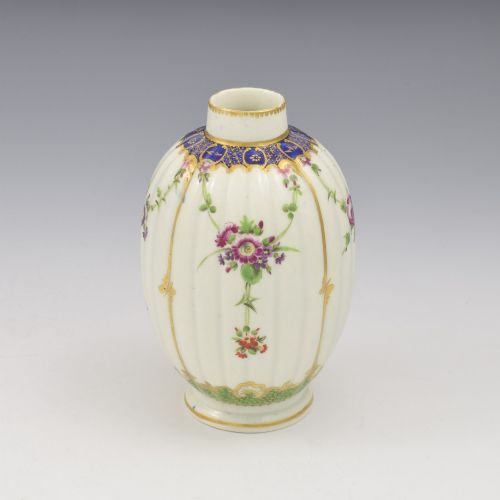
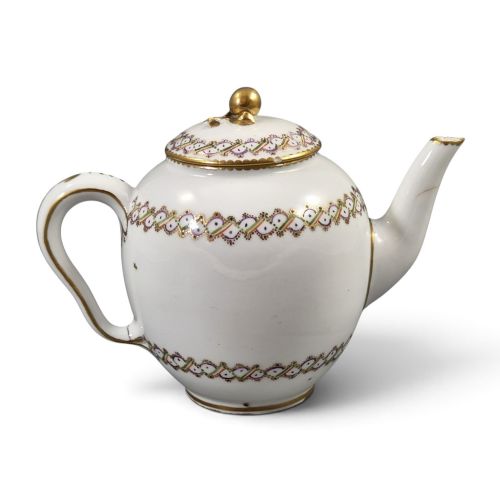
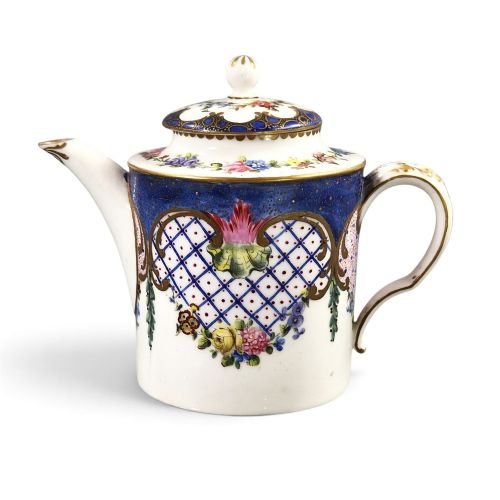
Behind the 19th-century bulk sits a smaller run of 18th-century useful wares: coffee cans of gobelet litron form, sucriers, a jam pot, salts, teapots, with years written into their titles from the 1750s to the 1780s. Dealers' date fields are blunter than their titles, and "19th Century" or "18th Century" often stands in for a year.
What Sets Them Apart
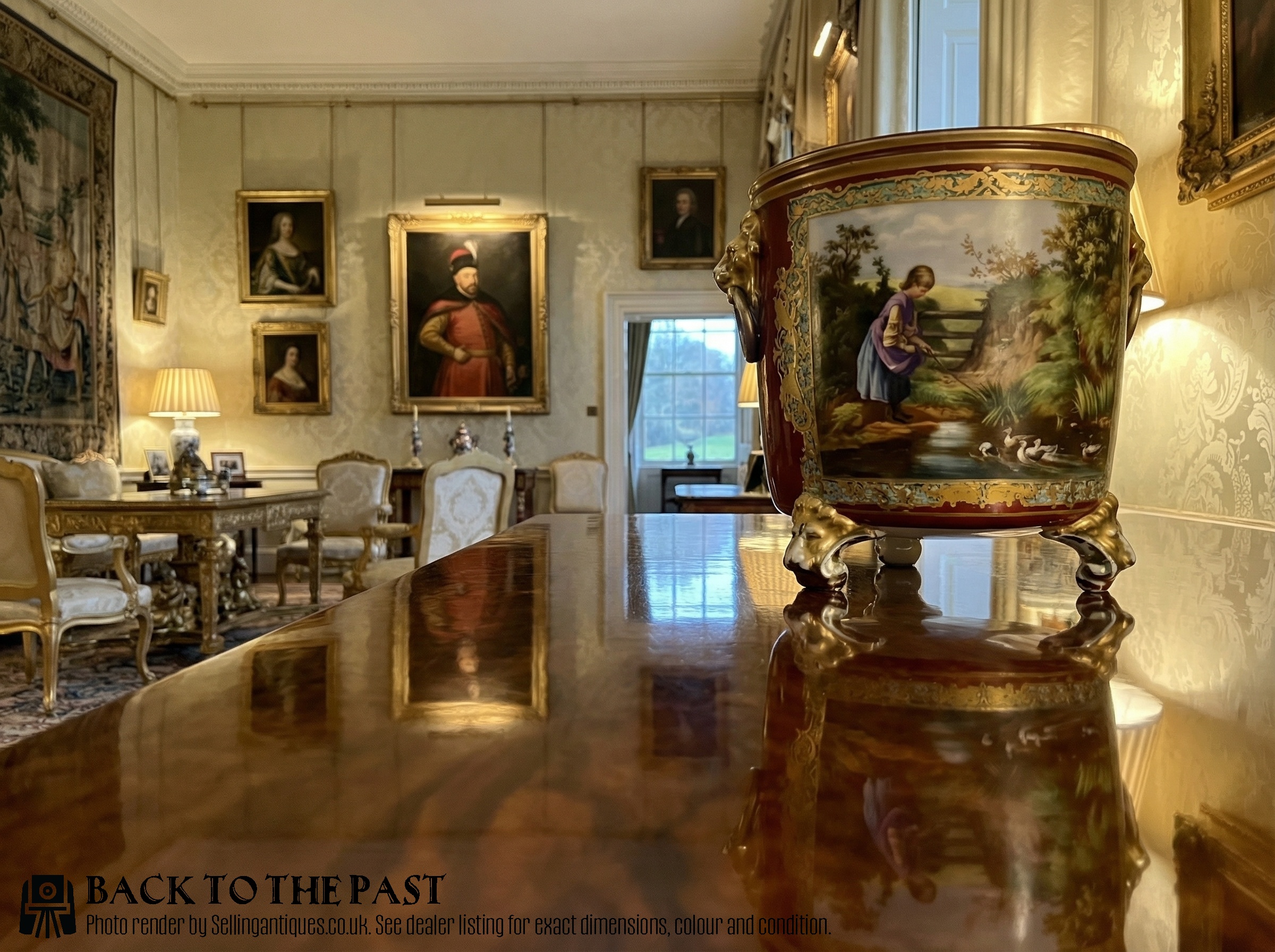
Gilt-bronze mounting is the feature that tracks the top of the range. Ormolu is named in eleven titles and "mounted" in ten, and the two highest-priced pieces in the archive are both mounted. Mounts turn a vase into a piece of furniture for the mantel, and the market has always paid for that.
Scale and completeness pull in the same direction. A quarter of all listings are pairs, and pairs of urns, vases and tazzas account for much of everything above the middle. The largest things recorded are a 20-inch charger, a huge mounted jardiniere, a garniture and a monumental pair of lidded vases; the smallest are a desk seal, a pair of salts and coffee cans, and they sit at the bottom.
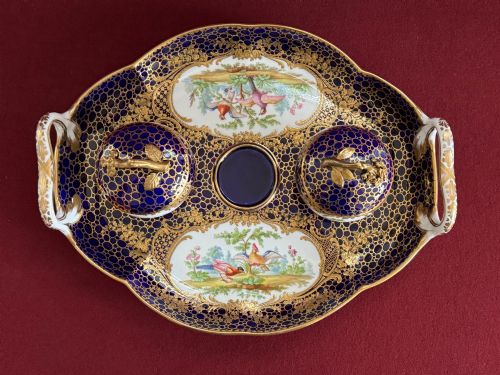
Decoration counts in two ways. A ground colour named by its proper name, bleu celeste above all, then cobalt, duck egg, rose and pink, sits above an unnamed "blue porcelain". So does a subject the dealer can identify in the title, a court portrait, a fete scene, a military encampment, against a plain body of the same shape.
Antique Sevres Retail Price Guide 2026
Typical UK retail prices for sevres, calculated from the Sellingantiques database of over a million retail prices indexed since 2003. This retail price guide relies exclusively on Sellingantiques data; no external sources or auction records are used, so the figures do not describe the wider market.
Sevres has been listed on Sellingantiques since 2009.
The Antique Sevres Glossary
- Sevres style / manner of Sevres
- A title flag meaning the piece is decorated in the Sevres taste rather than offered as factory production. It covers French and English porcelain alike.
- Bleu celeste
- The pale turquoise-blue ground colour, named in eight titles and the most cited colour in the whole category.
- Ormolu
- Gilded bronze or brass mounts, named in eleven titles and usually paired with the word "mounted". Gilt bronze is the same thing described the other way round.
- Gobelet litron
- The straight-sided cylindrical cup or coffee can form, named in several of the 18th-century titles.
- Tazza
- A shallow bowl raised on a stem or foot. It appears in the archive as ormolu-mounted pairs, while the comport is the footed serving dish that turns up in Sevres style titles.
- Bisque
- Unglazed white porcelain, used for portrait busts and commemorative plaques. Pate-sur-pate, decoration built up in layers of white slip, is named once, on a desk seal.
Antique Sevres: Frequently Asked Questions
Why are so many pieces called Sevres style?
A large share of the archive is titled "Sevres style" or "manner of Sevres" rather than Sevres. The look was copied widely through the 19th century, in France and in England, and dealers title accordingly.
Those pieces run the full range on Sellingantiques, including the two highest-priced items recorded. The wording tells you how the dealer is attributing the piece, not where it sits in the market.
What colour turns up most often?
Blue, by a wide margin. "Bleu" appears in eleven titles, and eight of those specify bleu celeste, the pale turquoise ground.
Cobalt, duck egg and pale blue account for most of the rest, with rose and pink grounds appearing alongside. Gilding runs with all of them.
How old is most of this porcelain?
The dated field is dominated by a broad "19th Century", on 34 of 78 listings, with "18th Century" on 13 more. Only 20 carry a clean year, and those cluster between 1850 and 1900.
Titles are often more precise than the date field, naming years from 1754 through to the 1840s. The archive as a whole spans roughly a century and a half, reaching the 1900s at the latest end.
Are pairs common in this category?
Yes. A quarter of all listings are pairs, 21 titles out of 78.
Pairs of urns, vases and tazzas account for a striking share of everything above the middle of the range. Garnitures, matched sets for a mantel, appear too, though only once in the sampled titles.
What small pieces come up?
The desk and dressing end of the category is steady if small: encriers and inkstands, a desk seal, a table casket, canted square boxes and a round box.
Useful wares fill out the rest, including coffee cans, sucriers, a jam pot, a sauce boat and salts. These sit at the lower and middle of the range.
Which forms are unusual in the archive?
Once in a while a shape appears that turns up nowhere else. A pate-sur-pate desk seal, a biscuit coronation plaque, an Aladdin oil lamp surmounted by a griffin, a champleve-enamel centrepiece, a tazza with a Mont-Blanc subject.
Bisque portrait busts and plaques form a small but persistent group of their own, alongside painted porcelain panels and ormolu-mounted plaques.