







Antique Wall Plaques
A flat ceramic panel made or adapted to hang on a wall, from a hand-painted porcelain plaque to a moulded pottery relief or an oversized dish put up for display.

Antique Wall Plaques
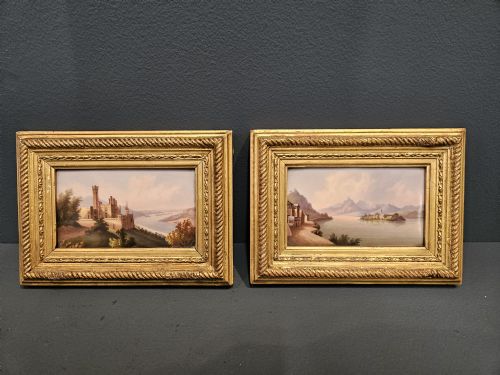
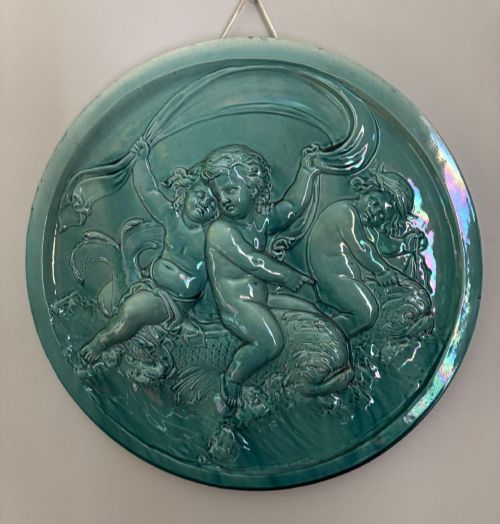
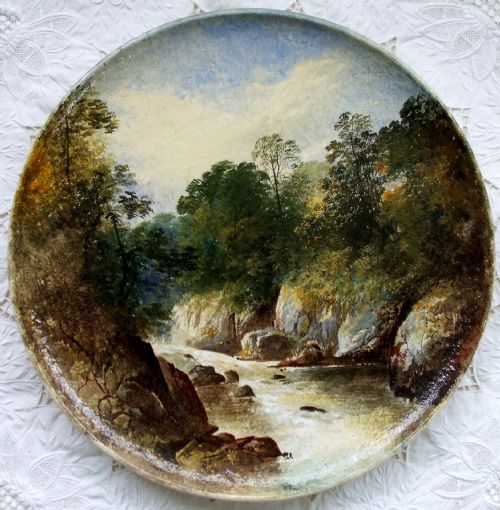
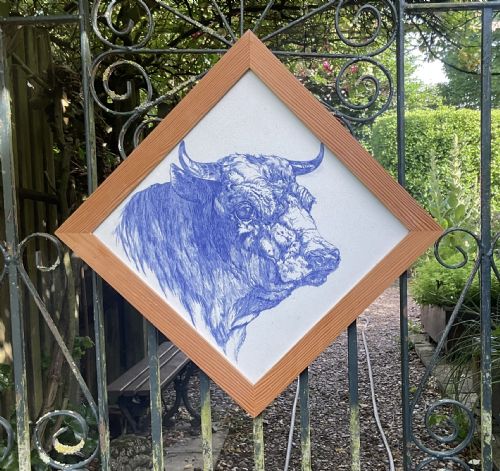
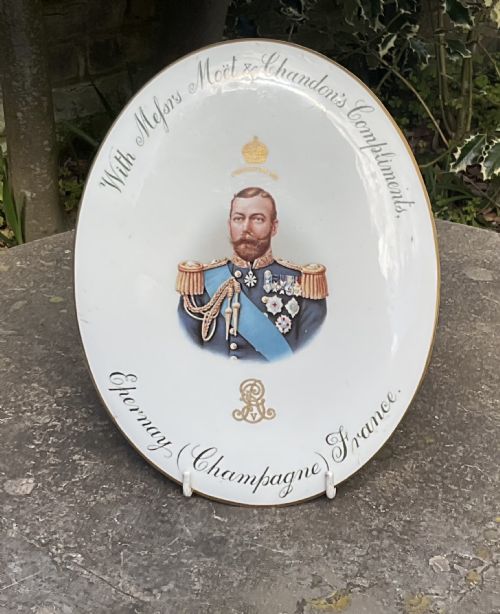
The heading covers a wide run of flat ceramics meant for the wall. Painted porcelain panels dominate, with about a quarter of titles saying porcelain and a tenth saying pottery. Alongside them sit moulded faience and majolica reliefs, framed tiles, wall masks and small printed pot lids.
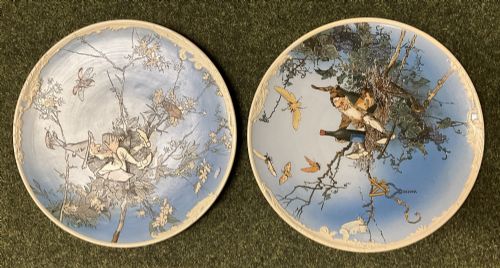
The piece you meet first is a single hand-painted or moulded panel of the 19th century, often described as large. Matched pairs come second and are unusually common for a decorative category: 'pair' appears in fourteen titles and the plural 'plaques' in thirteen, with one sampled listing a set of four.
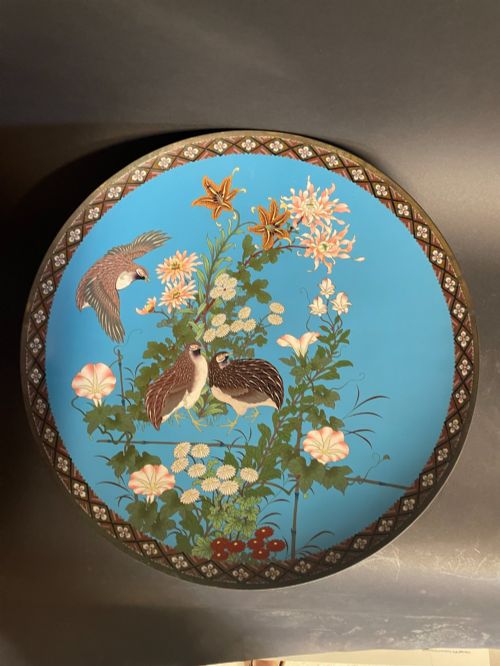
Nearly one in six is a charger rather than a plaque, an oversized dish hung for display rather than laid on a table. Framed and ormolu-mounted panels are frequent too, so what's offered is often the ceramic plus its surround.
Dating is broad. Twenty-nine listings carry only the '19th Century' tag, and where a clean year is given the run is 1860 to 1930. Five listings are tagged 18th century and one sampled group of tiles is given as 17th, so a small early tail sits outside that range. Origins spread past Europe: Japanese cloisonné, Chinese Republican-period panels and Persian script tiles each surface once or twice.

What Sets Them Apart
The main split is between decoration painted by hand and decoration moulded or printed into the body. The upper end of the range is almost entirely painted porcelain, panels and chargers alike, with pâte-sur-pâte pieces at or near the top. Printed pot lids and plain pottery plaques mark the bottom.
Size and number both push upward. 'Large' appears in a fifth of titles, and the pieces at the top state their dimensions, a 51 cm charger among them, where cheaper listings give no size at all. Pairs and sets sit above singles of the same kind.
A signature or a named decorator lifts a panel, and 'Signed' turns up as a title word on several of the dearer pieces. Framing does the same work: carved, gilt and ormolu-mounted panels cluster well above the middle of the category.
Antique Wall Plaques Retail Price Guide 2026
Typical UK retail prices for wall plaques, calculated from the Sellingantiques database of over a million retail prices indexed since 2003. This retail price guide relies exclusively on Sellingantiques data; no external sources or auction records are used, so the figures do not describe the wider market.
The most expensive wall plaques ever sold on Sellingantiques were a set of four ormolu-mounted porcelain plaques, in February 2021.

The Antique Wall Plaques Glossary
- Plaque
- A flat ceramic panel made or adapted to hang on a wall, rectangular, oval or round.
- Charger
- An oversized dish. Fifteen titles here use the word, most of them for display pieces hung rather than used at table.
- Faience
- Tin-glazed earthenware, used in titles for French, Italian and English pieces alike.
- Maiolica, majolica
- Tin-glazed Italian earthenware and the 19th-century revival of it. Both spellings appear in titles.
- Pâte-sur-pâte
- Decoration built up in layers of white slip on a coloured ground, then carved back until it reads as translucent. Three appear across the samples, all near the top of the range.
- Ormolu mount
- A gilt-bronze frame or surround fitted to a porcelain plaque.
Antique Wall Plaques: Frequently Asked Questions
How many wall plaques come up for sale?
About eleven pieces a year come to market on Sellingantiques, from fifty-two dealers who have listed in the category.
That works out at most dealers handling one and then moving on, so the supply arrives piece by piece rather than in runs.
Why are chargers listed as wall plaques?
A charger is an oversized dish, and many were made for display rather than for the table. Hung on a wall, they do the same job as a plaque.
The word turns up in fifteen titles, nearly one piece in six. Japanese, Italian and French examples all appear.
What does the 19th Century tag actually mean?
It's the dealer's broad period field, and it covers twenty-nine listings, roughly a third of the category.
Only thirty-four listings carry a clean year, and those run from 1860 to 1930, with the 1890s and 1900s the fullest decades. Dates written as 'c.1890' in a title are the dealer's estimate.
Are pairs of plaques common?
More common than in most decorative categories. 'Pair' appears in fourteen titles and the plural 'plaques' in thirteen, and one sampled listing is a set of four.
Matched pairs and sets carry a premium over singles, and they show up repeatedly at the upper end.
Which plaques sit at the top of the range?
Hand-painted porcelain, particularly signed panels and pâte-sur-pâte work. Size helps, and so does a carved, gilt or ormolu frame.
Printed pot lids and plain pottery plaques sit at the other end.
Do wall plaques come from outside Europe?
Yes, though in small numbers. Japanese cloisonné and totai shippo, Chinese Republican-period panels and a Persian Nastaliq script tile each appear once or twice in the samples.
The largest stated piece across the archive is a Japanese porcelain charger of 51 cm.