


Antique Coalport
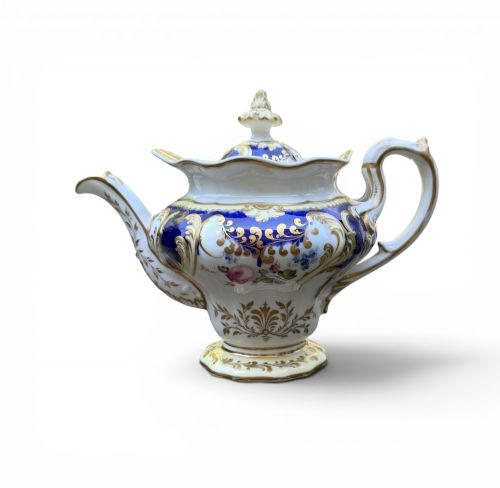
English porcelain made at Coalport in Shropshire, coming to market mainly as early 19th-century tea and coffee wares, dessert and serving dishes, with a smaller run of ornamental pieces.
Antique Coalport
Coalport porcelain was made from the late 1790s at works on the River Severn in Shropshire, beside the Coalbrookdale ironworking district, turning out useful and ornamental wares for the domestic market. Tea and dessert services were the mainstay, and that is how the category still comes to market. Production carried on through the 19th century and into the 20th.
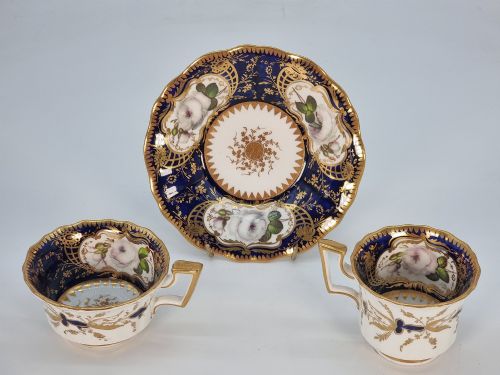
What you are most likely to meet is a single early 19th-century tea or coffee vessel. The coffee can leads: nine titles pair porcelain directly with coffee, most of them dated around 1805. Cups with saucers, trios, sucriers, slop bowls, cream jugs and shanked teapots make up the rest of that group, and Georgian and Regency labels attach to a large share of it.
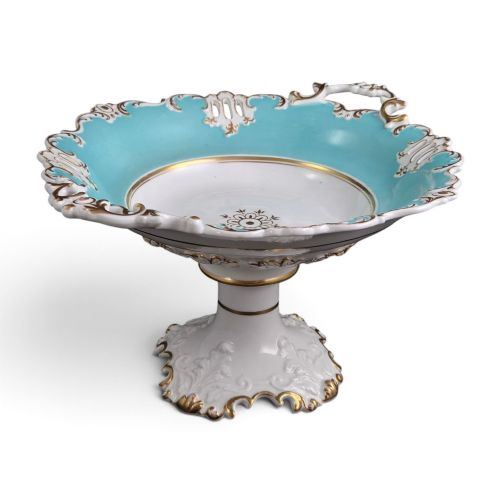
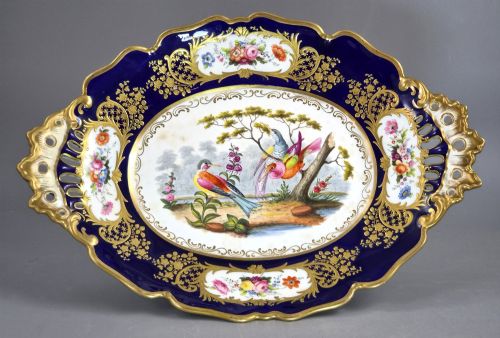
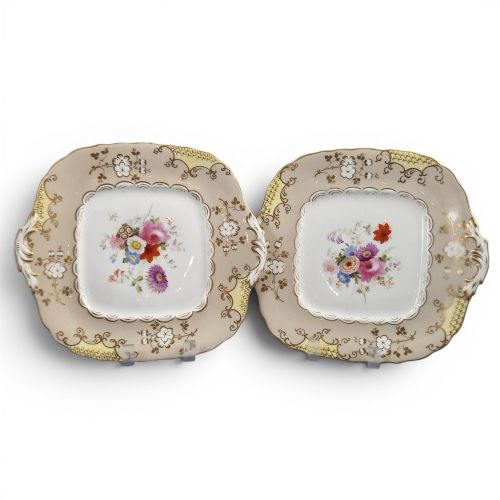
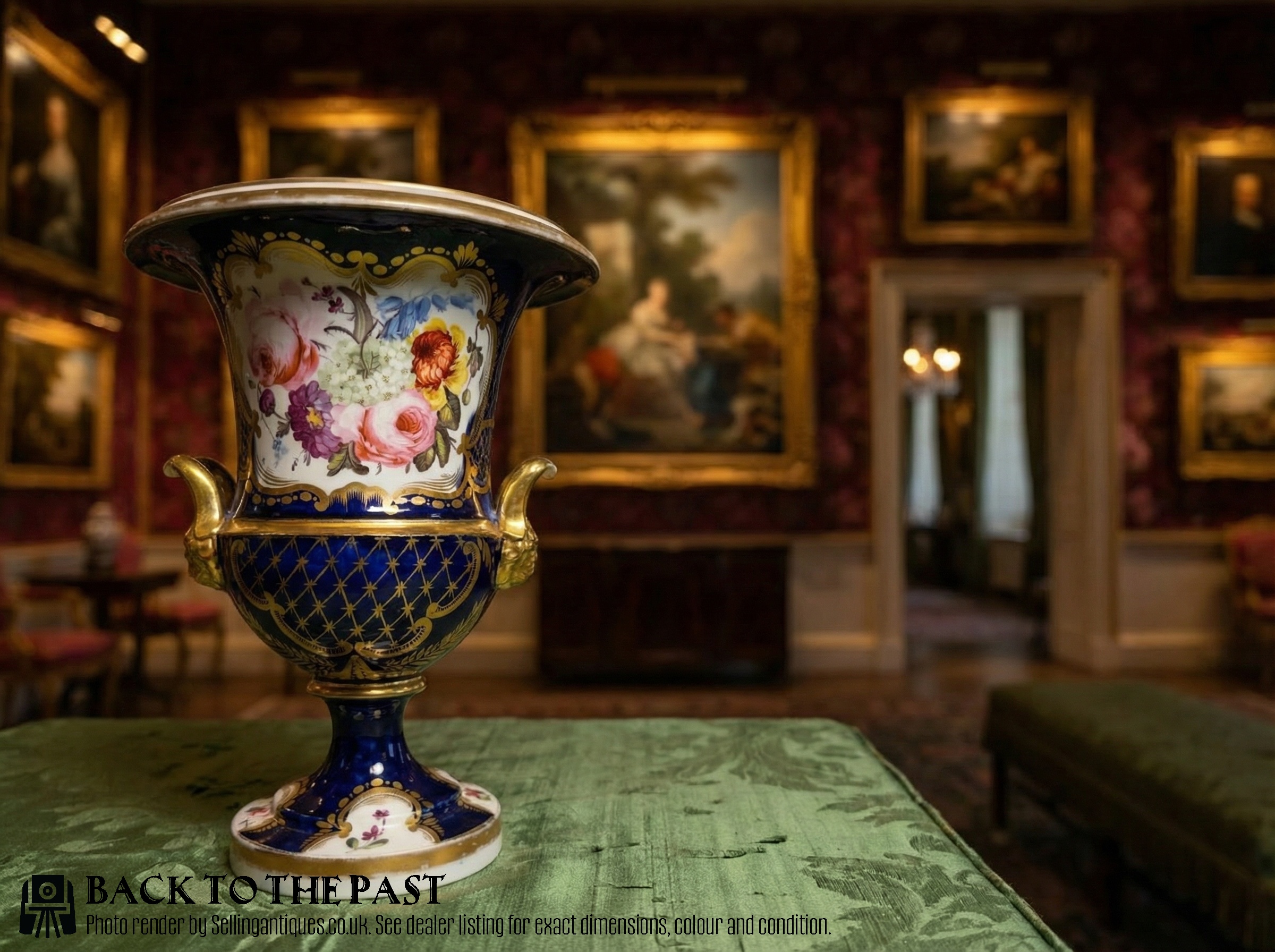
Dessert and serving wares are the other main body, running from a single shell-shaped dish or cake plate up to sauce tureens, muffin dishes, a meat platter and full services for six or eight. Ornamental and cabinet pieces form a third strand: ewers, a jardiniere, a cache pot, a Campagna urn, ice pails, cabinet plates and cabinet trios. A recurring subgroup carries separately modelled applied flowers in what the listings call Coalbrookdale style.
One in five titles quotes a factory pattern number, from plain three-figure numbers such as 128, 384 and 765 to the later series 2/162, 2/341 and A4846. A visible minority of listings hedge the attribution outright, with probably Coalport, attributed to Coalport or of Coalport type, so the category as offered takes in unmarked English porcelain assigned on shape and pattern grounds.
Range And Rank
Completeness does most of the work. The upper reaches of the range are armorial dessert services and teasets, a 42-piece tea set, an eight-piece signed dessert service, a supper set fitted with a lazy susan, pairs of ewers and ice pails. The bottom is a lone coffee can, a single saucer, a mug, one dish out of a set.
Naming counts next. Pieces that carry a pattern by name, Armorial, Thumb and Finger, Union, Cashmere, Bat Wing, Pembroke, Adelaide, Church Gresley or Imari, or a collector's attribution, sit above pieces described only as handpainted flowers. Certainty of attribution pulls the same way: probably Coalport, of Coalport type and Coalport or Coalbrookdale cluster in the lower and middle ground, while John Rose period pieces are named specifically.
Then decoration and scale. Flower-encrusted Coalbrookdale-style work, turquoise and jewelled gilt cabinet cups and artist-signed painting all sit in the upper half. So does size and odd form: the huge meat platter, the Campagna urn, the paired ewers. Small single pieces of plainer decoration hold the bottom.
Antique Coalport Retail Price Guide 2026
Typical UK retail prices for coalport, calculated from the Sellingantiques database of over a million retail prices indexed since 2003. This retail price guide relies exclusively on Sellingantiques data; no external sources or auction records are used, so the figures do not describe the wider market.
About nine Coalport pieces are listed on Sellingantiques each year, and thirty dealers have listed them.
Coalport
The Antique Coalport Glossary
- Coffee can
- A straight-sided cylindrical cup for coffee, without the flare of a teacup. It is the single most repeated form in this category.
- Trio
- A tea cup, a coffee cup or can, and one shared saucer, sold together as a set.
- Pattern number
- A factory number painted on the base identifying the decoration. Numbers quoted in these titles include 128, 136, 384, 724, 759, 765, 2/162, 2/341, 2/813 and A4846.
- Sucrier
- The lidded sugar bowl from a tea service. Also written sucriere or sugar box in these listings, alongside the slop bowl, the open bowl for cold tea and dregs.
- Flower-encrusted
- Separately modelled porcelain flowers applied to the surface. The listings call this Coalbrookdale style, and it turns up on a cup and cover, a pot, a tea kettle and a tureen.
- Cabinet cup
- A piece made for display rather than use, elaborately painted and gilded. Cabinet plates and cabinet trios appear on the same terms.
Antique Coalport: Frequently Asked Questions
How old is most Coalport on the market?
Early. Fifty-six of the period entries fall in the first half of the 19th century, split between the labels 19th Century, Georgian and Regency, which dealers use interchangeably.
Only 17 of the 84 listings carry a clean year, and that field runs from 1800 to 1960. Where a title gives a circa date, it tends to be the more specific statement.
What forms turn up most often?
Tea and coffee wares. Coffee appears in 17 titles, saucer in nine, tea in eight, with cans and trios of around 1805 to 1832 forming the largest single cluster.
Dessert and serving wares are the other main body, from shell-shaped dishes and cake plates up to full services. Ornamental pieces such as ewers, urns and jardinieres make up a smaller share.
Why do some listings say probably Coalport?
Because the piece is unmarked and has been assigned to the factory on shape and pattern grounds. Probably Coalport, attributed to Coalport and of Coalport type all appear in titles.
These hedged attributions sit in the lower and middle of the sampled range. Firmly named pieces, including John Rose period wares, sit higher.
What does Coalbrookdale style mean?
It refers to decoration with applied flowers, modelled separately and cemented to the surface. Coalport stood beside the Coalbrookdale district, and the listings use the name for this treatment.
Four sampled pieces name it: a flower-encrusted cup and cover, a pot of about 1815, a tea kettle, and a soup tureen given as Coalport or Coalbrookdale.
Are named patterns common on Coalport?
They turn up about as often as numbers do. Pembroke, Adelaide, Church Gresley, Union, Cashmere, Bat Wing, Imari, Thumb and Finger and Hamilton Flute all appear in the samples.
One title in five quotes a factory pattern number instead, running from three-figure numbers to the later 2/ series.
How many Coalport pieces come up each year?
Around nine listings a year reach Sellingantiques, spread across 30 different dealers, so no one dealer dominates the category.
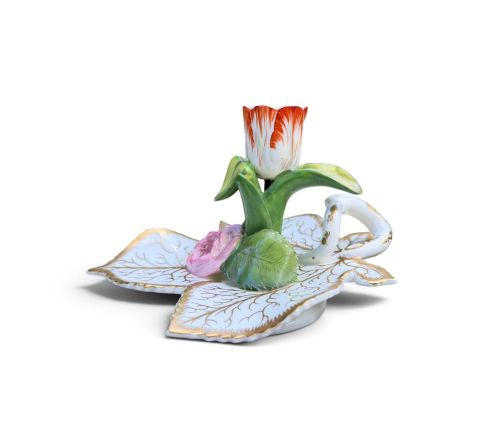
Oddities surface once and not again: an egg stand, a scallop-shell pen tray, a tulip chamberstick, a three-handled goblet, a child's set, and a supper set with a lazy susan at the top of the range.