

Antique Terracotta
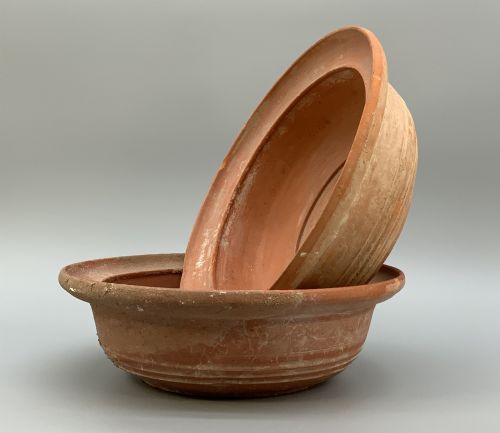
Fired red or buff clay, usually left unglazed, worked into garden urns and planters, dairy and kitchen vessels, and modelled busts, figures and animals.
Antique Terracotta
Terracotta is fired earthenware, commonly unglazed and red or buff in colour, sometimes glazed inside where it had to hold liquid. It is one of the oldest worked ceramic forms, used for building elements, storage vessels and modelled figures. From the Renaissance it served European sculptors for models and portrait busts, and from the nineteenth century it was made in quantity for garden ornament and horticultural ware.
The piece you are most likely to meet is large and nineteenth century, and there is a good chance it is one of a pair. "Large" is the commonest word in the whole category on Sellingantiques, and "pair" is close behind. Dating tends to be broad: the single biggest group is simply "19th Century", with the 1880s the strongest identified decade and early twentieth-century work well represented too.
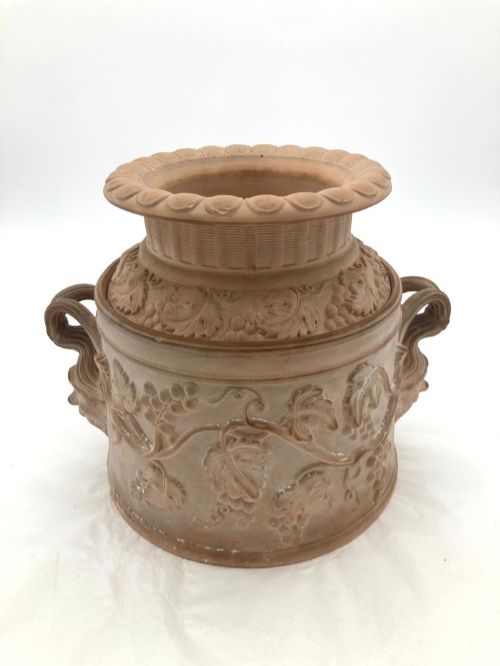
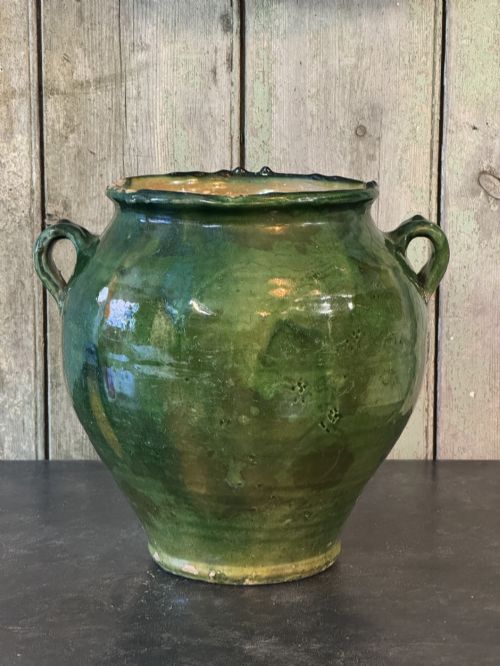
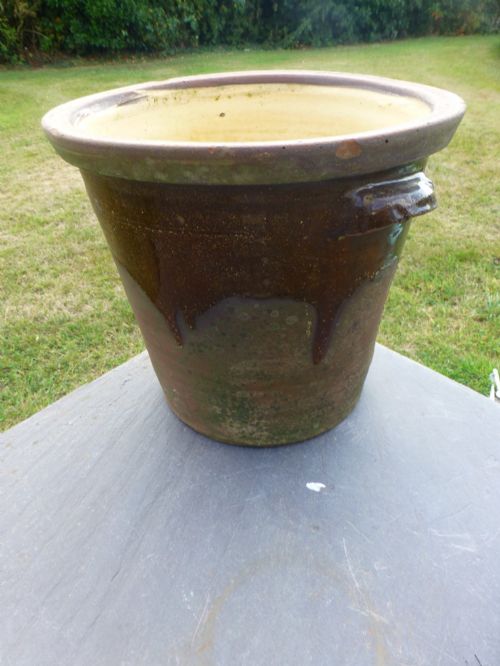
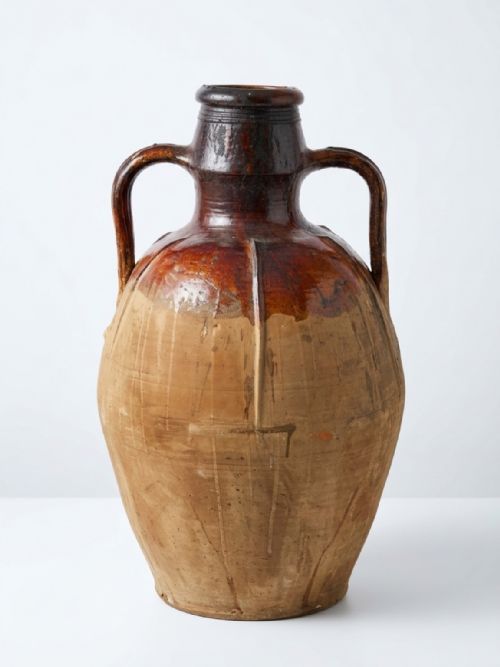
The field splits roughly in two. Garden and architectural work covers urns, planters, jardinieres, pots, roof finials, chimney pots, corbels, roundels, window troughs and garden seats. Modelled work covers busts, figures and sculpture, with animals a branch of their own: lions, dogs, pugs, cats, elephants, cockerels. Country and dairy vessels form a smaller group, running to olive oil jars, confit pots, salters, tians, pancheons and rhubarb forcers.
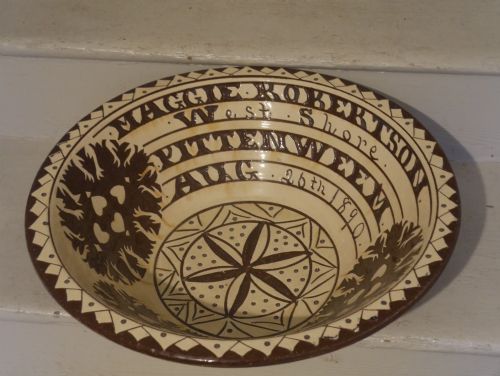
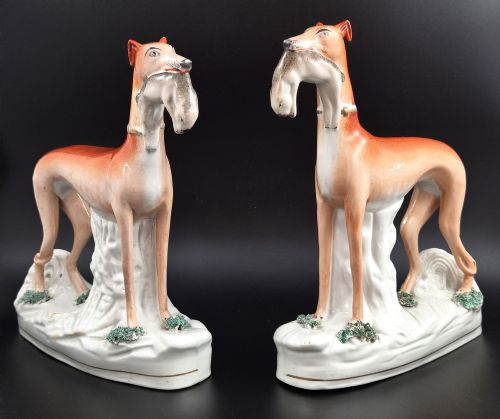
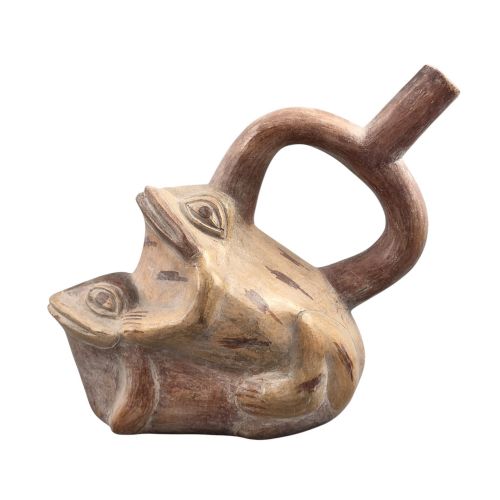
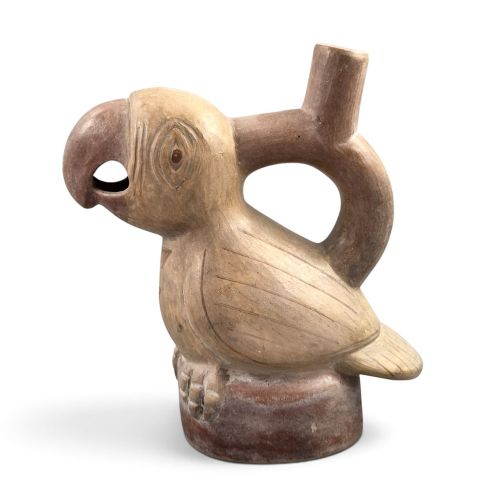
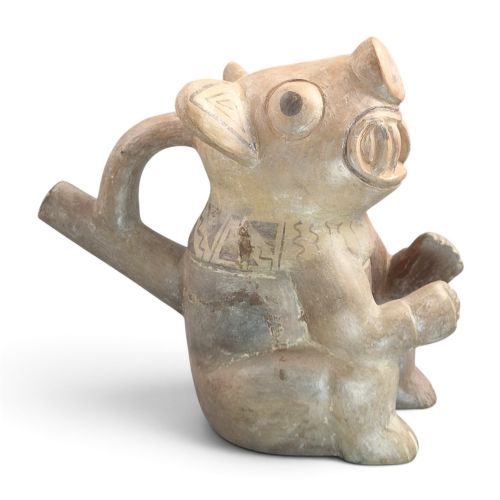
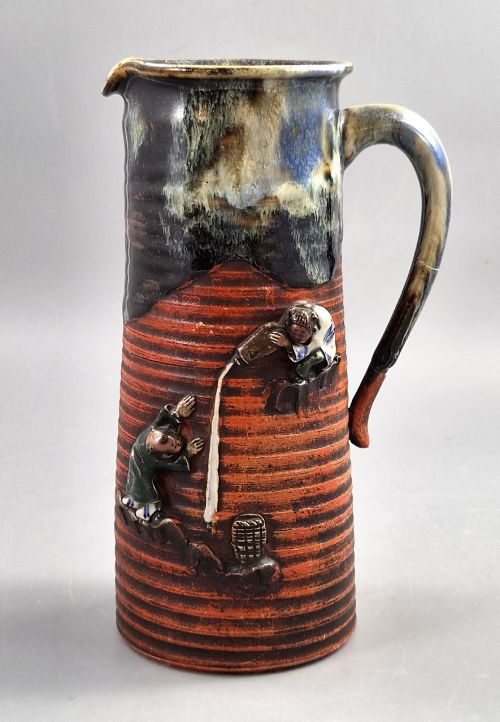
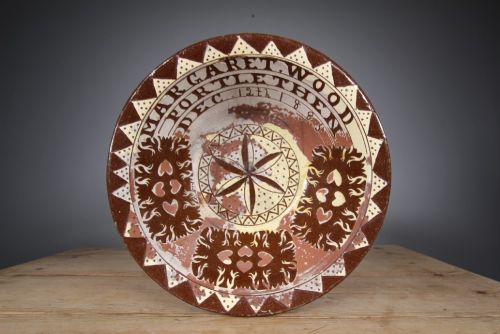
The heading is shelved broadly. Alongside true terracotta you will find other ceramics: Staffordshire pottery dogs, Japanese Kutani and Sumida Gawa, ironstone, slipware, majolica and porcelain, a share that rises in live stock. Origins named in titles are varied for a British market, with France well ahead, then Italy and Austria, and single pieces from Spain, Portugal, Greece, Turkey, Nigeria, Peru, India, Cambodia and Persia. A dozen listings sit before 1700, covering ancient Greek, Roman, Syro-Hittite, pre-Columbian and Chinese tomb material.
What Sets Them Apart
Size does most of the work. The upper reaches of the range are dominated by pieces described as very large, life size or monumental: garden lions, busts and standing figures. Plain plant pots, sap pots and confit pots populate the bottom. Pairing compounds it, and pairs of lions, urns, busts and figures account for much of the upper half.
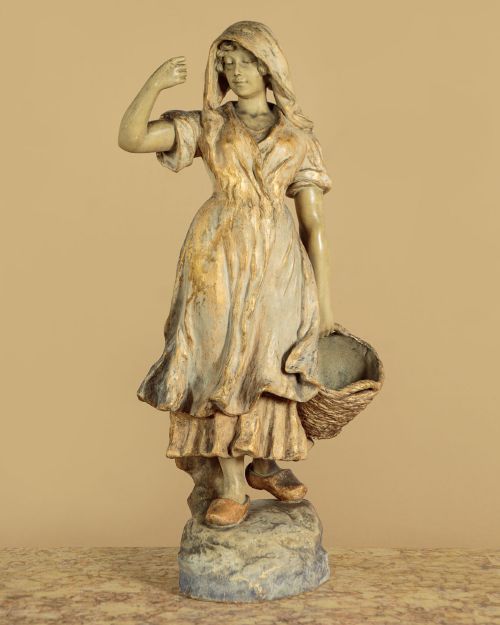
Subject separates the rest. Figural work sits above utilitarian, with busts, figures and animal models carrying more than vessels of the same age and clay. Surface counts too: glazed and painted terracotta turns up throughout, and polychrome or cold-painted busts and animals sit higher than plain buff garden ware.
Authorship is the last lever, and it is a thin one. Signed and named studio sculpture stands well above unattributed garden ware, but only two names clear three dealers between them. Most of the category arrives with no maker at all, which is why scale, pairing and subject decide so much of it.
Antique Terracotta Retail Price Guide 2026
Typical UK retail prices for terracotta, calculated from the Sellingantiques database of over a million retail prices indexed since 2003. This retail price guide relies exclusively on Sellingantiques data; no external sources or auction records are used, so the figures do not describe the wider market.
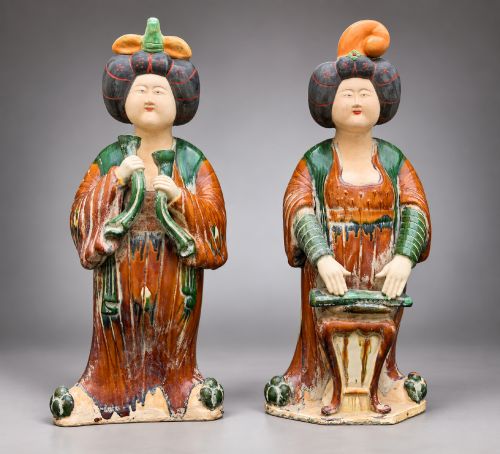
The most expensive terracotta ever sold on Sellingantiques was a pair of polychrome figures, an Oriental lady and an Arab soldier, sold in August 2025.

Goldscheider·Ugo Cipriani
The Antique Terracotta Glossary
- Terracotta
- Fired earthenware clay, usually left unglazed and red or buff in colour.
- Buff
- The paler cream-brown clay body, named in urn and lion titles as against the usual red.
- Confit pot
- French kitchen jar, typically part-glazed inside, for preserving meat in fat.
- Oil jar
- Large bellied vessel for storing olive oil, often sold on an iron stand.
- Tian
- Wide shallow Provençal bowl, glazed inside. Examples on Sellingantiques run to 54cm and 69cm across.
- Faux bois
- Clay modelled to imitate bark or tree trunk, seen on strawberry planters and window troughs.
Antique Terracotta: Frequently Asked Questions
What period is most antique terracotta from?
The nineteenth century dominates, with "19th" or a variant of it running through a good share of titles. Of the listings carrying a clean year, the largest single group is dated no more closely than the century itself.
Early twentieth-century work is well represented, particularly the 1900s, 1920s and 1930s. The dated field as a whole runs 1700 to 1950, with a small group of ancient and tomb material catalogued only as before 1700.
Why are so many pieces sold as pairs?
Garden and architectural terracotta was made for symmetry: flanking a doorway, a gateway or a flight of steps. "Pair" is one of the commonest words in the titles on Sellingantiques.
Lions, urns, busts and figures are the forms that recur in twos, and they account for much of the upper half of the range.
Are Staffordshire dogs really terracotta?
No, and the heading is a broad one. Staffordshire pottery dogs, Japanese Kutani and Sumida Gawa, ironstone, slipware, majolica and porcelain all appear under it.
True terracotta, unglazed or part-glazed fired red and buff clay, still carries the category. The other ceramics are a visible minority, and their share is higher in current stock than in what has sold.
Which forms turn up most often?
Two groups split the field about evenly. Garden and vessel work covers urns, planters, pots, jars and jardinieres; modelled work covers figures, busts and sculpture.
Animals form a branch of their own, with lions, dogs and pugs the commonest. Country and dairy vessels are a smaller group again: oil and confit jars, salters, tians, pancheons, forcers and crocks.
Is terracotta always unglazed?
Not always. Kitchen and dairy wares are often part-glazed inside, where the vessel had to hold oil, fat or milk, while the outside stays bare clay.
Glazed and painted surfaces turn up across the category. Cold painting, applied over the fired surface rather than fired on as glaze, appears on busts and animal models.
How wide is the range of origins?
Wider than most ceramic categories on a British market. France leads the named origins by some distance, followed by Italy and Austria.
Spain, Portugal, Greece, Turkey, Nigeria, Peru, India, Cambodia and Persia each appear, with Nishapur and Khmer material among the least frequent.