



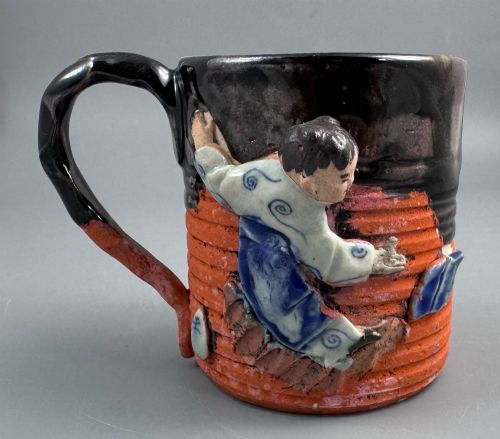


Antique Tankards
A tankard is a large single-handled vessel for beer and ale, and in this category it is almost always ceramic rather than metal.
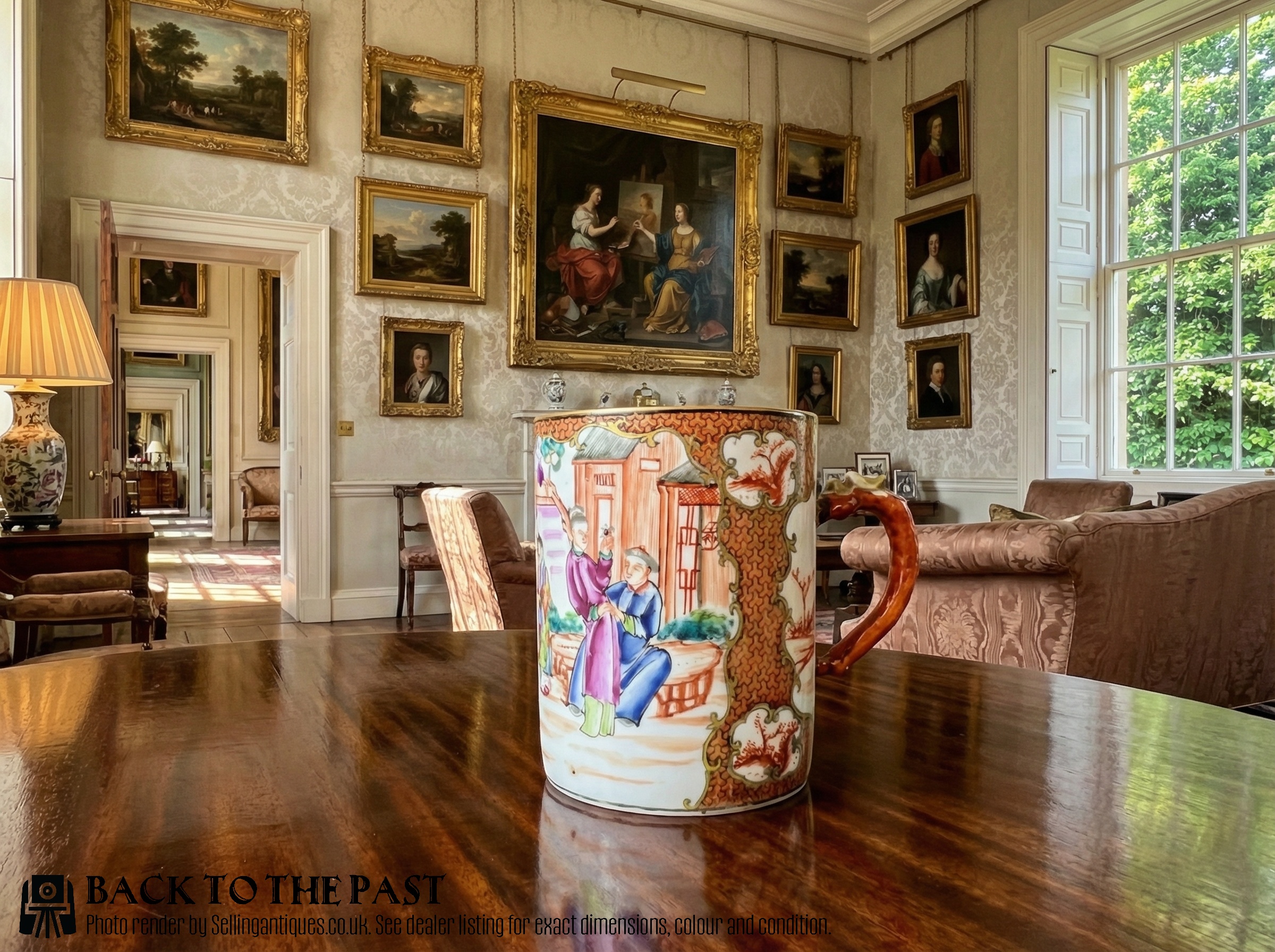
Antique Tankards
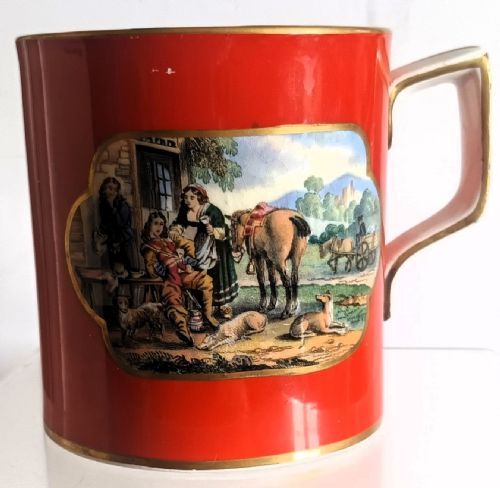
The word covers a single-handled ceramic drinking vessel, and the trade uses "tankard" and "mug" for the same object. Several listings write both. Porcelain dominates: "mug" appears in 32 of 79 titles and "porcelain" in 28, so the piece you are most likely to meet is a porcelain mug that the description also calls a tankard.
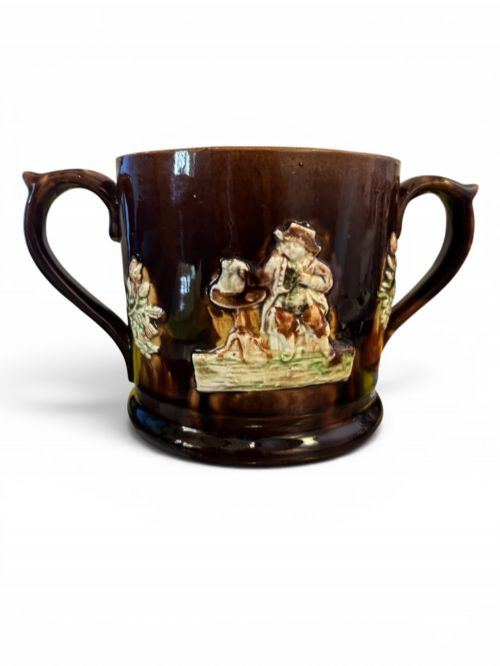
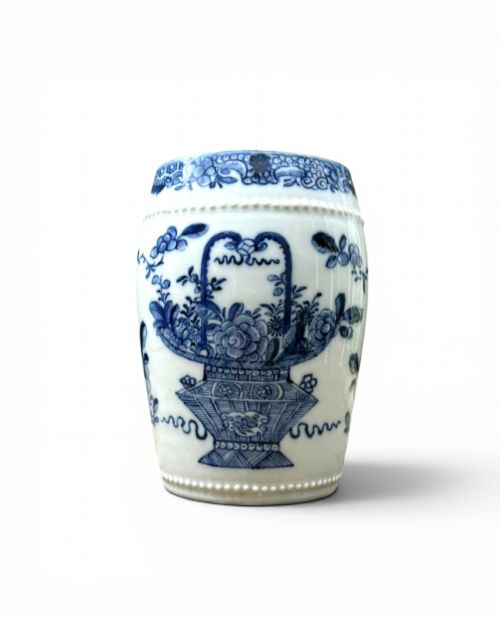
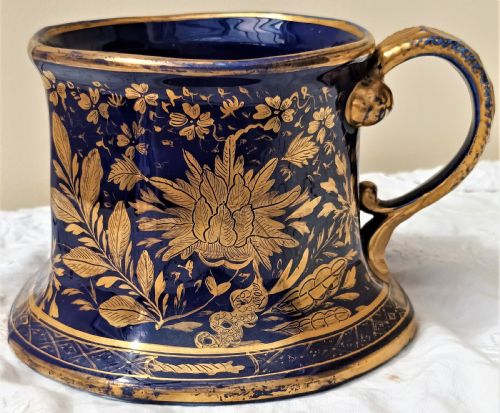
Ceramic tankards were made across Britain, the Continent and the Chinese and Japanese export trade in quantity through the eighteenth and nineteenth centuries. Bodies run from porcelain and stoneware to creamware, pearlware and delft. Cylindrical and barrel shapes both turn up, without a lid in all but five titles.
Five groups make up the category. English porcelain mugs, with Worcester in ten titles alongside Derby porter mugs, Caughley and Lowestoft. Chinese and Japanese export, from Qianlong famille rose to Kangxi Imari and Arita. Scottish Wemyss tankards painted with hens, cherries, thistles and iris. English earthenware, from spongeware and Gaudy Welsh to Sunderland pink lustre and Doulton Lambeth stoneware. And Continental steins, including Westerwald, Mettlach and Sarreguemines.
Dating here is mostly by century rather than year. Twenty-three listings say only "19th Century" and nineteen only "18th Century", against eighteen across the whole archive with a clean year, and those years run 1800 to 1920. Titles often carry a tighter circa date than the dating field does, so read the title first.
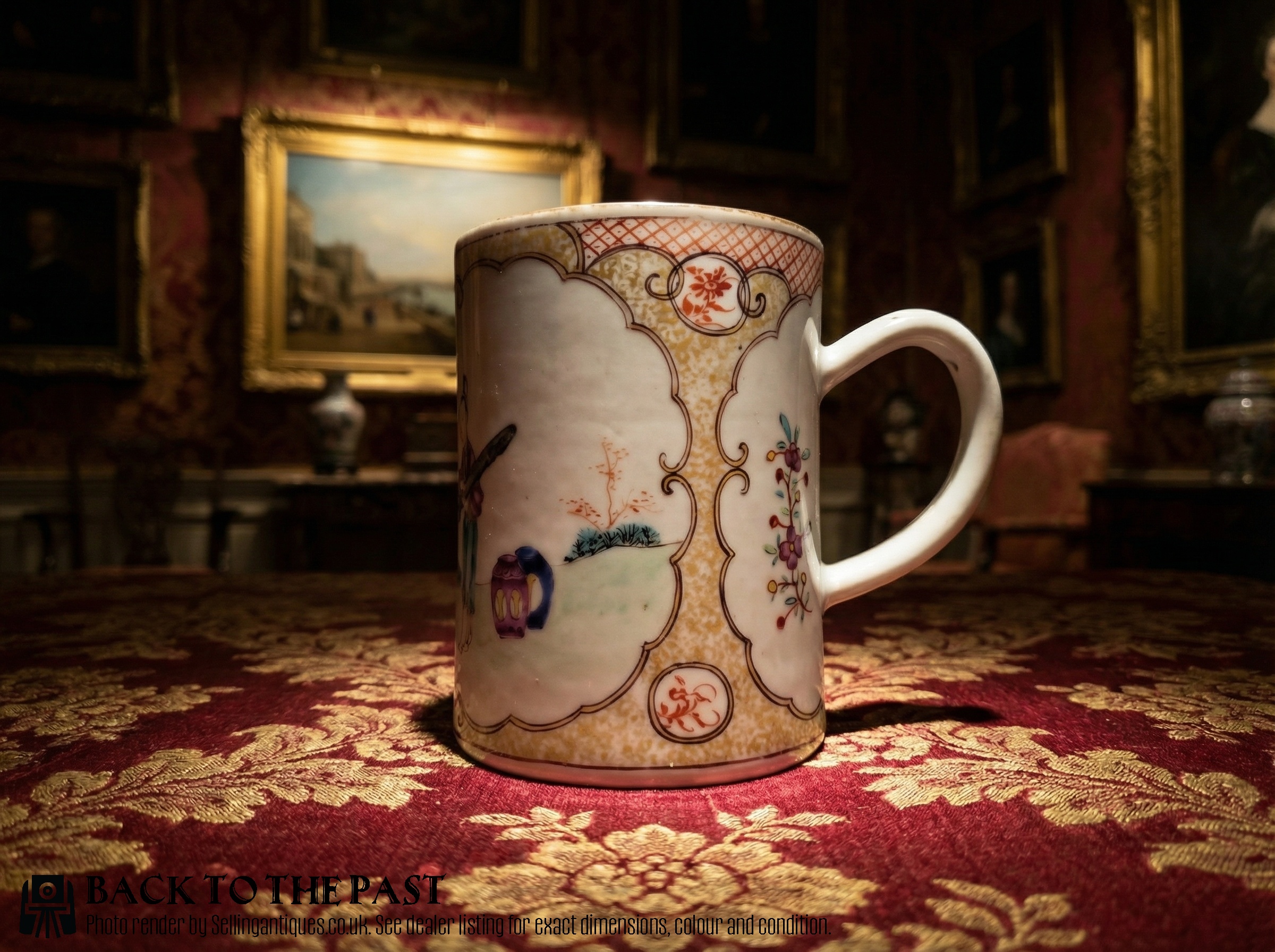
What Sets Them Apart
Size and a stated capacity do most of the work. "Large" qualifies a quarter of all titles, and quart, pint and half pint are named outright, with one pearlware frog mug given as a "Winchester Measure". A pint or more is the norm here rather than a small cup, though the largest figure anyone quotes is a Worcester mug at 14.1cm.
A named factory lifts a piece well clear of an anonymous one. Worcester leads, with First Period, Chamberlain, Grainger and Hadley all distinguished in titles, and Derby, Caughley, Lowestoft and Royal Vienna sit in the upper half of the range. Unattributed spongeware and blue and white transfer print sit at the bottom.
Decoration separates the rest. Hand-painted and polychrome work carries more than printed, and a titled pattern or identified view is a selling point in its own right: Plantation Pattern, Gilliflower Print, Parrot Pecking Fruit, a view of the City of Worcester. Lids and silver mounts are unusual, and the lidded Vienna tankards with painted mythological scenes hold the top of the range.
Antique Tankards Retail Price Guide 2026
Typical UK retail prices for tankards, calculated from the Sellingantiques database of over a million retail prices indexed since 2003. This retail price guide relies exclusively on Sellingantiques data; no external sources or auction records are used, so the figures do not describe the wider market.
Frog mugs keep cropping up: a modelled frog or newt sits inside, waiting for the drinker, and one was described as a frog and surprise spitting mug.
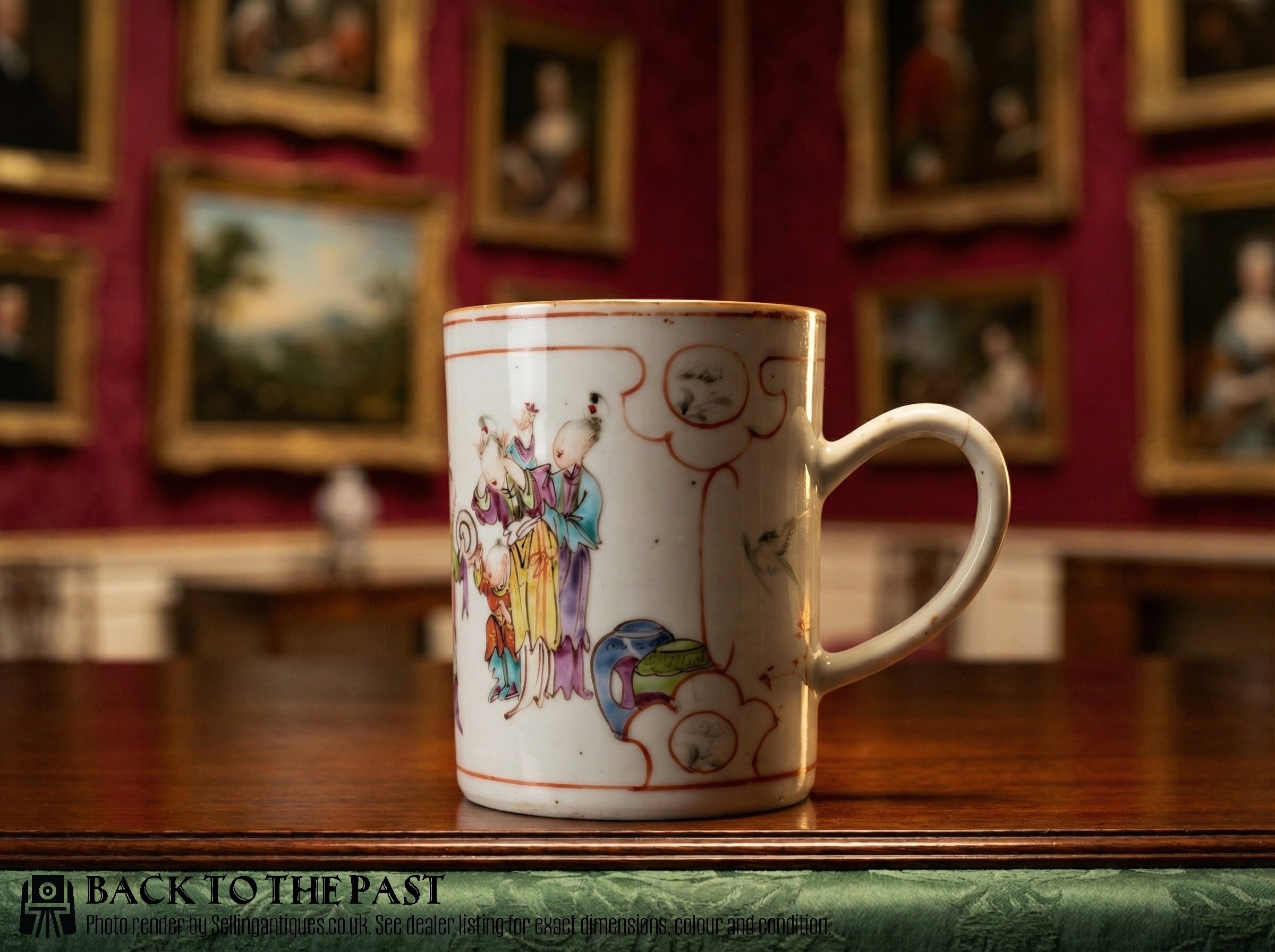
The Antique Tankards Glossary
- Tankard / mug
- Used interchangeably in these titles for the same single-handled drinking vessel. Several listings write both words.
- First Period
- Worcester porcelain of the earliest phase. Five titles use the term, usually with a date between c.1770 and c.1785.
- Quart / pint / half pint
- Stated capacities, given more often than dimensions. "Winchester Measure", the old statutory standard, appears once.
- Frog mug
- A mug with a modelled frog or newt in the bowl, revealed as the drink goes down. Four titles feature one, including a "frog/surprise spitting mug".
- Famille rose / famille verte
- Chinese enamel palettes, one pink-dominant, one green-dominant. Both appear on Qianlong export mugs.
- Westerwald
- German salt-glazed stoneware in blue and grey. Two 18th century tankards of it appear in the samples.
Antique Tankards: Frequently Asked Questions
Is a tankard the same thing as a mug?
In this category, yes. Dealers use the two words for the same single-handled vessel, and several listings write both in one title.
"Mug" appears in 32 of 79 titles and "porcelain" in 28, so a porcelain mug described as a tankard is the standard entry.
Do antique tankards usually have lids?
Rarely. Only five titles across the archive state a lid at all, phrased as "With Lid" or "Silver Plated Lid".
The lidded pieces cluster in the Continental group, and the Royal Vienna tankards with painted mythological scenes sit at the very top of the sampled range. Three further listings note a silver or silver-plated mount.
What is a frog mug?
A mug with a modelled frog or newt fixed inside the bowl, coming into view as the drink is finished. It is the oddest recurring form in the category.
Four titles feature one, including a "frog/surprise spitting mug" and a two-handled loving mug that pairs frogs with hunting scenes inside.
How old are the ones on Sellingantiques?
Mostly eighteenth and nineteenth century. Twenty-three listings are dated simply "19th Century" and nineteen "18th Century", with clean years running from 1800 to 1920.
Two pieces reach further back, both Japanese Arita porcelain given as around 1700. They are the earliest things in the archive and its only 17th Century entries.
Named-reign labels appear too, but scattered: Victorian on four, Georgian on three, Regency on two.
Which factories turn up most often?
Worcester leads, in ten titles, with First Period, Chamberlain, Grainger, Grainger Lee & Co and Hadley all separately named. Derby porter mugs, Caughley and Lowestoft follow.
Chinese attributions are the next largest group, Qianlong being the commonest. Wemyss accounts for another ten titles, all dated 1900 or 19th Century.
Are they sold singly or in sets?
Almost always singly. Two exceptions stand out in the archive: a set of three German steins, and a pair of matching blue and white quart tankards.
Thirty-nine dealers have listed in the category and around seven pieces come to market a year, so nearly every dealer has handled one and few have handled two.