

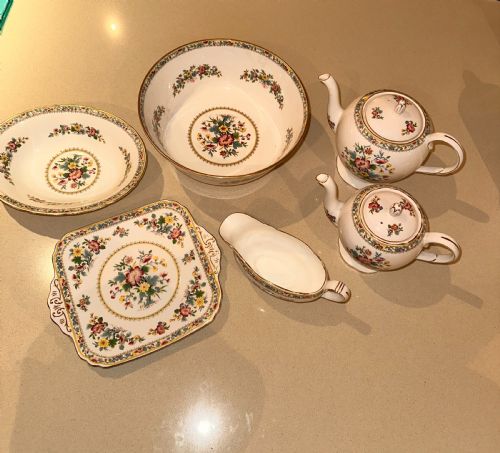
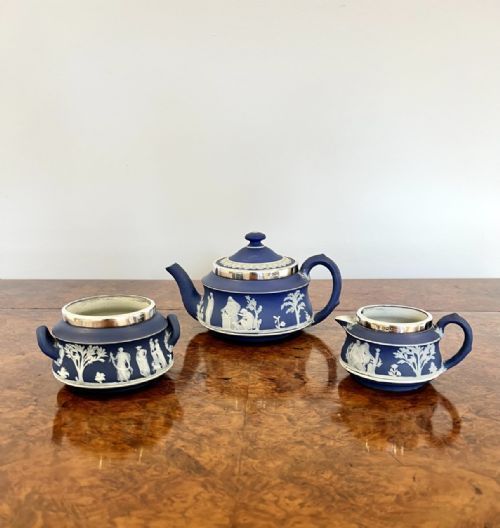


Antique Tea Service
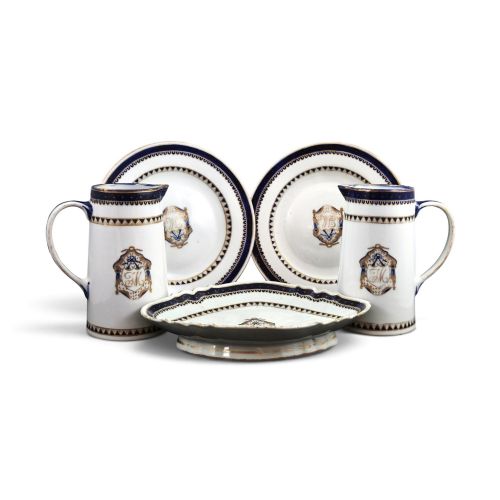
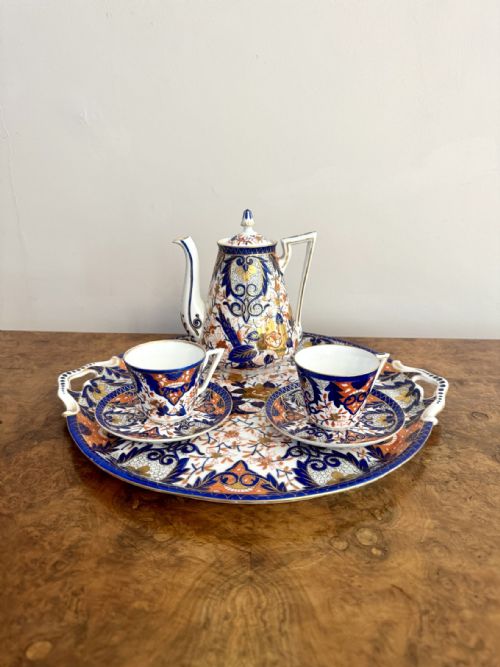
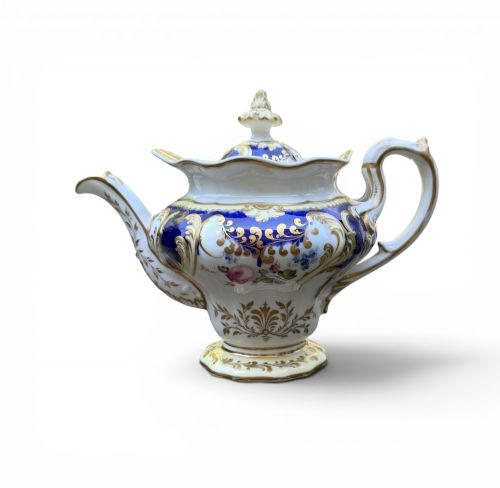
A matched set of ceramic pieces for serving tea, and often coffee too: teapot, covered sugar box, cream jug, cups, saucers and plates, bought as one thing.

Antique Tea Service
Matched services grew out of the spread of tea drinking in Europe from the late 17th century, when the drink moved from apothecary curiosity to social ritual and needed vessels of its own. Multi-place services in porcelain and bone china became a standard middle-class purchase through the 19th century, and the form carried on into the 20th as the afternoon tea set.
What you'll meet on Sellingantiques is dominated by English porcelain and bone china of the 19th to early 20th century, whole or in part. The word porcelain appears in roughly a third of titles, with a smaller run of earthenware, ironstone and pottery. Ten titles sell tea and coffee together, so a combined service is a normal variant rather than an oddity.
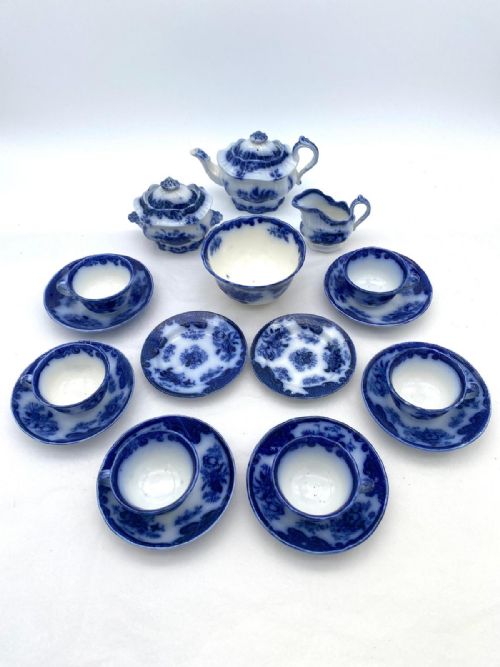
Around a quarter of listings are single components rather than sets. Teapots appear in eight titles, and the covered sugar box turns up on its own about as often, sold as a standalone piece. Slop bowls and creamers show up the same way. Alongside the full-size sets runs a persistent thread of children's and toy services, about eight listings, including nursery sugar bowls, flow blue child's sets and a miniature solitaire.
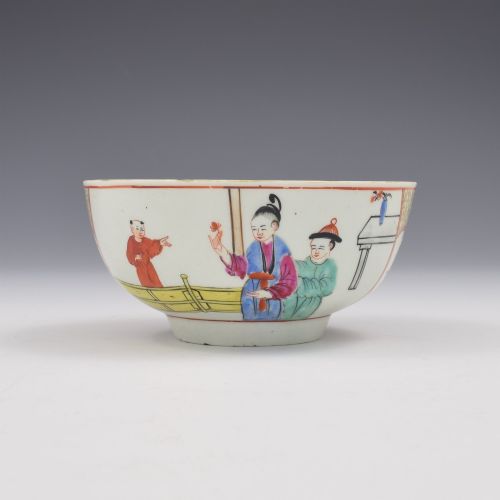
Dating needs a little reading. The dated field spans 1700 to 1960, but the largest single bucket is a vague 19th Century, and much of the rest uses era labels such as Regency, Victorian, Edwardian or 18th Century. Titles are often more precise than the date box, quoting things like c.1770 or 1847 to 1861. Continental and Asian services are a small minority: Old Paris, Limoges, Bohemian, German, Russian, Chinese Export and Japanese together account for eight or nine listings.
What Sets Them Apart
Completeness does most of the work. Titles that state twelve persons, eight settings at twenty-six pieces, twenty-one pieces, or in one case a hundred-piece hand-painted dinner service, sit well above part services and lone sucriers, teapots and creamers. A single surviving component is a different proposition from a service that will lay a table.
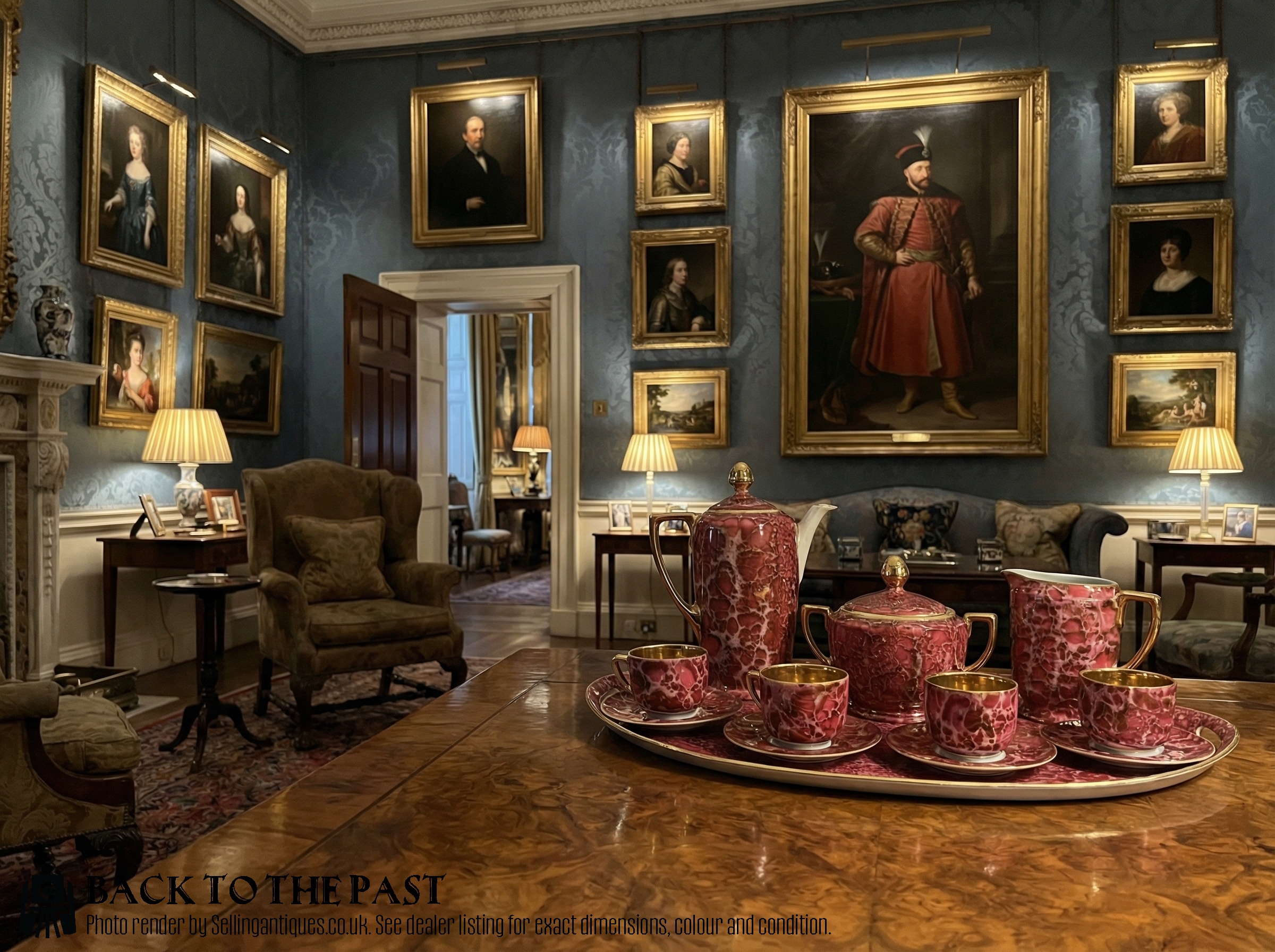
Decoration is the second divide. Handpainted and gilded, hand-gilded and enamelled, painted fruit: these phrases sit high in the range, while transfer-printed and sheet-pattern wares sit lower. Silver mounts push into the upper middle, and one lot of six silver-mounted coffee cans came with saucers and spoons, the only listing to include cutlery.
Naming lifts a piece too. A factory with a stated period and a pattern number tells a buyer far more than Ironstone Tea Service or Antique Tea/Coffee Service, 19th Century. Worcester is named in nine titles and is the only factory whose successive periods run across the whole span of the archive. Continental and Asian services occupy most of the top, and a Royal Worcester painted fruit set dated 1960 shows a mid-20th-century date is no bar to the upper end.
Antique Tea Service Retail Price Guide 2026
Typical UK retail prices for tea service, calculated from the Sellingantiques database of over a million retail prices indexed since 2003. This retail price guide relies exclusively on Sellingantiques data; no external sources or auction records are used, so the figures do not describe the wider market.
The largest lot listed on Sellingantiques is a hundred-piece hand-painted dinner service. Other titles run to twelve place settings, twenty-six pieces and twenty-one pieces.
The Antique Tea Service Glossary
- Part service
- An incomplete set. Listings state what survives with counts such as 20pc, 21 piece or 26 pcs, or simply say part service.
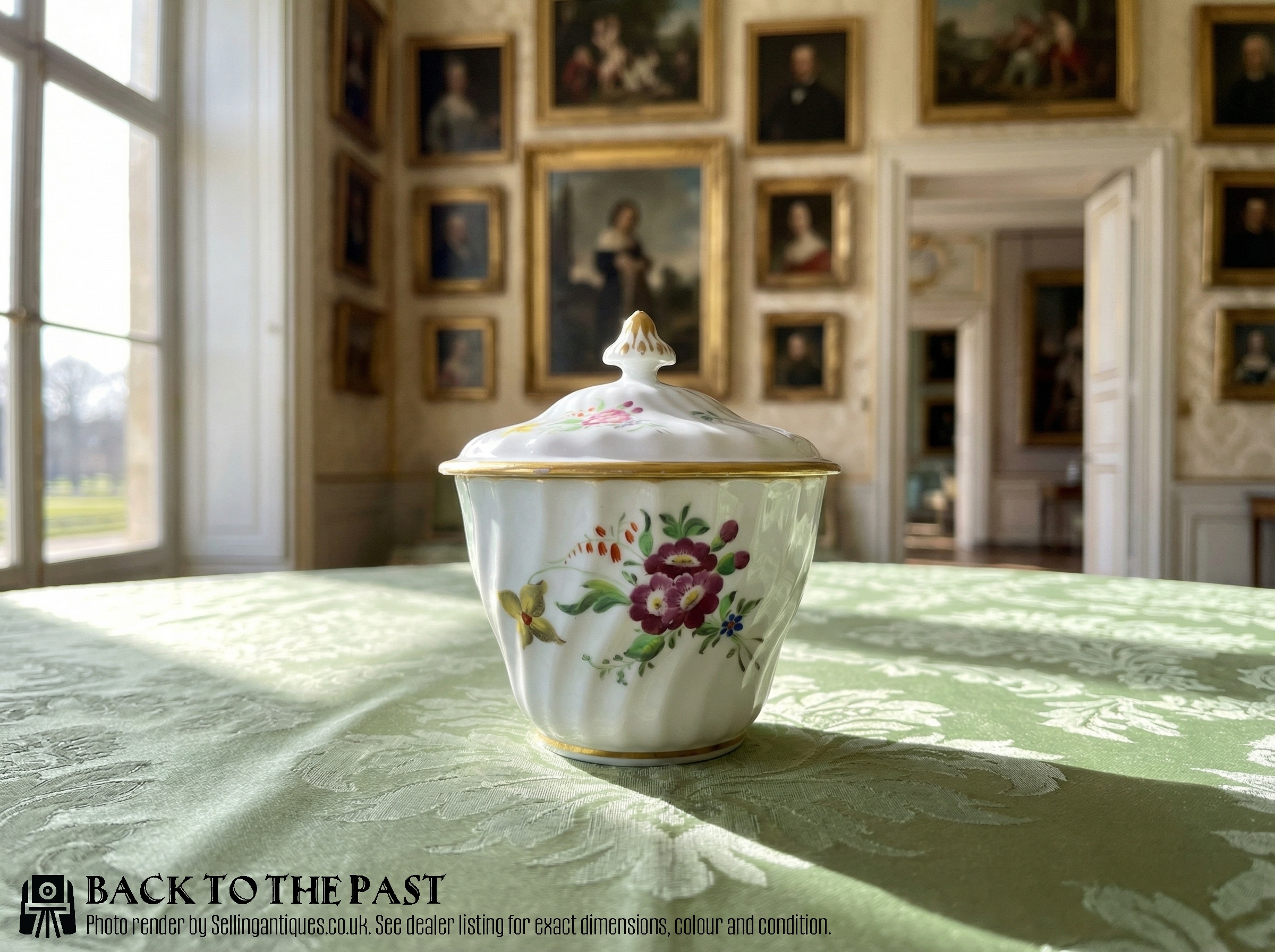
- Sucrier
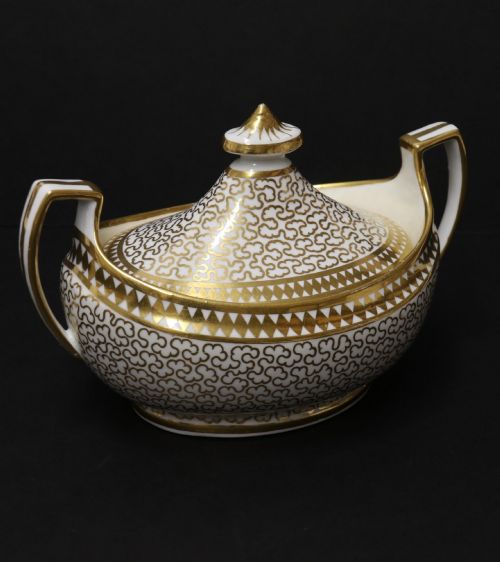
- The covered sugar box from a service, also spelled sucriere. It appears repeatedly on Sellingantiques sold on its own, with its cover.
- Bone china
- English porcelain body with bone ash added, named explicitly in some titles and distinct from the earthenware and ironstone entries.
- Coffee can
- A straight-sided cylindrical coffee cup. One lot pairs six of them with saucers and spoons.
- Solitaire and tete-a-tete
- A service laid for one person, or for two. Both terms turn up in these titles, including a miniature solitaire.
- First Period, or Dr Wall period
- Collector's shorthand for the earliest Worcester porcelain, used in three titles alongside Flight, Barr Flight and Barr, and Chamberlains as later factory periods.
Antique Tea Service: Frequently Asked Questions
How many pieces does a tea service have?
There's no fixed number. Titles quote counts directly: 20pc, 21 piece, 26 pcs across eight settings, twelve persons, and in one case a hundred-piece hand-painted dinner service.
Part services are common, and about a quarter of listings are single pieces rather than sets at all. Reading the piece count in the title is the quickest way to know what you're looking at.
Why are sugar bowls sold on their own?
The covered sugar box, or sucrier, accounts for around eight listings, offered as a standalone piece rather than as the remnant of a broken set.
Teapots do the same, appearing in eight titles. Slop bowls and creamers turn up singly too, so a lone component is a recognised part of this category.
What does the date on a tea service listing mean?
The dated field runs from 1700 to 1960, and thirty-four of the sixty-eight listings carry a clean year. The single largest entry, though, is the broad 19th Century.
Era labels do a lot of the rest of the work: Regency, Victorian, Edwardian, 18th Century. Where precise decades appear they cluster in the early 20th century, with the 1930s, 1900s and 1920s all reaching five listings or more.
Titles are frequently more precise than the date box, quoting things like c.1770, 1893 to 1894, or 1917 to 1925.
Are children's tea services collected?
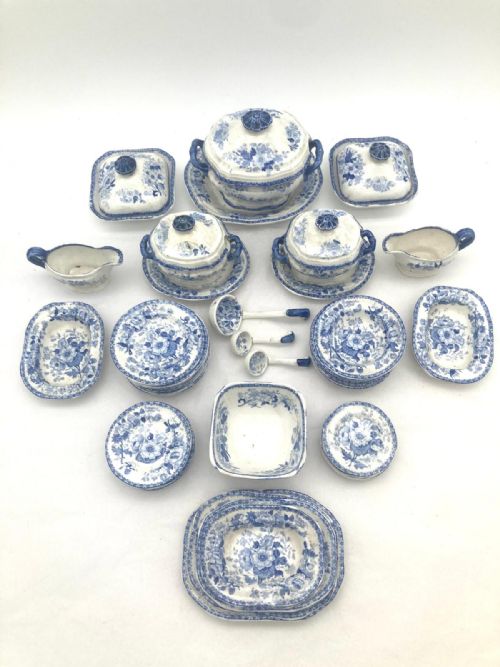
They form a persistent thread of about eight listings: nursery sugar bowls, toy dinner services, child's tea sets and a miniature solitaire.
Flow blue is named on three of them, and transfer printing is the usual decoration. One carries a portrait of Queen Victoria.
Do tea services include coffee pieces?
Ten titles, about one in seven, sell tea and coffee together as a single service. Wording varies: tea and coffee service, Tea/Coffee Set.
Coffee sets also appear alone, including coffee cans with saucers. Treat the combined service as a normal form rather than an unusual one.
Which factory appears most in this category?
Worcester, named in nine titles. It's the only factory whose successive periods run across the whole span of the archive, from First Period through Flight, Barr Flight and Barr, Chamberlains, Grainger and Royal Worcester.
Beyond that, no single name dominates. Thirty-nine different dealers have listed in this category against roughly eight listings a year, so supply is spread wide.