

Antique Staffordshire
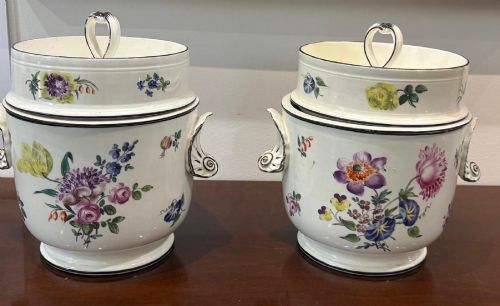
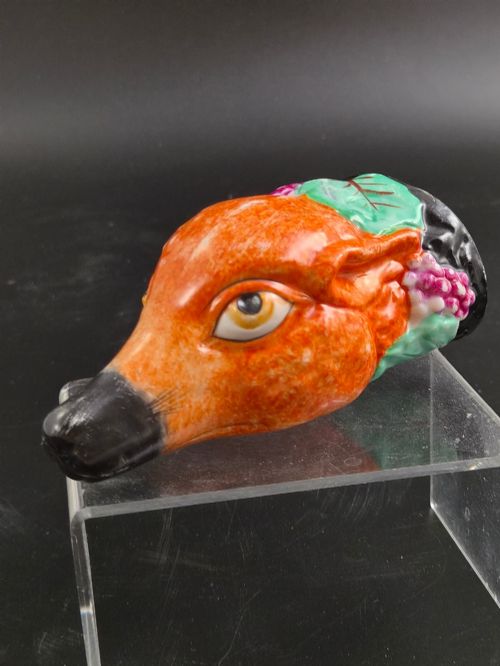
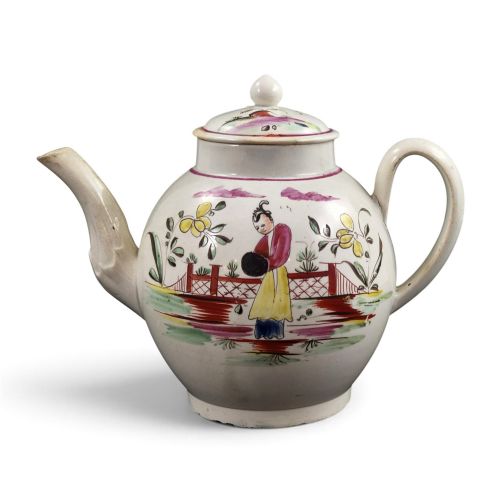
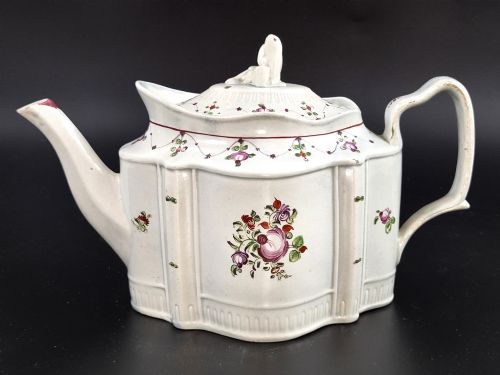
Earthenware made in the North Staffordshire potteries: painted figures and animal models for the mantelpiece, sold in their thousands as cheap chimney ornaments, alongside printed and moulded tableware for the table.
Antique Staffordshire
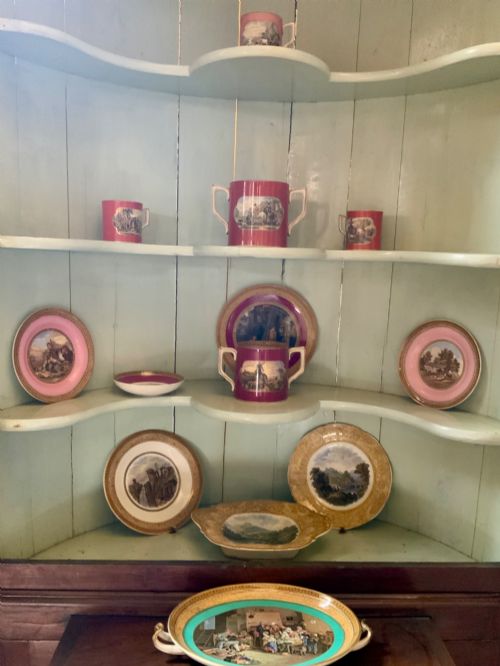
Two streams sit under one heading. The larger is small painted figures and animal models, a few inches to a foot or so high, very often offered as a facing pair. The second is printed and moulded useful ware: tureens, platters, chestnut baskets, mugs, cow creamers, hen-on-nest egg crocks and cheese domes.
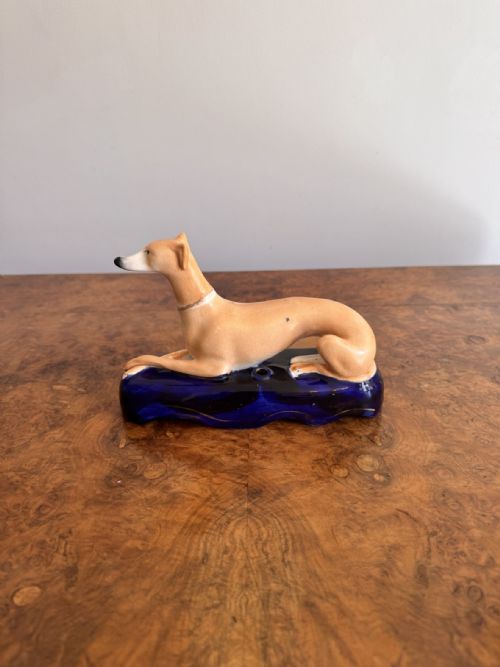
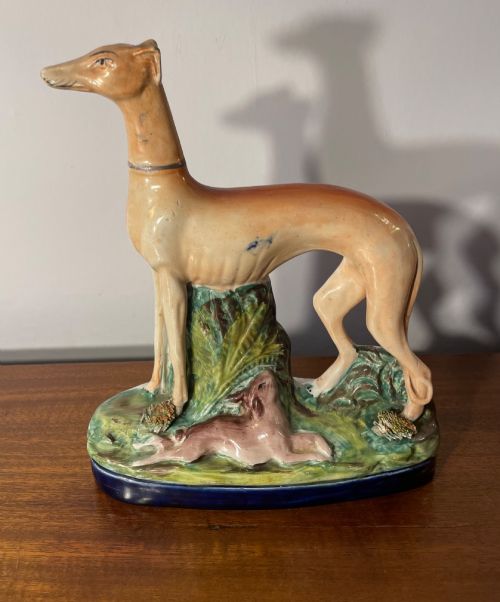
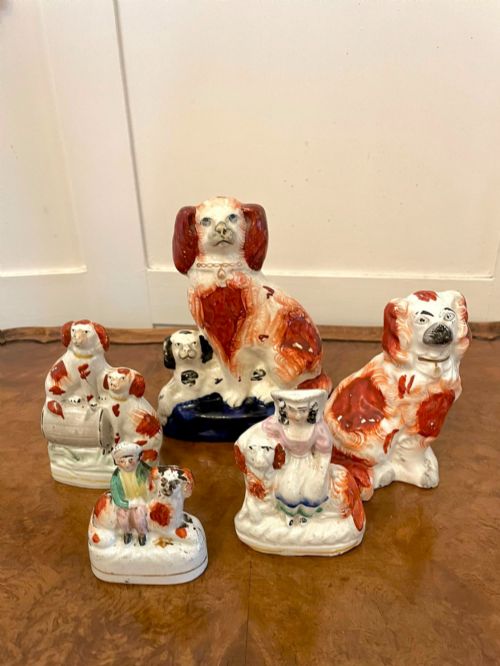
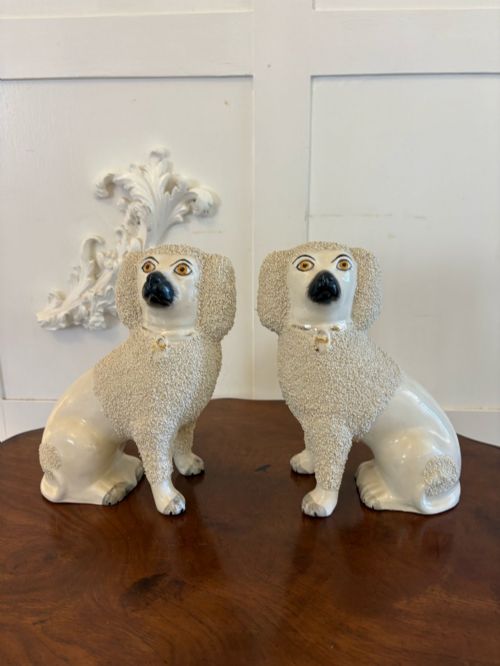
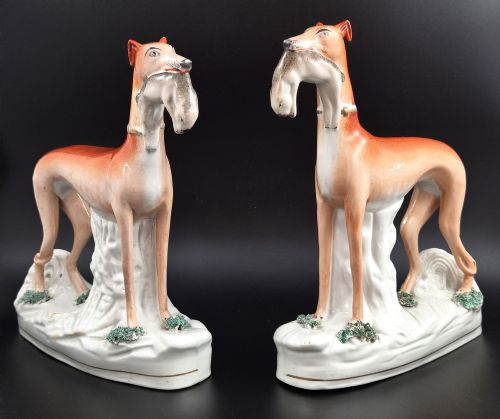
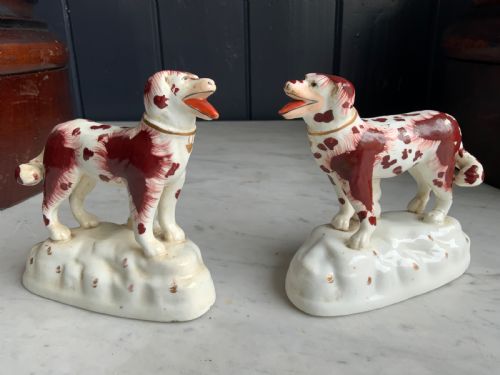
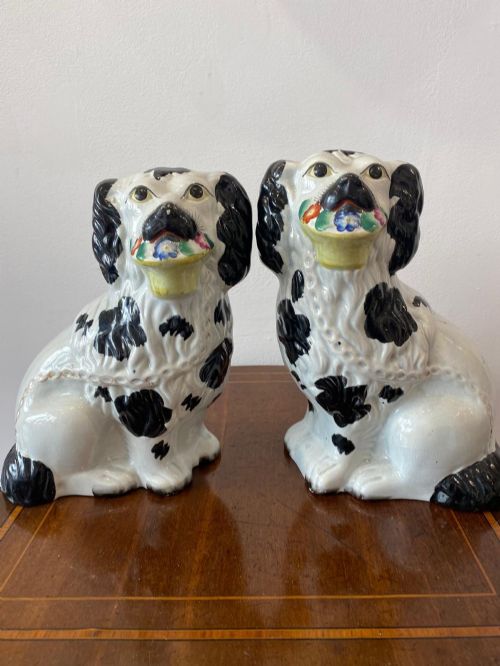
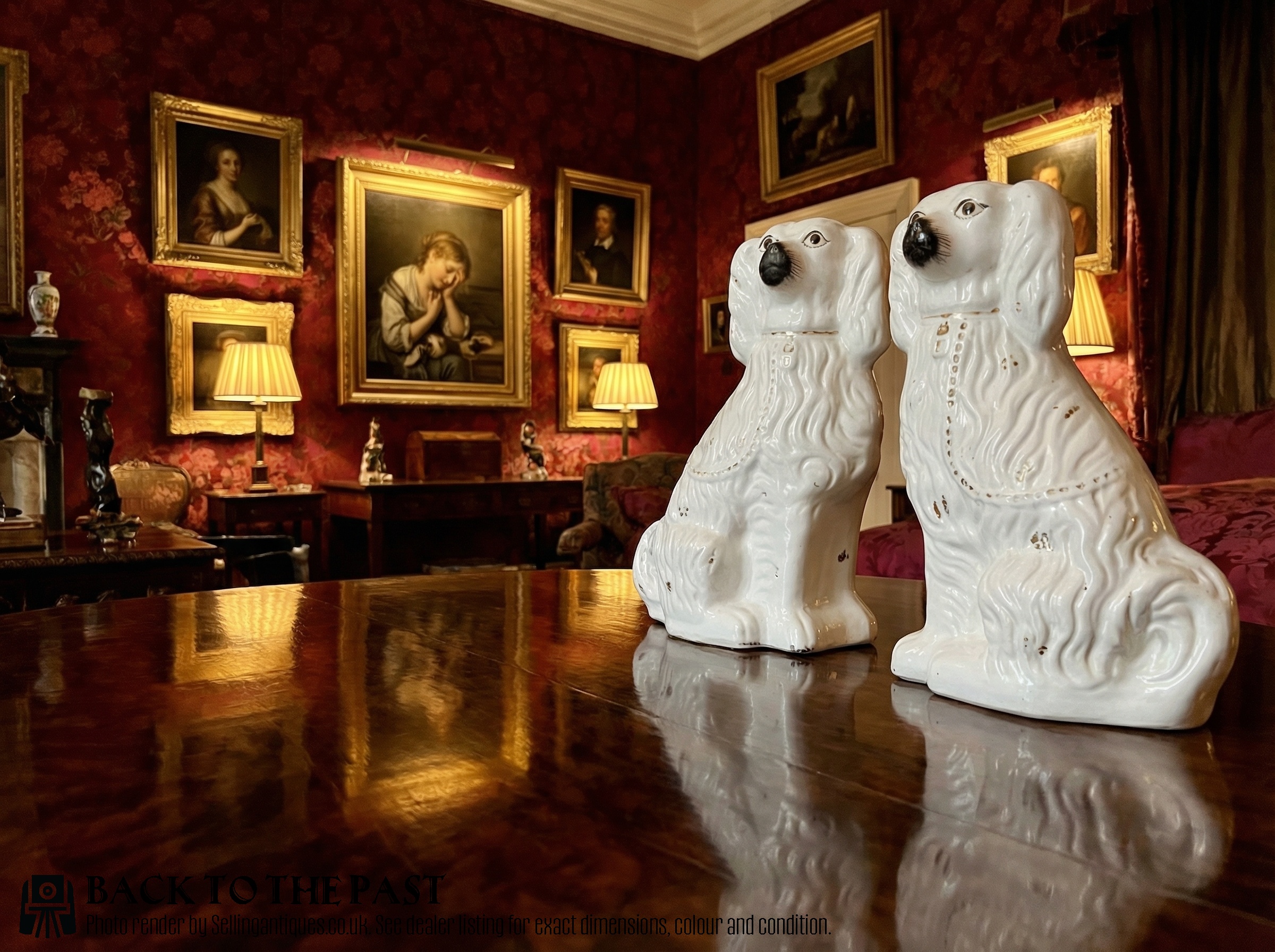
The version you are most likely to meet is a pair of Victorian pottery figures, and most often a pair of seated dogs. "Pair" appears in 461 of 1,137 titles and "Victorian" in 432. Spaniels lead the dogs, then greyhounds and poodles. Colour is part of the naming, with white, blue, black and red written straight into titles.
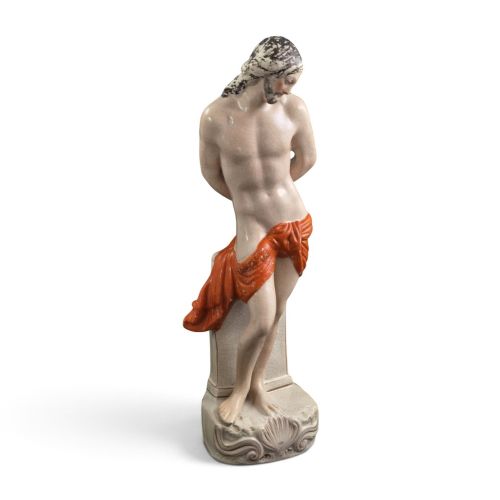
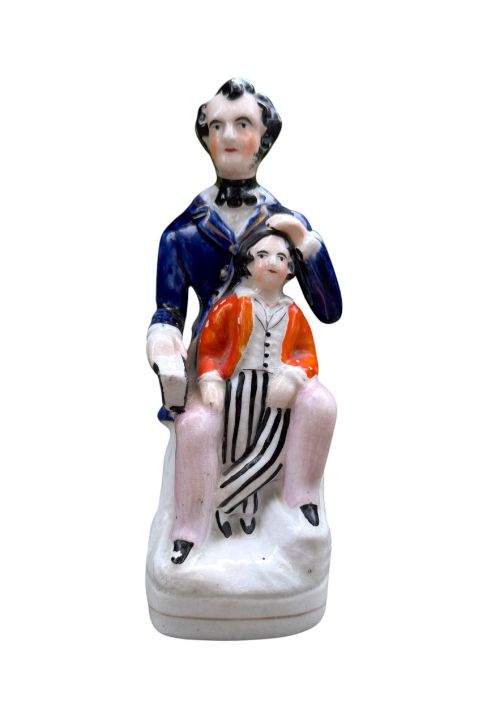
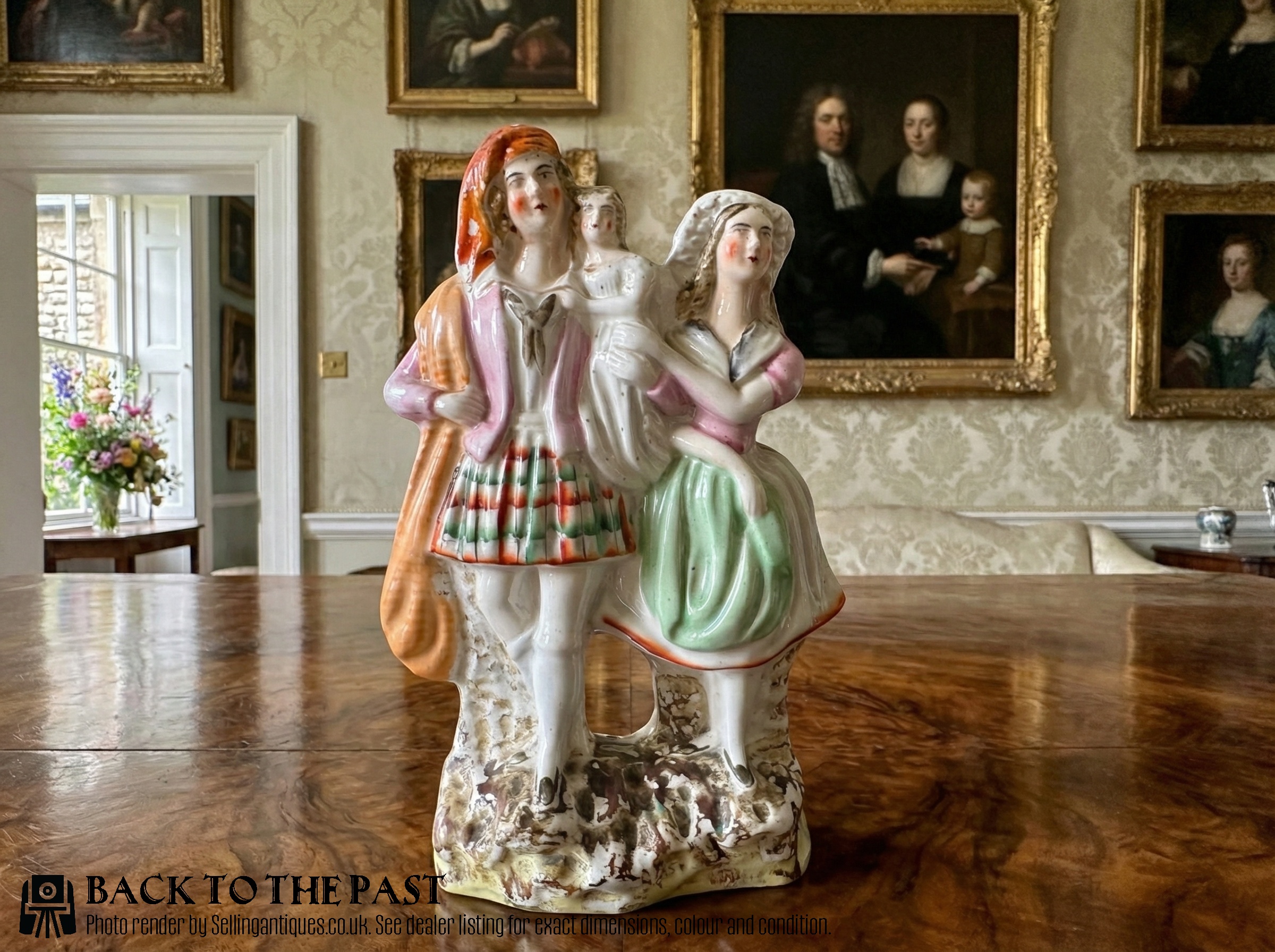
Portrait, theatrical and flatback figures form the other large group of models. Named subjects run from Wellington, Napoleon and Shakespeare to John Wesley, the evangelists Moody and Sankey, Dick Turpin and Tom King. Beyond the dogs come cows, sheep, cats, lions, zebras, elephants, cockerels and rabbits, and blue-and-white transferware makes up a bigger share of current stock than of the archive.
The dated field runs 1750 to 1940, but "19th Century" is the single largest label and "Victorian" adds another 205, so era brackets outnumber years. Where decades are given they cluster on the 1860s and 1880s. "c1860" appears in 103 titles: read it as the trade's shorthand for mid-Victorian rather than a documented year. An early band of pearlware, prattware and creamware sits behind all this, small but present.
What Sets Them Apart
Pairing does most of the work. "Pair" is the commonest word in the titles, and qualifiers like "near pair", "matched pair" and "original matched pair" do careful duty, so two facing figures sit above the single. Scale pulls the same way: "large" runs through a hundred titles against a scattering of "miniature", and dogs are graded by factory size number, with smaller numbers being the larger models.
Modelling separates the middle from the top. Titles single out a separate front leg, separate front feet, or a dog carrying a basket or a hare in its mouth, because free-standing elements were harder to make and harder to keep. On the human figures, a named and identified subject counts, and royal and theatrical portraits sometimes carry a reference number from the standard figure literature.
Then there is date and subject. The early end, in pearlware and prattware, and the eighteenth-century pieces, sit high: the earliest sampled work includes a milkman figure put at about 1755 and a cauliflower teapot at about 1765. So do the uncommon subjects, rabbits, cockerels, zebras, roc birds and pipe-smoking dogs, while the standard spaniel pair fills the middle of the range.
Antique Staffordshire Retail Price Guide 2026
Typical UK retail prices for staffordshire, calculated from the Sellingantiques database of over a million retail prices indexed since 2003. This retail price guide relies exclusively on Sellingantiques data; no external sources or auction records are used, so the figures do not describe the wider market.
Whole flocks come up as one lot. The archive holds a group of hens on nests and, once, a collection of sixty-one nineteenth-century pottery sheep.
The Antique Staffordshire Glossary
- Flatback
- A figure modelled in the round at the front and left plain and flat behind, made to stand against a wall. It turns up in 31 titles.
- Pair
- Two facing figures made and sold together, and the commonest single word in the category. "Near pair" and "matched pair" appear where the two were brought together later.
- Pearlware
- Whitish earthenware under a faintly blue-tinted glaze, used for the earlier figures. Named in 39 titles.
- Comforter
- Trade name for the big seated spaniel, appearing in titles as "Comforter Spaniel". Several listings use "wally dog" for the same mantelpiece model.
- Spill vase
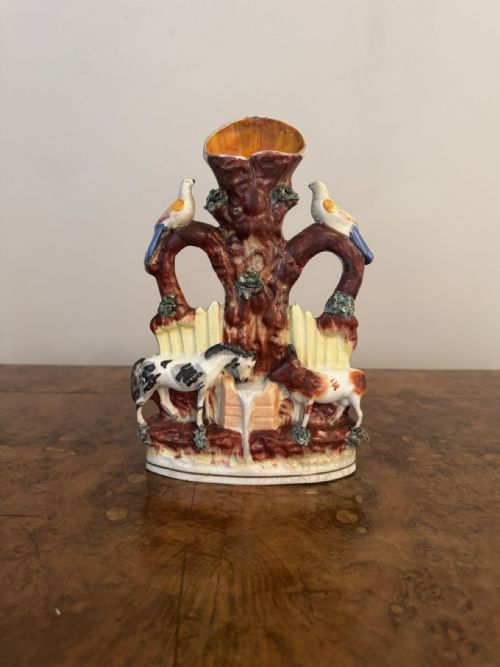
- A figure with a tube built in to hold paper spills for lighting a fire. It recurs with sheep, foxes, lions and dogs.
- Bocage
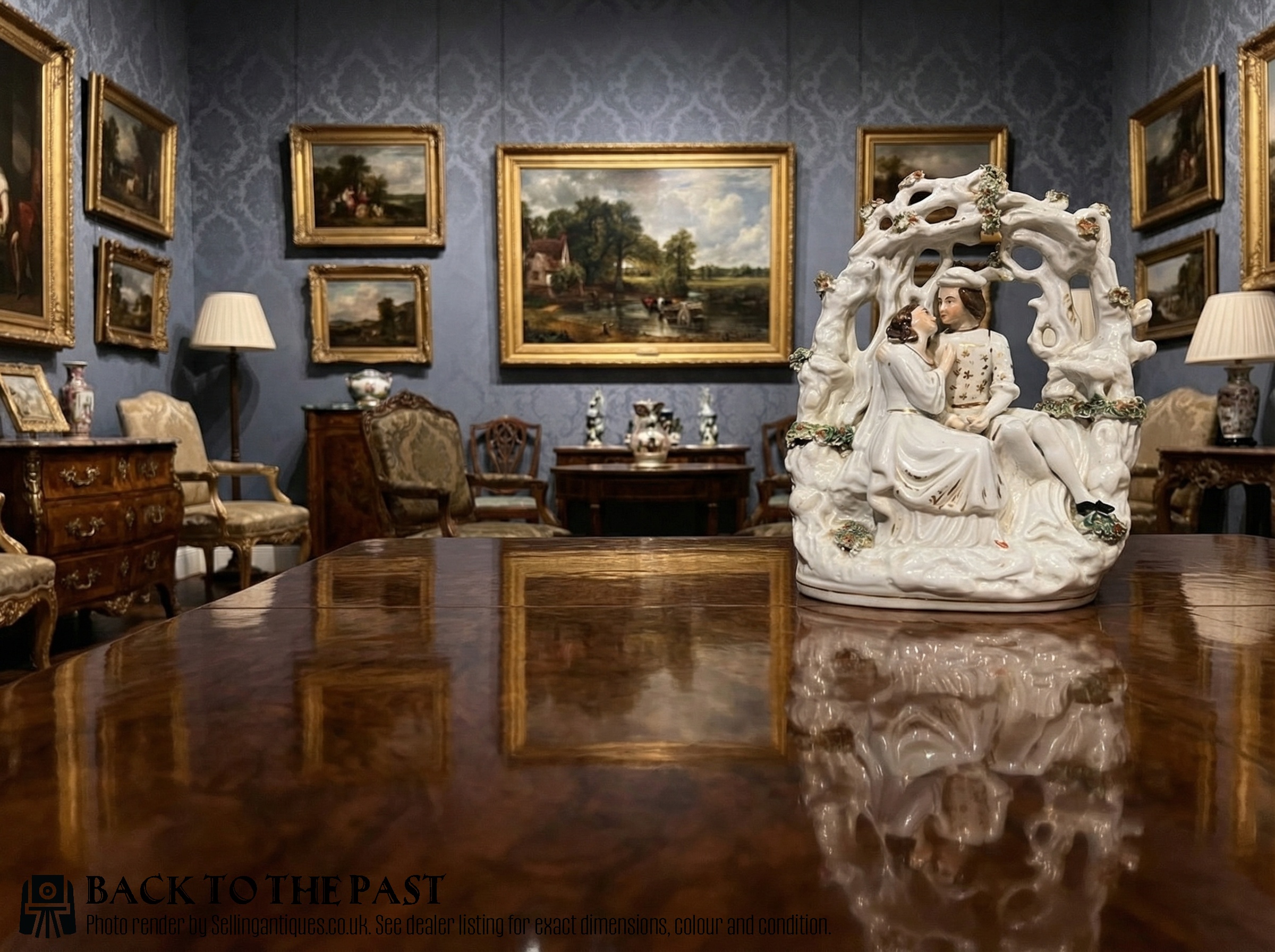
- The moulded leafy background behind an early figure group, and a marker of the pre-Victorian end of the category.
Antique Staffordshire: Frequently Asked Questions
Why do so many titles say c1860?
The decade counts cluster hard on the 1860s, with the 1880s behind, and "c1860" is written into 103 titles. Thirty-four of those are dog pairs.
It works as trade shorthand for mid-Victorian rather than a documented year. Over 500 entries in the category carry an era label such as "19th Century" or "Victorian" instead of a year at all.
Are Staffordshire dogs always sold in pairs?
Not always, but pairing is the norm. "Pair" appears in 461 of 1,137 titles, and dogs are the largest single group of models within that.
Singles are listed too, and so are larger lots. Collections of four, five and six dogs have come through, along with a group of hens on nests and, once, sixty-one nineteenth-century pottery sheep as one lot.
What animals besides dogs turn up?
Cows, sheep, cats and lions form a steady band, with cow creamers and hen-on-nest crocks crossing into the tableware side.
The wider archive holds zebras, a Bactrian camel, an elephant named Jumbo, roc birds, cockerels, rabbits, a pouring swan and Medici lions. Spaniels, greyhounds and poodles still outnumber all of them.
Is Staffordshire pottery or porcelain?
Pottery, in practice. "Pottery" appears in 278 titles against "porcelain" in just 30, and the body throughout is earthenware.
The earlier pieces are named by body type instead: pearlware in 39 titles, prattware in 16, with creamware behind them.
Which pieces sit at the top of the range?
Early eighteenth-century work and the scarcest animal pairs. The highest-placed samples include a 1750s figure, a 1760s cauliflower teapot and a 1780s bust.
Among the animals, rabbits and pipe-smoking dogs sit high, while the standard seated spaniel pair fills the middle.
One odd strand sits apart: South Staffordshire enamel, a Bilston bird patch box, a bonbonniere and an etui, where everything else is earthenware.
How much comes to market each year?
Around 147 listings a year on Sellingantiques, and 112 different dealers have listed in the category.
That is one of the widest dealer bases in ceramics, which is why the same forms recur in so many variations of colour, size and subject.