


Antique Tiles
A flat glazed ceramic square, painted or printed, made to face a wall, a fireplace, a floor or a roof.

Antique Tiles
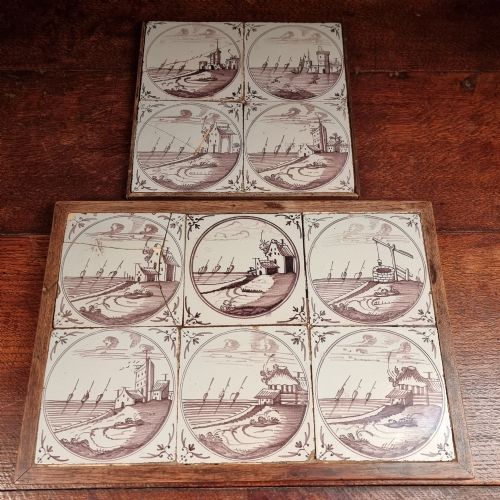
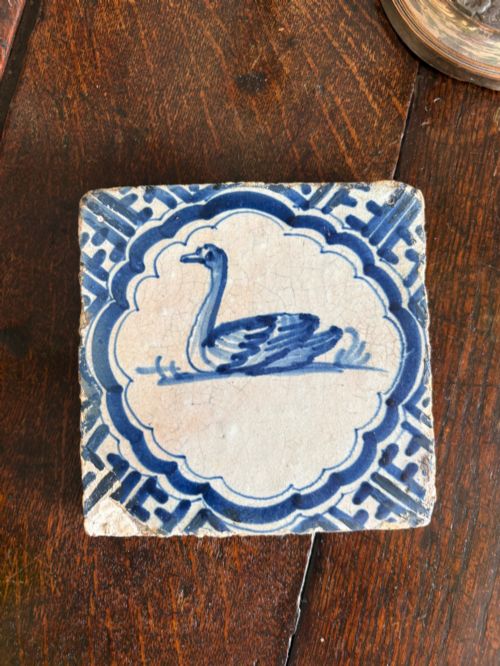
Half of all titles in this category on Sellingantiques simply say "tiles", and nearly half say "delft". Those two words carry the category. What you are most likely to meet is a tin-glazed delft tile of the 18th century, painted in cobalt blue or manganese purple on an opaque white glaze, offered as a single, a pair or a set.
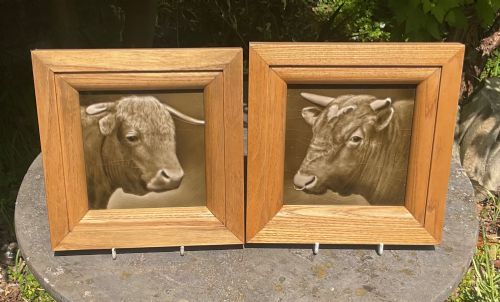
Tin-glazed wall tiles spread through the Low Countries and England from the 17th century, and Dutch, Liverpool, Bristol and Lambeth work all turns up in the listings. Then come Victorian printed and moulded tiles, about a quarter of the category, made for fireplaces, hallways and washstands, often in themed series.
Beyond those two blocks the category widens. Islamic and Persian tiles recur in small numbers, including Kubachi pottery and Qajar and late Safavid pieces. Architectural tiles appear once or twice each: Chinese celadon-glazed lion and phoenix roof ridge tiles, Japanese roof ornaments, garden edging, floor tiles, terracotta wall tiles.
The dated field runs from 1750 to 1930, but only 42 of 135 listings carry a clean year. The 18th century is the largest single block, with 43 listings, more than the 19th Century and Victorian entries combined. Broad century labels outnumber decade-level dating, so read a century as a bracket.
Where The Range Sits
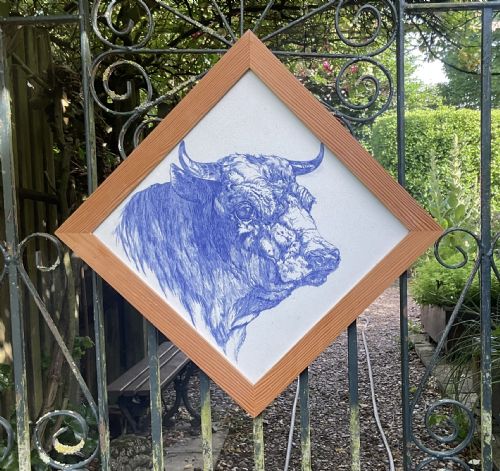
Number is the plainest divide. Single Victorian and delft tiles sit at the cheap end, while sets of six, eight, twelve, fourteen and sixteen delft tiles sit well up the range, and one group of seventeen floor tiles has passed through. Framing lifts a group again: oak-framed Victorian sets, framed 17th-century delft pairs and multi-tile pictures all cluster in the upper part.
Painting does the rest of the work. A plain blue-and-white tile with a simple corner motif is the baseline. Polychrome bird, chinoiserie and figural delft, and named subject series such as Aesop's Fables and theatrical portraits, run above it. Palette vocabulary is specific in these listings: manganese, polychrome, powdered ground, bianco-sopra-bianco.
Attribution and origin push a tile higher still. Titles naming a factory or designer sit above generic Victorian ceramic tile entries, though no single firm recurs often enough to count as a staple. Size flagged as large or huge, and the Islamic and East Asian architectural pieces, sit at or near the top.
Antique Tiles Retail Price Guide 2026
Typical UK retail prices for tiles, calculated from the Sellingantiques database of over a million retail prices indexed since 2003. This retail price guide relies exclusively on Sellingantiques data; no external sources or auction records are used, so the figures do not describe the wider market.
Where a tile carries a clean year on Sellingantiques, the dates run from 1750 at the earliest to 1930 at the latest.
The Antique Tiles Glossary
- Delft / delftware
- Tin-glazed earthenware with an opaque white surface, painted before firing. The single commonest word in these titles.
- Manganese
- A purple-brown painting pigment used instead of cobalt blue, named in nine titles.
- Polychrome
- Painted in more than one colour, and often paired with delft in a title.
- Powdered ground
- A stippled colour ground, usually manganese, laid around a reserved painted panel. Several Lambeth tiles carry it.
- Bianco-sopra-bianco
- A white-on-white painted border, associated in these listings with Bristol tiles.
- Ridge tile
- A moulded architectural tile made for a roof line, here in Chinese and Japanese examples.
Antique Tiles: Frequently Asked Questions
What sort of tiles come up most often?
Tin-glazed delft accounts for roughly half the category. Blue-and-white or manganese painting on an opaque white glaze, Dutch or English, sold singly, in pairs and in sets.
Victorian printed and moulded wall tiles are the next block, about a quarter, made for fireplaces, hallways and washstands.
How old are they usually?
The 18th century is the largest period block, with 43 of 135 listings. That is more than the 19th Century and Victorian entries put together.
The dated field as a whole runs 1750 to 1930. Seventeenth-century and Georgian entries appear in small numbers.
Are tiles sold one at a time or in groups?
Both. Singles are common, and "pair" appears in seventeen titles.
Larger groups are commonplace too: sets of four, six, seven, eight, nine, twelve, fourteen and sixteen all turn up, along with tile panels and tile pictures made from several tiles mounted as one image.
Do any non-European tiles turn up?
Yes, in small but recurrent numbers. Persian Qajar and late Safavid tiles appear, along with Kubachi pottery tiles of the 17th century and a large script tile.
East Asian architectural pieces also surface: Chinese celadon-glazed lion and phoenix roof ridge tiles, and Japanese roof ornaments.
Which factories are named in the listings?
Several firms and designers appear in titles, English and Continental, but each as a one-off rather than a running presence. No maker recurs often enough to call it a category staple.
Names reach the page in different ways: stamped on the back, carried on a printed label, or offered as an attribution only.
What subjects appear on Victorian tiles?
Themed series are a running feature. Months of the Year, nursery rhymes, Aesop's Fables, Idylls of the King, Waverley Novels and Shakespeare scenes all appear.
Aesthetic and Art Nouveau designs also turn up, alongside plainer moulded and printed patterns.