


Antique Figurines
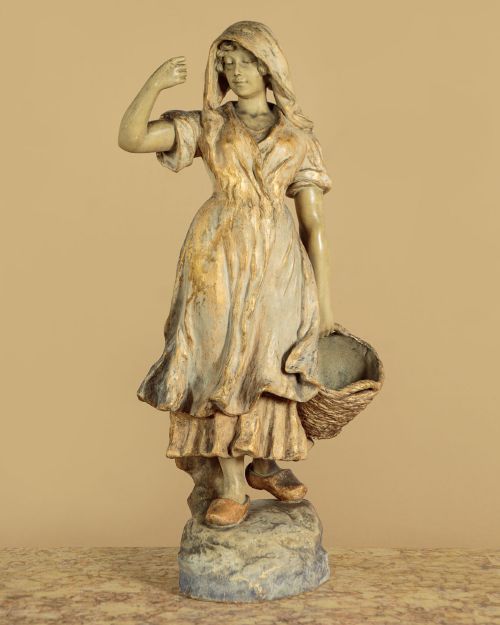
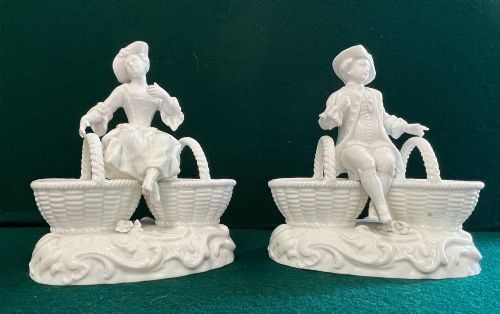
Small free-standing ceramic sculpture, made as a table or mantel ornament: single figures and facing pairs of people and animals, in porcelain or moulded earthenware.

Antique Figurines
Free-standing ceramic figures were made in Europe from the early 18th century, first in porcelain for the dessert table and later for the mantel and cabinet. English potteries followed with cheaper moulded earthenware for a mass market through the 19th century. Both of those threads run through this category at comparable weight, so a listing here is as likely to be Staffordshire pottery as Continental porcelain.
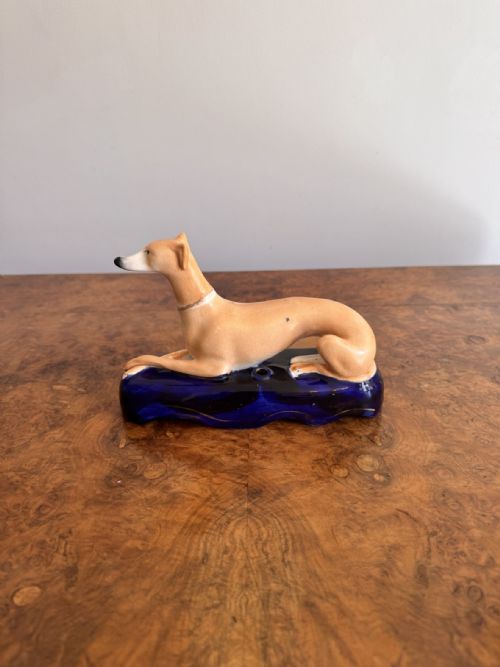
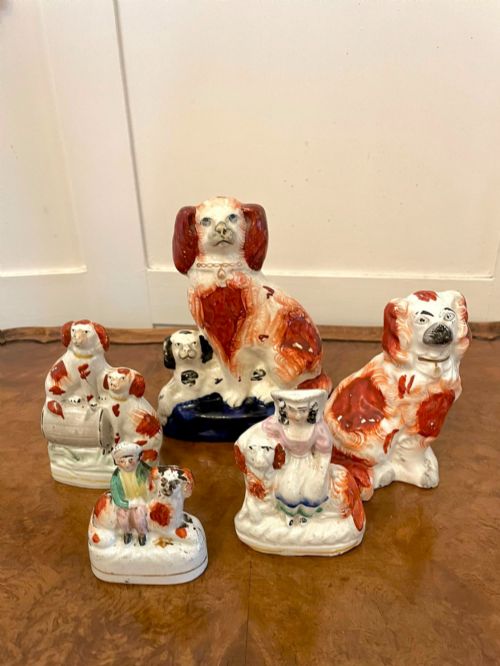
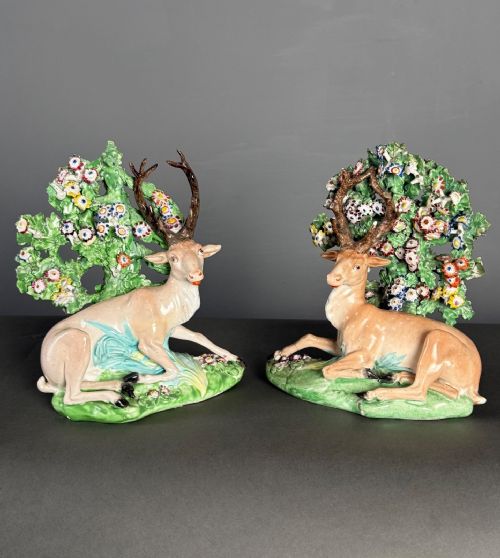
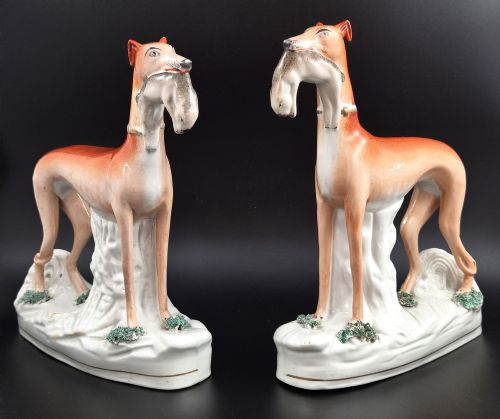
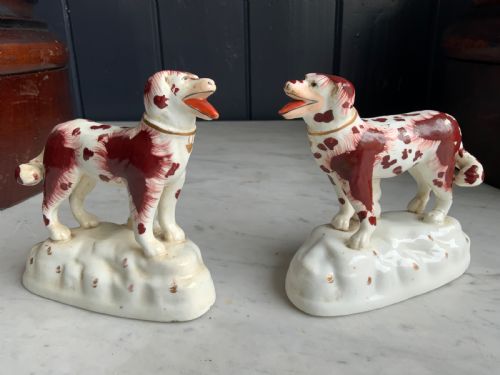
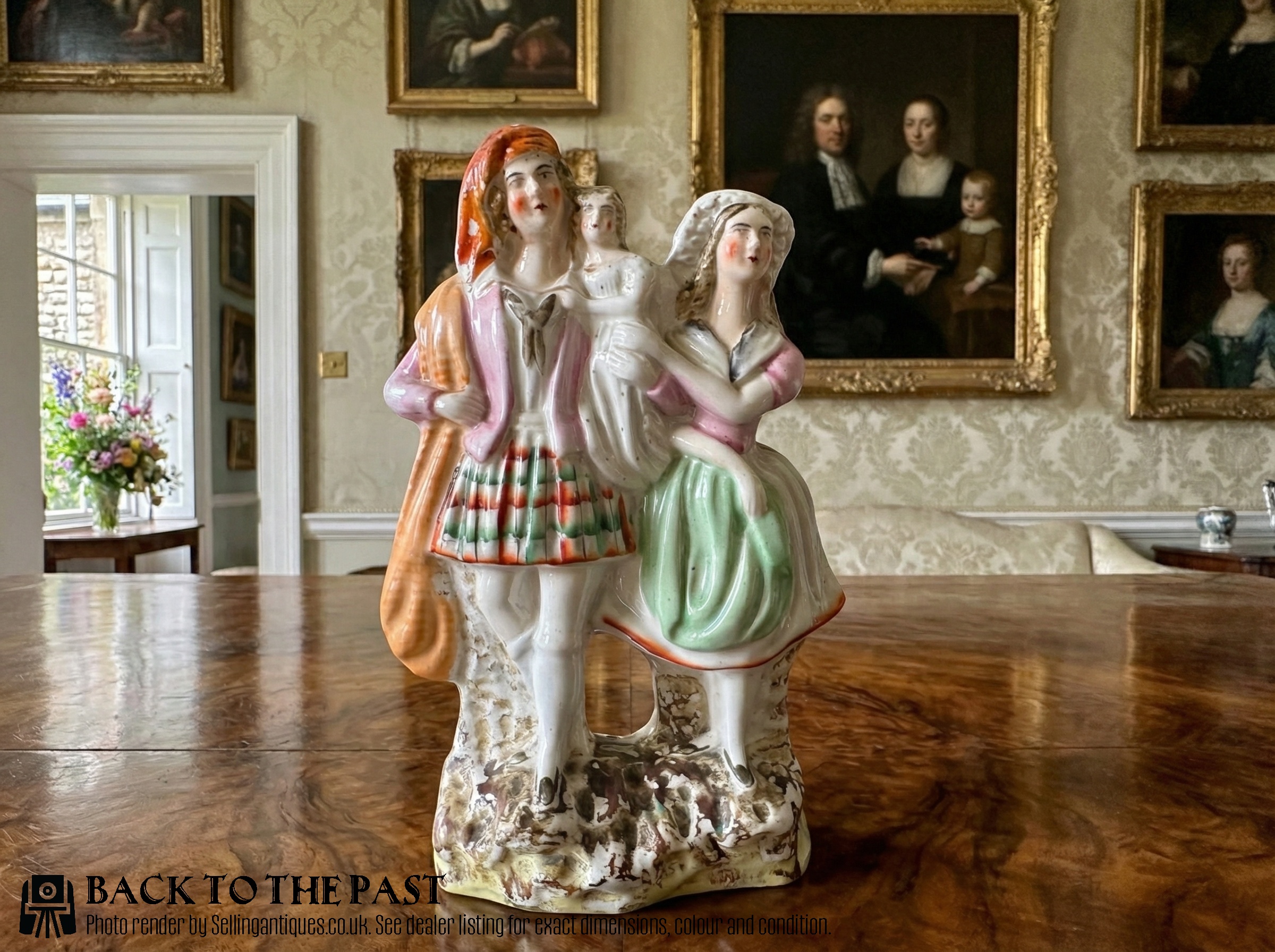
The form you'll meet most often is a 19th-century pair. The word pair sits in a quarter of titles, and the single biggest cluster is Victorian Staffordshire: facing seated spaniels, poodles, greyhounds, and flatback portrait figures of royal and theatrical subjects. Staffordshire accounts for roughly a quarter of the category and the bulk of live stock.
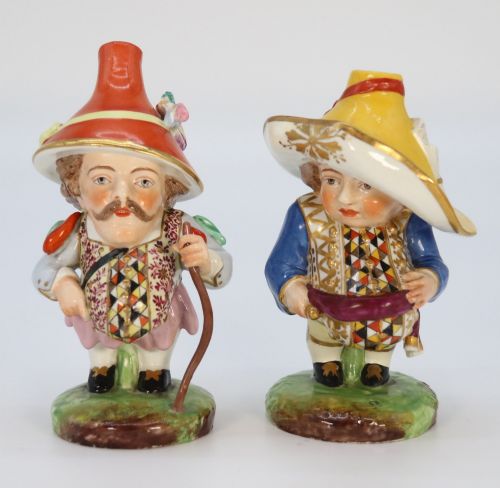
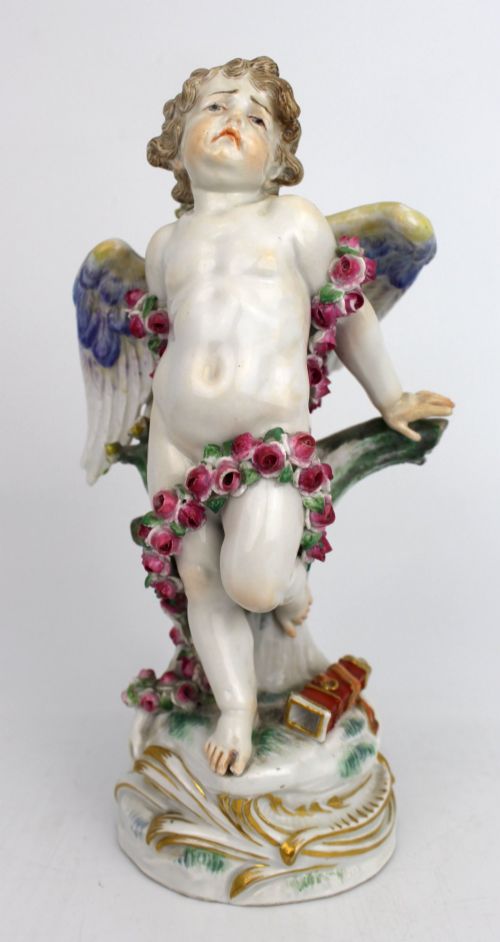
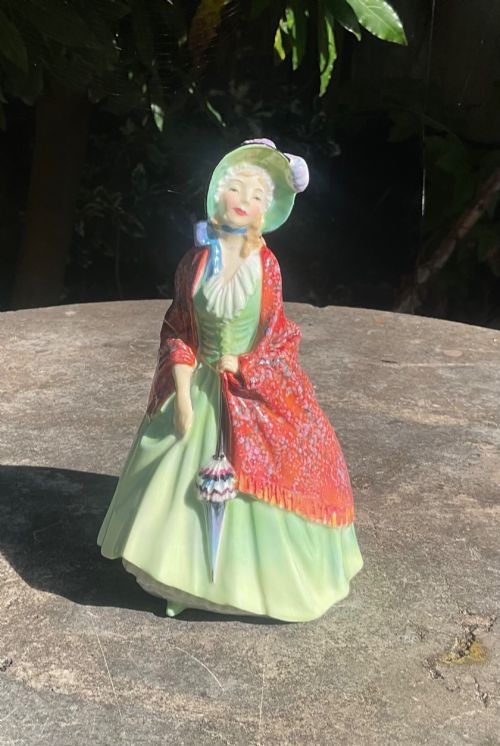
The porcelain side splits into a Continental block (German, Bohemian, Austrian, French, with Meissen, Royal Dux and Samson recurring in titles) and English factory porcelain running from the 18th to the 20th century, where Derby, Worcester, Royal Worcester, Chelsea and Royal Doulton appear. Parian and bisque figures, left white and unglazed, form a smaller consistent slice, and 1920s-30s novelties another.
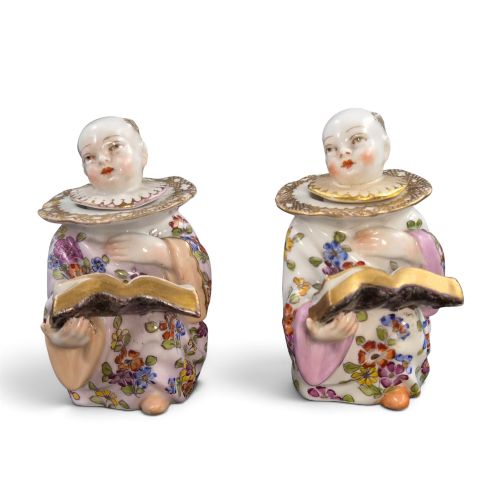
A sizeable minority of these figures also did a job. Spill vases, watch holders, candle extinguishers, pastille burners, inkwells, quill holders, pin-cushion dolls, powder boxes, hat-pin holders and cow creamers all turn up modelled as figures rather than as plain vessels.
The Range
Naming does most of the work. Titles at the top of the range carry a factory or a modeller, and often a period within that factory: Patch Period, Bloor period, Marcolini, Kerr & Binns, a gold anchor mark, a model number. Lower down, a title reads simply 'Pair Antique Figures' or 'Pair of Staffordshire dogs' and stops there.
Against that sit the copies. 'Chelsea Style', 'Derby Style', 'Meissen Style', 'Sevres style' and 'manner of' recur throughout, and Samson is itself a maker of after-the-fact copies of other factories. A style attribution and a factory attribution are not the same claim, and the range reflects it.
Completeness and size then separate the rest. Pairs and sets hold the upper reaches, from the Four Seasons as standing putti to a set of 24 Continental figurines. Heights get quoted only when they're worth quoting, up around 60 to 69 cm, with words like monumental and life size appearing at that end. Early dates pull the same way: 18th-century pieces are a small part of the whole. Named models help too, whether an HN number and title on Royal Doulton or a Royal Worcester shape number.
Antique Figurines Retail Price Guide 2026
Typical UK retail prices for figurines, calculated from the Sellingantiques database of over a million retail prices indexed since 2003. This retail price guide relies exclusively on Sellingantiques data; no external sources or auction records are used, so the figures do not describe the wider market.
19th Century is the date label used most on Sellingantiques for figurines, with 18th Century next and the 1880s third.
James Hadley
The Antique Figurines Glossary
- Flatback
- A figure modelled in the round at the front and left plain behind, made to stand against a wall or on a mantel shelf.
- Pair
- Two figures made as facing companions. The word is in a quarter of titles, and a matched pair is the usual form the category takes.
- Figure group
- Two or more figures on one shared base, sometimes shortened in titles to just 'group'.
- Parian
- A white unglazed porcelain body, often left plain to imitate marble. Bisque, or biscuit, is the related term for fired but unglazed porcelain.
- Spill vase
- A figure with an attached tube for paper spills, used to carry a light from the fire. A common Staffordshire form.
- Okimono
- A Japanese decorative figure made for display, the word used here for Satsuma and Kutani pieces.
Antique Figurines: Frequently Asked Questions
How many figurines are listed each year?
Around 110 come up a year on Sellingantiques, and 118 different dealers have handled them.
That spread means this is a category almost every ceramics dealer touches at some point, rather than the preserve of a handful of specialists.
What period do most of them come from?
Dealer-entered dates run from 1700 to 1960. The commonest entry isn't a year at all but the vague '19th Century', on 207 listings, and only 374 of 788 carry a clean year.
Decade tags cluster at the 1880s, 1860s, 1890s and 1930s. Period words like Victorian, Georgian, Regency and Edwardian get used as dates too, where a year isn't known.
Are Staffordshire dogs the same as flatbacks?
They overlap. Flatback describes the construction: modelled at the front, left plain at the back, made to sit against a wall.
Staffordshire spaniels are the best-known example, usually as a facing pair of seated dogs. Poodles and greyhounds appear as well, alongside flatback portrait figures of royal and theatrical subjects.
Which subjects turn up at the top of the range?
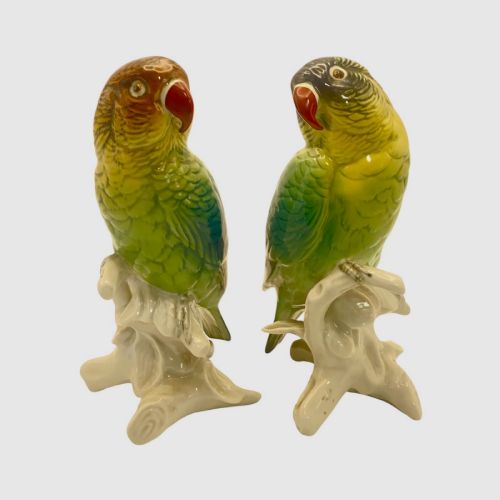
Parrots and cockatoos are a recurring note right at the top, as singles and as pairs perched under lemon trees. Elephants appear there too.
Sets do the same. A set of the Four Seasons, a Georgian pair complete with sconces, and a 24-piece set of Continental figurines are among the larger lots to pass through.
Why do so few listings name a maker?
Only one name clears three dealers across the whole archive, which tells you how rarely dealers agree on an attribution under this heading.
When a factory is named, it may come as a stamped or impressed mark, a printed mark, or simply as 'attributed to'. A great many titles carry no maker at all, just the form and a period.
What are the oldest pieces sold under this heading?
A few are tagged 'Before 1700'. Among them an Egyptian faience shabti and a terracotta Astarte figure of around 2000-1700 BC, by a long way the oldest things to appear here.
Other one-offs include a Ming glazed terracotta tomb companion, a Ca Mau shipwreck-cargo seated boy and a Staffordshire pearlware cottage money box.