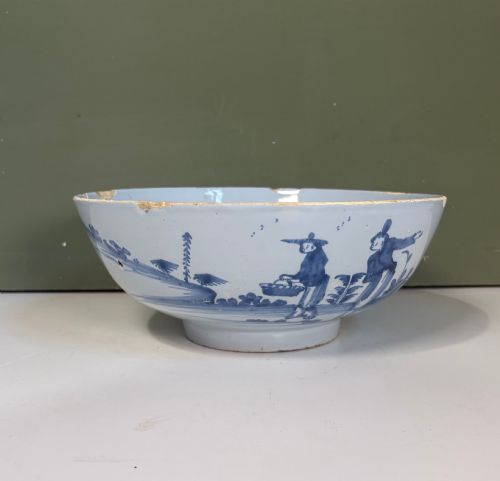
Antique Delft
Tin-glazed earthenware painted in cobalt blue or several colours over an opaque white glaze, made as an affordable domestic answer to imported Chinese porcelain and used for dishes, wall tiles and lidded shop jars.

What Is Antique Delft?
Delft is earthenware coated in a white glaze made opaque by tin oxide, then painted and fired. It began in the Netherlands and spread to England in the 17th century. Dutch and English pieces dominate what sells on Sellingantiques, with the odd French or Italian piece around the edges.
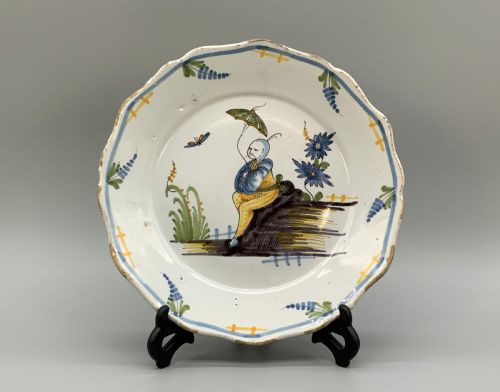
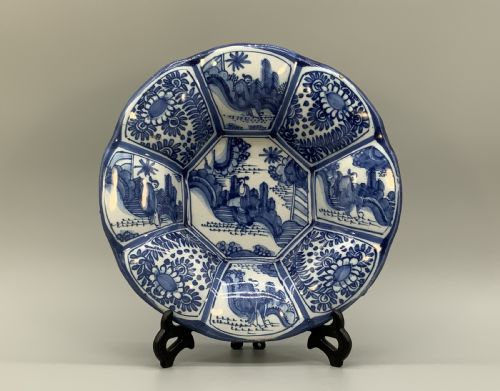
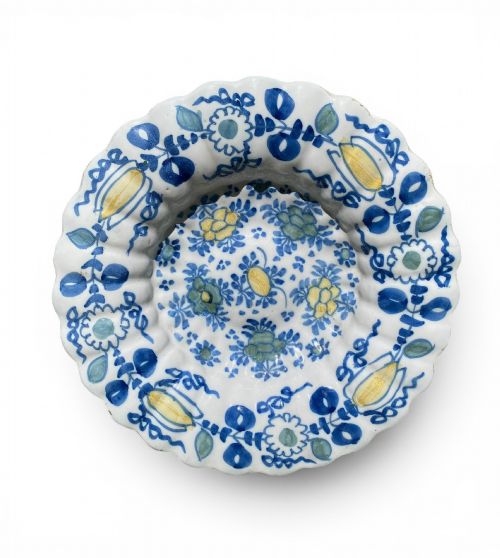
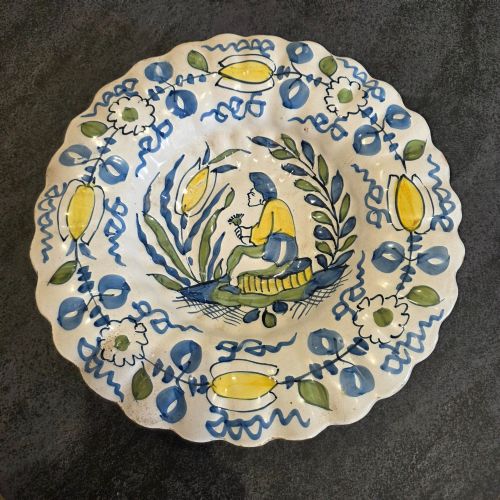
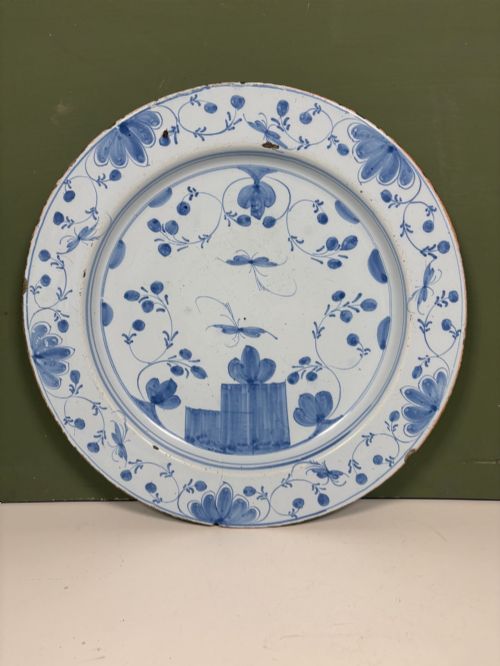
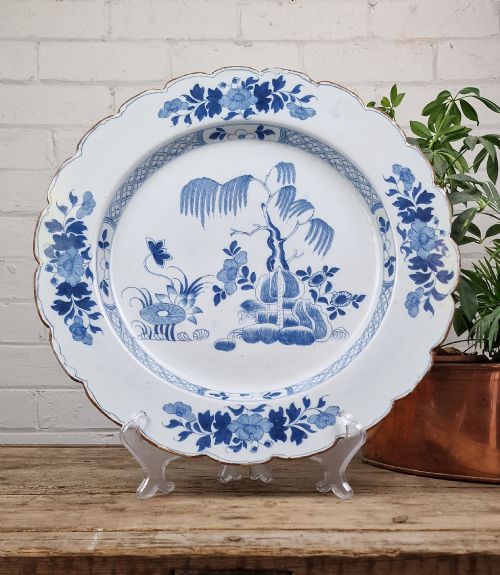
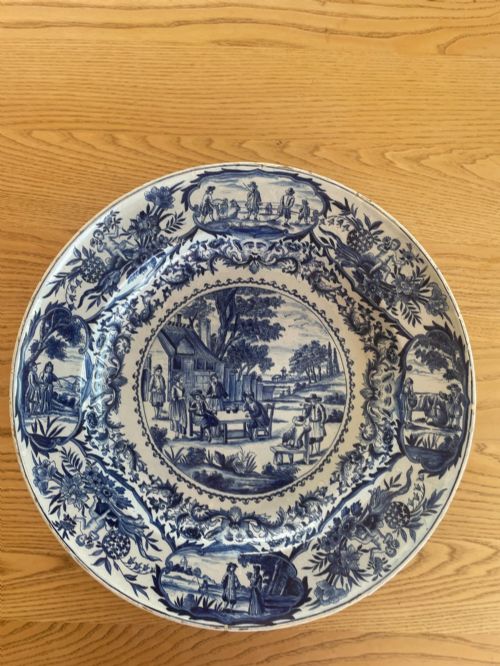
The form you'll meet most often is the 18th-century charger, a large circular dish for display or serving. A third of all titles in the archive carry the word, and the single commonest listing title is the bare phrase "18TH C DELFT CHARGER", repeated dozens of times with no factory or origin attached. Blue-and-white and polychrome painting are both well represented.
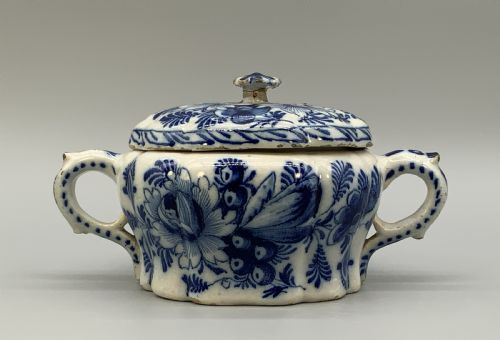
After flatware come the lidded jars, about a fifth of the archive: apothecary and drug jars lettered with their contents, and tobacco jars labelled SPAANSE, ST DOMINGO, ST VINSENT or TABAC DE PARIS, several with a date painted on. Tiles form a third strand, sold loose, in sets running from five up to sixteen, and as framed panels and tile pictures of biblical scenes.
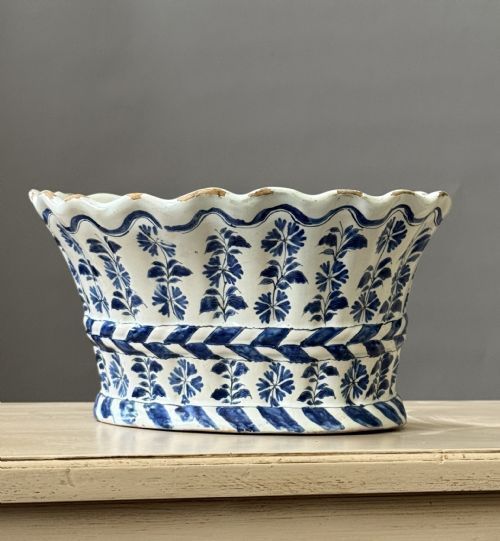
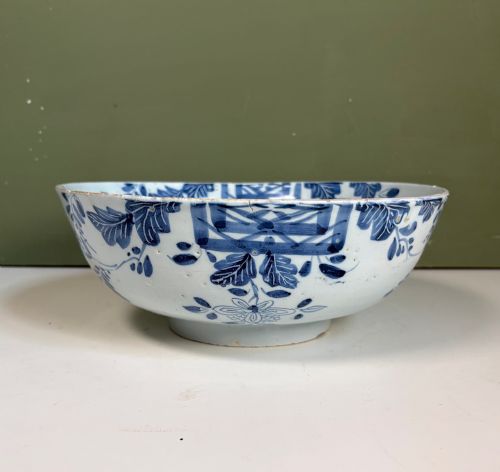
The rest is hollow ware and oddities. Bowls, jugs, bottles, posset pots, tankards and punch bowls turn up throughout, alongside flower bricks, bough pots, tulipieres, cows, dogs, horses and riders. Two-thirds of titles say 18th century, though only a minority of listings carry a clean year; a 17th-century handful and a 19th-century tail sit either side.

What Sets Them Apart
Form does most of the work. Plain chargers cluster low and mid, because there are so many of them and they say so little about themselves. The flower and figure pieces sit at the other end: tulipieres, flower bricks, garden urns, pairs of lions with shields, cows, dogs and horses with riders. These come up once in a blue moon, and every animal in the sample sits in the upper half of the range.
Multiples matter. Pairs appear in roughly one title in ten, and pairs of chargers, jars, flower bricks, cows and tulipieres run well above comparable singles. The same holds for tiles, where a set of eight to sixteen or a framed panel stands apart from loose tiles sold one at a time. Size pulls the same way, with large stated in a good number of titles.
Then there's what the title can name. A stated origin or factory sits above the anonymous run: Bristol, Liverpool and Lambeth on the English side, a handful of Dutch factory and painter names that never appear often enough to form a pattern. Decoration counts too. Polychrome outnumbers blue alone in the titles, and pieces with an identifiable subject, Aesop's Fables, the Last Supper, peacocks, chinoiserie, recur at the upper end.
Retail Price Guide 2026
Typical UK retail prices for delft, calculated from the Sellingantiques database of over a million retail prices indexed since 2003. This retail price guide relies exclusively on Sellingantiques data; no external sources or auction records are used, so the figures do not describe the wider market.
Around 47 pieces of delft are listed on Sellingantiques each year, and 61 dealers have listed one.

The Antique Delft Glossary
- Charger
- A large circular dish meant for display or serving, and the commonest single form in this category by a wide margin.
- Tin glaze
- The opaque white glaze, made white by tin oxide, that gives all these wares their painted ground.
- Polychrome
- Painted in several colours rather than blue alone. It appears in more titles than blue does.
- Apothecary or drug jar
- A lidded or open jar for pharmacy contents, commonly lettered across the front with the drug name.
- Faience
- The Continental name for the same tin-glazed ware, used in a dozen or so titles here.
- Bianco-sopra-bianco
- White painting worked over a bluish-white ground, noted on a Bristol tile in the archive.
Frequently Asked Questions
Why do so many listings just say 18th century?
Because that is how the trade has always described it. Two-thirds of titles in the archive contain "18th", and 228 listings say plainly "18th Century" with nothing more precise attached.
Another 80 sit at 1750, which works the same way: dealer shorthand for the middle of the century rather than a measured date. Only 117 of 401 listings carry a clean year.
Is Delft always blue and white?
No. Colour is stated about as often as form in the titles, and polychrome turns up in more of them than blue does.
Manganese, a purple-brown pigment, appears in a smaller run of titles, used for painting or as a powdered ground. Plain white pieces with no painting at all also sell, chargers among them.
What's the difference between Dutch and English delft?
Both are the same tin-glazed earthenware. The technique moved from the Netherlands to England in the 17th century.
On Sellingantiques, English pieces are identified by town: Bristol appears in around nineteen titles, Liverpool in nine, with Lambeth and a single London attribution. Dutch factory and painter names surface in only a handful of titles.
How often does Delft come up for sale?
Around 47 pieces reach the market in a year, and 61 different dealers have listed one.
That spread tells you something. Delft is a category most general ceramics dealers touch at some point, rather than the preserve of a few specialists.
Are Delft tiles sold singly or in sets?
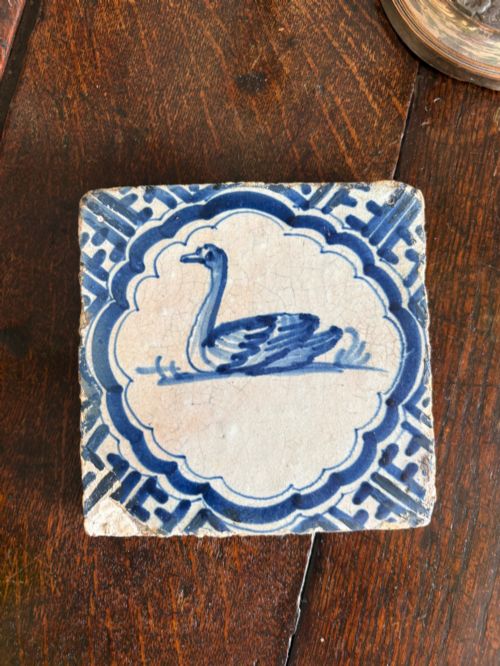
Both. Loose single tiles appear regularly, and sets run to five, six, eight, ten, twelve, fourteen and sixteen.
Beyond that there are framed panels and tile pictures, several showing biblical scenes. Sets and panels sit above loose tiles in the range.
What are the unusual forms that turn up?
Alongside the chargers and jars, the archive carries flower bricks, bough pots, tulipieres, posset pots, punch bowls, wine coolers and a food warmer.
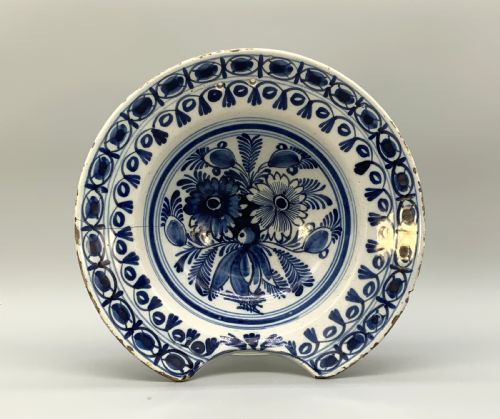
One-offs include a barber's bowl, a cress dish, a pea keeper, a strawberry strainer, a cake stand, a miniature armchair, a lantern and a garden urn. Animals, cows, dogs, lions and horses with riders, appear once in a blue moon.