


Antique Lustreware
Lustreware is pottery and porcelain finished with a thin metallic film fired over the glaze, giving an iridescent sheen, and used from cheap silver-effect tableware to richly gilded decorative bowls.
Antique Lustreware
Lustre decoration began in the Islamic world and was revived in England from the late 18th century, first for inexpensive silver-effect and copper-effect pottery. Early 20th-century art potteries took it up again, this time for deeply coloured, printed and gilded wares meant for display rather than use.
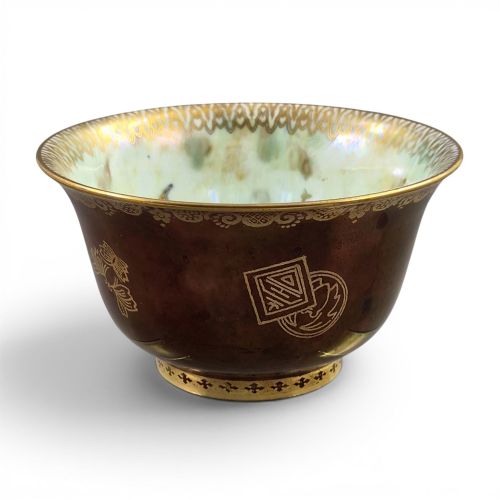
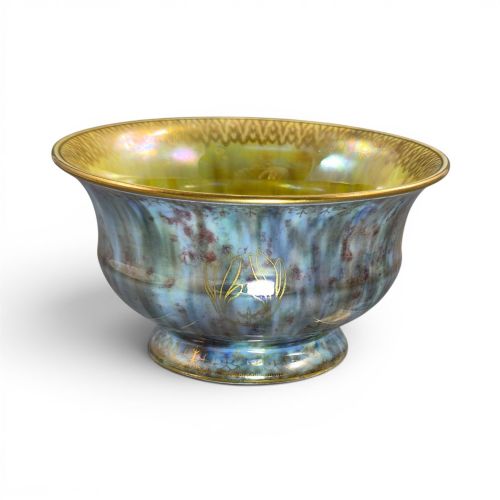
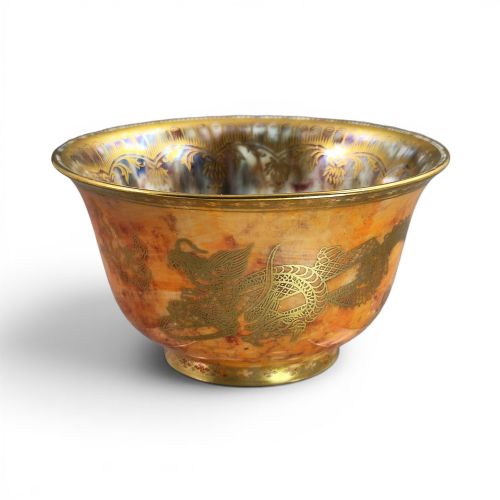
On Sellingantiques the category leans heavily one way. Wedgwood lustre designed by Daisy Makeig-Jones accounts for 26 of 37 titles, and the bowl is almost the only form, in 29 of them. Octagonal bowls and miniatures both recur, decorated with dragons, butterflies, goldfish and phoenixes. Around a third of the Wedgwood group is named Fairyland, sometimes with a pattern number such as Z4825 or Z4832 quoted in the title.
Dragons are the commonest named subject, in ten listings, turning up as coiling, Tibetan, green, lantern and Celestial variants. Beyond the bowls, the archive holds a miniature cup, a pair of three-handled mugs, a teapot, a cache pot with its stand, a dish, a plaque and a perfume bottle.
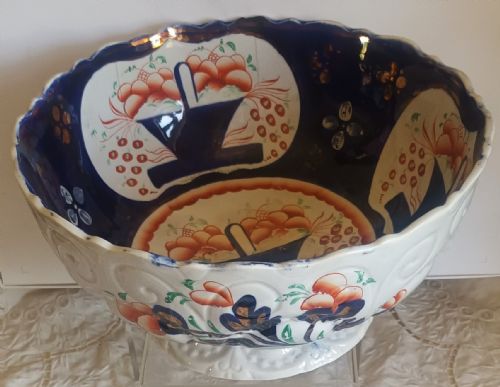
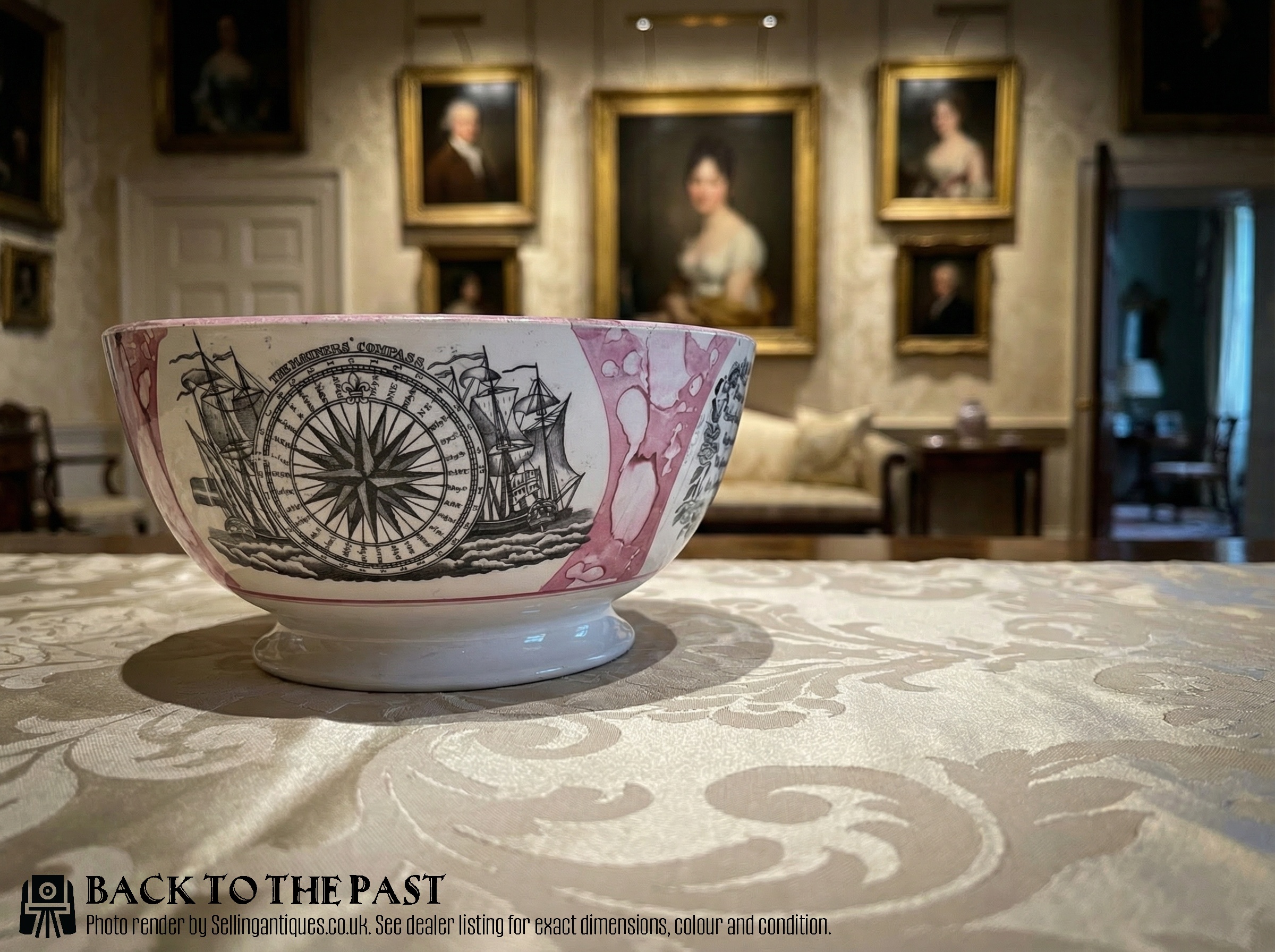
The dated field runs 1910 to 1930, with the 1910s the busiest decade. It doesn't cover everything: five listings sit simply under '19th Century', taking in Sunderland pink-splash and Gaudy Welsh pottery, and two Persian Kashan bowls given to the 12th or 13th century are filed in a 'Before 1700' bucket. Titles are usually more precise than the period tag, often giving c.1914, c.1915 or c.1920, so read the title.

Where The Range Widens
Naming does most of the work. Titles carrying Fairyland cluster in the upper half of the range, while an unnamed lustreware dish and a Maling tulip bowl sit at the bottom. A quoted Z-number pushes a piece up too: the five listings with Z4823, Z4825, Z4828, Z4832 or Z5176 all sit mid-range and above.
Subject follows. Dragon decoration, and the Celestial Dragon pattern in particular, occupies the highest Wedgwood positions. Size and form pull in opposite directions, with large octagonal bowls above and miniature cups and bowls at the lower end, though a pair of miniature bowls sold well as a pair.
Age is the one thing that outranks all of it. The two Kashan bowls are the only pre-modern pieces in the archive, and one of them sets the top of the whole category.
Antique Lustreware Retail Price Guide 2026
Typical UK retail prices for lustreware, calculated from the Sellingantiques database of over a million retail prices indexed since 2003. This retail price guide relies exclusively on Sellingantiques data; no external sources or auction records are used, so the figures do not describe the wider market.
The 1910s is the period label used most on Sellingantiques for lustreware, with the 1920s next and the 19th century third.
The Antique Lustreware Glossary
- Fairyland lustre
- Wedgwood's named range of richly printed and gilded lustre. The word appears in eleven titles and is the single most useful thing to spot in a description.
- Z-number
- A Wedgwood pattern reference quoted in titles. Z4823, Z4825, Z4828, Z4832 and Z5176 all turn up, and they identify the printed design rather than the shape.
- Octagonal bowl
- An eight-sided bowl, the shape most often specified in this category. Five bowls carry it, including the largest of the Celestial Dragon examples.
- Celestial Dragon
- A named dragon pattern found on two of the larger bowls. Coiling, Tibetan, green and lantern dragons are the other variants named in titles.
- Sunderland
- North-east English pink-splash lustre pottery. One sailors' arms bowl represents it in the archive, filed under the 19th century.
- Kashan
- A Persian centre of medieval lustre production. Two bowls given to it are the only pieces here from outside the English and European tradition.
Antique Lustreware: Frequently Asked Questions
Why is one designer's name on so many listings?
Daisy Makeig-Jones designed the Wedgwood lustre wares that dominate this category, and her name appears in 26 of 37 titles, seven in ten.
The pieces are dated to the 1910s and 1920s, and bowls make up nearly all of them. Fairyland is the named range within that group.
What forms turn up apart from bowls?
Bowls account for 29 of 37 titles, so everything else is a one-off or close to it.
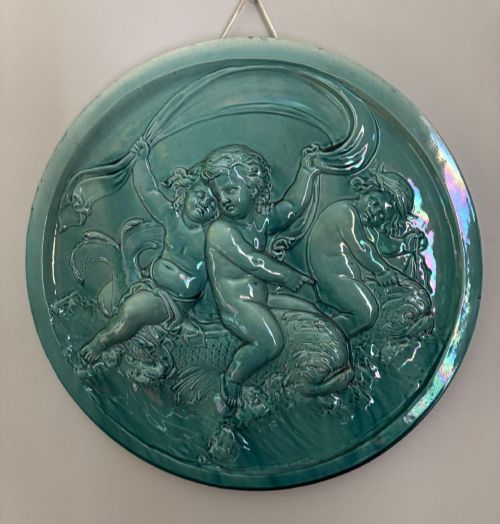
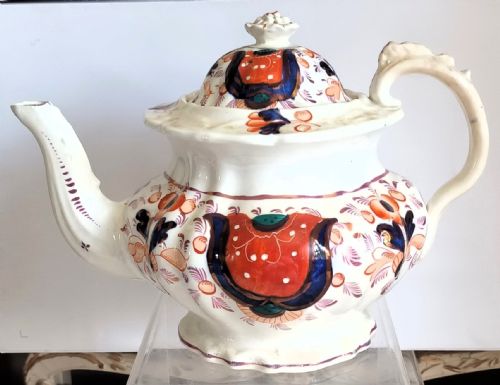
The archive holds a miniature cup, a pair of three-handled mugs, a Gaudy Welsh teapot, a cache pot with stand, a dish, a plaque and a perfume bottle. A large French plaque, an Art Deco perfume bottle and a Maling tulip bowl each appear once.
Does a pattern number in the title mean anything?
It's a Wedgwood pattern reference for the printed design. Z4823, Z4825, Z4828, Z4832 and Z5176 all appear in titles here.
Listings quoting one sit mid-range and above. They're quoted often enough in this category to be worth learning.
How old are the pieces in this category?
The dated field runs 1910 to 1930, with fourteen listings in the 1910s and seven in the 1920s.
Five are tagged simply '19th Century', covering the earlier English lustre pottery, and two Kashan bowls are given to the 12th or 13th century in their titles. A few Wedgwood pieces are tagged Edwardian although the titles read c.1915 or 1920s.
Are Persian lustre bowls part of this category?
Two are. Both are described as Kashan bowls of the 12th or 13th century, and they're the only pre-modern lustre in the archive.
One of them sets the top of the range.
How often does lustreware come up for sale?
Around seven pieces a year come to market on Sellingantiques, and eleven dealers have listed one.
That makes it a small category with a narrow centre: Wedgwood lustre bowls, most of them dragon, butterfly, goldfish or phoenix subjects.