


Antique Moorcroft
Tube-lined Staffordshire art pottery sold under the Moorcroft name, made as decorative wares for everyday domestic use: bowls, lidded jars, dishes, jardinieres and the occasional teaset.
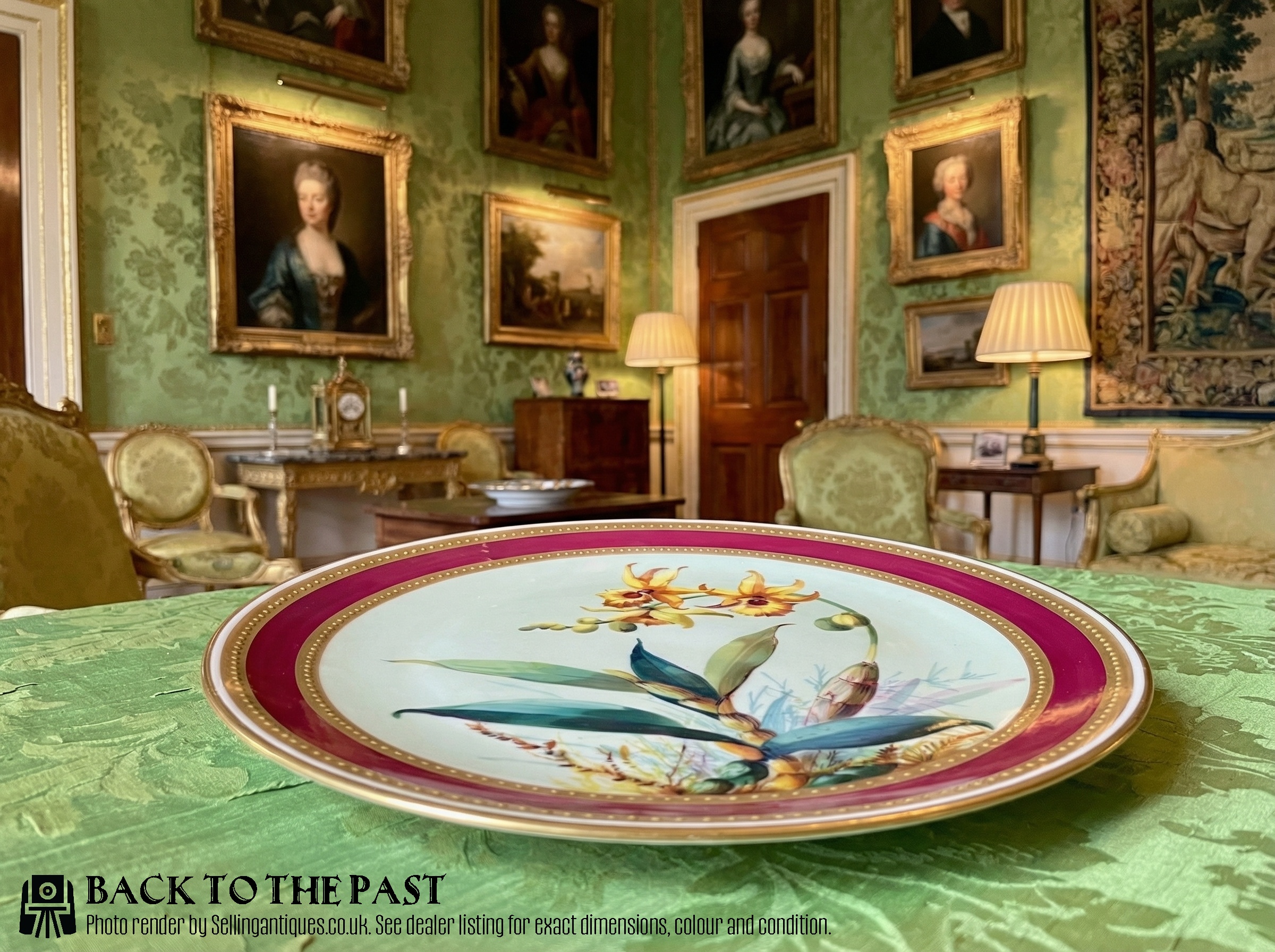
Antique Moorcroft
The technique behind it is tube-lining: raised outlines of slip piped onto the pot, then flooded with coloured glaze. That is what gives the patterns their ridged edges and pooled colour. It grew out of the Burslem pottery trade around the turn of the twentieth century, and the wares were made to be used as well as looked at.
The name usually brings tall vases to mind, but on Sellingantiques the category is dominated by tableware and flatware. Bowls account for 46 of 127 titles, in at least nine rim and foot forms: inverted rim, roll neck, rimmed edge, octagonal, shallow, deep, pedestal, twin handled and pewter-footed. Jars, dishes and jardinieres follow, often lidded or with covers.
Pattern is the main way pieces are identified, and almost every listing names one. Pomegranate is the most frequent, appearing on ochre, on blue, seeded, rimmed, twin handled, and as candlesticks, jardinieres, jars and bowls. Eventide, orchid, pansy, cornflower, hazeldene, claremont, moonlit blue and leaf and berries all turn up throughout. Flambé, a reduction-fired glaze giving reds and mottling, runs through 11 titles.
An earlier stratum sits apart, labelled McIntyre or Macintyre after the Burslem works: Florian Ware, Flamminian, Gesso and Peacock Feathers, dated to the 1890s and 1900s. Some pieces carry a Liberty association, and pewter mounts show up as feet, rims and lids on tazzas, bowls and biscuit jars.
Where The Range Splits
Pattern does more work than anything else. Eventide, hazeldene, claremont, moonlit blue and the cornflower and Spanish designs sit at the upper end of the range, while anemone, hibiscus, magnolia, columbine and African lily bowls and plates gather at the lower end. Eventide alone runs through 12 titles.
Form complexity follows close behind. Lidded, handled, footed and mounted pieces sit above plain open bowls and dishes, so jardinieres, twin handled lidded boxes, pedestal bowls and pewter-footed tazzas hold the top, and pin dishes, plates and small bowls the bottom. Teawares are uncommon and sit at the very top: a four-piece moonlit blue teaset is the highest-priced entry in the archive.
Age pushes upward too. "Early" appears in 16 titles and clusters on the 1900s and 1910s material, and the McIntyre-period Florian and Flamminian wares are concentrated high, while the 1930s and 1940s bowls and plates gather low. Liberty-linked pieces sit high as well, as do large examples, matched pairs and complete services.
Antique Moorcroft Retail Price Guide 2026
Typical UK retail prices for moorcroft, calculated from the Sellingantiques database of over a million retail prices indexed since 2003. This retail price guide relies exclusively on Sellingantiques data; no external sources or auction records are used, so the figures do not describe the wider market.
The top Moorcroft sale of the last year on Sellingantiques was a Florian Ware jardiniere, in February 2026.
The Antique Moorcroft Glossary
- Tube-lining
- Raised slip outlines piped onto the pot and then filled with coloured glaze. The technique behind the ridged pattern edges.
- Pattern name
- The design, and the primary identifier in titles: pomegranate, eventide, orchid, pansy, cornflower, hazeldene, claremont, moonlit blue, leaf and berries.
- Flambé
- A reduction-fired glaze giving red and mottled effects. It runs through 11 titles, often over leaf and berries, orchid or clematis.
- McIntyre / Macintyre
- The earlier Burslem works whose name marks the pre-factory wares. Nine titles use it, and both spellings appear.
- Jardinière
- A large plant or bulb bowl. Nine titles carry the word, and they sit consistently near the top of the range.
- Tazza / comport
- A raised dish on a foot or stem. Several in this category stand on pewter feet.
Antique Moorcroft: Frequently Asked Questions
Which forms turn up most often?
Bowls, by a wide margin, taking 46 of the 127 titles. They come as inverted rim, roll neck, rimmed edge, octagonal, shallow, deep, pedestal, twin handled and pewter-footed.
Jars account for 15 titles and dishes 13, frequently with a lid or cover. Jardinieres appear in nine. Twin handled runs through 11 titles, usually on bowls, boxes and lidded pots.
What does a listing date of 1920 mean?
It means the 1920s. Of 127 listings, 125 carry a clean year, but the values are decade buckets rather than precise dates, so read them that way unless the title says otherwise.
Only two listings give a single year, 1915 and 1916. The 1920s account for 44 entries and the 1910s for 35, nearly two thirds between them, with the 1930s, 1940s and 1900s behind.
How wide is the date span?
The dated field runs from 1870 to 1950. The earliest entry is an orchid-painted tazza comport attributed in its title to Thomas Moorcroft for E.J.D. Bodley, and it predates the studio wares by a generation.
At the other end, the latest dated piece is a single 1950 coral hibiscus ginger jar. A lone Victorian entry and a lone 1890s entry, both McIntyre daisy teapots, sit near the early end.
Are pairs and sets common?
Pairs are a real sub-pattern. Candlesticks in pomegranate and in eventide, miniature pansy vases and hibiscus dishes all come as matched twos.
Complete services are scarcer. Two teapots, a Florian Ware poppy tea service, a peacock feathers teaset and a four-piece moonlit blue teaset make up most of the teaware in the archive.
What unusual pieces have appeared?
A handful of forms turn up once and nowhere else: a matchstrike, a pen and inkstand, a circular table box, a screw-top jar, a slipper orchid jug, a forget-me-not tyg and a pair of Art Nouveau chalices.
Scent bottles appear twice, both in slipper orchid, one under a flambé glaze.
How large do these pieces get?
The stated dimensions are modest. The biggest figures given in titles are a 25cm eventide display bowl and a 13-inch pansy vase.
"Large" or "huge" appears in 18 titles without a measurement attached, and scale does push pieces up the range.