




Antique Ewers
A ewer is a jug with a handle and a lipped or spouted mouth, made for pouring water, wine or scent, and in this archive as often made to be looked at as used.
Antique Ewers
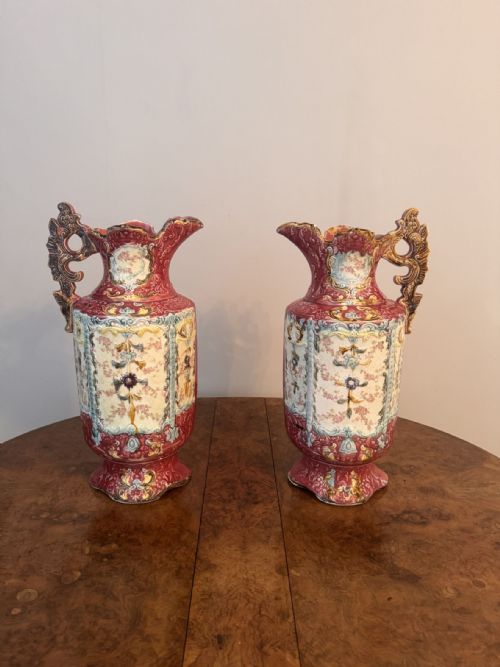
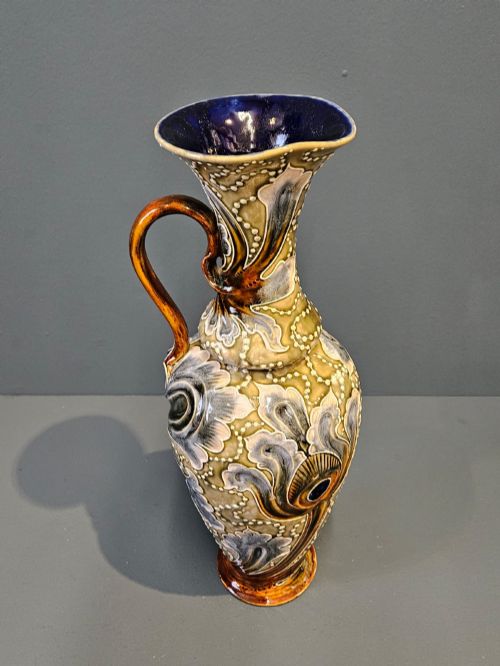
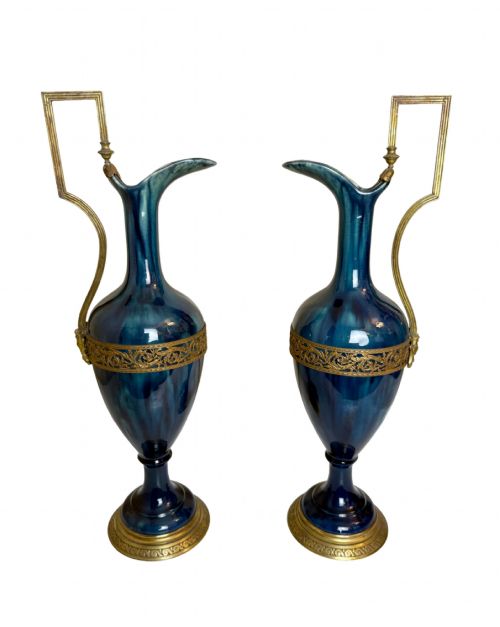
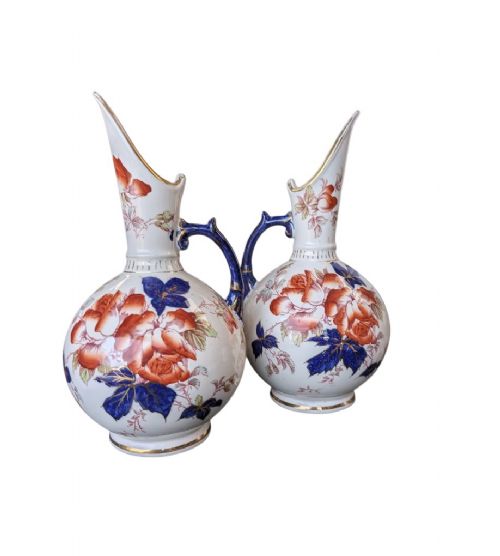
The word covers a jug form with a handle and a wide lip or spout. Ewers were made from antiquity for pouring water over the hands or at table, and with a matching basin for washing before plumbing arrived. From the 18th century onward, European porcelain and pottery factories also made them as ornaments, often in pairs, with no expectation they would ever hold liquid.
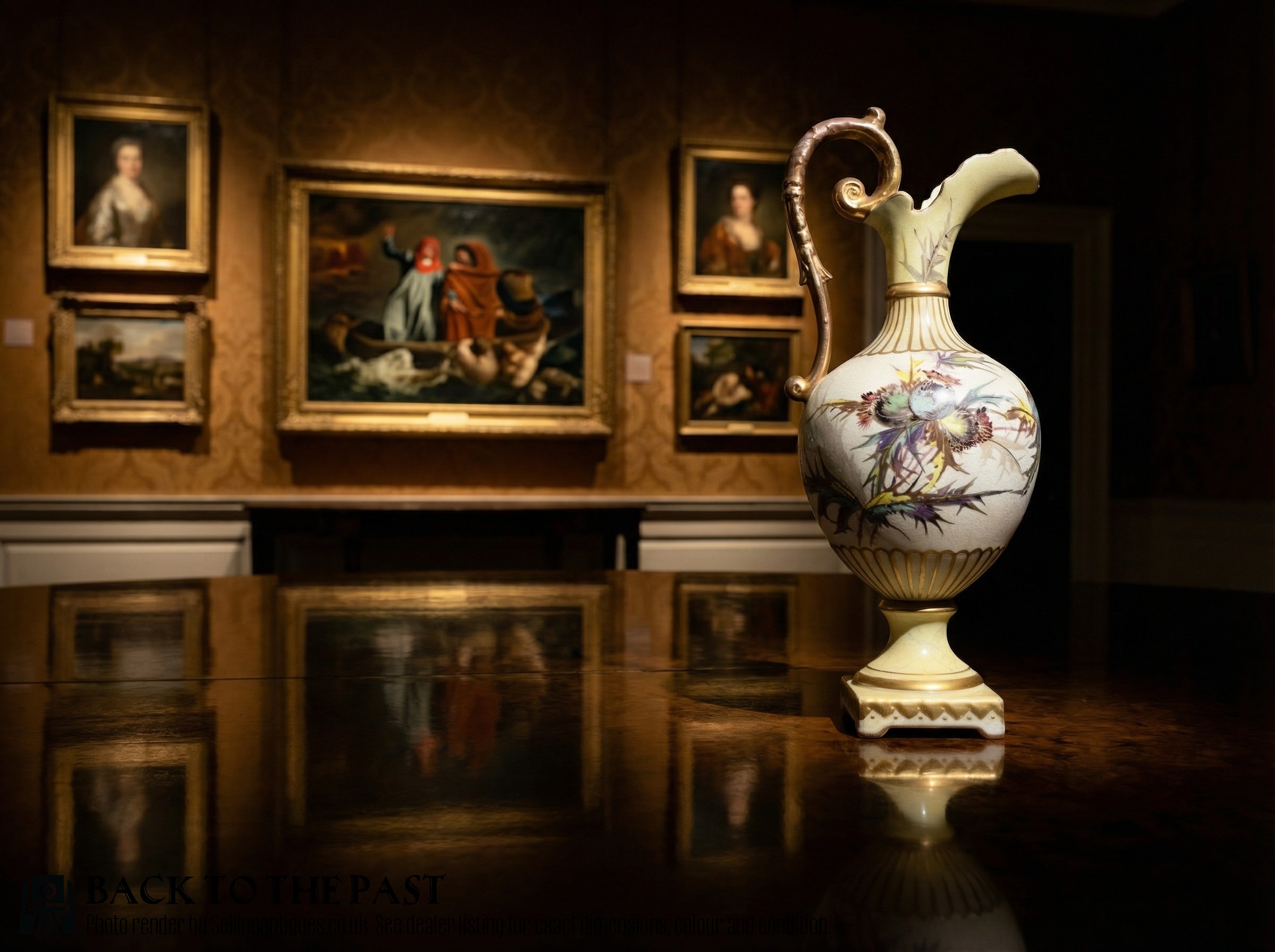
What you are most likely to meet on Sellingantiques is a single decorative English porcelain ewer, and specifically a Royal Worcester one. The word 'ewer' appears in 61 of 92 titles, 'Worcester' in 32 and 'Royal Worcester' in 27, with 'porcelain' in 24. Blush ivory grounds and reticulated pierced work recur through that group, and several pieces are signed by named decorators.
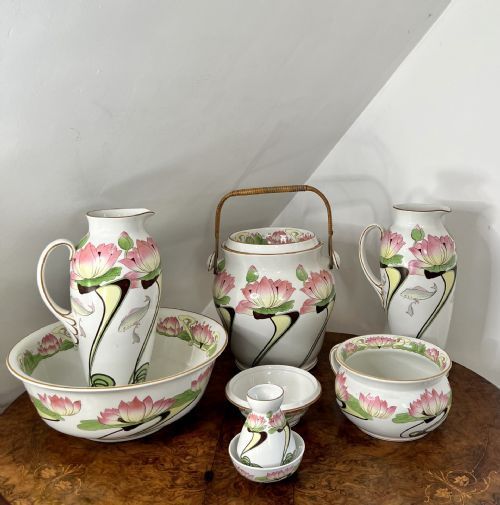
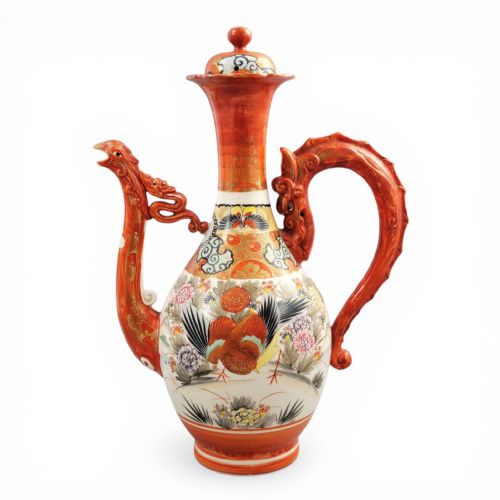
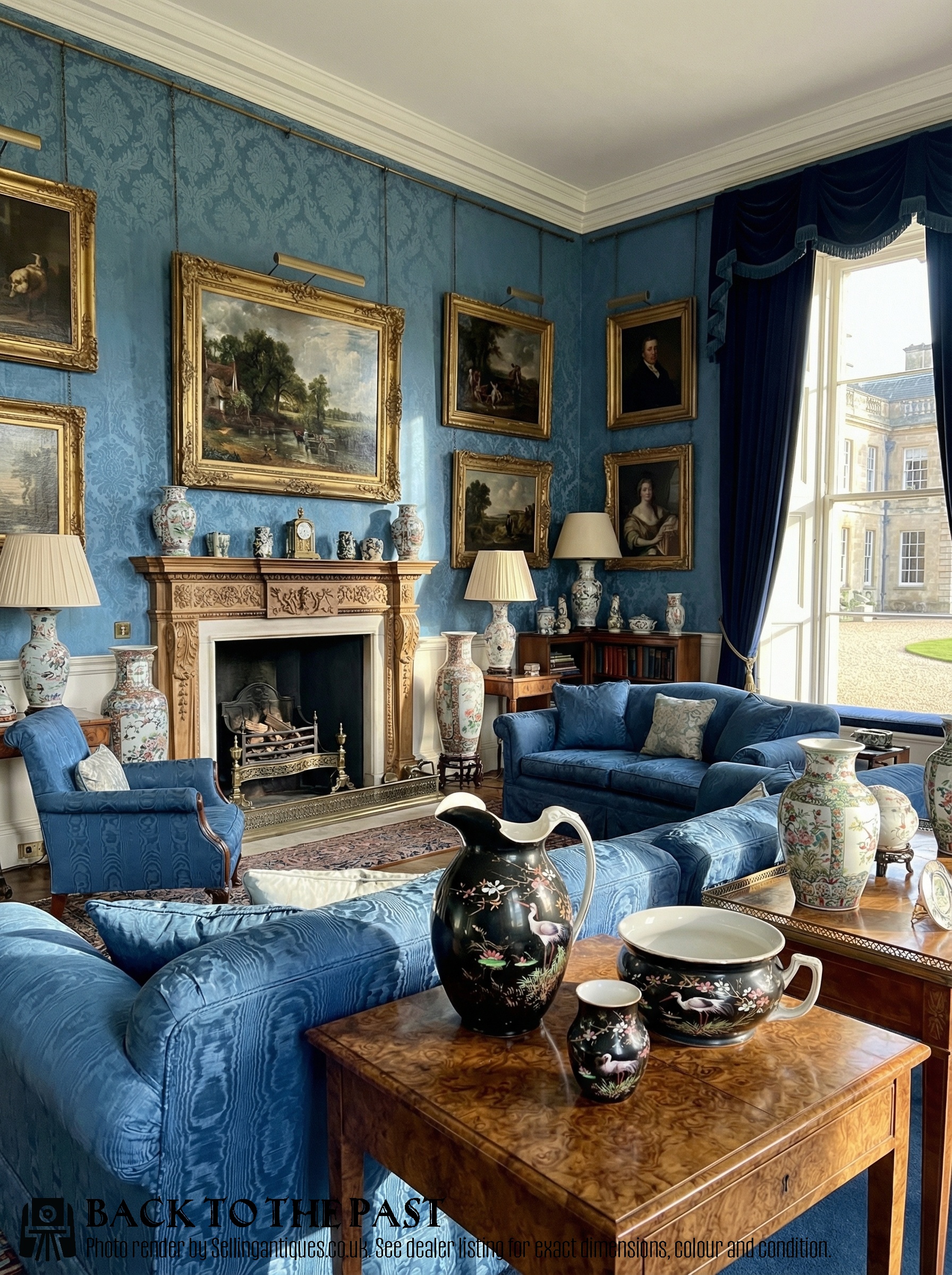
Around that core sit smaller groups. Jug-and-basin and bathroom sets turn up steadily, mostly Victorian and Edwardian. Asian ewers account for roughly one in eight, taking in Arita, Imari, Kutani and Satsuma sake ewers, a Kangxi wine ewer and a Song lidded ewer. Stoneware, faience, maiolica and ironstone examples fill out the lower and middle ground, along with miniature ewers and 18th-century cream boats a few inches high.
Dating is loose. Of 92 listings, 23 are given only as '19th Century', with the 1900s and 1910s next commonest, so a good half of the category is placed by century or reign rather than year. Where a precise year does appear it usually comes off a factory mark on an Edwardian or pre-WWI Worcester piece. Around eleven ewers reach the site in a year, spread across 36 dealers.
Where The Range Splits
A decorator's signature does more than anything else to lift a ewer. The highest-priced titles carry names painted or signed on the piece, and the porcelain piercer George Owen appears four separate times, with a reticulated ewer signed by him sitting at the very top. Pierced lattice work counts on its own too, at Grainger level as well as the summit.
Body and pairing pull in the same direction. Porcelain concentrates in the upper half, while faience, maiolica, Gaudy Welsh and stoneware cluster at the bottom. Just over a fifth of listings are pairs rather than singles, and paired Coalport, Meissen, Vienna and Royal Worcester ewers sit well above comparable single vessels.
Scale and age finish the picture. 'Large' turns up in eight titles, and words like monumental, pedestal and ewer on stand recur among the dearer entries. Early, documented pieces hold their ground: 17th- and early-18th-century Arita, Kangxi and Song ewers sit high, while undated late-Victorian domestic jugs and small miniature ewer-and-basin sets sit low.
Antique Ewers Retail Price Guide 2026
Typical UK retail prices for ewers, calculated from the Sellingantiques database of over a million retail prices indexed since 2003. This retail price guide relies exclusively on Sellingantiques data; no external sources or auction records are used, so the figures do not describe the wider market.
The most expensive ewer ever sold on Sellingantiques was a Royal Worcester reticulated ewer signed by the piercer George Owen, sold in February 2019.
The Antique Ewers Glossary
- Ewer
- A jug with a handle and a lipped or spouted mouth, made for pouring, and here as often ornamental as functional.
- Blush ivory
- A soft ivory-to-peach shaded ground, found on several of the Worcester ewers in this archive.
- Reticulated
- Pierced through in an open lattice, seen on the Grainger and George Owen Worcester ewers.
- Ewer and basin
- The washstand pairing of jug and bowl, also listed as a jug and basin set or bathroom set.
- Cream boat, or Chelsea ewer
- A small 18th-century jug form for cream, filed in this archive under the ewer heading.
- Puce mark
- A factory backstamp printed in purple-pink, used to date one Worcester ewer here to 1890.
Antique Ewers: Frequently Asked Questions
Which maker turns up most often?
Royal Worcester, and by a distance. Of 92 titles, 27 say Royal Worcester and 32 mention Worcester in some form, with a further handful given as Grainger, First Period or FBB.
No other name comes close to that share, and the top of the range is almost entirely signed Royal Worcester.
Are ewers usually sold singly or in pairs?
Both, though singles dominate. Twenty-one of the 92 listings, just over a fifth, are pairs rather than single vessels.
Pairs run through the whole category: blush ivory Worcester, Coalport, Meissen figural ewers, and a pair of Arita oil and vinegar ewers given as around 1700.
How old are the ones on Sellingantiques?
The dealers' own dating runs 1800 to 1930 across the 43 listings that carry a clean year. The commonest single entry is simply '19th Century', used for 23 pieces.
Older things do appear. Five listings sit in the 18th century, three in the 17th and two before 1700, the earliest being a lidded Song dynasty ewer with dragon relief given as around the 12th century. The latest is a Moorcroft flambé leaf and berries ewer of 1930.
What does reticulated mean on a ewer?
It means the body has been pierced through in an open lattice, cut by hand before firing.
Reticulated work appears in this archive at Grainger level and, signed by the piercer George Owen, at the very top of the range.
Do any ewers come with their original basin?
Yes. Jug-and-basin pairings form a small but consistent part of the category, listed variously as ewer and basin, jug and bowl set or bathroom set.
They are mostly Victorian and Edwardian, and include miniature versions only a few inches high.
What Asian ewers appear in the category?
Roughly one listing in eight is Japanese or Chinese. Japanese entries include Arita, Imari, Kutani and Satsuma sake ewers.
On the Chinese side the archive carries a Kangxi wine ewer, a Qianlong-marked aubergine glaze piece and a Song dynasty lidded ewer.