
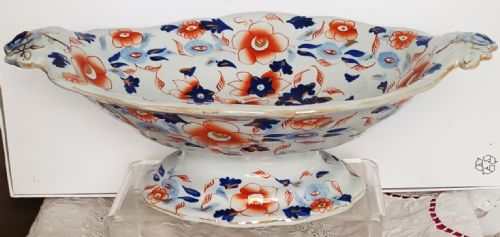


Antique Comport
A comport is a raised serving dish, a shallow bowl or plate lifted on a foot or stem, made to hold fruit, dessert and sweetmeats at table.
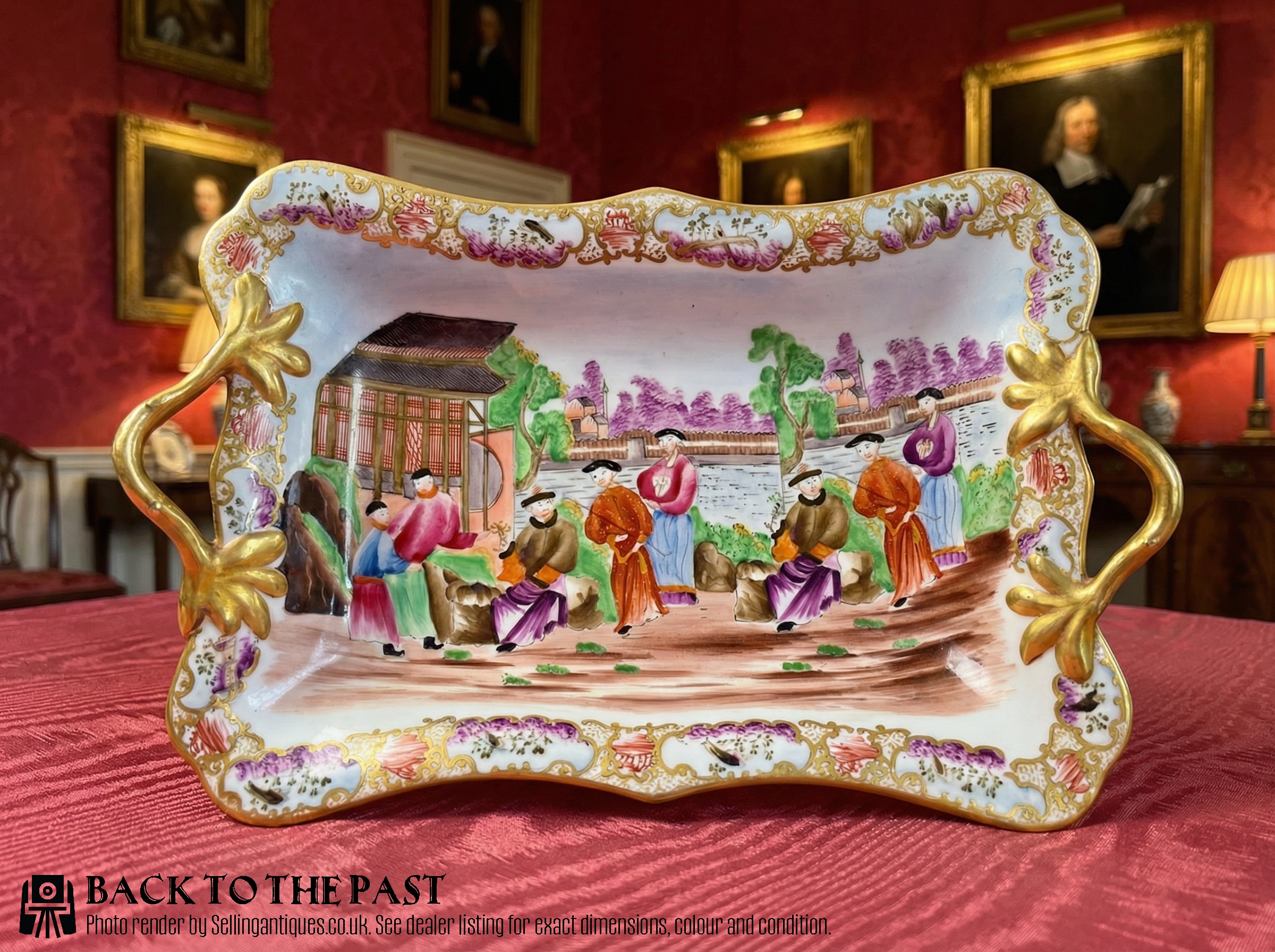
Antique Comport
Dessert became a separate course in the later 18th century, and the table was dressed in height to suit it. The comport is what that produced: a dish raised on a foot, stem or pedestal, part of an English dessert service. "Compote" is the French form of the same word, and both spellings stay in trade use.
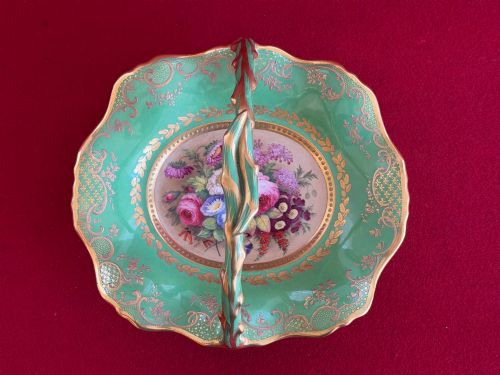
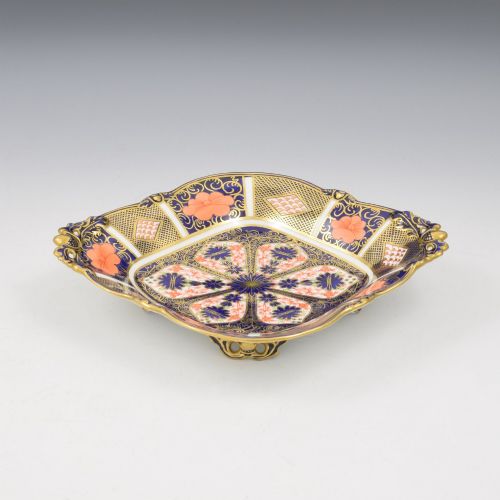
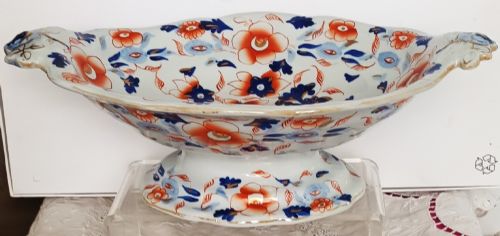
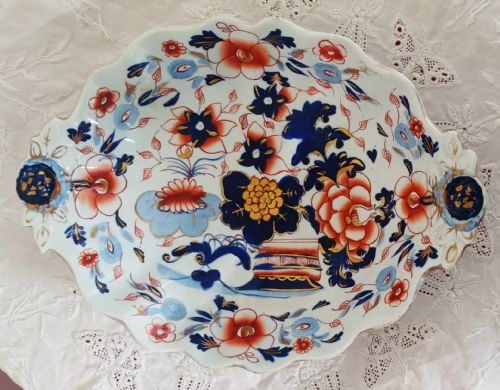
The comport you are most likely to meet on Sellingantiques is a single 19th-century ceramic dish, sold alone rather than with its service. Porcelain is the commonest single term in the titles, at 14 of 60. Heavy earthenwares make up much of the rest: ironstone, majolica, pearlware, creamware and drabware.
Titles split the form two ways. "Low comport" is a trade term rather than a description, used in eight titles for the shallow-bowled version on a short foot; "pedestal comport" is the taller one, bowl raised on a distinct stem. The same object also answers to tazza, centrepiece and pedestal dish, so one search word will miss most of the category.
Worcester is the most named origin, in nine titles, eight of them Royal Worcester, and the blush ivory and painted-fruit low comports sit among them. Continental porcelain is a steady presence: German, Dresden, Saxony, Meissen-style, Royal Copenhagen and Sèvres-style centrepieces together account for around a fifth. Chinese and English blue-and-white pieces turn up in small numbers.
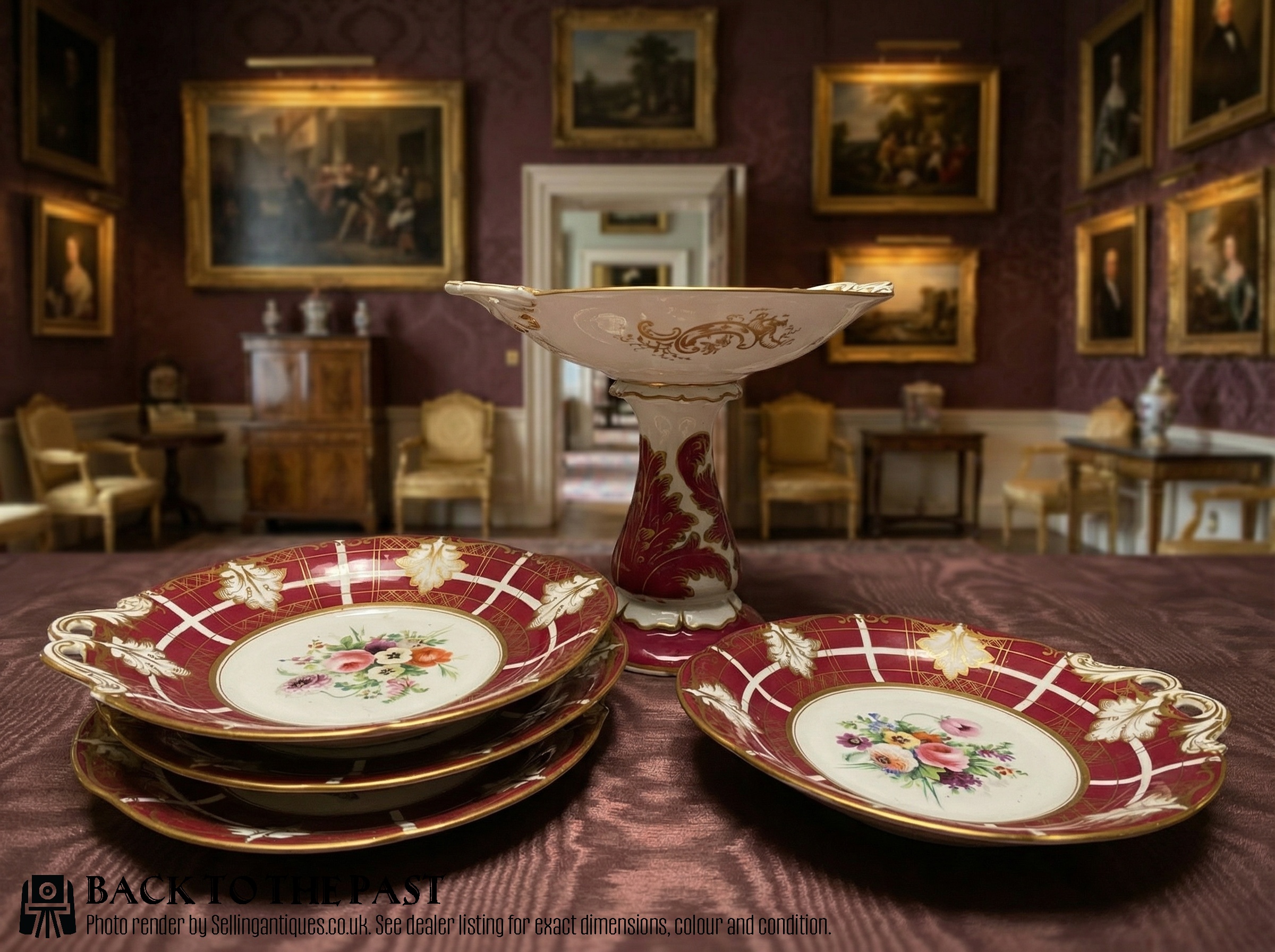
The Range
Painting decides the top. The highest-placed English comports are Royal Worcester low comports with hand-painted fruit, signed by or attributed to a named painter. Below that sit transfer-printed and relief-moulded earthenwares, where the decoration came off a plate or out of a mould rather than a brush.
Body follows the same line. Porcelain runs through the upper half of the sample, while majolica, ironstone and general pottery cluster lower. Scale works alongside it: "large" appears in eight titles and is usually attached to a continental centrepiece with applied roses, putti or figure supports, not to a plain English footed dish.
Two other things lift a piece. Survival as a group is one, since pairs, a comport set and a set of four majolica waterlily comports all sit well above single dishes. A tight date is the other. Twenty listings are dated no closer than "19th Century" and seven simply "Victorian", so pearlware of 1790-1800, drabware of 1815-20 or a comport dated 1869 stands apart.
Antique Comport Retail Price Guide 2026
Typical UK retail prices for comport, calculated from the Sellingantiques database of over a million retail prices indexed since 2003. This retail price guide relies exclusively on Sellingantiques data; no external sources or auction records are used, so the figures do not describe the wider market.
19th Century is the period label used most on Sellingantiques for comports, with Victorian next and the 1880s third.
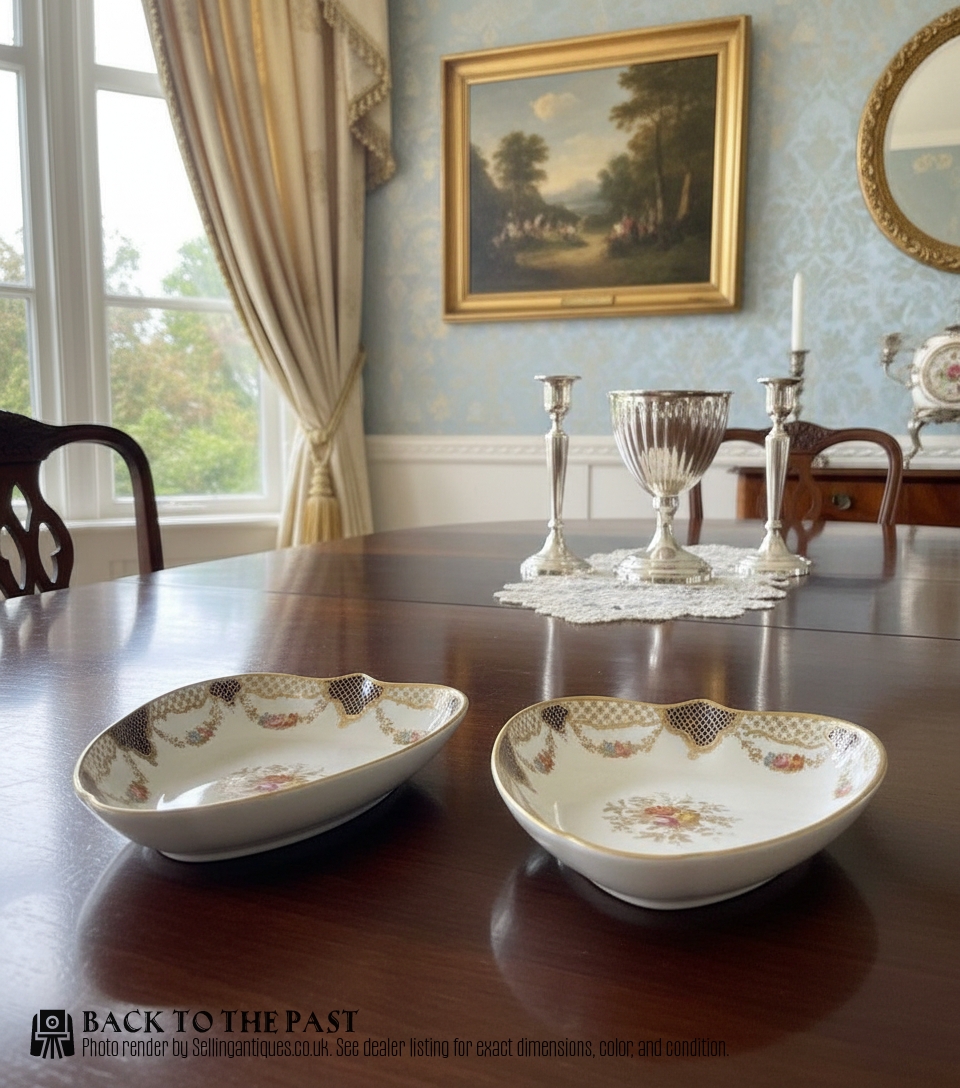
The Antique Comport Glossary
- Comport
- A raised dish on a foot or stem for serving fruit and dessert. It is the dominant spelling in these titles.
- Low comport
- The shallow-bowled version on a short foot, as opposed to a tall pedestal. Eight titles use the phrase.
- Compote
- The same object under its French-derived name, appearing occasionally in titles alongside tazza, centrepiece and pedestal dish.
- Blush ivory
- A soft graded ivory ground on Worcester porcelain, named in one low comport title.
- Gadrooned edge
- A rim of repeating convex lobes, noted on one Coalport low comport.
- Dessert service
- The matched set a comport originally belonged to. Part services and matching plates turn up in the archive.
Antique Comport: Frequently Asked Questions
What is the difference between a comport and a compote?
Nothing, as far as the object goes. Comport is the English variant, compote the French term for the same footed dish, and both spellings persist in the trade.
Comport dominates the titles on Sellingantiques. Compote appears occasionally, and tazza, centrepiece and pedestal dish cover the same form again.
Which makers turn up most in this category?
Worcester is the most named origin, in nine of sixty titles, and eight of those are Royal Worcester. Mason's Ironstone accounts for four titles.
Beyond that the names scatter. Coalport, Minton, Royal Crown Derby, Meissen, Royal Copenhagen and Wedgwood each appear in small numbers, mostly as single listings rather than a run.
How old are most antique comports for sale?
The dated field runs from 1800 to 1960. "19th Century" is the commonest entry, on twenty listings, with seven more filed as Victorian and a few as Georgian or Regency.
Only 24 of the sixty carry a clean year. The 20th century is present but thin, mostly Royal Worcester painted-fruit work dated between 1920 and 1960.
Are comports usually sold singly or in sets?
The single dish is much the commoner thing, sold on its own rather than with the dessert service it came from.
Sets do survive. The archive holds a set of four majolica waterlily comports, a Royal Crown Derby comport set, a part dessert service and several pairs, including Minton rabbit comports and two-tier Meissen stands.
What were comports used for at table?
They held fruit, dessert and sweetmeats. Raising the dish on a foot or stem gave the dessert course height, which is how the table was dressed once dessert was served separately from the later 18th century.
Larger examples were made for the middle of the table, which is why several listings use centrepiece and comport as the same word.
Why does the title date sometimes differ from the listed date?
The dated field takes a single year, so a range in the title gets rounded into it. A piece titled c1815-1817 is filed as 1800, and one titled c1880-1920 is filed as 1920.
The title carries the fuller version. Reading both gives a better sense of where a comport actually sits.