
Antique Majolica
Brightly coloured lead-glazed earthenware moulded in relief, made from the mid-19th century for the dining table and the conservatory.
Antique Majolica
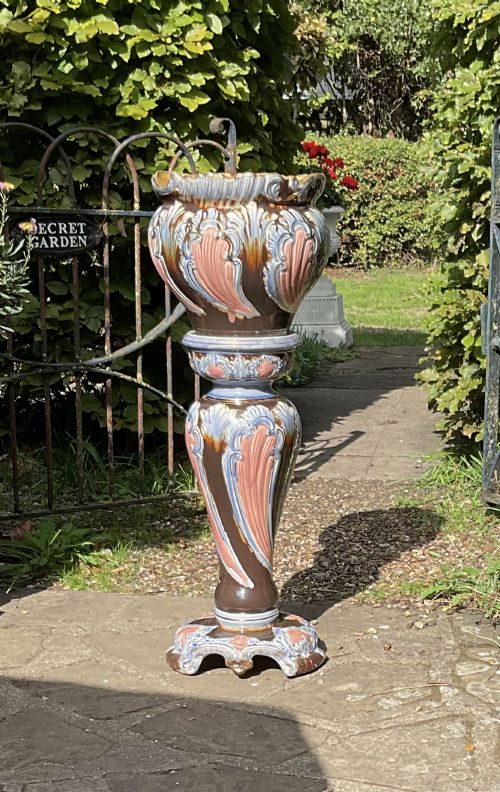
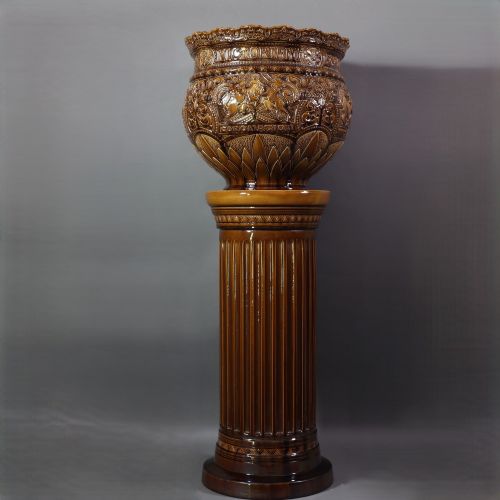
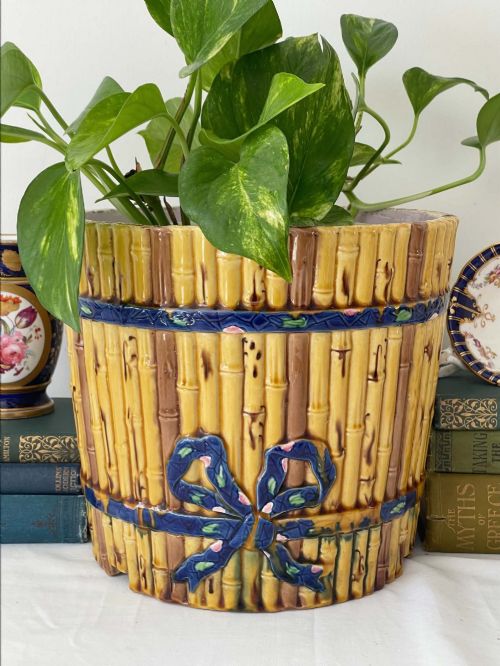
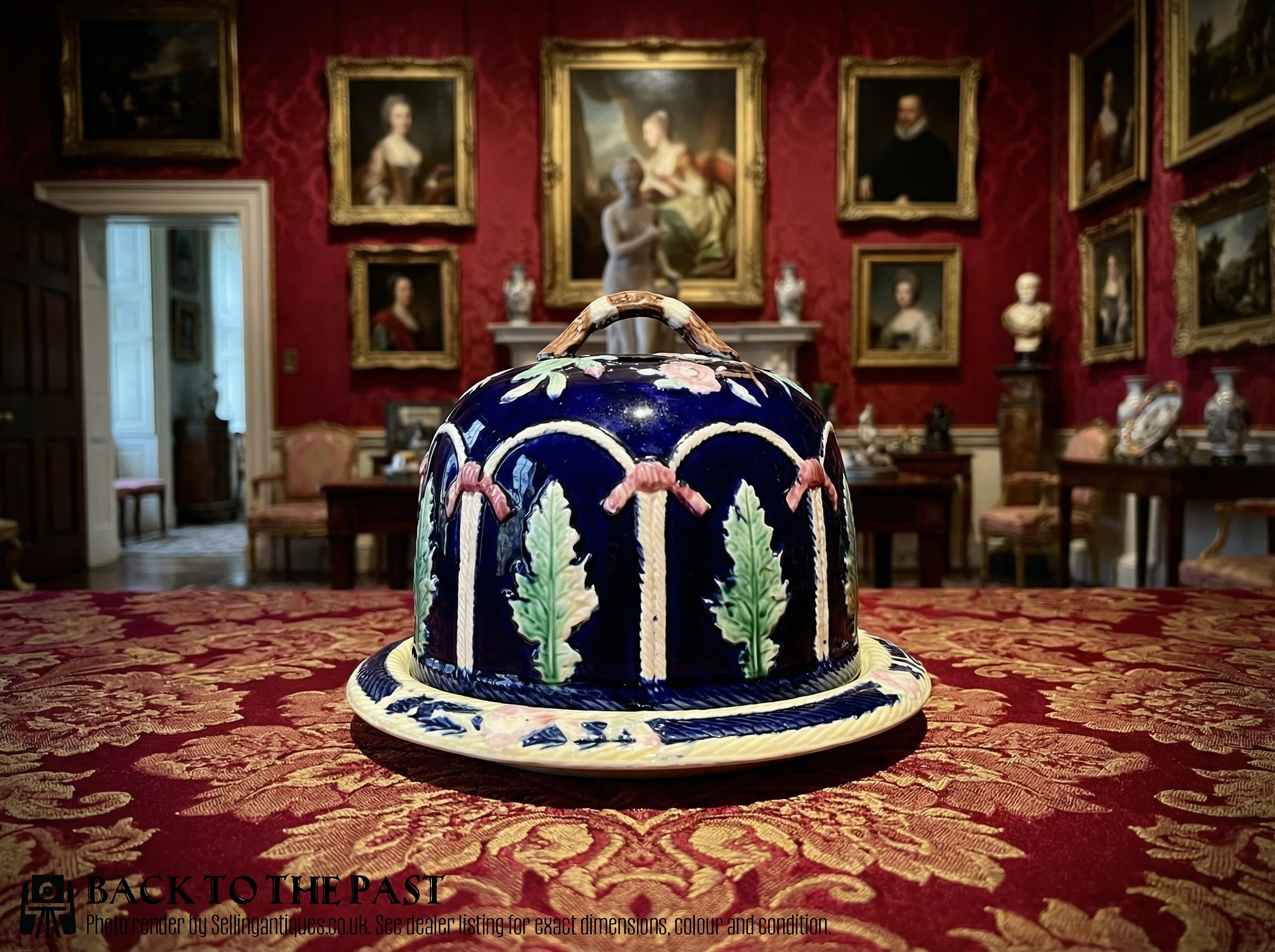
The piece you're most likely to meet under this heading is Victorian and English: a moulded serving dish or a jardiniere with its stand. 'Victorian' appears in 53 titles on Sellingantiques, 'jardiniere' in 35 and 'dish' in 30, and the jardiniere-on-stand and the cheese dome recur more than any other single object.
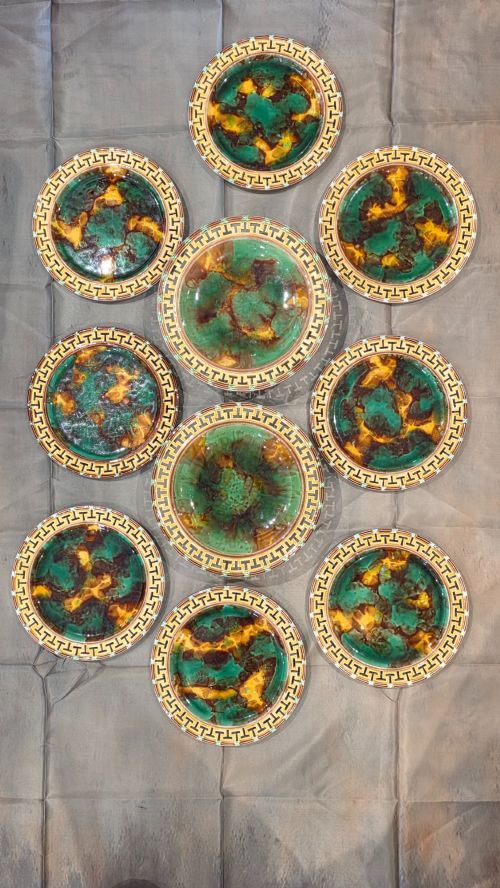
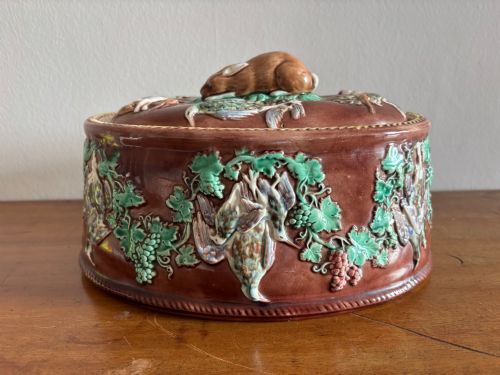
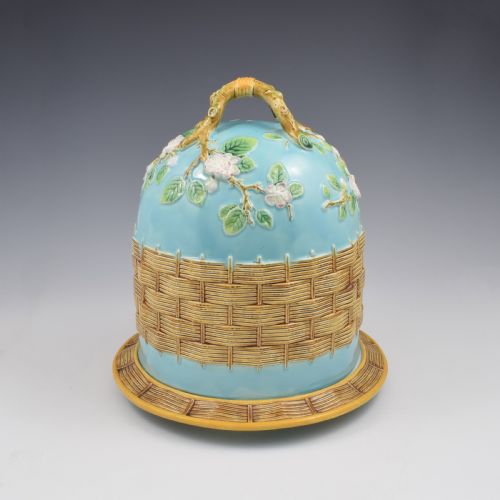
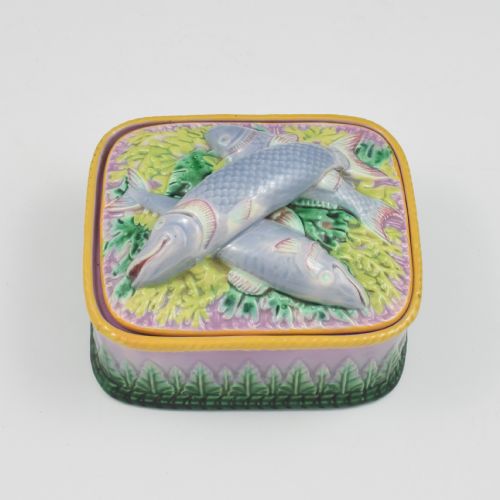
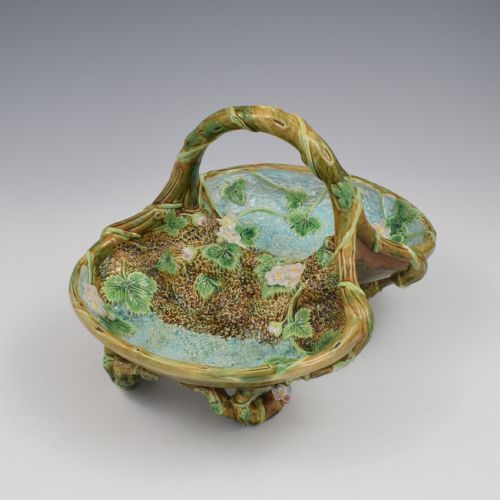
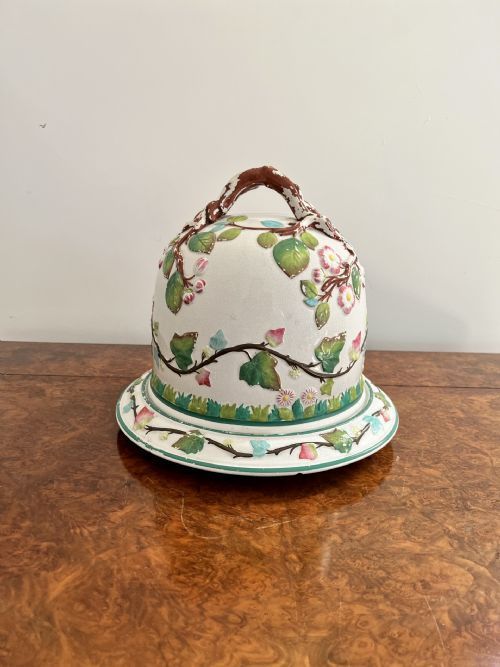
Tableware makes the largest single group. Cheese domes and covers, sardine boxes with a fish finial on the lid, strawberry servers, game pie dishes modelled with rabbit or mallard, comports and centrepieces. Planting pieces run to roughly a third of the category, and at the big end that means garden seats, pedestal columns and umbrella stands rather than anything for a table.
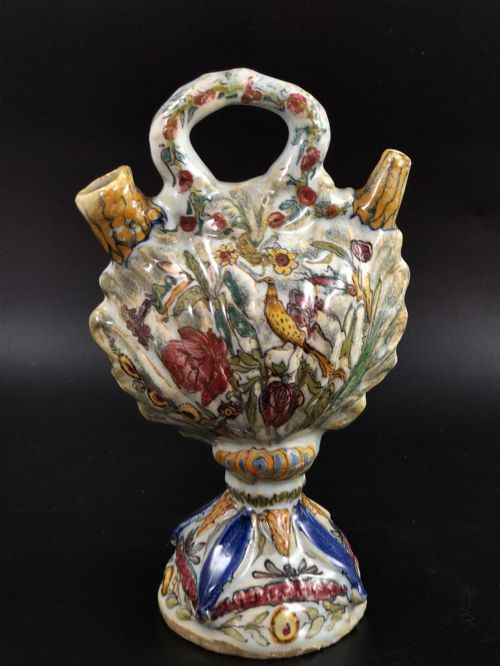
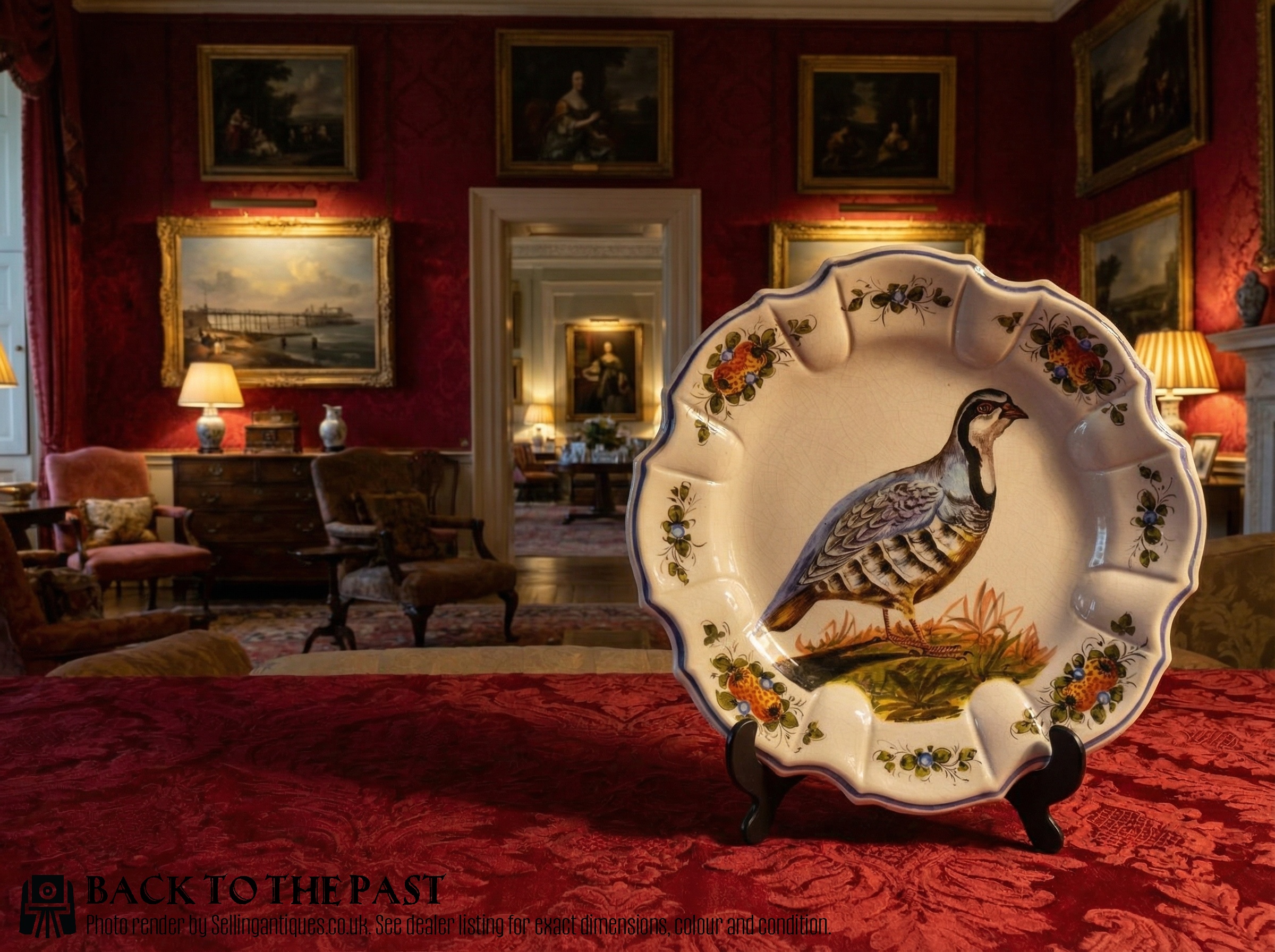
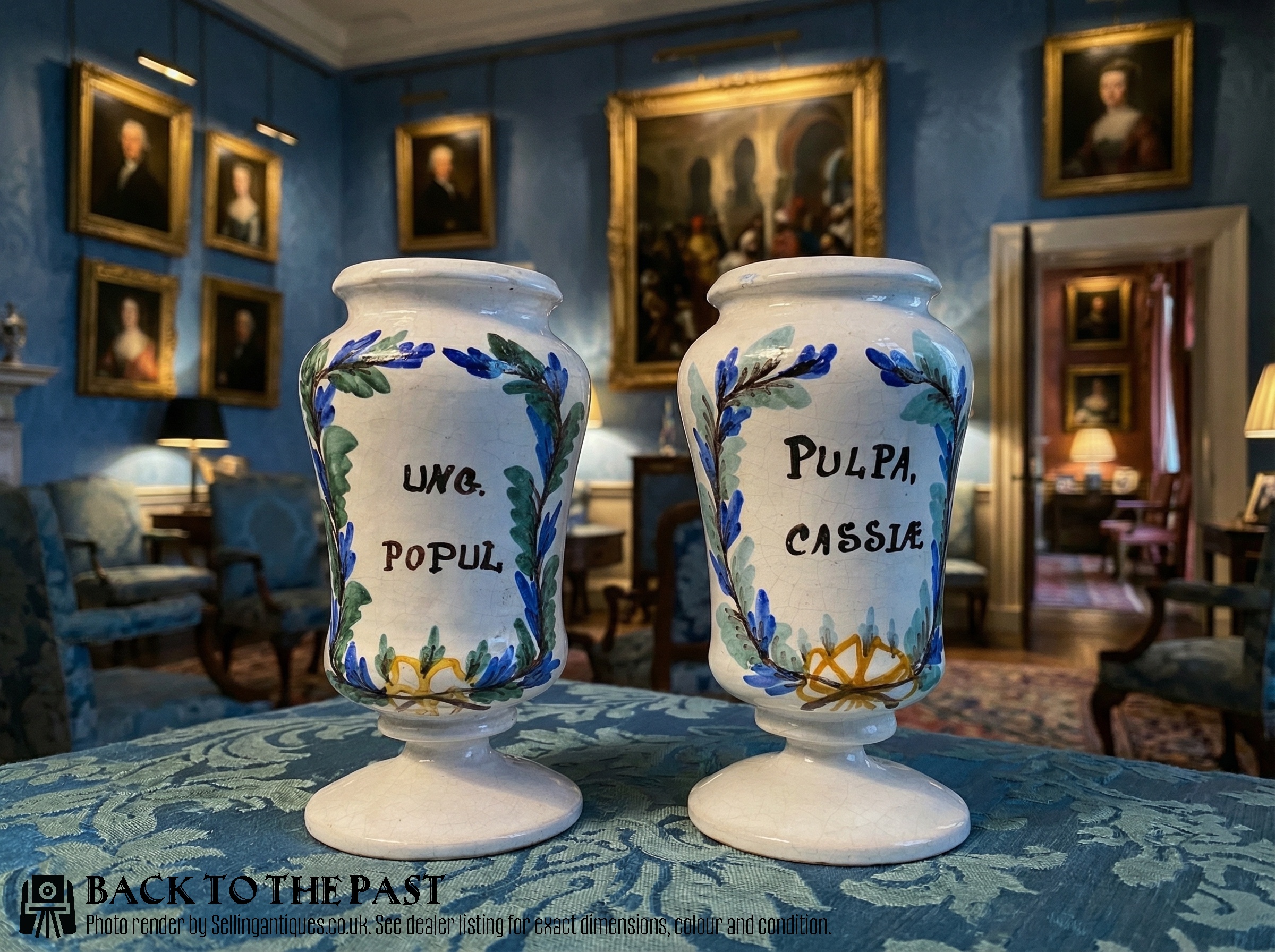
A second strand sits under the same heading and is a different thing altogether: Italian tin-glazed maiolica and French faience. Albarelli and pharmacy jars, istoriato chargers painted with classical scenes, plaques and pilgrim flasks on the Italian side; asparagus cradles, frog pitchers and tobacco jars on the French. This is about a tenth of the whole, though it is prominent in current stock.
Dating is broad. 'Victorian' and '19th Century' between them outnumber every decade label, so a great many pieces are placed only within a reign or a century. Where a decade is given the 1880s lead. Eighty-one listings carry a clean year, and those run from 1859 to 1940. The seven listings placed in the 18th century, and one sampled piece from before 1700, all belong to the Italian tin-glaze side.
Where Value Sits
A named English factory does more than anything else to lift a piece. Minton appears in 22 titles, George Jones in 22, Wedgwood in 10, and those sit well above the anonymous 'Victorian majolica dish'. Some titles say 'style' or 'taste' instead of a maker, which is a different claim and reads as one.
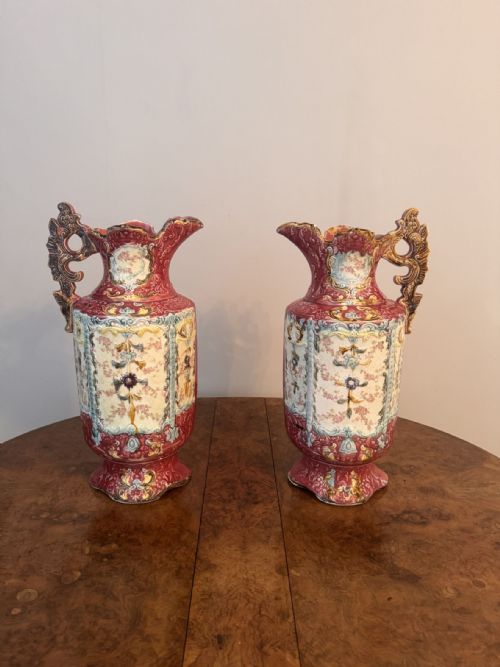
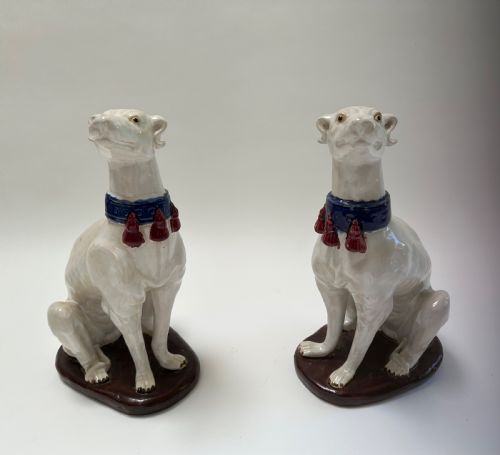
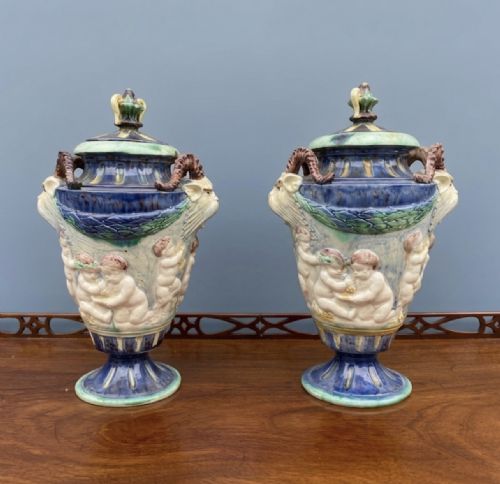
Scale and completeness pull in the same direction. 'Large' turns up in 43 titles, and 'huge', 'monumental' and 'massive' cluster in the upper end. Pairs appear in 16 titles, and a jardiniere with its stand, a cheese dome with its base, an asparagus service of seven pieces or a strawberry set with its napkin rings all carry more than the single survivor.
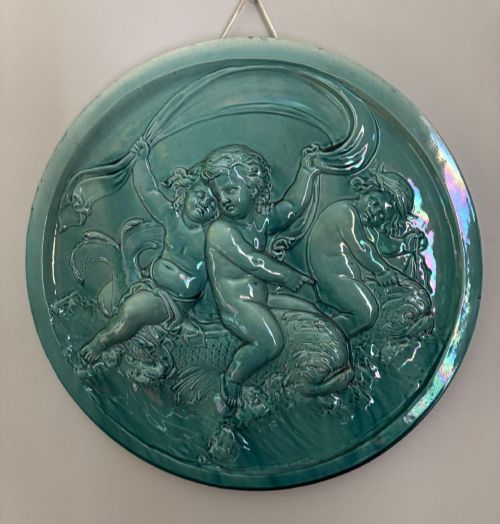
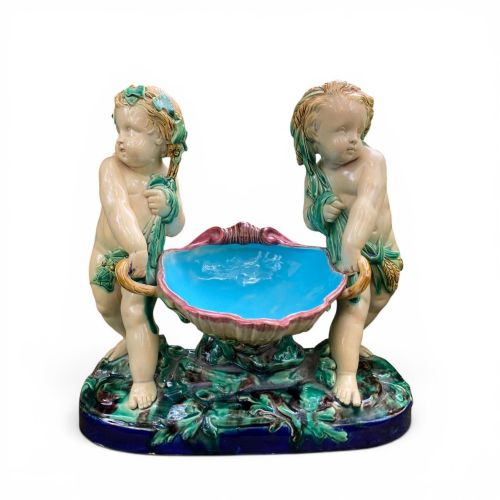
Modelling counts too. Crab tureens, cow cheese domes, fox and squirrel trays, parrots, lions and cherub baskets sit above plain relief moulding of leaves or basketweave. So does anything with a fixed point of reference: titles citing a model number or a date mark cluster above the middle of the range. The highest-priced thing recorded is not tableware at all but a large 19th-century Alhambra-style vase.
Antique Majolica Retail Price Guide 2026
Typical UK retail prices for majolica, calculated from the Sellingantiques database of over a million retail prices indexed since 2003. This retail price guide relies exclusively on Sellingantiques data; no external sources or auction records are used, so the figures do not describe the wider market.
Majolica has been listed on Sellingantiques since 2009.
The Antique Majolica Glossary
- Jardiniere
- An ornamental planter, often sold with its matching stand or pedestal column. The two together are worth more than the bowl alone.
- Cheese dome
- A tall covered dish with a base, made to hold a whole stilton. Also called a cheese bell, and it appears in 18 titles.
- Comport
- A raised dish on a foot, used for dessert or fruit. Sometimes given as tazza.
- Sardine box
- A small lidded dish on a stand, usually with a fish finial on the cover.
- Faience
- Tin-glazed earthenware, the French term, in 10 titles. Maiolica is the Italian spelling, used in these listings for tin-glazed rather than moulded wares.
- Istoriato
- A maiolica charger painted with a narrative or classical scene, from the Italian strand of the category.
Antique Majolica: Frequently Asked Questions
What is the difference between majolica and maiolica?
In these listings the spelling separates two kinds of pottery. Majolica means the colourful lead-glazed ware moulded in relief, introduced in England in the mid-19th century and taken up across Europe.
Maiolica, with the i, means Italian tin-glazed earthenware, painted rather than moulded. Faience is the French term for the same tin-glazed body and appears in 10 titles.
Which forms turn up most often?
Jardinieres and their stands, and dishes, lead the titles. The jardiniere-on-stand and the cheese dome recur more than any other single object.
Beyond those, the table forms are specialised: sardine boxes, asparagus cradles, strawberry servers with napkin rings, oyster plates, game pie dishes and spittoons all appear.
How old is most antique majolica?
Most of it is placed in the 19th century. 'Victorian' and '19th Century' are the two commonest dating labels by a wide margin, and where a decade is given the 1880s lead, followed by the 1890s and 1900s.
The listings that carry a clean year run from 1859 to 1940. A handful sit in the 18th century, and those belong to the Italian tin-glazed side.
Are jardinieres usually sold with their stands?
Often, and the title says so when they are. 'Stand' appears in 28 titles against 35 for 'jardiniere', so a good number come as the pair.
The complete jardiniere and stand sits higher in the range than the bowl on its own.
What are the largest majolica pieces?
Garden seats, conservatory seats, pedestal jardinieres and umbrella stands. These are the biggest things in the category by some distance.
The word 'large' turns up in 43 titles, nearly one in five, and 'huge', 'monumental' and 'massive' recur among the higher-priced ones.
Which countries made the majolica listed here?
England dominates, then France and Italy. Titles also name Portugal, Austria, Bohemia, Scotland and Australia, with the Australian and Portuguese pieces showing up only once or twice.
French entries include Gien and Sarreguemines pieces; the Italian ones include Savona and Naples wares alongside pharmacy jars and chargers.