
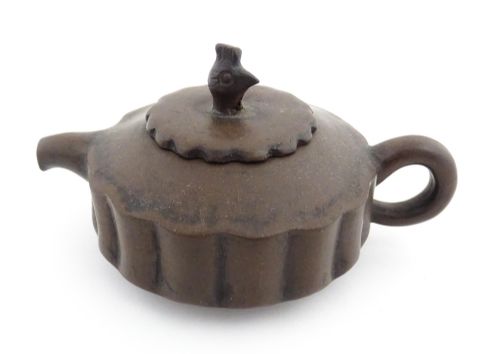
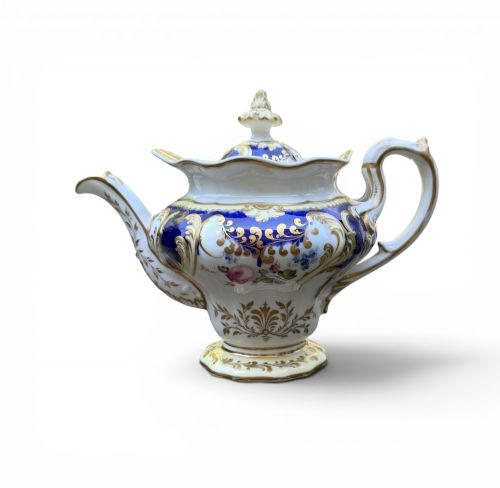
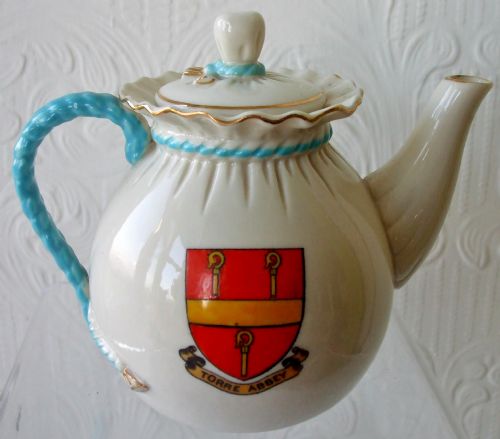
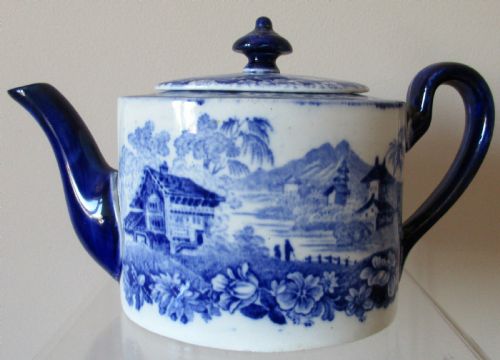


Antique Tea Pot
A ceramic pot for brewing tea at the table, made from the mid-18th century onwards, and sold alongside the sucriers, stands and services that shared the tray with it.
Antique Tea Pot
Purpose-made brewing vessels followed tea's arrival in 17th-century Europe, and the earliest Western pots borrowed their shapes from Chinese export wine and wine-warming pots. By the 18th century English porcelain and earthenware factories were turning out teapots with matching stands, sucriers and full services for the tea table.
The single ceramic pot dominates, and porcelain is the material named most often in titles. Around it sits a wide spread of bodies: soft-paste and bone china, creamware, white stoneware, ironstone, agateware, majolica and treacle-glazed bargeware. English porcelain tea wares make up about a third of listings, moulded earthenware and stoneware roughly a quarter.
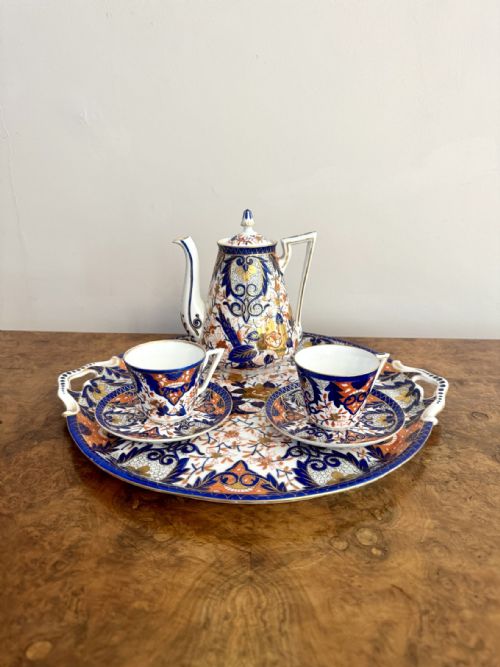
Only some four in ten titles say teapot at all. The rest of the category is tea-table company: sucriers and sugar bowls, Prattware and other teapot stands, biscuit barrels, and six complete tea or coffee services, one of them a tête-à-tête made for two. Chinese, Japanese and Meiji pieces are a persistent minority, with single French and Russian services the rarest origins.
Dealer dating runs from 1750 to 1940, and 19 of the 43 listings carry a clean year. The rest is banded: 19th Century is the commonest label, then Victorian, then 18th Century, with a scattering of Georgian, Regency and Edwardian. The 1910s and 1920s each account for four listings, a late cluster in a category whose earliest pieces sit in the 1750s. Scale swings hard, from nursery wares and a Satsuma miniature to pots titled large.
Where The Range Splits
Attribution does most of the work. A title that pins a factory and a phase, or quotes a named pattern and mark, comes with a fuller description than a plain teapot title, and sits above it. Fence Pattern with a blue crescent, Angouleme pattern, a numbered felspar pattern: the specific ones are the ones the trade has already worked out.
Decoration divides the field next. Hand-painted work, signed by its painter or gilded by hand, stands apart from blue and white transfer printing and from moulded wares that took their pattern from the mould. Completeness pushes in the same direction, with pot and cover, pot on stand, and full services each recurring as their own type of listing.
Then there is the early and the odd. The 18th century holds the top of this category, and single pieces that turn up once and nowhere else carry their own weight: a double-spouted agateware pot, a Delft posset pot with its lid, a majolica teapot modelled as a Chinese boy on a melon.
Antique Tea Pot Retail Price Guide 2026
Typical UK retail prices for tea pot, calculated from the Sellingantiques database of over a million retail prices indexed since 2003. This retail price guide relies exclusively on Sellingantiques data; no external sources or auction records are used, so the figures do not describe the wider market.
Not every title in this category on Sellingantiques says teapot. It also carries sucriers, sugar basins, teapot stands, biscuit barrels and whole coffee services.
The Antique Tea Pot Glossary
- Sucrier
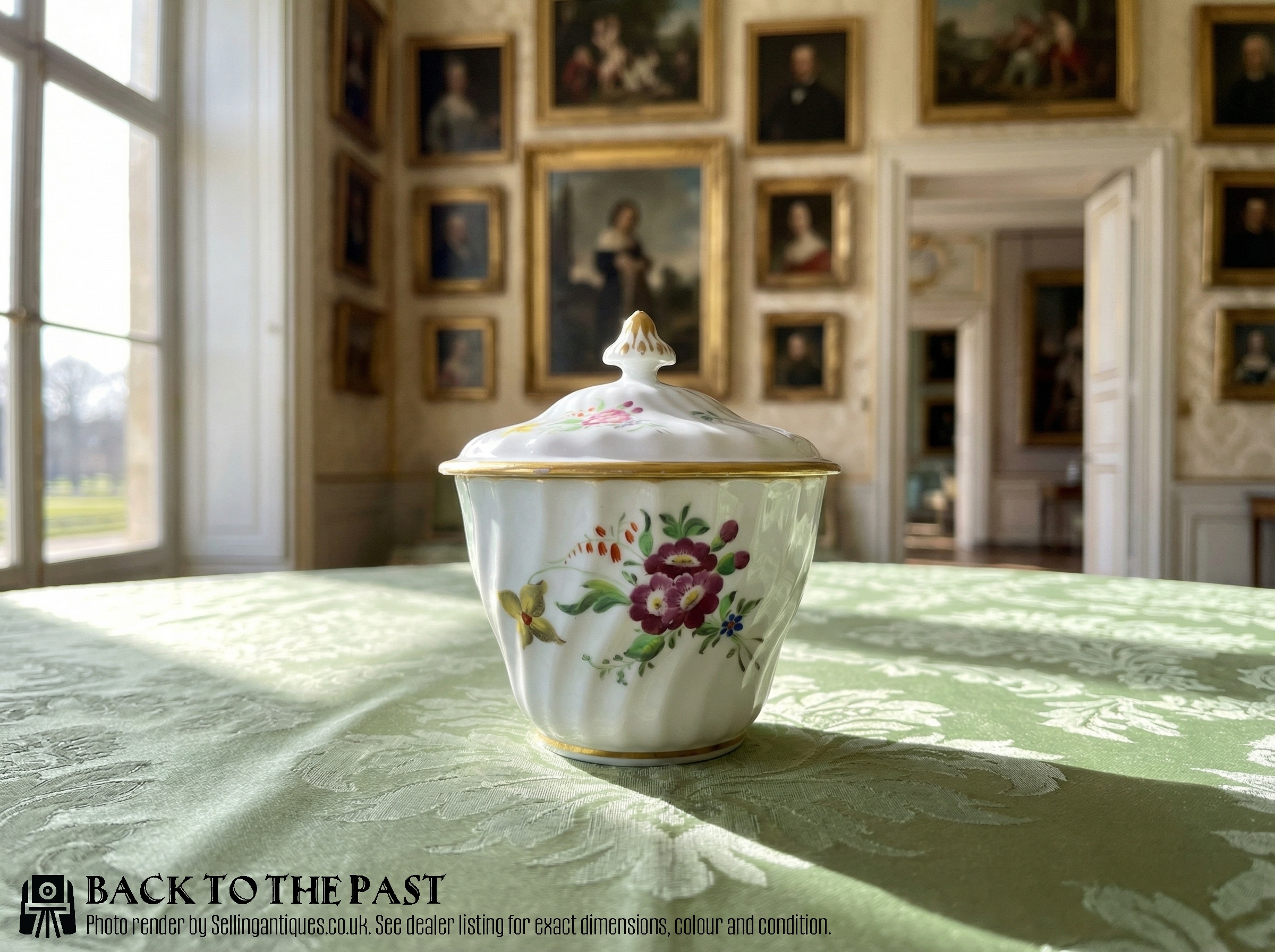
- A lidded sugar bowl made as part of a tea or coffee service, and one of the commonest non-pot listings in this category.
- Knop
- The finial on a teapot cover, the bit you lift it by. One title here specifies a flower knop.
- Bargeware
- Heavy treacle-glazed earthenware, often large, and named in two titles.
- Creamware
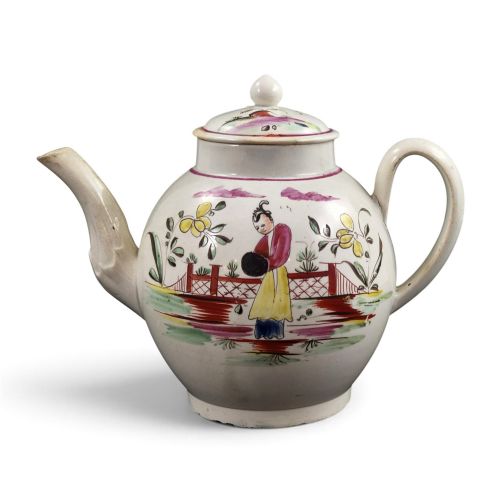
- Cream-coloured refined earthenware, represented by an 18th-century chinoiserie teapot.
- Agateware
- Ware made from wedged coloured clays, so the marbling runs through the body rather than sitting on the surface.
- Tête-à-tête
- A service made for two people only. One Russian example has passed through the archive.
Antique Tea Pot: Frequently Asked Questions
Are all the listings actual teapots?
No. Fewer than four in ten titles say teapot or tea pot. The category carries sucriers, sugar bowls, teapot stands, biscuit barrels and whole services.
Roughly a third of what is listed is a tea-table companion rather than a pot. Six listings are entire tea or coffee services.
How old are these pieces?
Dealer dating runs from 1750 to 1940. Nineteen of the 43 listings give a clean year; the rest are banded as a century or a reign.
Nineteenth Century is the single largest label, followed by Victorian. Several titles carry a tighter circa in the description than the dating field records.
What materials turn up in this category?
Soft-paste and bone-china porcelain lead, with porcelain the commonest material word in titles. English porcelain tea wares account for about a third of listings.
Beside them sit creamware, white stoneware, ironstone, agateware, majolica and salt-glazed bargeware, making up roughly another quarter.
Do Chinese and Japanese teapots appear?
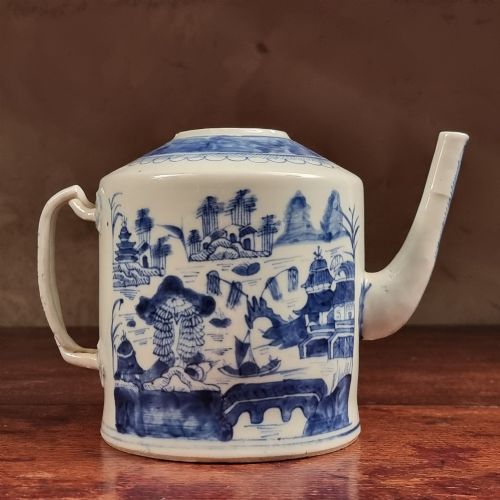
They do, as a steady minority of around six listings. Late 18th-century Chinese, two 19th-century Japanese, a Meiji Satsuma miniature and a Qianlong export famille rose pot all feature.
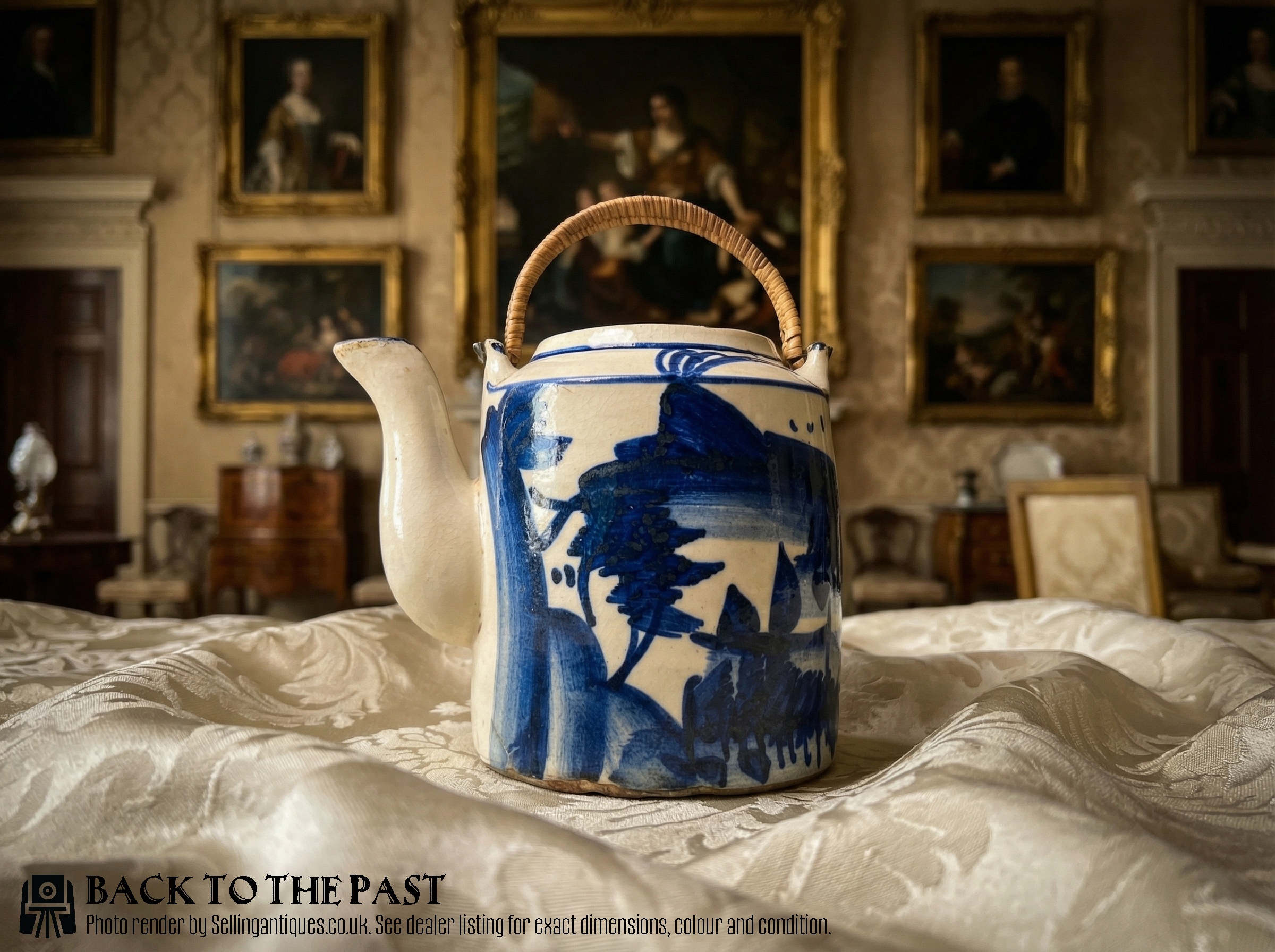
A Chinese or Vietnamese blue and white piece in 16th-century style and an oriental chá pot in a wicker case have also come through.
Why do some listings name a pattern number?
Because the factory recorded it, and the dealer has matched it. Titles quoting a named pattern or mark are consistently more fully described than plain teapot titles.
That specificity tends to place a piece above a generically described pot of similar date.
How big do antique tea pots get?
Scale swings from one end to the other. Nursery-sized children's wares and a Meiji Satsuma miniature sit at the small end.
At the other, titles simply say large, and bargeware pots are among the heaviest things in the category.