






Antique Satsuma
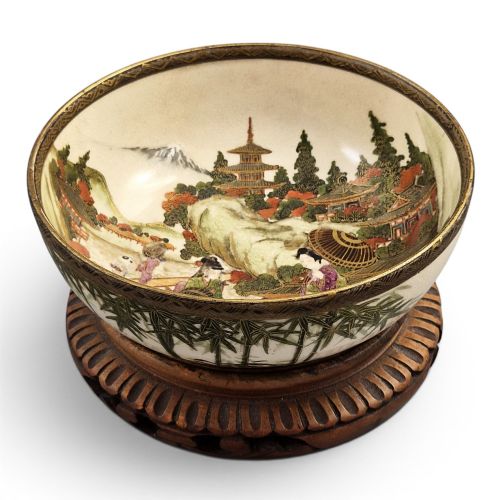
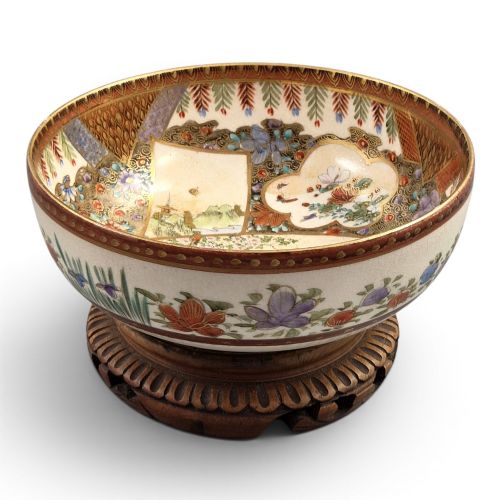
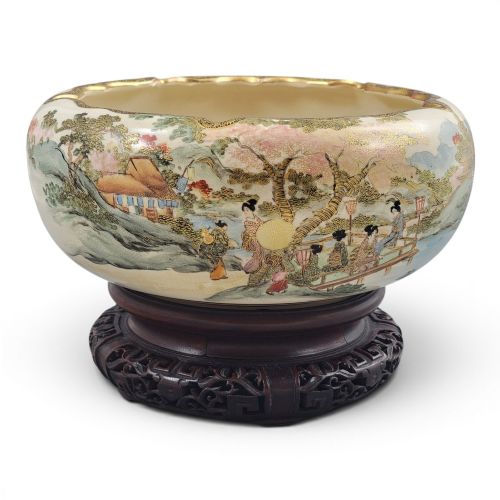
Satsuma is Japanese cream earthenware with a fine crackled glaze, painted in coloured enamels and gilding, most of it made for export and much of it signed on the base.
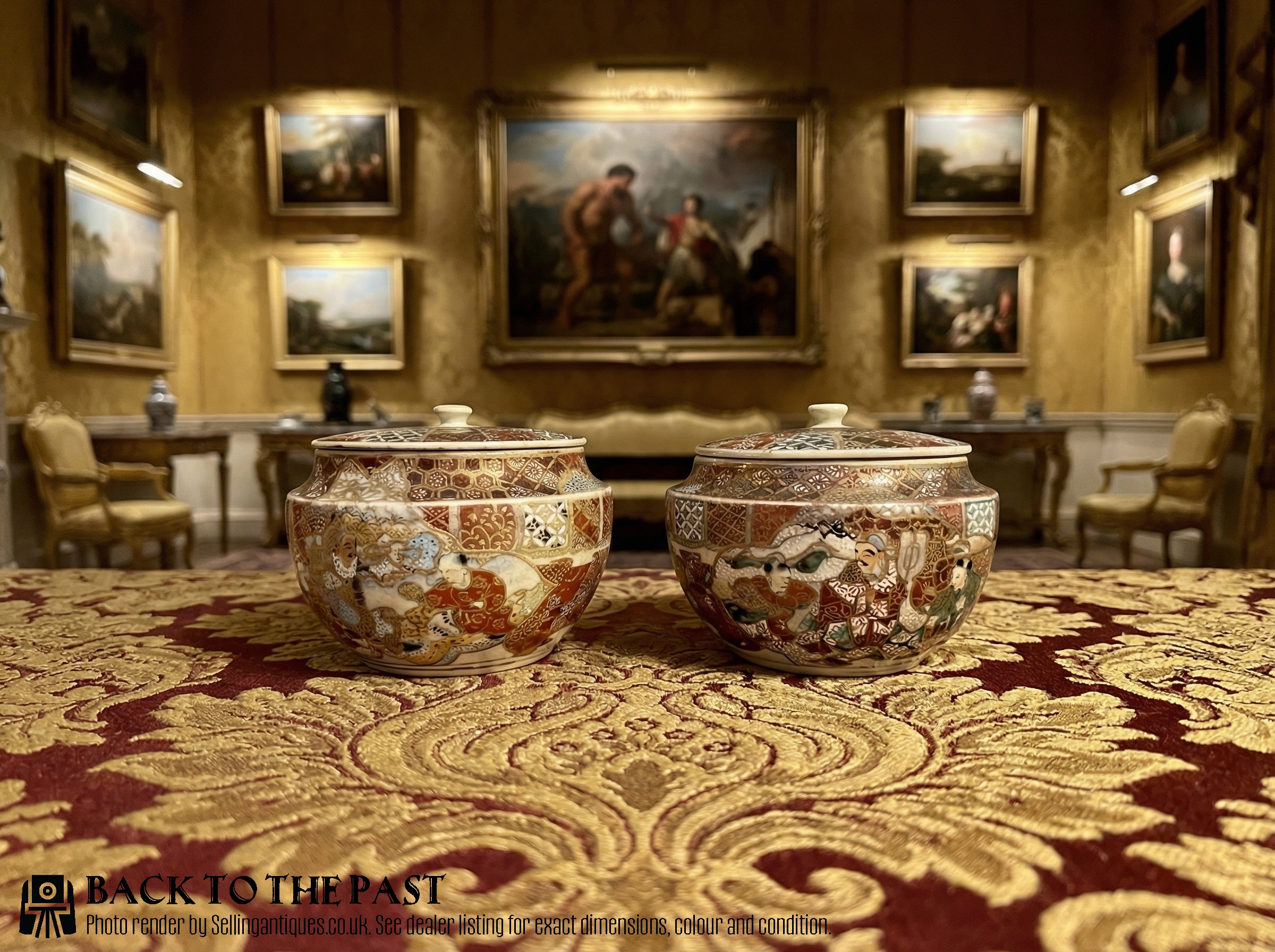
Antique Satsuma
The name comes from Satsuma province in southern Kyushu, where crackle-glazed cream earthenware was made from the seventeenth century. The densely enamelled and gilded style Western buyers mean by the word was developed for export in the second half of the nineteenth century, much of it decorated in Kyoto and other centres.
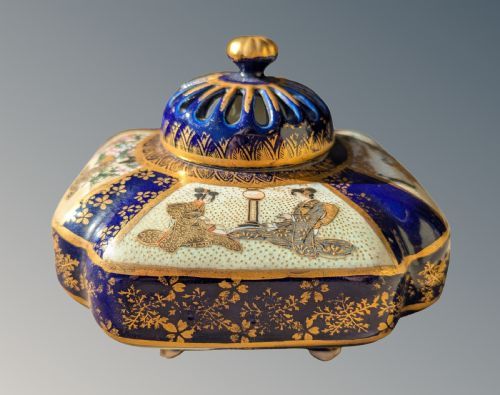
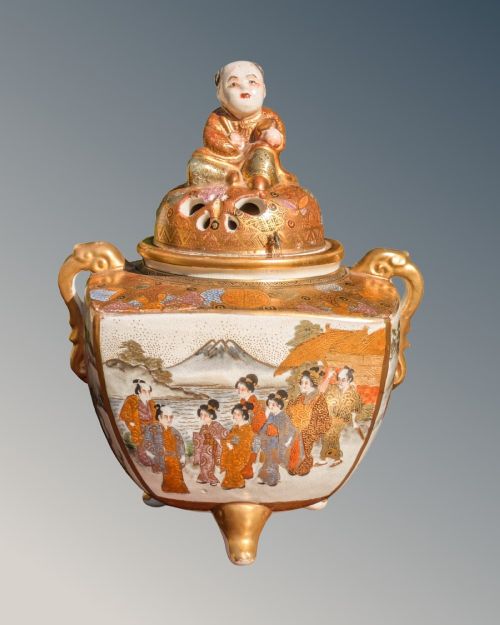
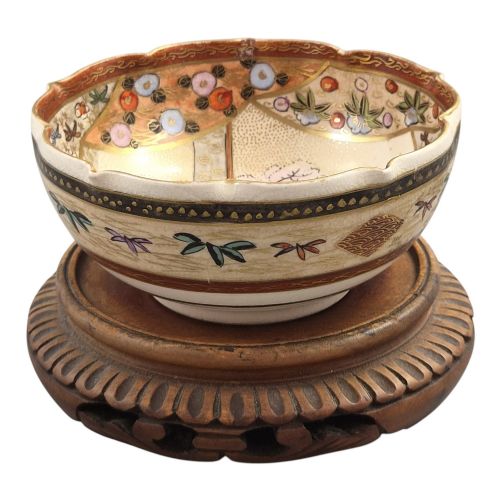
What comes to market on Sellingantiques is small and medium tableware and desk objects rather than monumental pieces. Bowls are the backbone, in a third of titles. Then incense burners, or koro, often lidded and sometimes on three feet with a pierced cover. Tea wares, dishes, chargers and plaques, boxes and lidded jars follow, along with modelled figures and okimono of deities, bijin and animals.
The likeliest thing you will meet is a signed Meiji bowl. "Japanese" appears in most titles and "Meiji" in around four in ten, though Meiji is used more freely than the dated field, so a title reading Meiji Period may sit against a dealer date of 19th Century, 1890 or 1900 with equal likelihood. The commonest date entry is not a decade at all but simply "19th Century".
Body wording varies from dealer to dealer. Some titles say pottery, others earthenware, and a number, including netsuke and several figurines, say porcelain. Kyoto is the origin most often named, and it turns up far more in current stock than in the sold archive.
Top And Bottom
A read signature does most of the work. The upper half of the range is thick with named hands, while the cheaper entries say only "signature to base", or nothing at all. Kyoto attribution pushes in the same direction, and the dearer pieces sometimes name a commissioning company alongside the decorator.
Scale and complexity of form separate the rest. Plain and lobed bowls sit low; reticulated koro, tripod boxes, ewers, cricket cages, pierced lids and ormolu-mounted bowls sit high. Titles escalate through large, huge and monumental, and the biggest things recorded are a decorated panel, vases and a koro and cover.
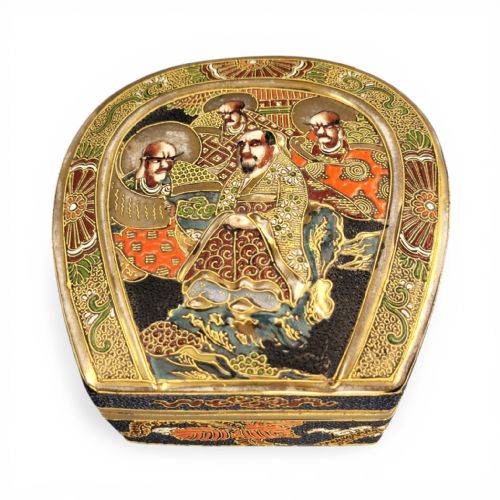
Density of painting and gilding is the last axis. Titles carrying Imperial, Millefleur or Thousand Flowers, Moriage, Gilt, and named figural subjects such as a samurai battle, Rakan or the Seven Gods sit in the upper part of the range. Imperial Satsuma is a dealer's grading term, not a place.
Antique Satsuma Retail Price Guide 2026
Typical UK retail prices for satsuma, calculated from the Sellingantiques database of over a million retail prices indexed since 2003. This retail price guide relies exclusively on Sellingantiques data; no external sources or auction records are used, so the figures do not describe the wider market.
19th Century is the period label used most on Sellingantiques for Satsuma, with the 1890s next and the 1900s third.

Shozan·Kizan·Koshida·Kinkozan
The Antique Satsuma Glossary
- Koro
- A lidded incense burner, often on three feet and sometimes with a pierced or reticulated cover. Second only to bowls in the archive.
- Meiji
- The Japanese era 1868 to 1912, named in around four in ten titles and the period most of this material is assigned to.
- Okimono
- A free-standing decorative figure or ornament made for display rather than use. Deities, bijin and animals all turn up.
- Signed
- Bearing a painted or impressed base mark. Named in a sixth of titles overall and in a quarter of live listings.
- Moriage
- Raised slip or enamel decoration standing proud of the surface.
- Shimazu crest
- The cross-in-circle badge of the Satsuma daimyo family, noted on several signed pieces.
Antique Satsuma: Frequently Asked Questions
What form of Satsuma turns up most often?
Bowls, by a wide margin. They account for a third of titles, ahead of incense burners at around one in nine and tea wares at fewer than one in ten.
After those come dishes, chargers and plaques, boxes and lidded jars, figures and okimono, and vases and jardinieres.
Why do dealers call it pottery, earthenware and porcelain?
The wording in titles simply isn't consistent. Satsuma is a crackle-glazed cream earthenware, but nine titles say pottery, others say earthenware, and a number say porcelain.
The porcelain wording clusters on the smaller things, including two netsuke and several figurines.
How often does Satsuma come up for sale?
Twenty-nine dealers have listed Satsuma on Sellingantiques, and about sixteen pieces reach the market in a year.
So it is a category met steadily rather than in bulk, with bowls forming the run and the unusual forms appearing singly.
What does Imperial Satsuma mean?
It is a dealer's grading term for densely gilded, finely painted export pieces, not a place or a factory.
It appears on ten titles and sits mostly in the upper part of the range, on okimono, plaques, koro and vases.
Is Kyoto Satsuma different from Satsuma?
Kyoto, or Kyo-Satsuma, refers to Satsuma decorated in Kyoto workshops. The ware takes its name from Satsuma province in Kyushu, but much of the enamelled export style was painted elsewhere.
Kyoto is the origin most often named in titles, and it appears far more in current stock than in the sold archive.
Which dates do listings give?
The dated field runs from 1850 to 1920. Where decades are given they cluster in the 1890s and 1900s, with the 1880s, 1910s and 1920s thinner.
More listings carry no decade at all and are dated only "19th Century". A few are labelled Victorian or Edwardian instead.