


Antique Limoges
Porcelain and painted enamel made in and around the French town of Limoges, reaching the market mostly as table and service pieces, with a smaller run of plaques, lidded vanity boxes and enamel on metal.
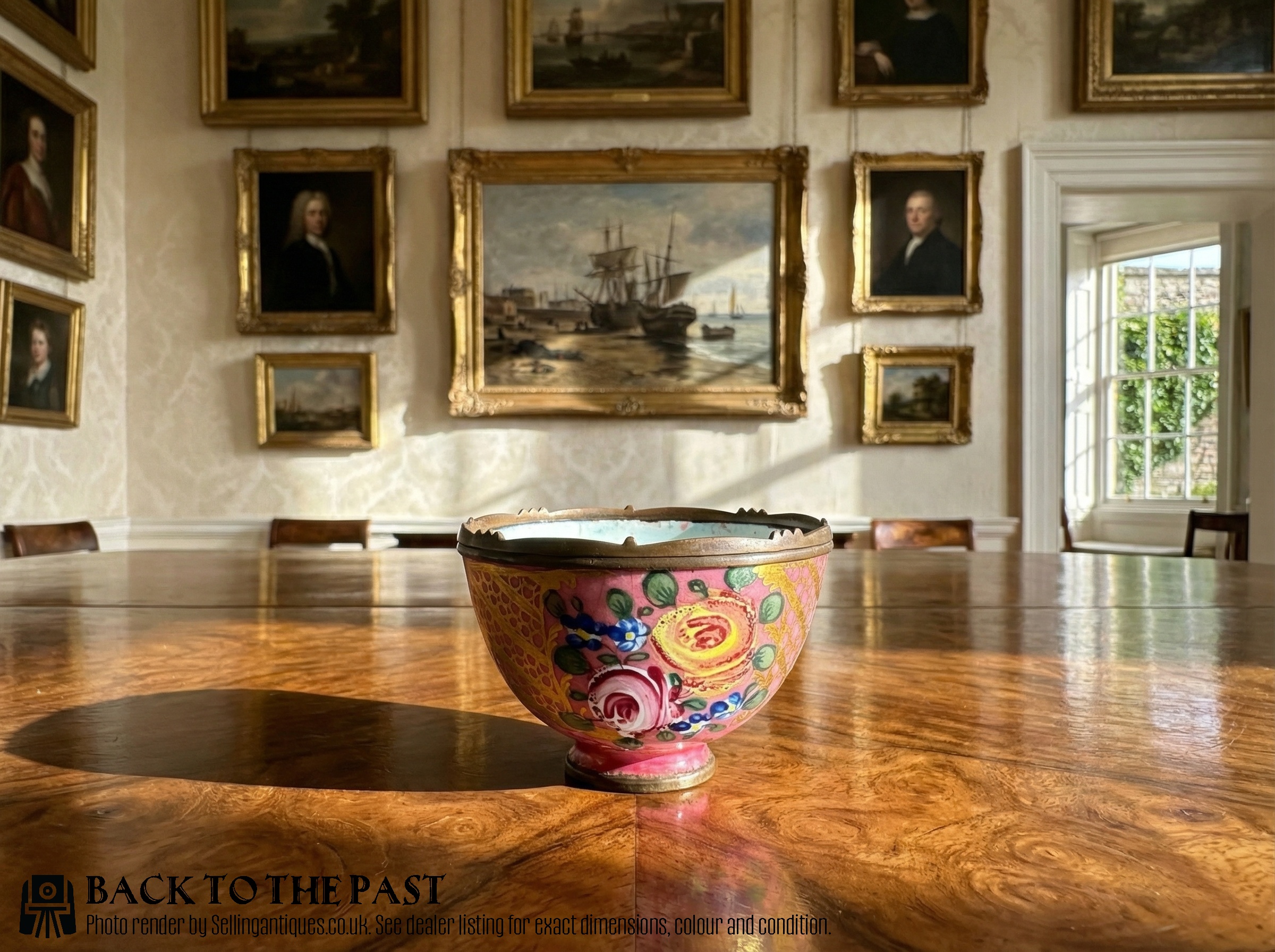
Antique Limoges
Limoges is a place, not a firm. The town in west-central France painted enamel on copper from the late medieval period onward, then became a porcelain district once local kaolin was worked in the later 18th century. Dozens of separate factories and decorating workshops sat behind the name.
What reaches Sellingantiques is porcelain far more often than enamel, and usually something for the table. Of eighteen sampled listings, four are dinner or dessert services, coffee sets or a chocolate pot, against three plaques and plaque-like display pieces, and four small lidded powder boxes and bonbonnières. Only four titles name enamel at all.
Dates cluster at two poles. Eight listings carry a clean year and those run from 1880 to 1930, so later 19th-century tablewares sit at one end and a tight group of Art Deco lidded vanity pieces, all placed around 1930, at the other. Two pieces are dated to the 18th century, and both are enamel on metal rather than porcelain.
Odd forms turn up once and then not again: a pair of oyster plates, a footed grisaille enamel tazza with a portrait, a bisque figural pair of a young man and woman from the 1870s, an enamel scent bottle with silver mounts. Fourteen dealers have listed in this category, but only around three pieces come to market in a year.

Where The Range Splits
Attribution does most of the work. Four of eighteen titles name a factory or decorator; the rest name the town alone, which is how the bulk of this material is offered. Those four sit above the plainly labelled dinner set and the gilded porcelain service.
Enamel outruns porcelain. All four enamel listings fall in the upper half of the sampled range, and the two 18th-century pieces, both enamel, sit high. The scent bottle with silver mounts is the one piece with precious-metal fittings and the top of the sample.
Hand-painted pictorial work carries a piece too. The painted plaque of a young woman and the portrait tazza are priced above the services and sets, while the plainest, least-attributed tableware sits at the bottom.
Antique Limoges Retail Price Guide 2026
Typical UK retail prices for limoges, calculated from the Sellingantiques database of over a million retail prices indexed since 2003. This retail price guide relies exclusively on Sellingantiques data; no external sources or auction records are used, so the figures do not describe the wider market.
Limoges is a small category on Sellingantiques. About three pieces are listed a year, and fourteen dealers have listed one at some point.
The Antique Limoges Glossary
- Limoges
- The French town and its district, a place of manufacture covering many separate factories and workshops rather than one maker.
- Dinner service
- A matched set of table china, counted by pieces in listings. The largest on Sellingantiques runs to 65 pieces, the next biggest counted set to seven.
- Plaque
- A flat panel of porcelain or enamel painted as a picture, meant to be framed or mounted.
- Enamel
- Coloured glass fused onto a metal base, the Limoges tradition that predates porcelain in the town.
- Grisaille
- Decoration in shades of grey, imitating relief or sculpture. Used on the footed enamel tazza in this archive.
- Bisque
- Unglazed porcelain left matt, used for figures such as the 1870s figural pair.
Antique Limoges: Frequently Asked Questions
Is Limoges a maker or a place?
A place. Limoges is a town in west-central France, and the name on a piece points to the town and its district rather than to one firm.
Many separate factories and decorating workshops worked there. That is why most listings name only Limoges, with a factory or decorator named in a minority of titles.
What sort of Limoges comes up most often?
Porcelain rather than enamel, and usually a table piece. Dinner and dessert services, coffee sets and a chocolate pot make up roughly a third of the sampled listings.
After that come painted plaques and display pieces, then a small group of lidded vanity wares. Enamel on metal is a distinct minority, four of eighteen titles.
How old is most antique Limoges on the market?
Eight listings carry a clean year and those run from 1880 to 1930. That fifty-year window covers most of what actually reaches the site.
Dealers' own dating is often broader, with 19th Century and 1930s each used several times. Two listings go back to the 18th century, and both of those are enamel.
Why are the enamel pieces at the top of the range?
Enamel on copper is the older Limoges tradition, and all four enamel listings in the sample fall in the upper half of the range.
Age and mounts push them further. The two 18th-century pieces are both enamel, and the enamel scent bottle with silver mounts is the highest-priced listing of the eighteen.
What are Art Deco Limoges powder boxes?
Small lidded ceramic boxes and bowls for a dressing table. They form a tight little group on Sellingantiques: three powder boxes or bowls and a bonbonnière, all placed at about 1930.
They sit at the lower end of the range, below the painted plaques and the enamel.
How often does Limoges come up for sale?
Not often. Around three pieces a year reach the market in this category.
Fourteen different dealers have listed in it, so most of them have handled a single example rather than stocking the material regularly.