

Antique Tureens
A tureen is a covered ceramic serving vessel for the dining table, made to bring soup, sauce or vegetables to table and keep them warm under the lid.

Antique Tureens
The covered tureen entered European dining in the early 18th century as part of formal service. Ceramic versions followed silver forms, and by the later 18th and 19th centuries factory-made earthenware and ironstone tureens with covers and stands were a standard part of the dinner service.
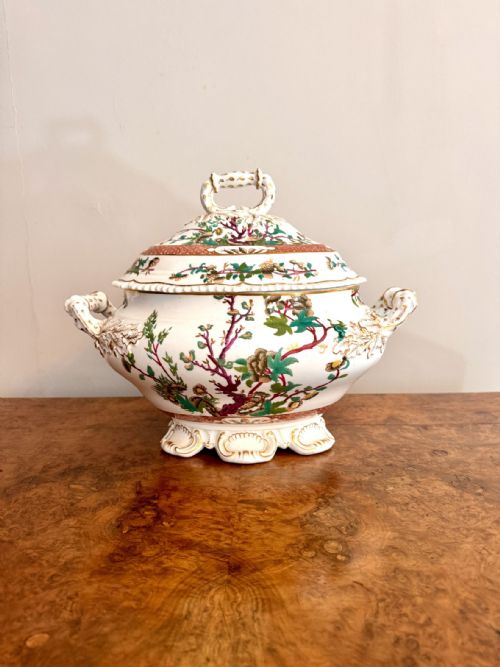
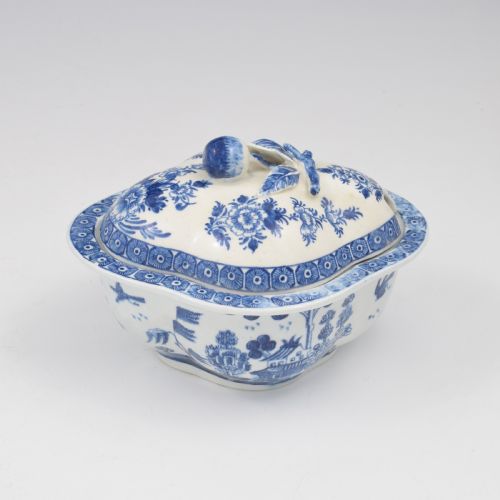
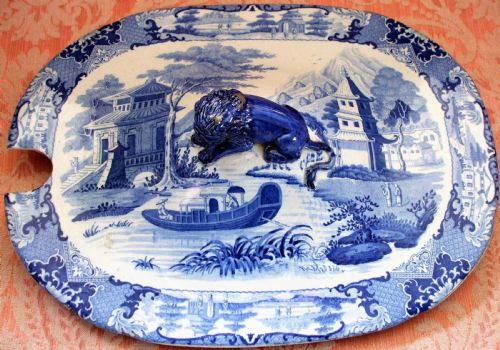
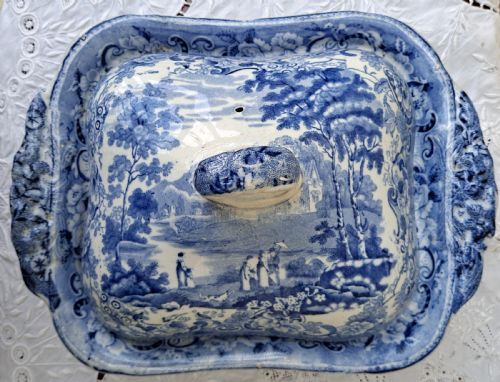
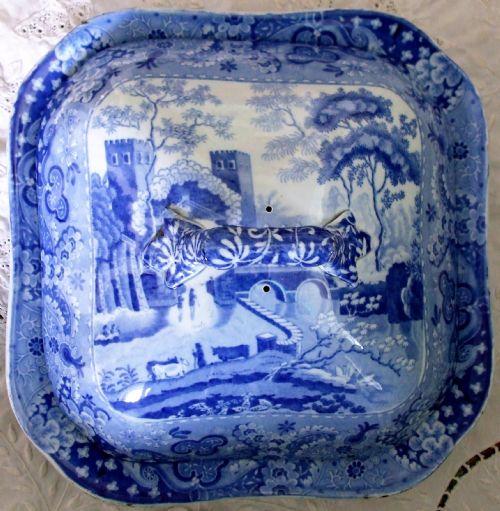
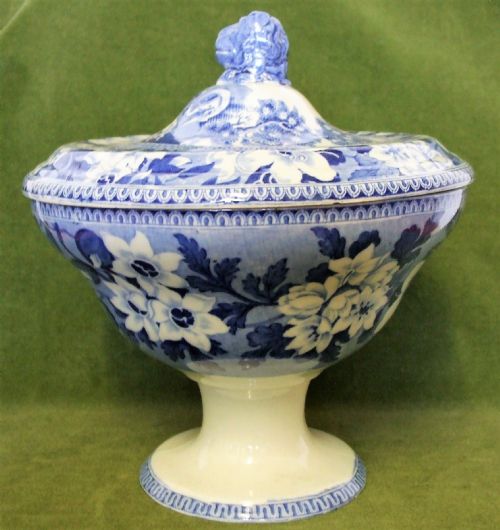
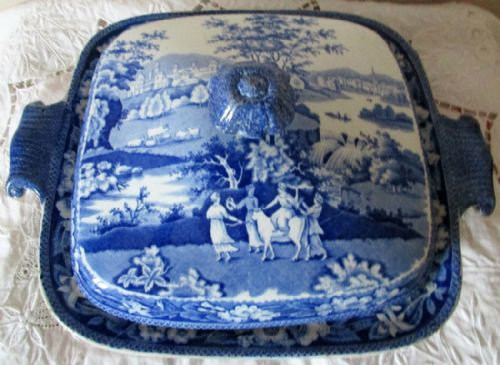
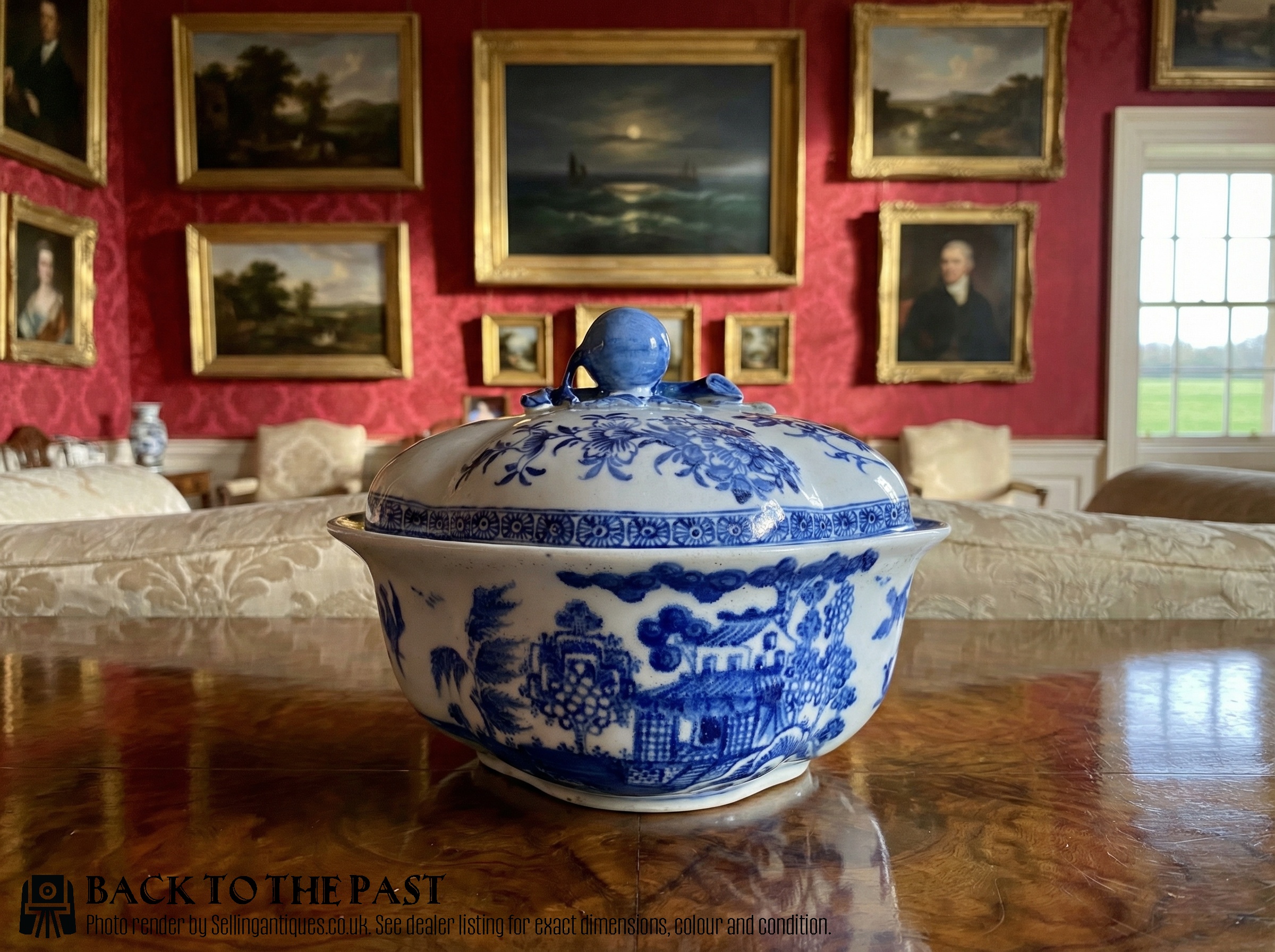
The version you are most likely to meet on Sellingantiques is an English earthenware or ironstone tureen with blue transfer-printed decoration. Blue and white each appear in more than a fifth of titles, ironstone and pottery together outweigh porcelain, and a named pattern is given in around a fifth of listings.
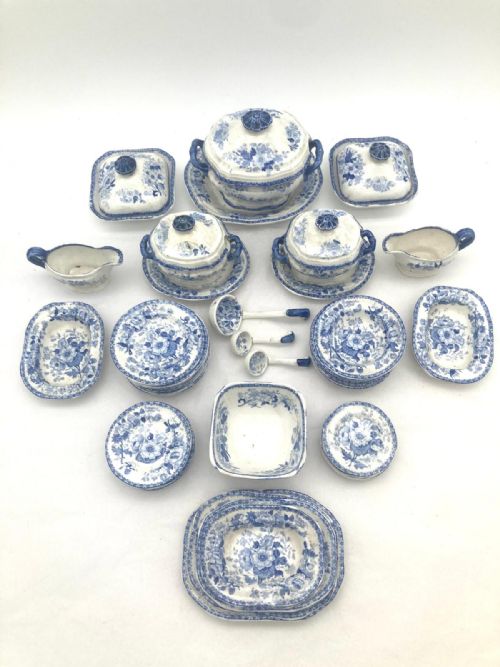
Size terms sort the category. Sauce tureens are the commonest, small and usually made in pairs, often with a matching stand and sometimes a ladle. Soup tureens are the large oval or rectangular size with a ladle slot cut in the cover, and vegetable tureens are shallower covered dishes.
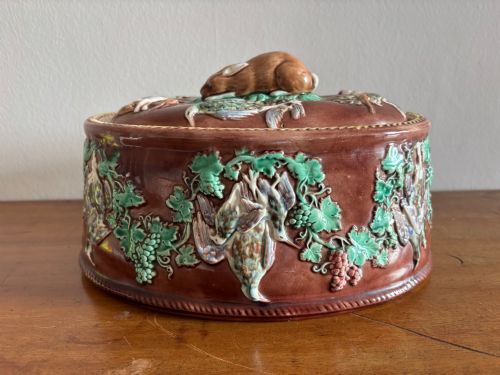
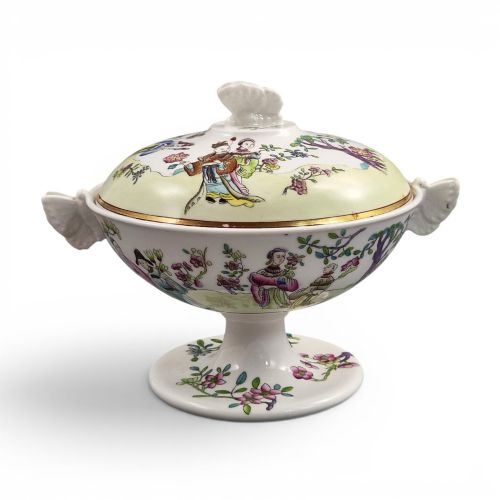
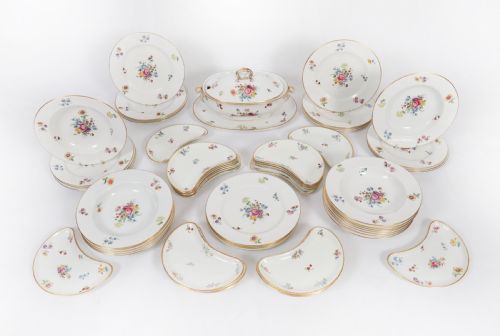
Around the edges sit porcelain tureens, English and Continental; Chinese and Chinese export examples; and modelled forms including hen-on-nest and chicken egg baskets, partridge tureens, a cabbage and a crab. Some tureens come as part of a dinner, dessert or child's service rather than on their own.

What Sets Them Apart
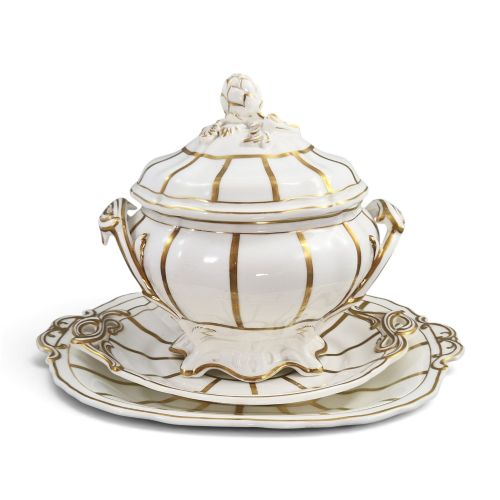
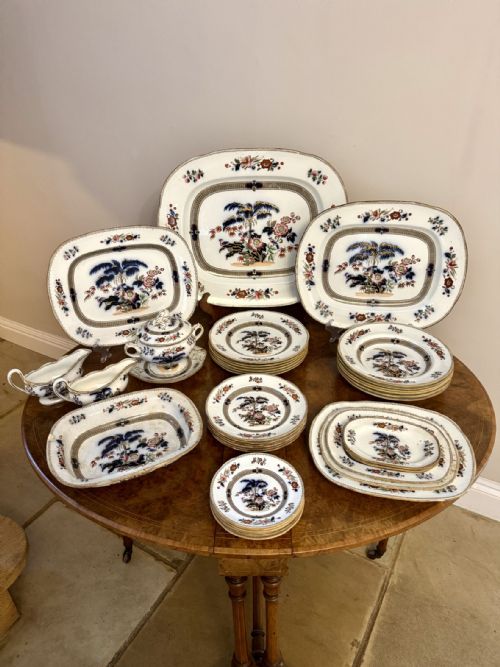
Completeness does most of the work. A tureen with its original cover, stand and ladle sits well above a bare vessel, which is why so many titles spell out "tureen, cover and stand". Pairs of sauce tureens, sets of three and larger groups push further up again, and a tureen sold inside a substantial dinner service reaches the top of the range.
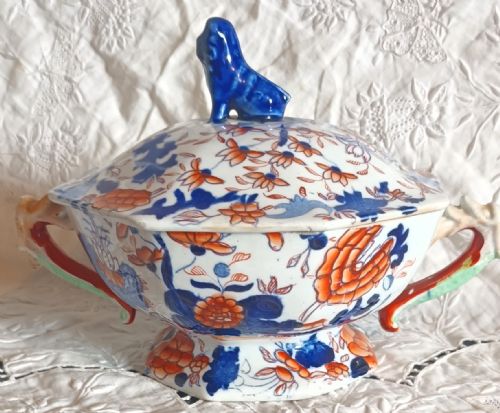
Attribution and pattern come next. Listings that name a factory and a recorded pattern, Water Lily, Mandarin, Grasshopper, Japan Basket, Tobacco Leaf, sit above the generic blue and white tureen with no pattern given. The archive is unusually specific on pattern names for a ceramics category, so a named scheme carries weight.
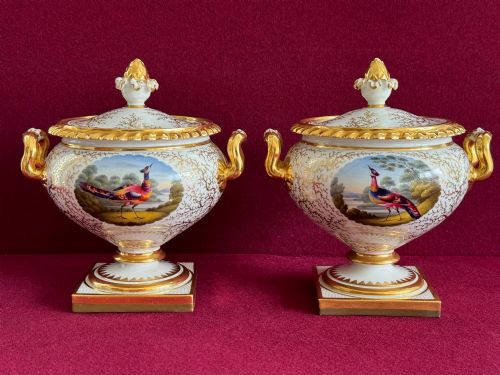
Then body and scale. Hand-painted or gilded porcelain, with painted fruit, crests or gilt handles, sits above printed earthenware. Large examples sit above small ones, with the biggest sampled piece a rectangular ironstone tureen with an inner lid at 32cm wide; miniature and toy tureens sit at the bottom.
Antique Tureens Retail Price Guide 2026
Typical UK retail prices for tureens, calculated from the Sellingantiques database of over a million retail prices indexed since 2003. This retail price guide relies exclusively on Sellingantiques data; no external sources or auction records are used, so the figures do not describe the wider market.
The largest measured tureen on Sellingantiques is a monumental Imari ironstone one with an inner lid, recorded at 32cm wide.
The Antique Tureens Glossary
- Cover
- The lid. It is named separately in a fifth of titles because tureen and cover are described as a matched unit, and a cover can be lost or replaced.
- Stand
- The flat dish the tureen sits on, part of the original set and frequently sold with it. Named in around one title in seven.
- Sauce tureen
- The small size, usually made and sold in pairs, sometimes with its own ladle. It is the commonest size term in the category.
- Soup tureen
- The large size, typically oval or rectangular, with a slot cut in the cover for the ladle handle.
- Ironstone
- Dense, hard-fired white earthenware patented in the early 19th century. It accounts for around one listing in six.
- Caneware
- Buff unglazed stoneware, used in this archive for game pie dishes and game tureens.
Antique Tureens: Frequently Asked Questions
How often do tureens come up for sale?
Sixty dealers have listed tureens on Sellingantiques, but only about twenty-two come to market in a year. The category arrives in ones and twos rather than in runs.
That pace means a particular size, pattern or body may not repeat for some time.
What does 19th Century mean in these listings?
It is the dealer's shorthand, and it dominates the dated field: 67 listings carry it, with Georgian on 18 and Regency on 15. Only 55 of 182 listings give a clean year.
Where sample titles do give a circa date, they mostly fall between about 1810 and 1880. So the tag usually points at the first two-thirds of the century.
The full dated span runs from 1750 to 1960.
Are tureens usually sold with a stand?
Often, but not always. Stand appears in around one title in seven, and cover in around one in five, with titles regularly reading "tureen, cover and stand" or "tureen, cover and ladle".
The rest are listed as the vessel and its lid alone.
Which patterns turn up on tureens?
Named patterns are recorded in around a fifth of titles, which is specific for a ceramics category. Blue transfer subjects include Camel, Elephant, Europa, Castle, Romantic Ruins, Rural Scenery, Canton River Scene, Tower and Bridge of Lucano.
On the ironstone side the names run to Mandarin, Water Lily, Bamboo, Imari, Japan Basket and Grasshopper. Tobacco Leaf appears on Chinese export, and Aesop's Fables and Pomerania each turn up too.
Do animal-shaped tureens appear in this category?
Yes, as a persistent minority. Hen-on-nest dishes and chicken egg baskets account for eight titles, and single appearances include a partridge pair, a dove tureen, a cabbage and a crab.
Majolica and caneware game pie dishes sit alongside them.
Where were antique tureens made?
England dominates: earthenware, ironstone and pottery bodies, with a smaller run of English porcelain. Chinese and Chinese export tureens, including Qianlong blue and white and Canton famille rose, make up about one listing in twenty.
Continental origins are thin on the ground. French faience is the commonest source outside England and China, with single Spanish, Italian, Danish, German, Bohemian and Portuguese-style entries.