

Antique Meissen
Hard-paste porcelain from the Saxon manufactory at Meissen, made for the table and the cabinet, and above all modelled into small painted figures and groups.
Antique Meissen
Meissen, near Dresden, was the first European factory to make true hard-paste porcelain, from the early 18th century. It set the pattern for the modelled figure, the painted tea and coffee service and the flower-encrusted cabinet piece, and the rest of Europe followed. Its crossed-swords mark became the most copied trademark in ceramics.
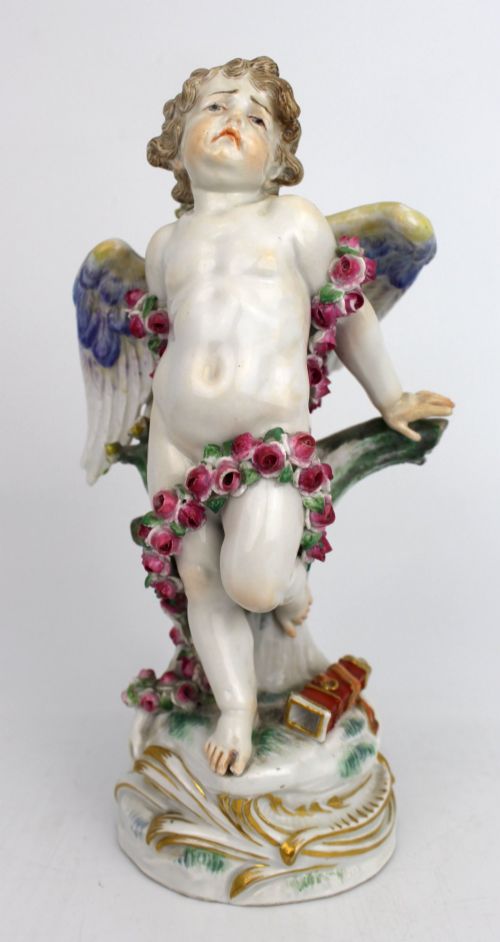
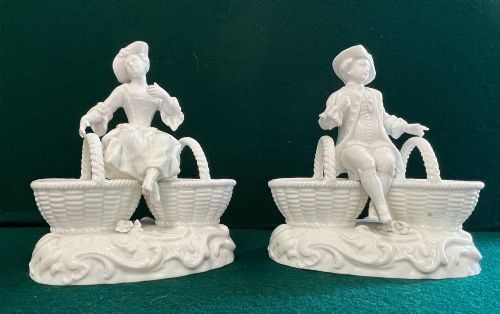
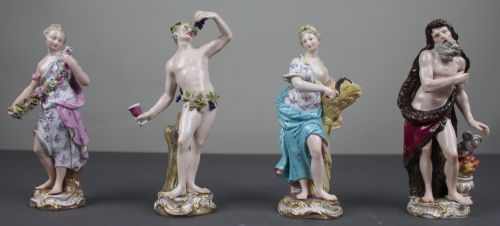
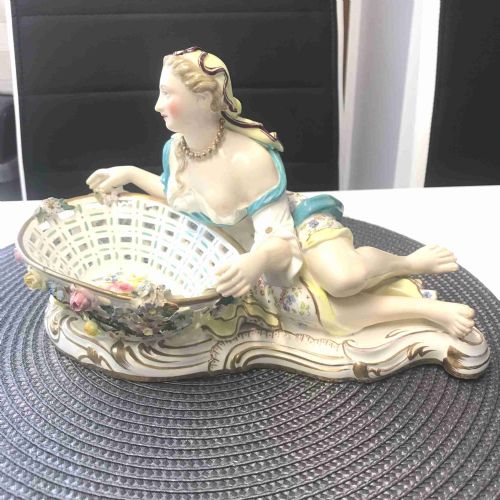
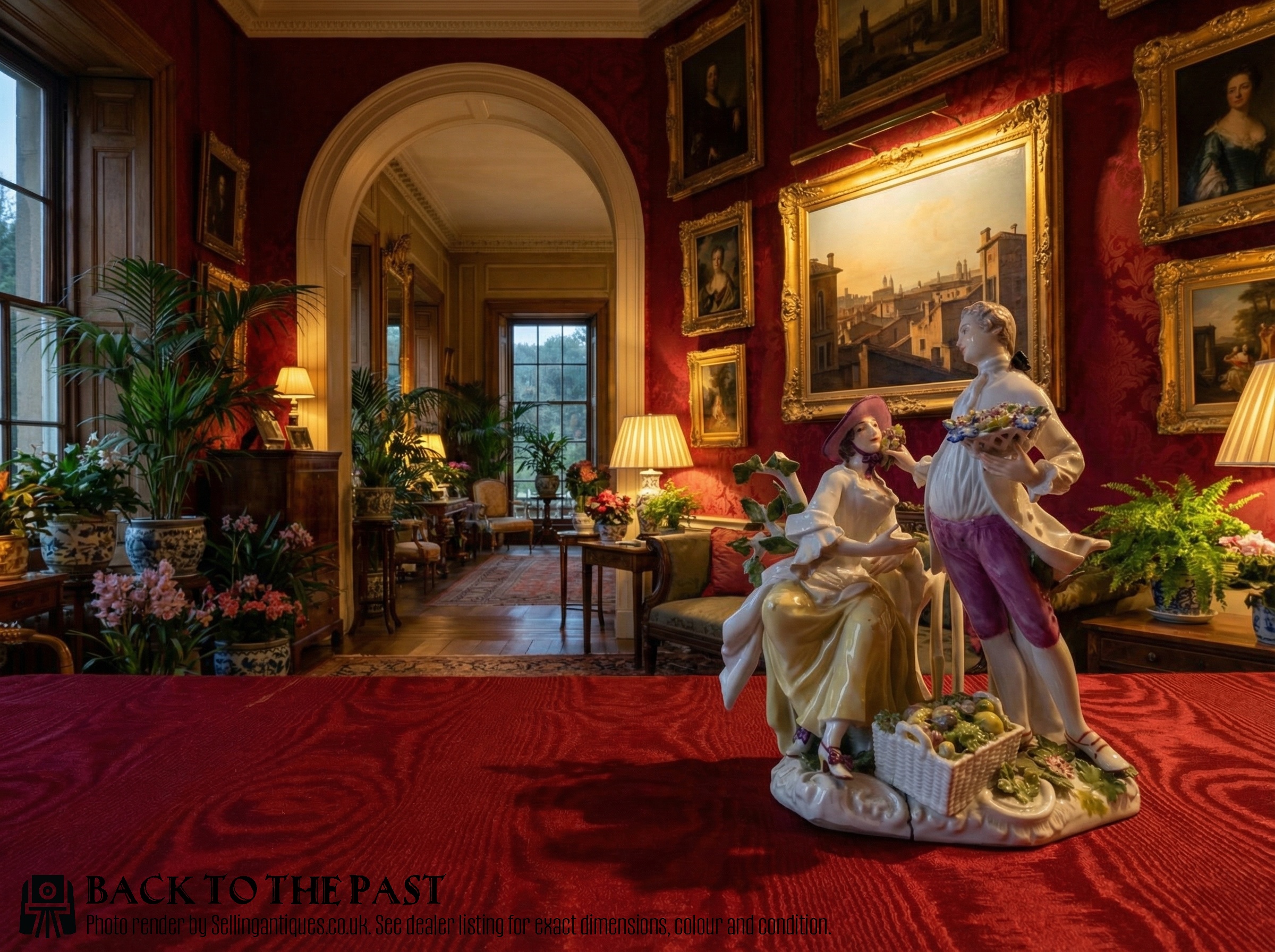
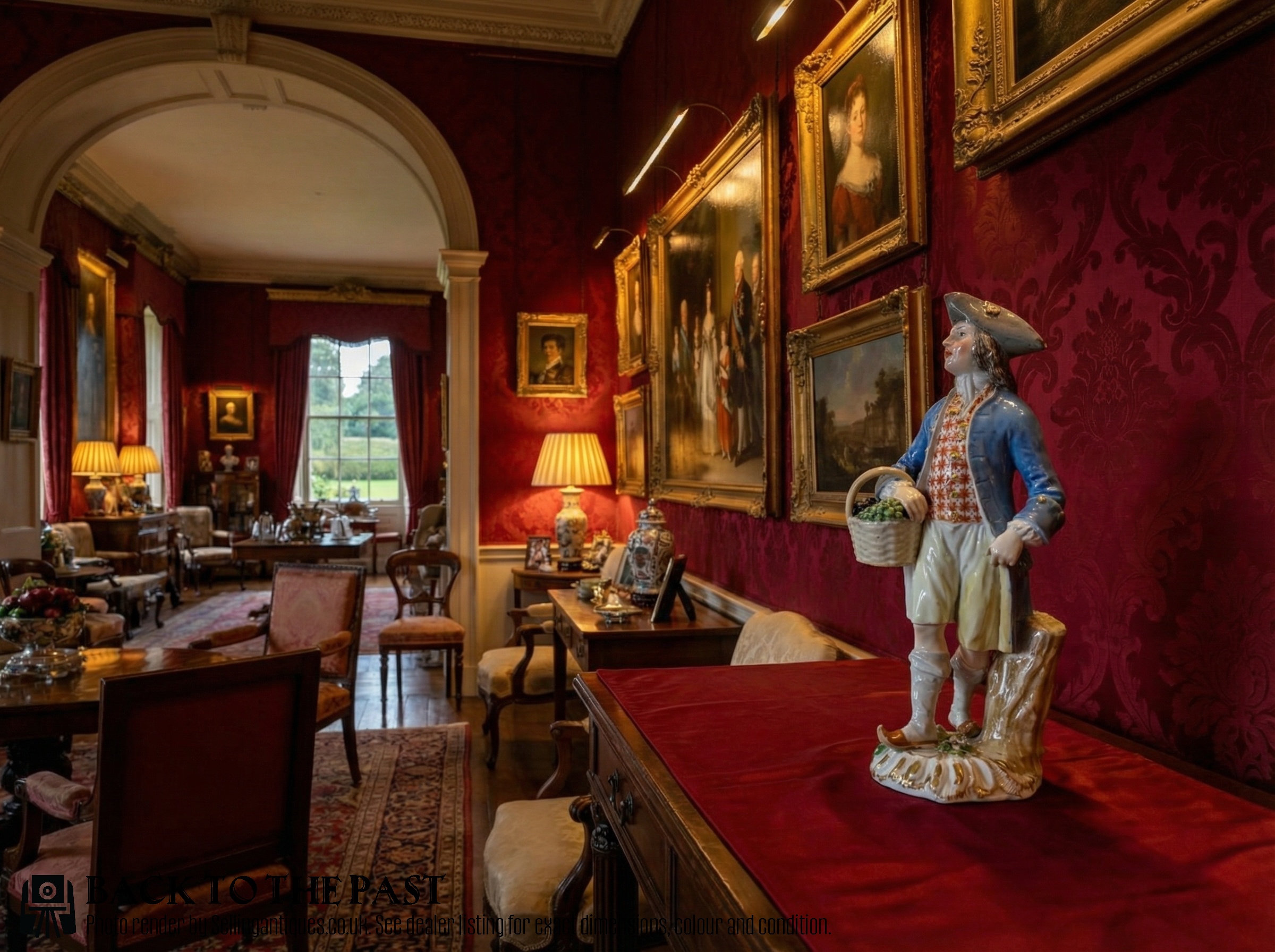
The form you are most likely to meet is a hand-painted and gilded figure or figure group, 19th century more often than 18th. Putti, dancers, musicians, shepherdesses, grape harvesters and street traders recur, along with the monkey band and named subjects like 'The Good Mother' and 'Broken Eggs'. Pairs and matched sets run through the category, up to the Four Seasons as a complete set of four.
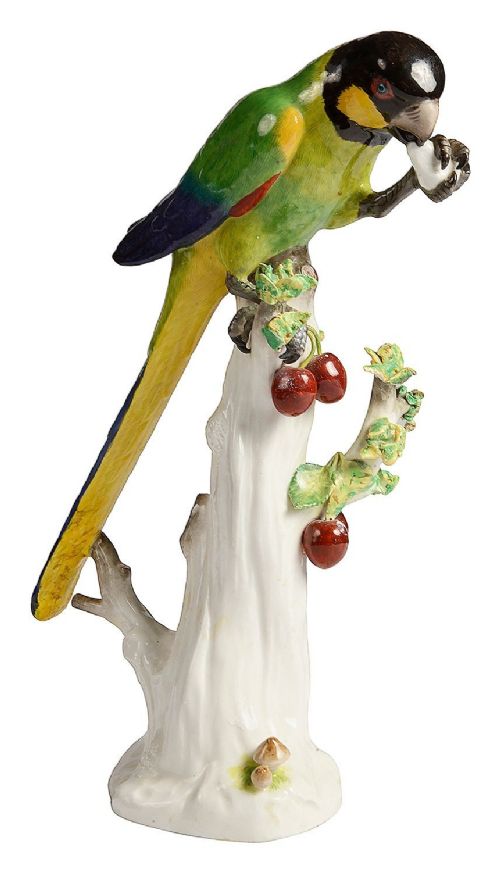
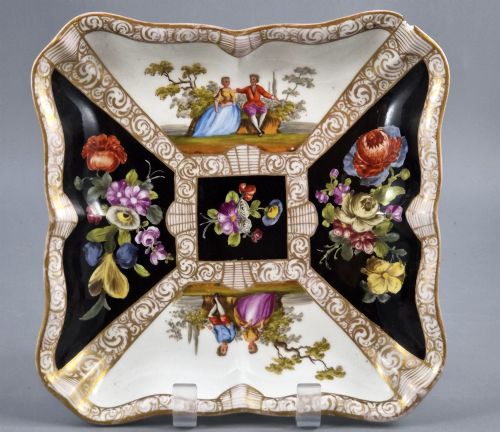
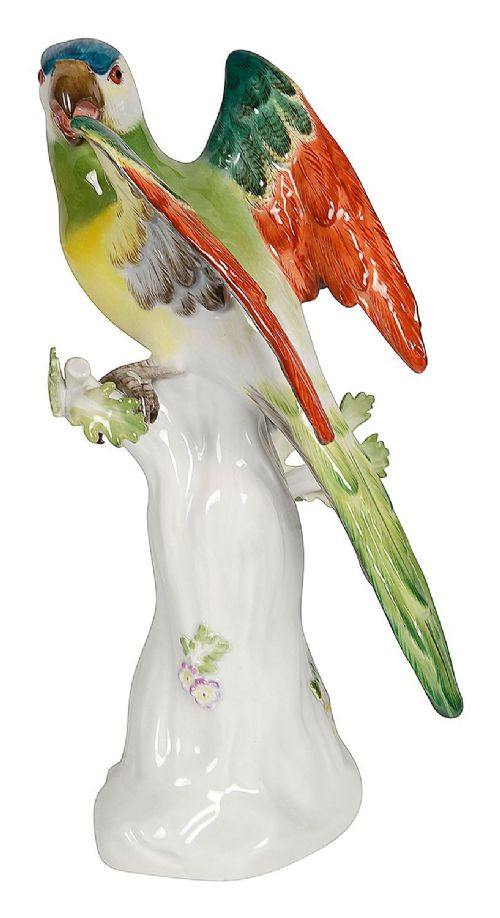
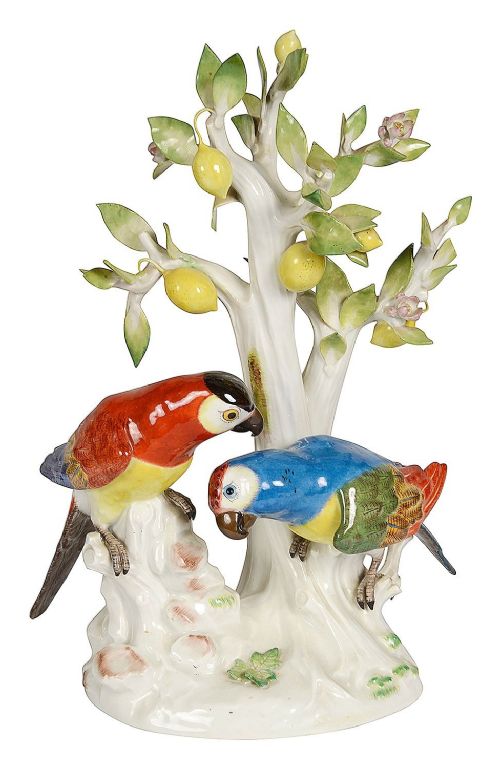
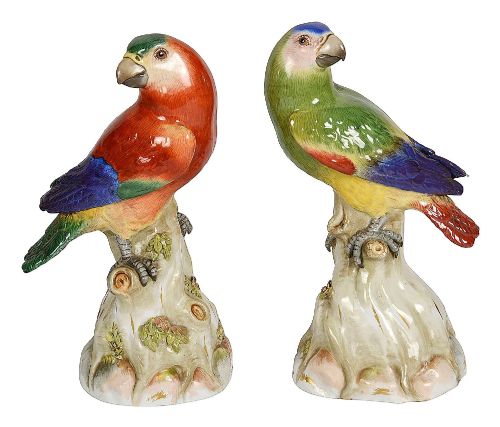
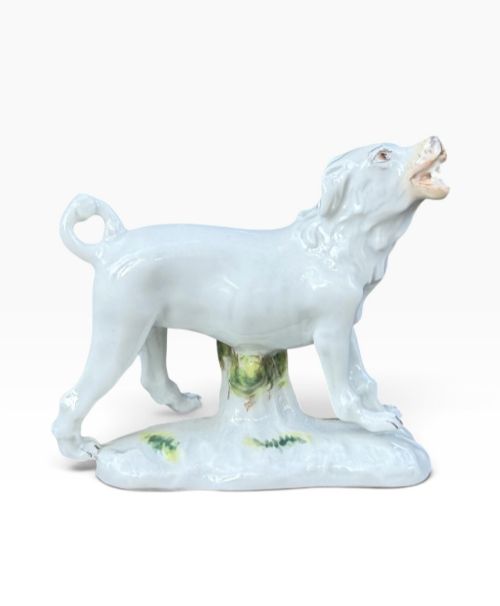
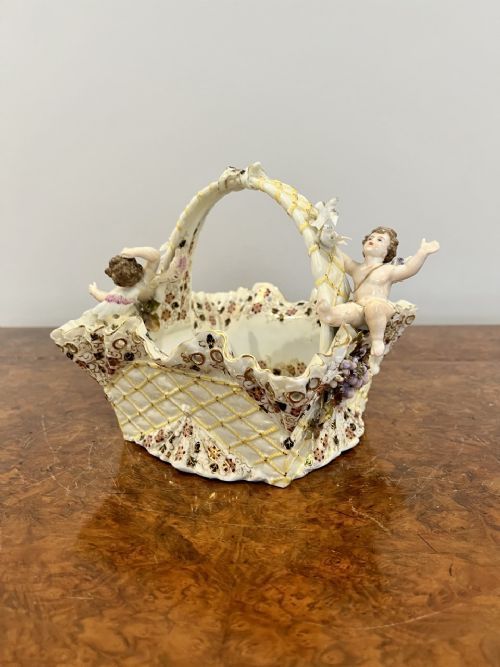
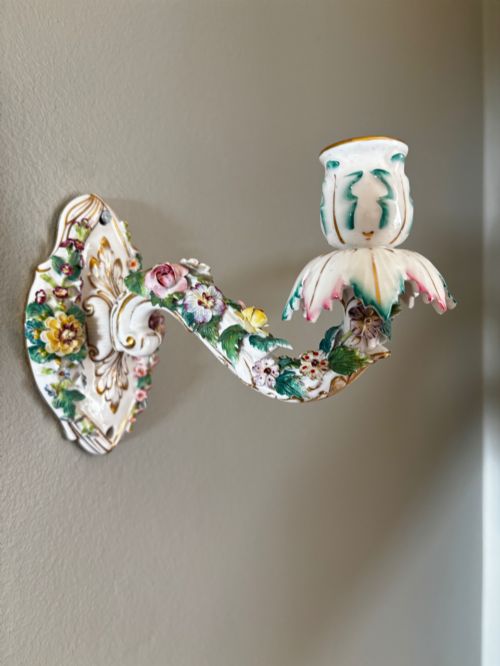
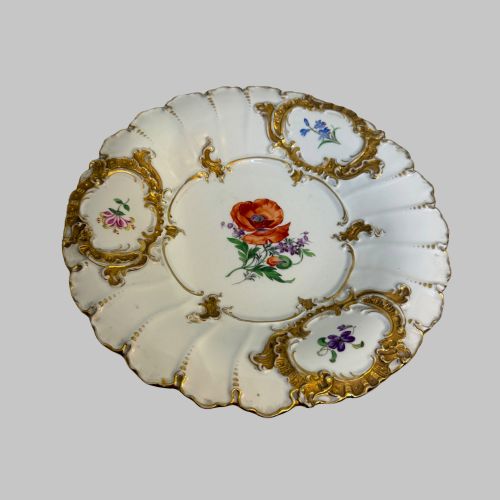
Tablewares and cabinet pieces make up about a quarter of what appears: bowls, saucers, teapots, coffee pots, sucriers, dessert dishes, candelabra, centrepieces and baskets, with the occasional cabaret set or coffee service. Birds and animals are fewer but conspicuous, parrots and cockatoos among them, and they hold the upper reaches of the range.
Because the mark was copied so widely, porcelain made in Meissen's manner sits alongside the factory's own. Roughly one listing in eight is titled 'Meissen Style' or 'after Meissen', or names Sitzendorf, Helena Wolfsohn, Dresden, Samson or Volkstedt instead. Dating is often coarse, filed simply as 19th or 18th century, so the title with its circa date is frequently the finer guide.
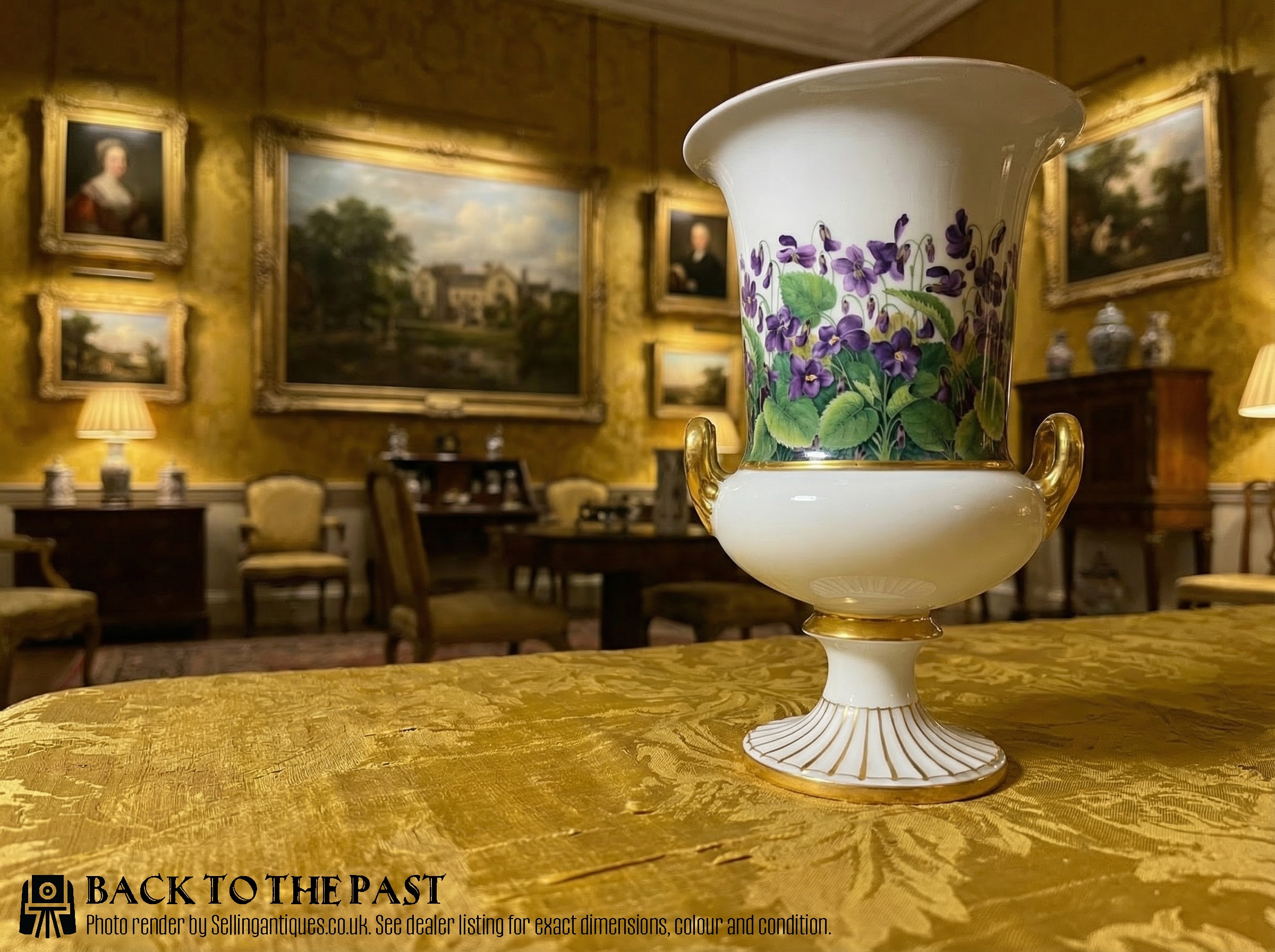
Where The Range Widens
Complexity does most of the work. A single small figurine sits near the bottom; a multi-figure group on one base, a matched pair, or a named subject such as the Four Seasons or a courting couple sits well above it. Scale pulls the same way, and heights get quoted where they matter, from around 17cm up to a pair of figures at 60cm.
Factory Meissen stands above porcelain made in its manner. Titles hedged as 'Meissen Style', 'after Meissen' or '(Meissen?)', and those naming another Saxon or French factory, describe a different thing from a crossed-swords piece, and the archive prices them as such. Where a model number or a modeller's name is claimed in the title, the piece tends to sit higher again.
Among the wares, early decoration carries more than later work in the same shape. Harbour and merchant scenes, woodcut flowers, coloured grounds and tea pieces dated to the 1730s and 1740s stand above 19th-century floral painting on a comparable teapot or saucer. Birds and animals are the other outlier, few in number and repeatedly near the top.
Antique Meissen Retail Price Guide 2026
Typical UK retail prices for meissen, calculated from the Sellingantiques database of over a million retail prices indexed since 2003. This retail price guide relies exclusively on Sellingantiques data; no external sources or auction records are used, so the figures do not describe the wider market.
The most expensive Meissen ever sold on Sellingantiques was a porcelain Count Bruhl's Tailor, the tailor riding a goat, dated around 1860. It sold in March 2026.
The Antique Meissen Glossary
- Crossed swords
- The underglaze blue factory mark, written in titles as 'cross swords'. It is the most copied trademark in ceramics, which is why so much circulates as 'style' or 'after'.
- Group
- A single piece modelled with two or more figures on one base, as opposed to a figure standing alone. The word appears in 31 titles, often as 'porcelain group'.
- Putti
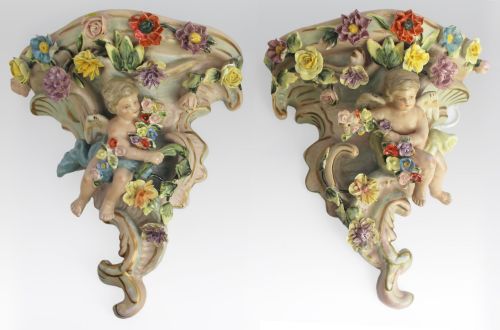
- Chubby infant figures, cherubs and cupids. They turn up in nine titles, commonly worked into sets of the seasons or the senses.
- Marcolini period
- Meissen production of roughly 1774 to 1814, named in ten titles and usually given with that date range. Saucers, sucriers, ecuelles and baskets are the recurring forms.
- Sucrier and ecuelle
- A covered sugar bowl, and a covered broth bowl with its stand. Both recur among Marcolini-period wares.
- Zwiebelmuster
- The blue and white stylised floral pattern, known in English as Blue Onion, named here on a coffee pot.
Antique Meissen: Frequently Asked Questions
How many come up for sale each year?
Around 27 pieces reach this market in a year on Sellingantiques, carried by some 37 different dealers.
That spread means the category sits across many hands rather than with a few specialists, and what appears in any given month varies.
Are figures more common than tea wares?
Yes. Figures, figurines and groups account for roughly half the category, with 'group' alone in 31 titles and 'figure' in 24.
Tablewares and cabinet pieces make up about a quarter: bowls and saucers lead, with teapots, coffee pots, sucriers, dishes, candelabra and baskets behind them.
What dates do listings cover?
The recorded dates run from 1750 to 1960, though titles push the earliest wares back to tea bowls and saucers described as around 1730.
The 19th century dominates, covering 78 dated listings against 45 for the 18th. Decade buckets behind them are thin, and a leopard attacking a snake, filed to 1960, is the latest thing recorded.
Why do some listings say Meissen style?
The crossed-swords mark was copied more than any other in ceramics, so porcelain made in Meissen's manner has always circulated alongside the factory's own.
Roughly one listing in eight is titled 'Meissen Style' or 'after Meissen', or names another factory outright, among them Sitzendorf, Helena Wolfsohn, Dresden, Samson and Volkstedt.
Which subjects turn up again and again?
Putti, dancers, musicians, shepherdesses, grape harvesters and Cris de Paris street traders are the steady figural repertoire, along with the monkey band.
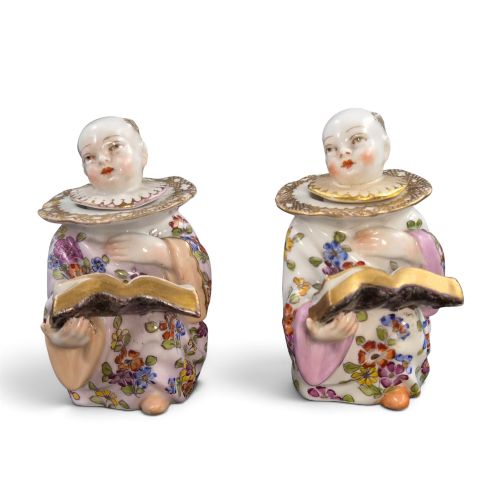
Among birds and animals, parrots, cockatoos and hoopoes recur, one perched parrot standing 43cm. Oddities appear once and not again: nodding pagoda figures as a 17cm pair, and the tailor riding a goat.
Do complete sets of figures appear?
Matched pairs are common, with 'pair' in 38 titles, close to a fifth of them.
Complete allegorical sets are much scarcer. The Four Seasons as a full set of four appears twice, and those two are the only complete sets of the kind recorded.