




Antique Bisque
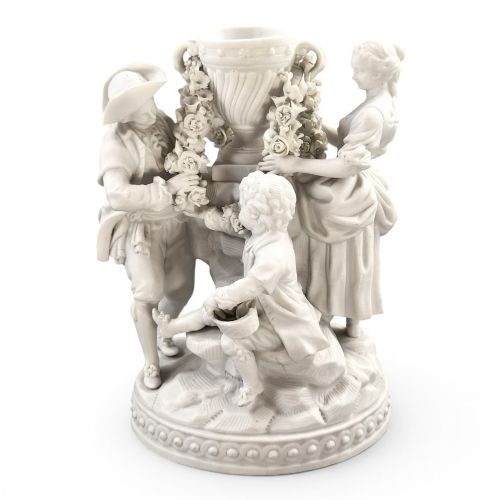
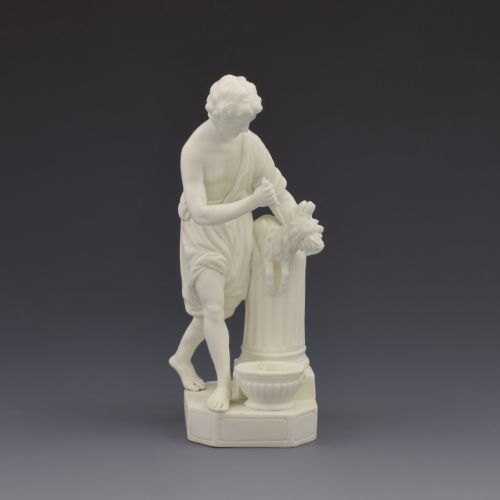
Bisque is porcelain fired but left unglazed, and in this category it means figure sculpture: white or lightly tinted people, made to stand on a mantel or table.
Antique Bisque
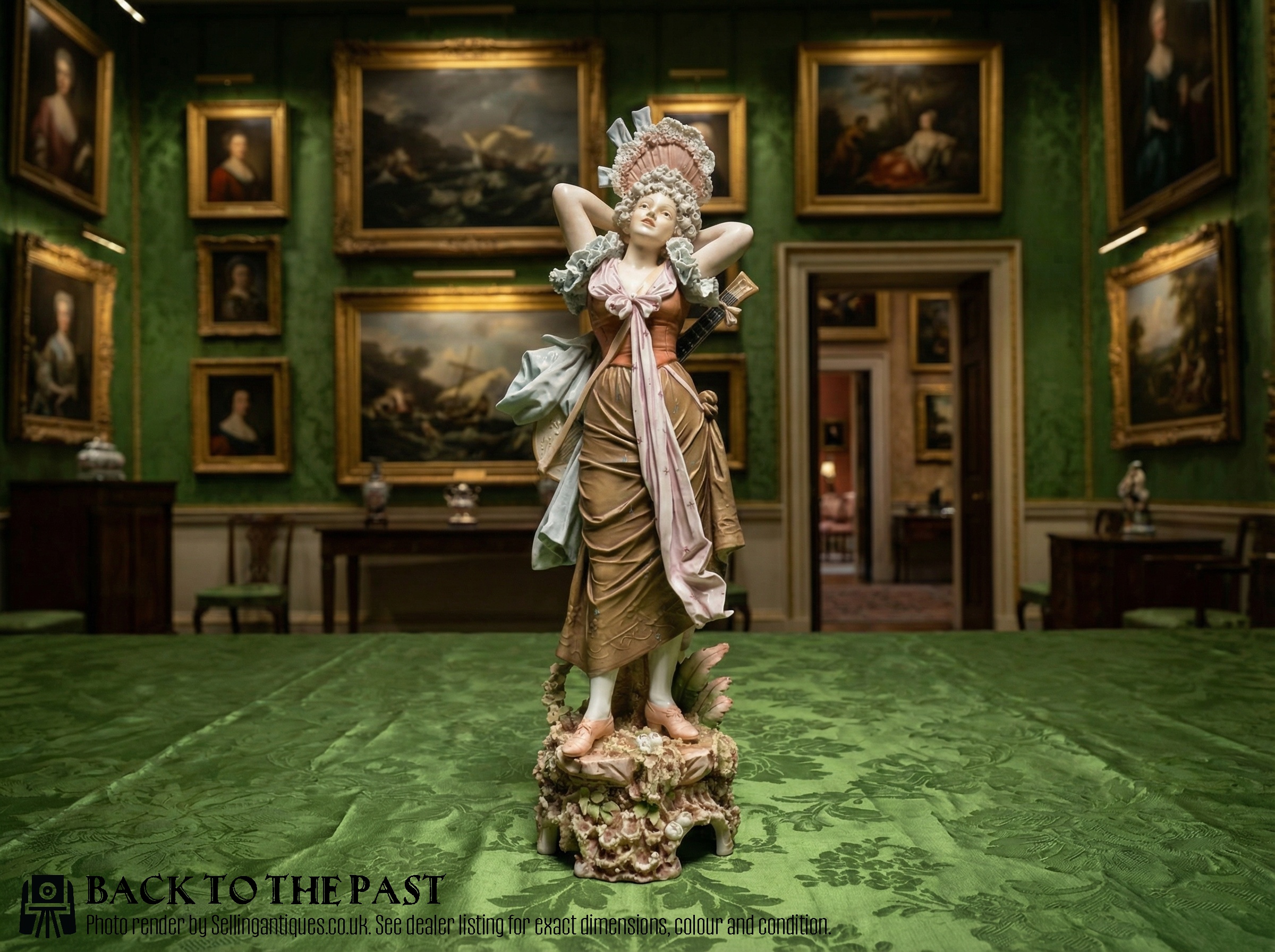
Bisque, also spelled biscuit, is porcelain taken through the fire without a glaze. The surface reads as matte stone rather than glass, which keeps modelled detail crisp and gives a marble-like white. European factories took it up from the mid-18th century, mostly for figures.
Nearly half the listings on Sellingantiques carry the word porcelain, and the figural words dominate everything else: figure, figures, figurine, figurines. So what you are most likely to meet is a standing or seated human subject, sold singly or, very often, as a matched pair. The word pair appears in 22 of 70 titles.
Around it sit smaller strands. Titles using the name parian, the statuary-white body, account for a sixth of the category, alongside biscuit-titled studies. Royal Dux Bohemia is the most concentrated single origin, running to about one title in eight as figures, groups, a shell centrepiece and a numbered model. French bisque is a substantial minority, and brings with it the plaques, roundels and centrepieces. Busts turn up throughout, with royal and historical sitters.
Dating is loose more often than not. The dated field runs 1850 to 1920, and the commonest single entry is simply 19th Century, at 24 listings, with Victorian used in the same broad way. Where decades are given they cluster late, in the 1890s through the 1910s. Three listings reach back into the 18th century, a small tail rather than a strand.
The Range
Scale is the usual selling point after subject. Large qualifies a fifth of titles, with Huge and Very Large turning up as well, and the biggest stated size in the samples is a French shepherd and shepherdess group at 60 cm. Size pushes a piece up the range.
Attribution does the rest of the work. The upper half of the range carries a factory or a modeller's name, stamped, marked or given as attributed, and often a model or pattern number with it. The lower end says only what the piece shows: a bisque figurine of a young boy, an antique bisque porcelain figure group. Specific identification of subject and date works the same way, so a titled group with a year attached sits well above a generic one.
Pairs and groups outrank singles, and matched boy-and-girl or man-and-woman couples run from the bottom of the range right to the top. Added enrichment appears only at the upper end: gilding on classical figures, and ormolu mounts on a centre bowl.
Antique Bisque Retail Price Guide 2026
Typical UK retail prices for bisque, calculated from the Sellingantiques database of over a million retail prices indexed since 2003. This retail price guide relies exclusively on Sellingantiques data; no external sources or auction records are used, so the figures do not describe the wider market.
Matched pairs are close to a defining feature here, with boy-and-girl and man-and-woman couples running right through the category.
The Antique Bisque Glossary
- Bisque / biscuit
- Porcelain fired without glaze, leaving a matte, stone-like surface. Both spellings are used in titles in this category.
- Parian
- A fine white statuary porcelain body sold under that name, used in roughly a sixth of titles here.
- Pair
- Two figures made and sold as companions, commonly a man and woman or boy and girl. The commonest title word after the body itself.
- Figure group
- Two or more figures modelled on a single base, as opposed to a matched pair of separate pieces.
- Plaque, roundel, tondo
- A flat relief panel, rectangular or circular, hung rather than stood. Only a handful appear against the mass of three-dimensional work.
- Piano baby
- A large seated or crawling infant figure, made to sit on a piano top.
Antique Bisque: Frequently Asked Questions
What is the difference between bisque and parian?
Both are unglazed white porcelain. Bisque, or biscuit, is the general term for porcelain fired without a glaze; parian is a fine statuary-white body sold under that particular name.
On Sellingantiques the two sit side by side. Parian appears in about a sixth of titles, biscuit in a similar handful, and dealers use whichever name the piece was sold under.
Why are so many bisque figures sold in pairs?
They were modelled that way. Matched companions, usually a man and woman or a boy and girl, were made to flank a clock or stand at either end of a mantel.
Pairs are close to a defining feature of the category, appearing in 22 of the 70 titles, and they run from the plainest examples to the largest groups.
How old is most antique bisque?
The dated field spans 1850 to 1920. Where a clean decade is given it tends to be late, clustering in the 1890s, 1900s and 1910s.
Twenty-four listings are dated only as 19th Century, with Victorian used in the same broad way. A few pieces reach back into the 18th century, and the latest dated piece is a 1920 Art Deco sculpture of a seated nude.
Does bisque come in anything other than figures?
It does, but figures dominate. Busts of royal and historical sitters recur, and there are centrepieces, one of them a bowl with ormolu mounts.
Flat work is uncommon: a few plaques, roundels and tondos, including a pair of Italian portrait roundels of Renaissance poets. Odd forms surface once each, among them a white bisque poodle and a doll with sleep eyes.
Is Royal Dux bisque common on the market?
It is the most concentrated single origin in this category, running to about one title in eight.
It turns up as single figures, larger groups, a shell centrepiece and a piece quoted by its model number.
How often does antique bisque come up for sale?
Twenty-four dealers have listed in the category, with roughly nine pieces coming to market a year.
That makes it a steady trickle rather than something that arrives in runs, so the mix on offer at any one time is small and varied.