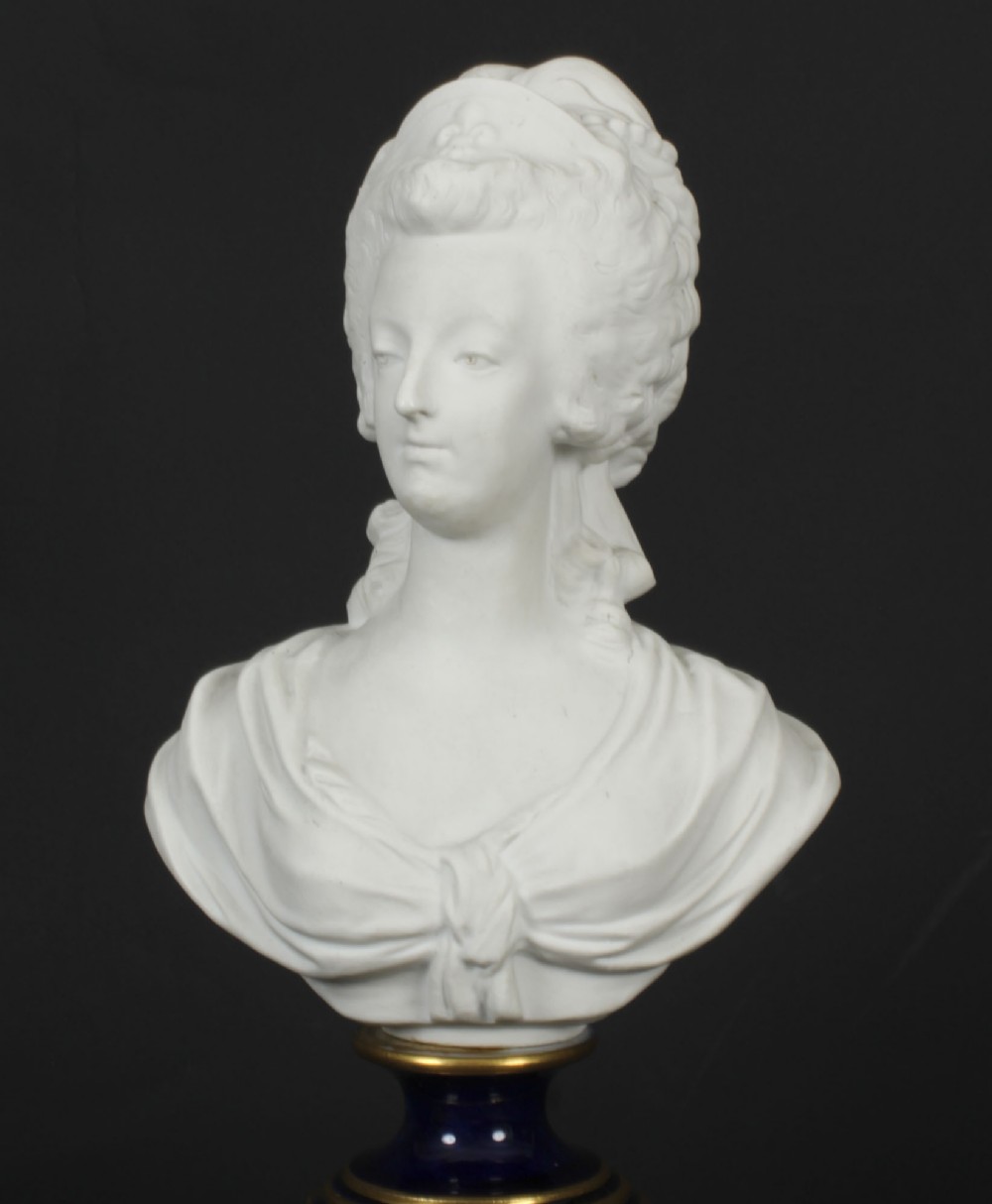
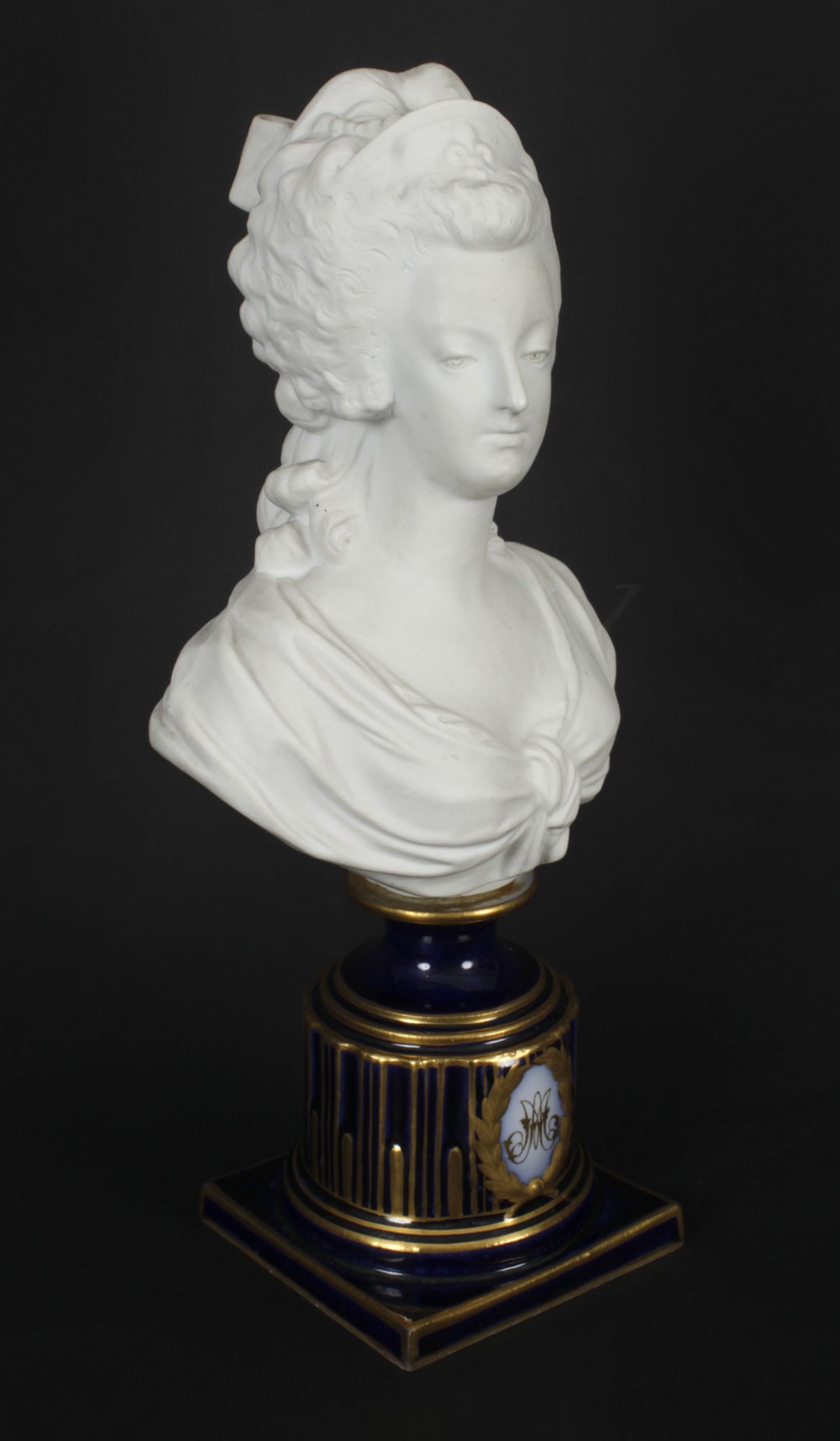
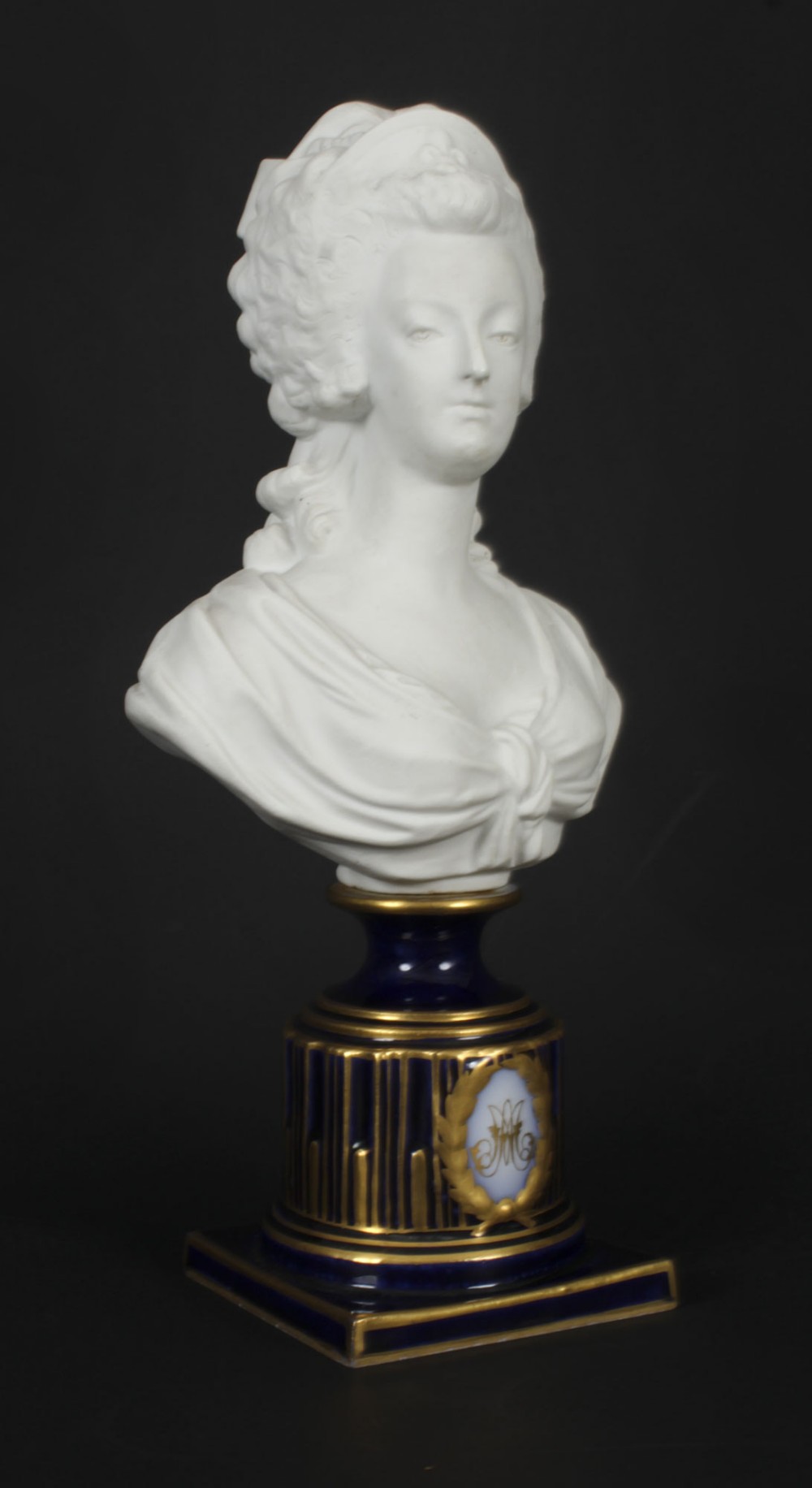
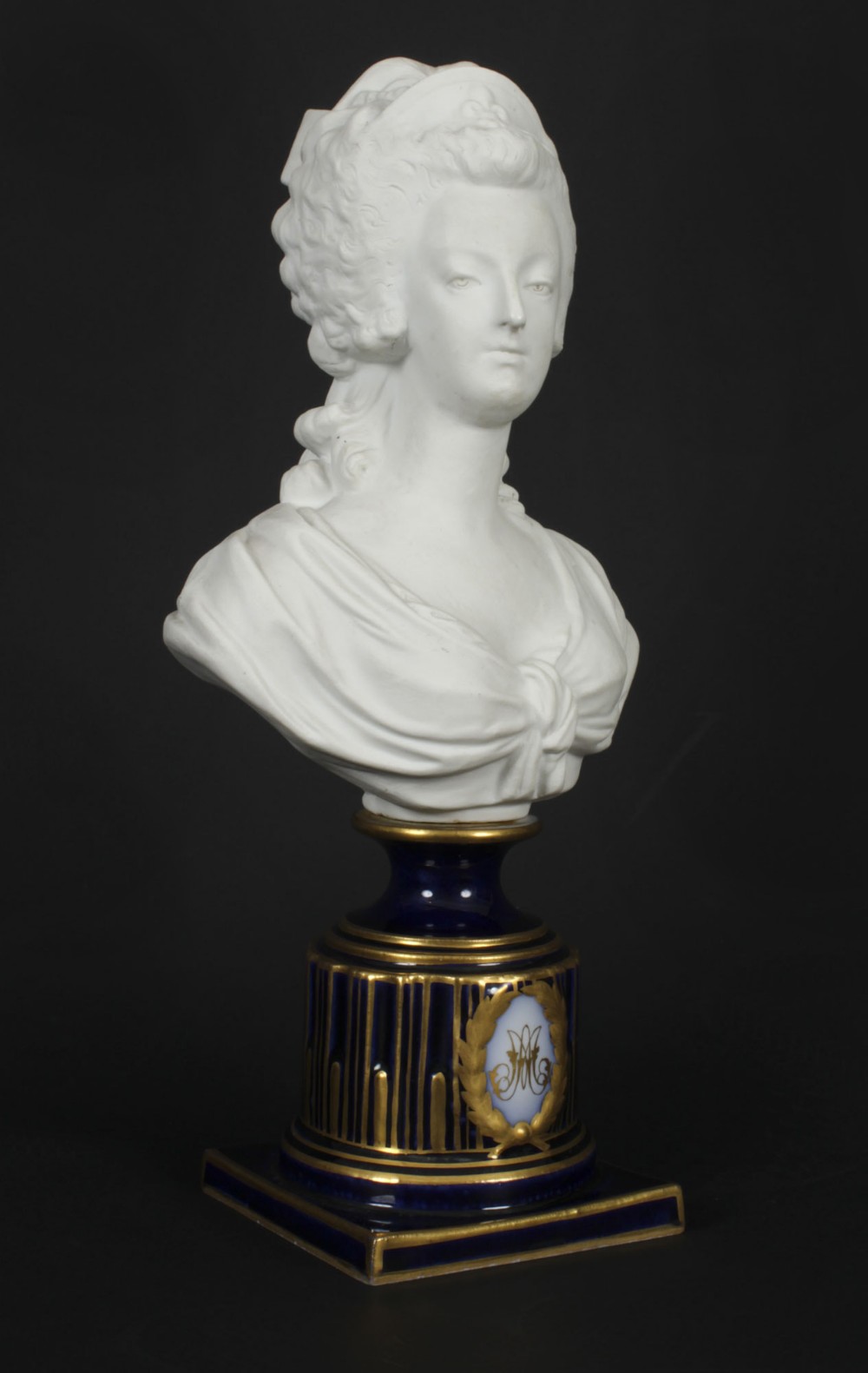
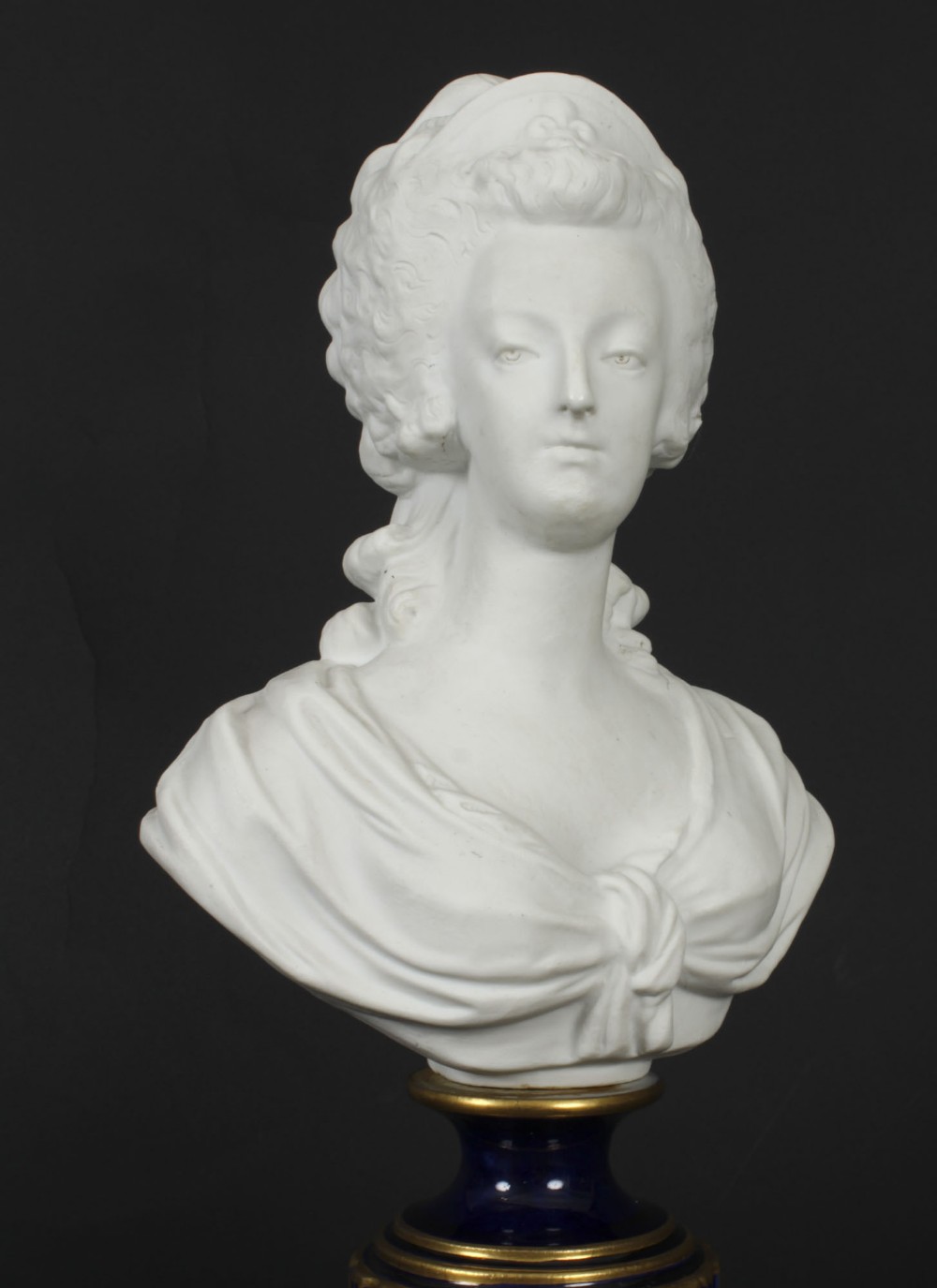
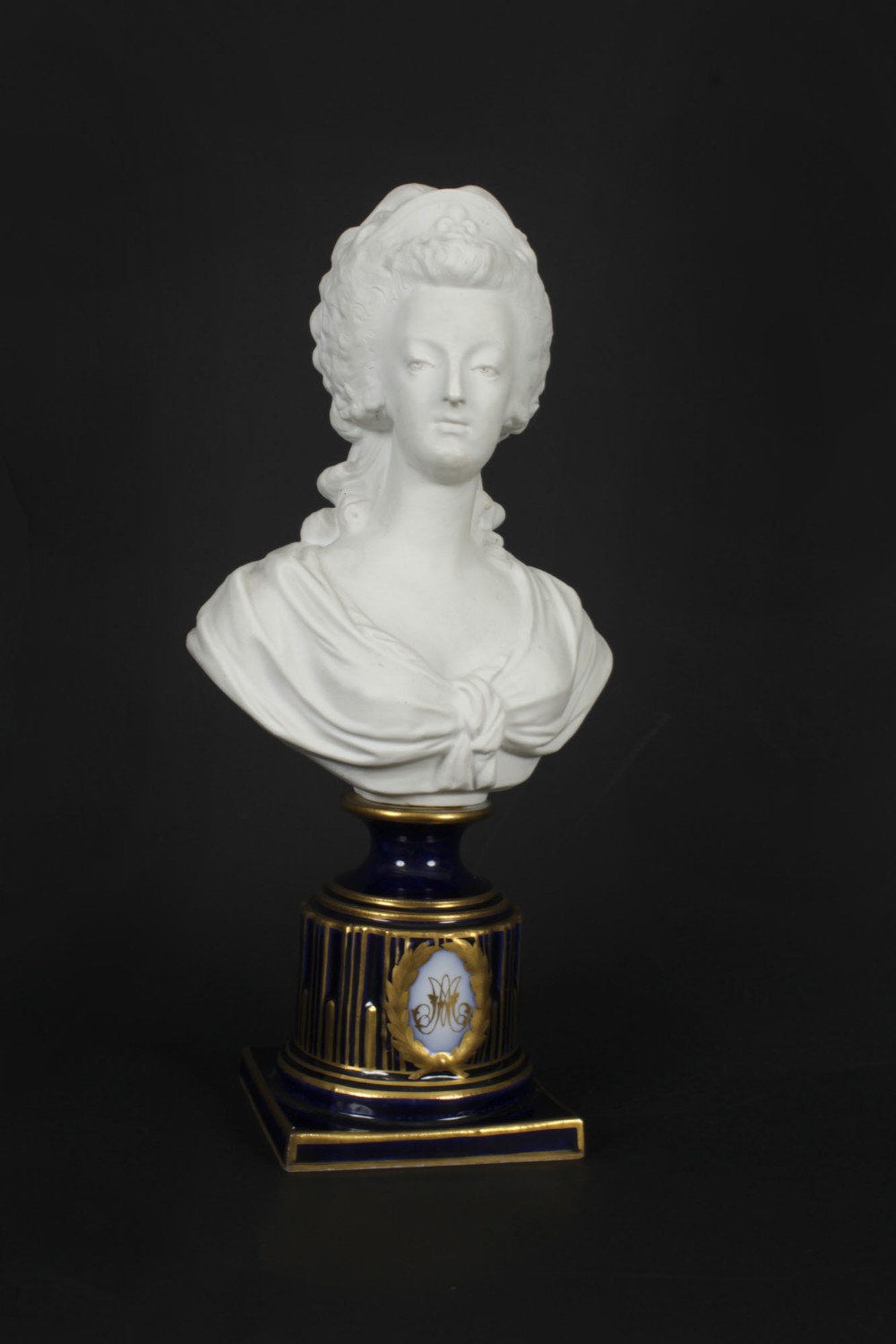
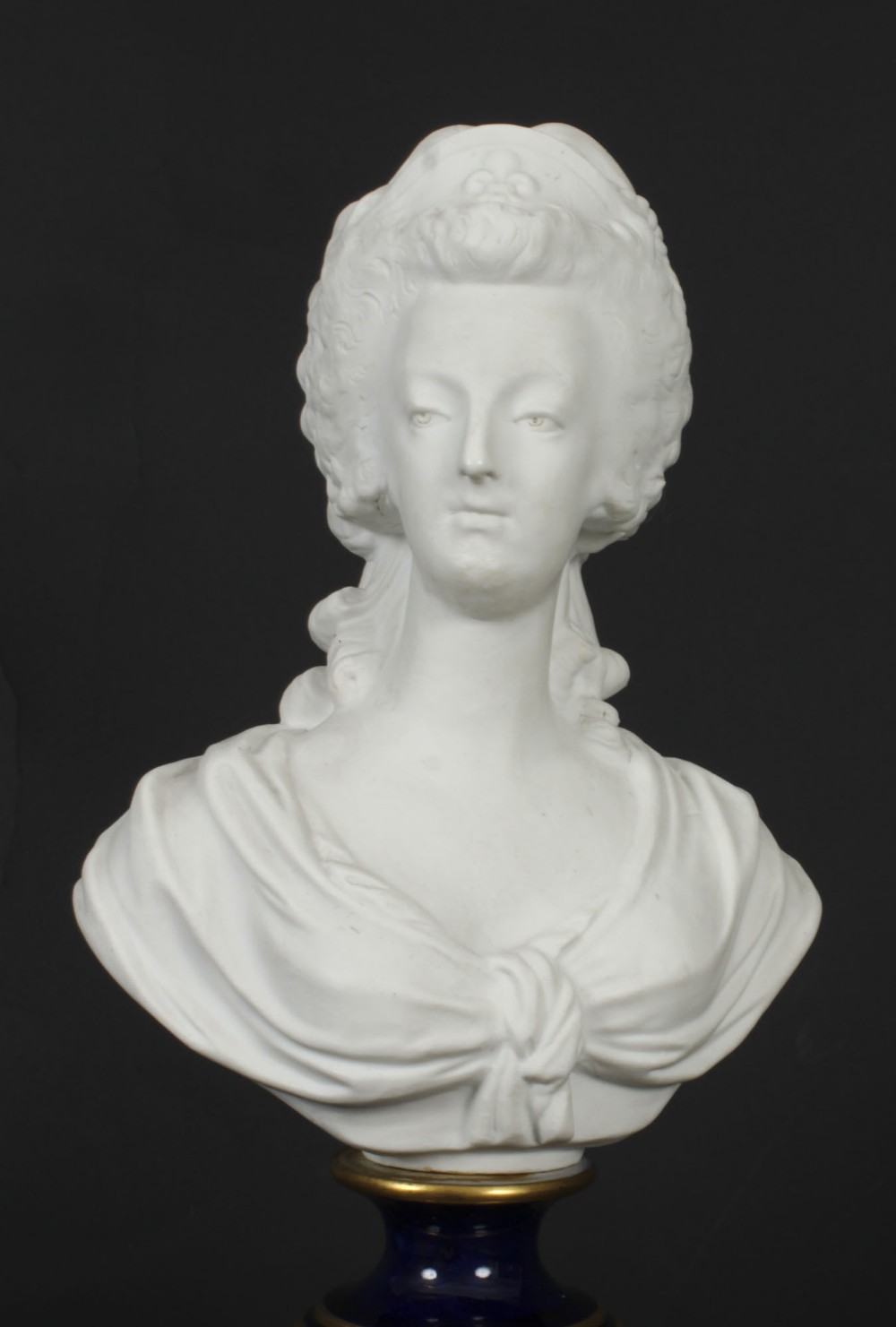
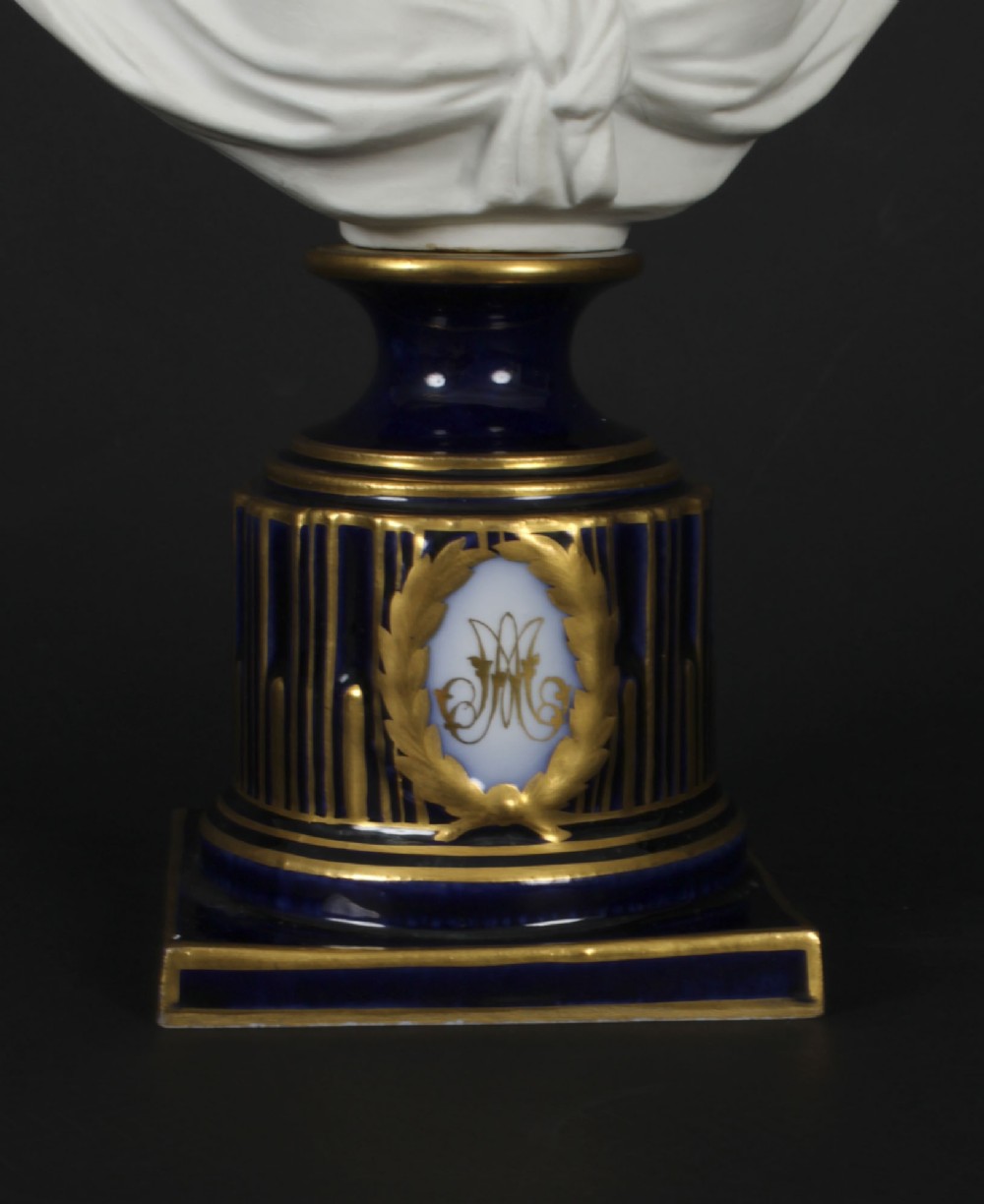
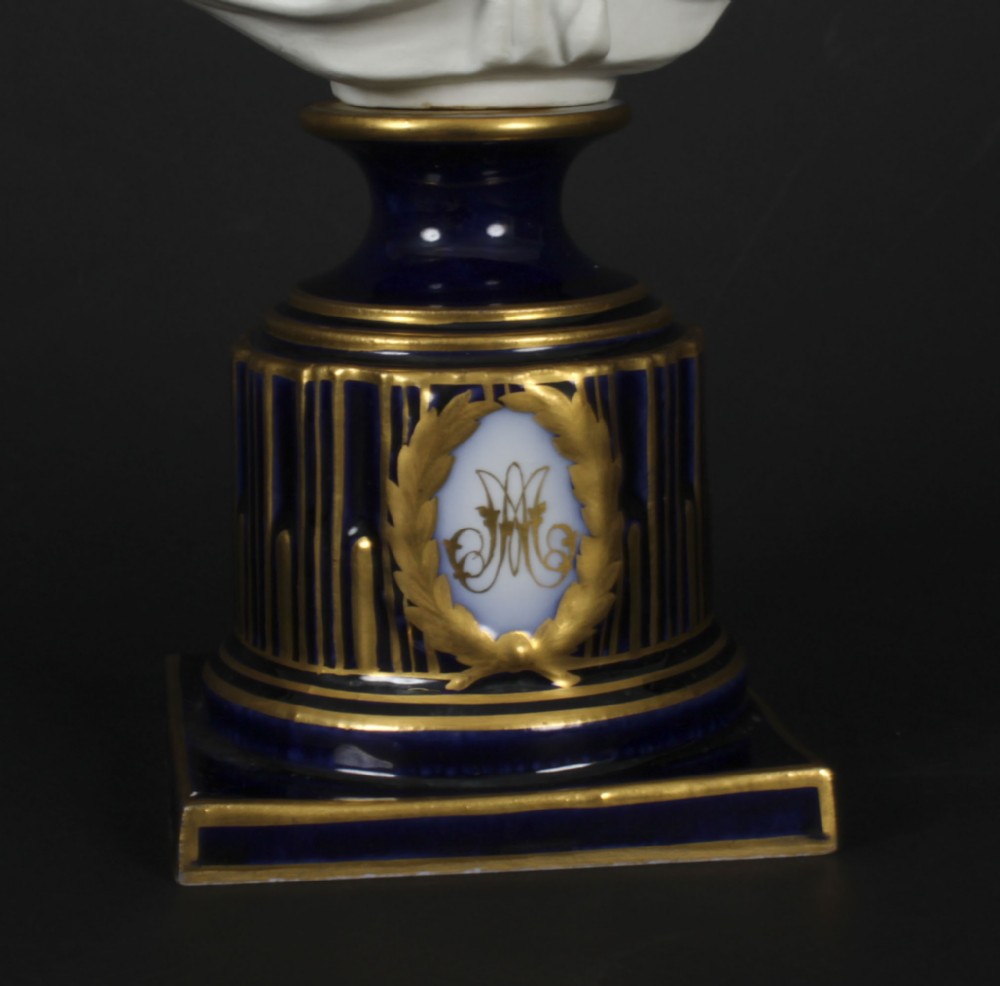
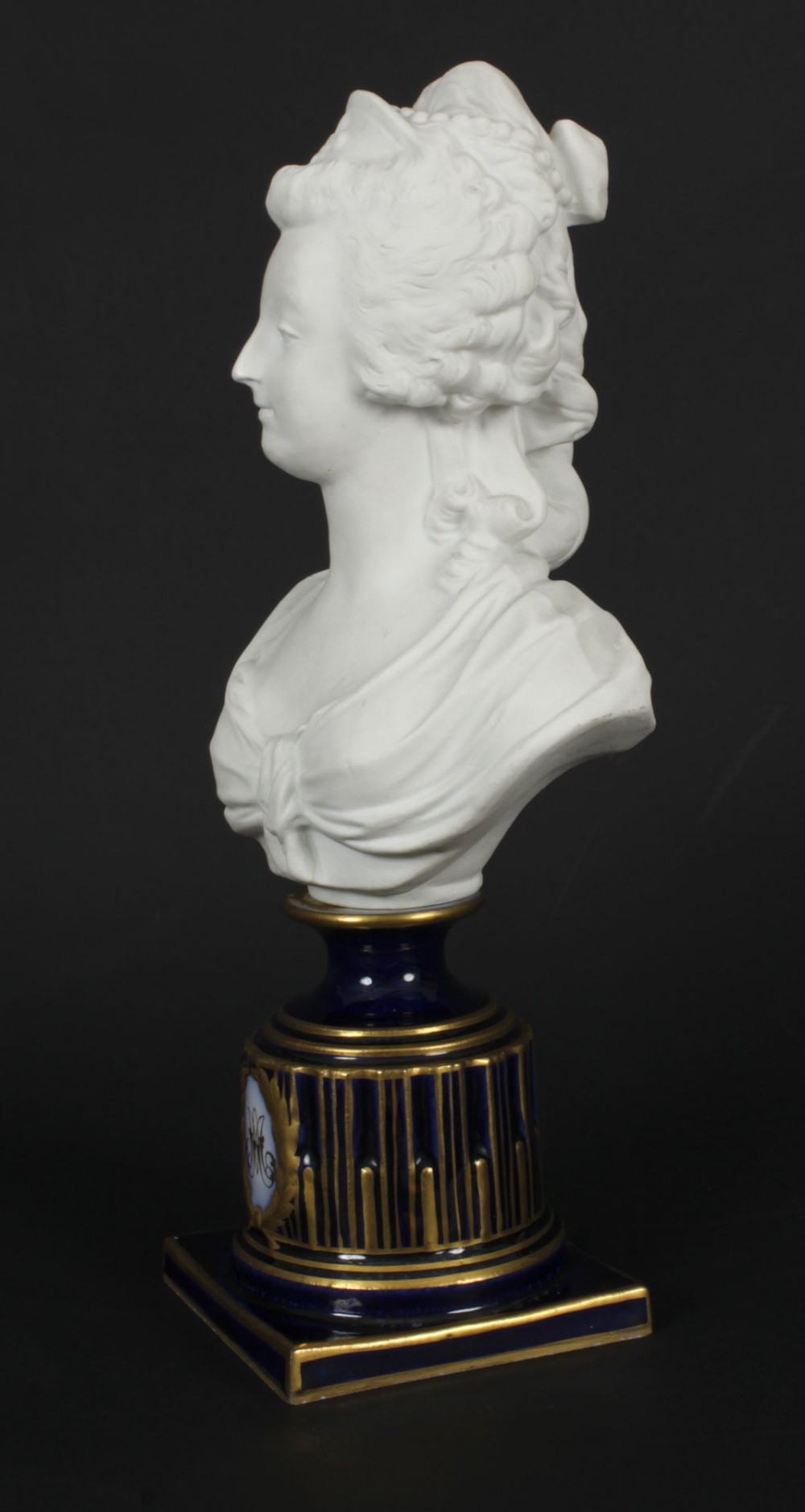
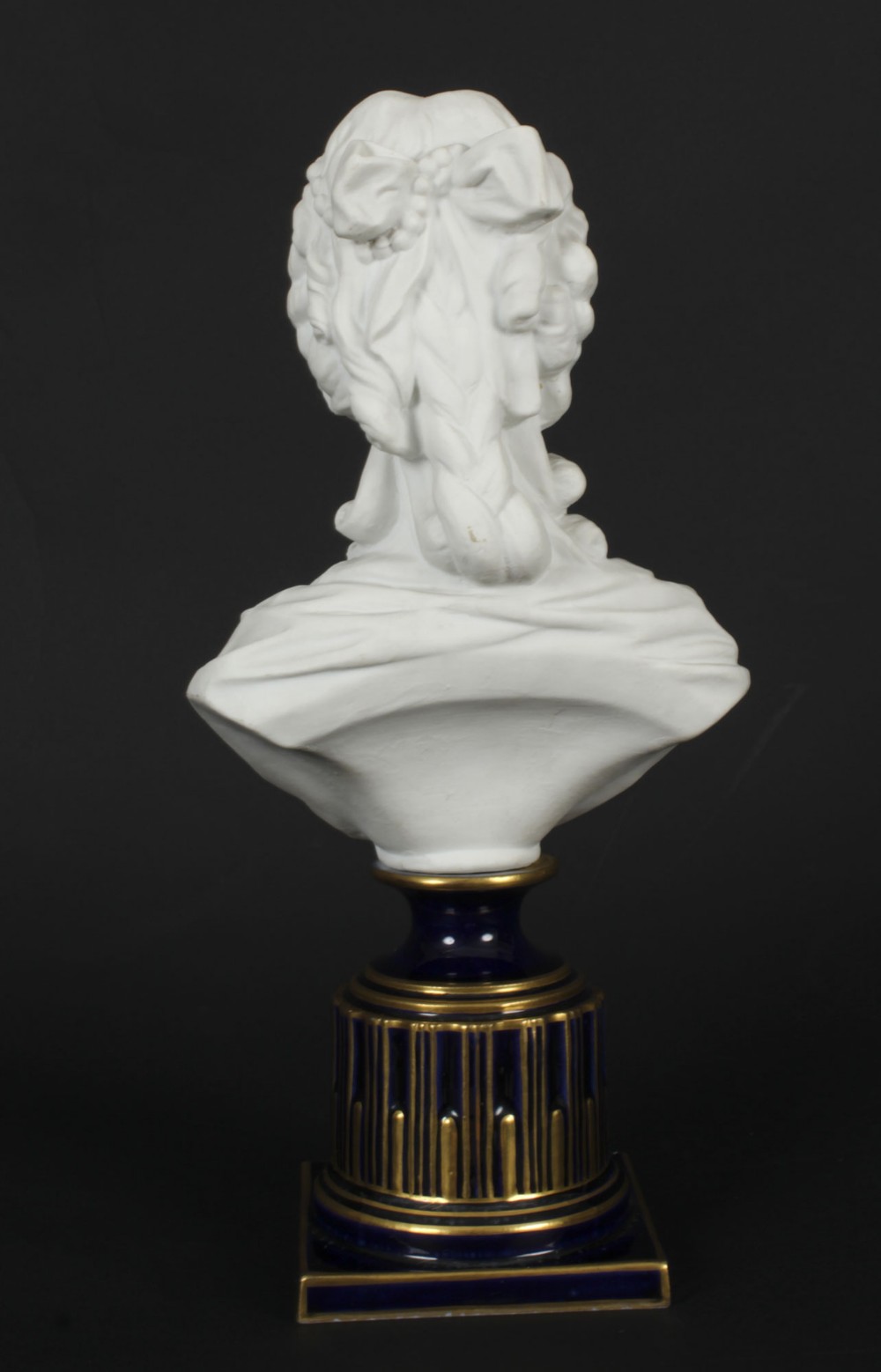
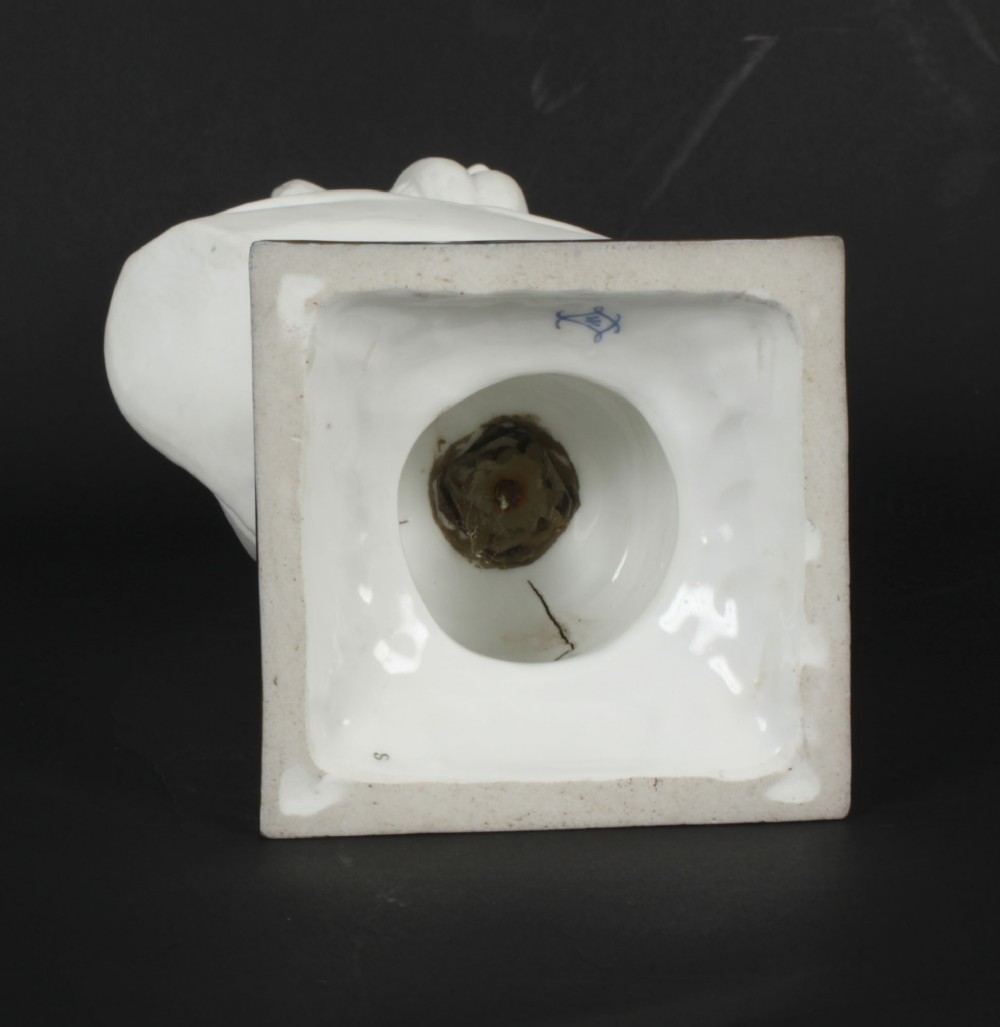
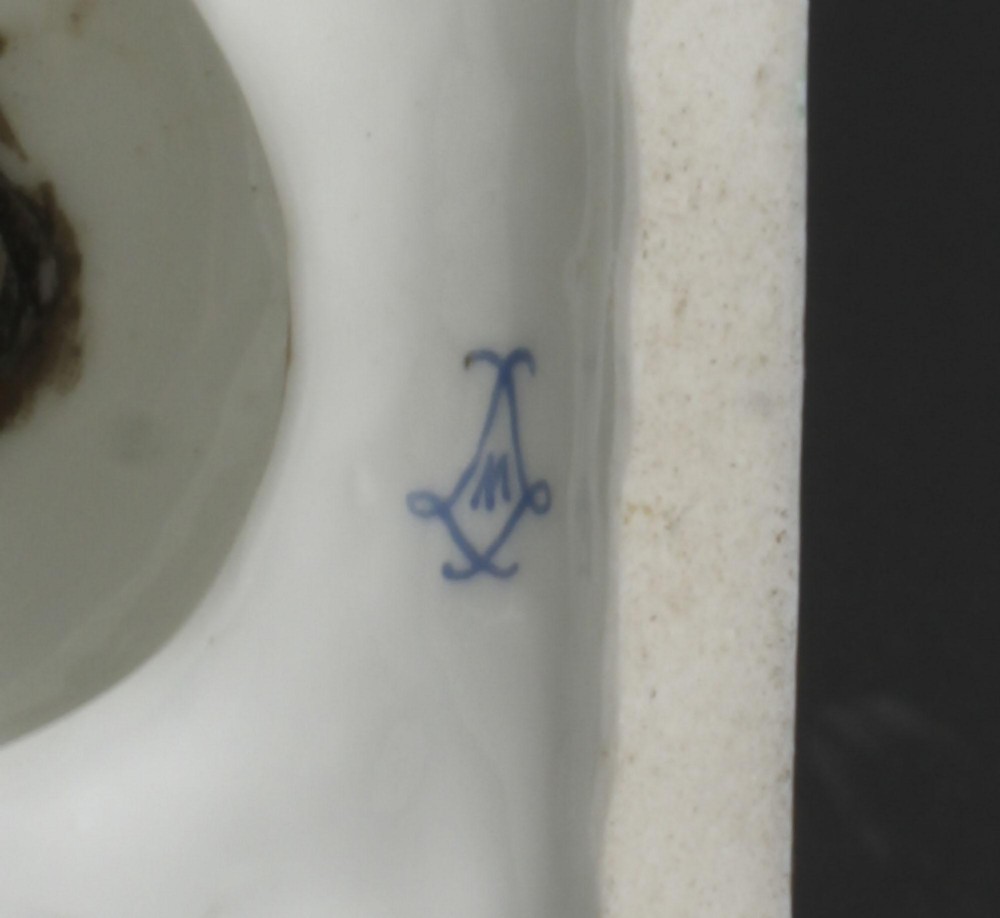
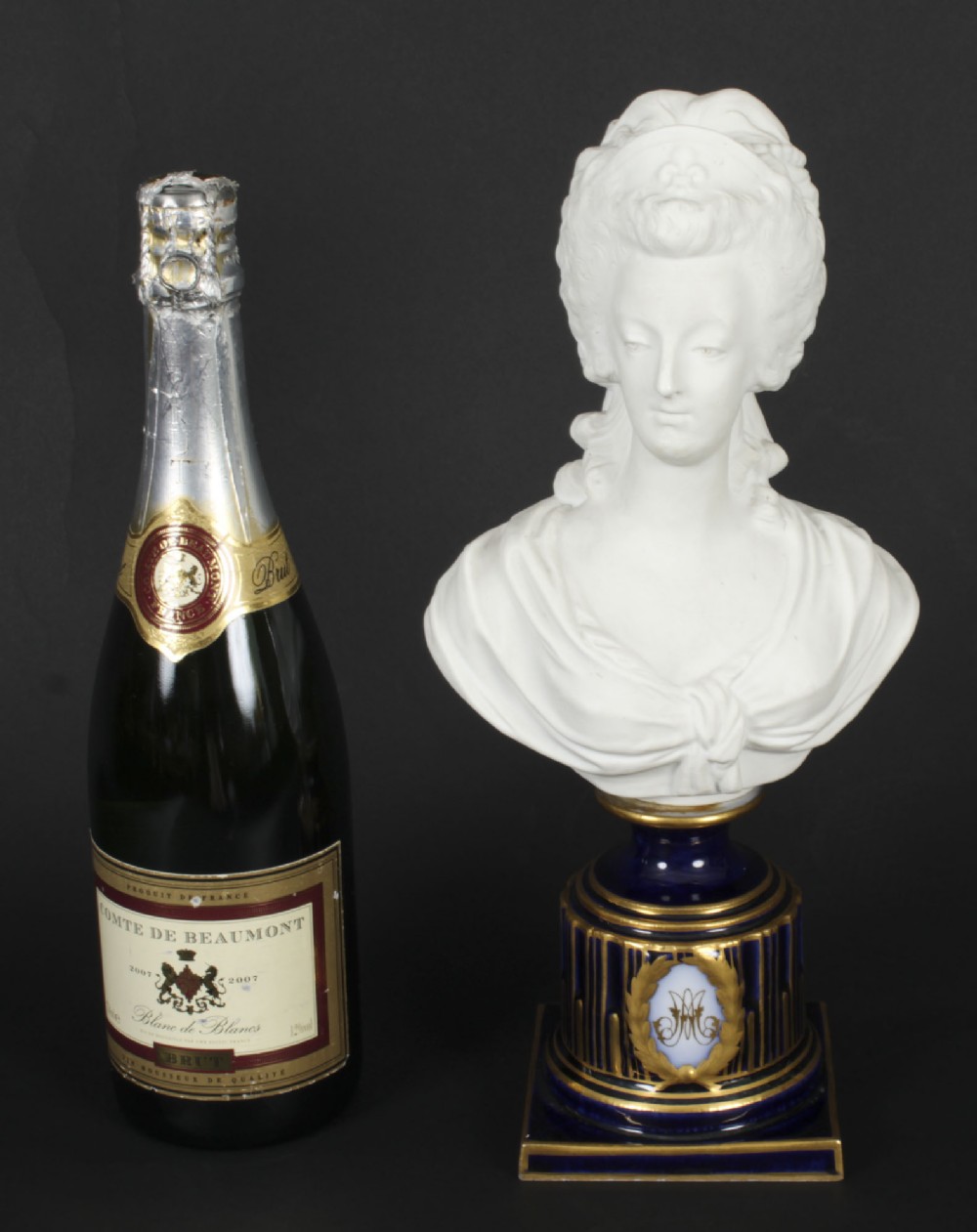
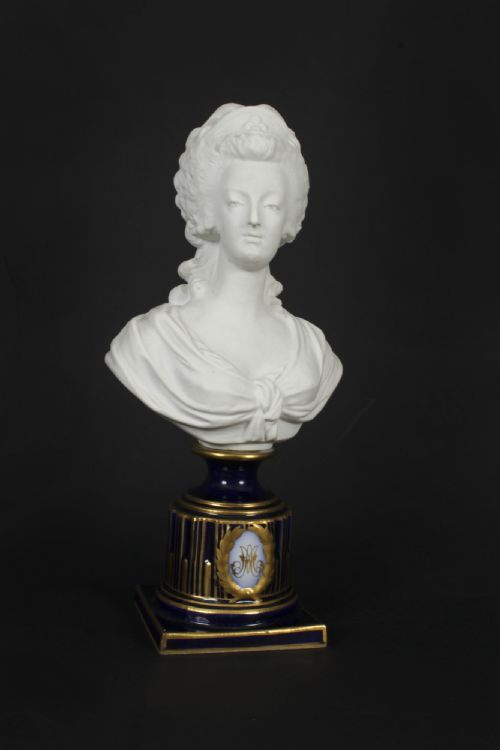
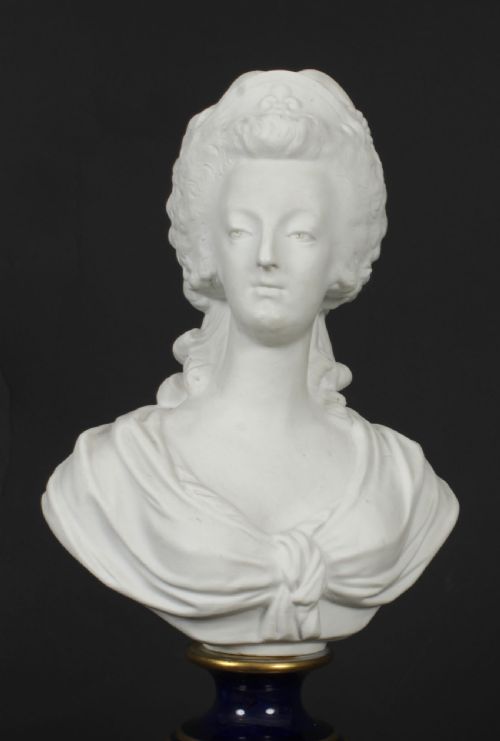
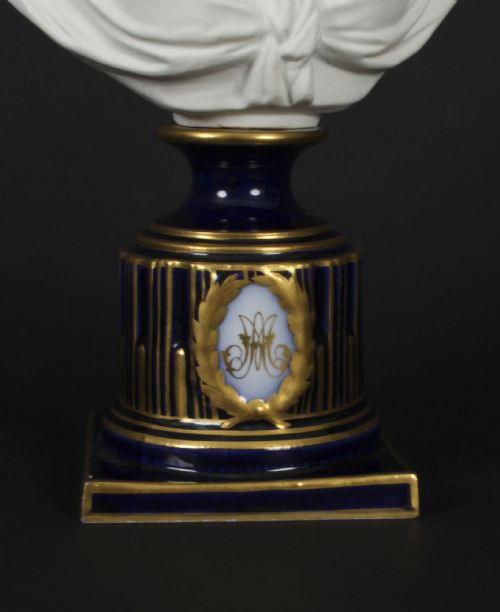
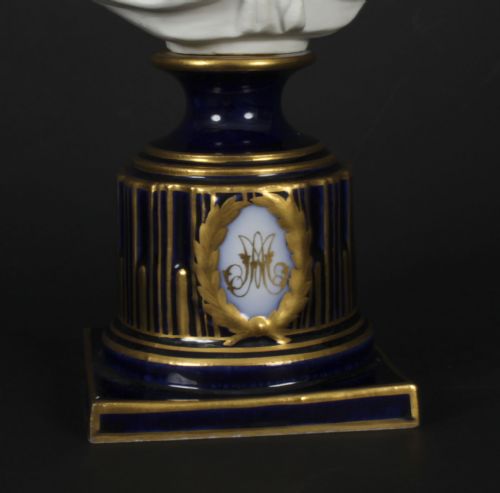
Regent Antiques has dated this Sevres Bisque Porcelain Bust to the 19th Century.
This is an elegant bust of Marie Antoinette, Queen of France and the wife of Louis XVI.
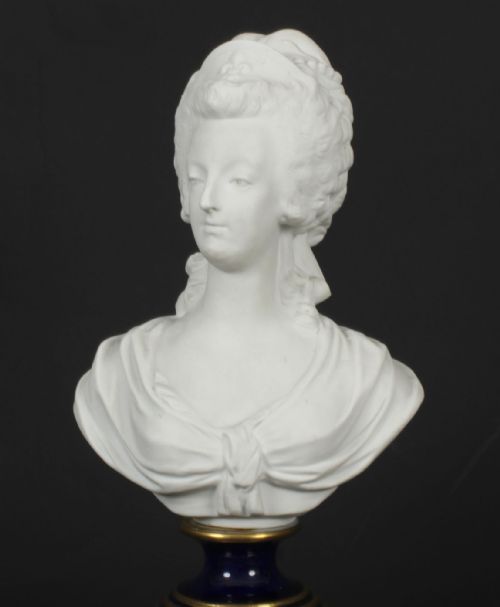
Marie Antoinette was a prominent victim of the Reign of Terror, executed by guillotine in October 1793 after being found guilty of treason by the Revolutionary Tribunal. Her execution followed that of her husband, King Louis XVI, and was the culmination of her unpopularity due to her perceived extravagance, and her perceived role in undermining the French Revolution. Busts of her were very popular in France and the Sevres factory made many.
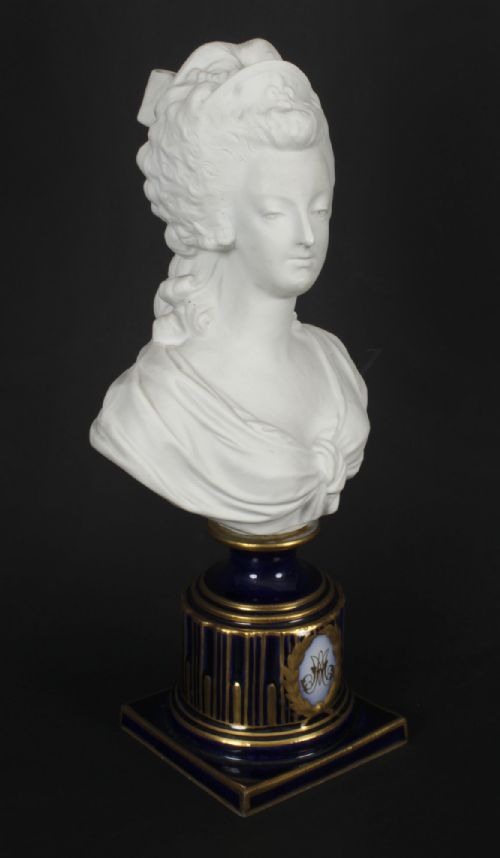
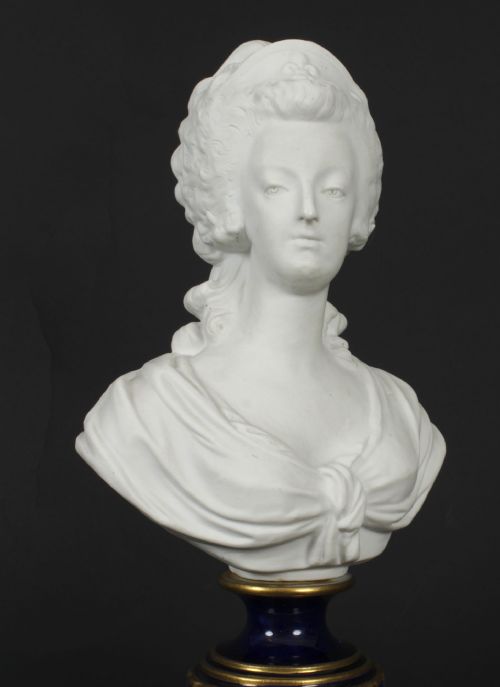
Marie Antoinette is pictured with ribbons woven into her hair wearing a Fleur de Lys crown.
Bisque porcelain busts of Louis XVI and Marie Antoinette were highly fashionable during their reign, and continued to be produced in the 19th Century.
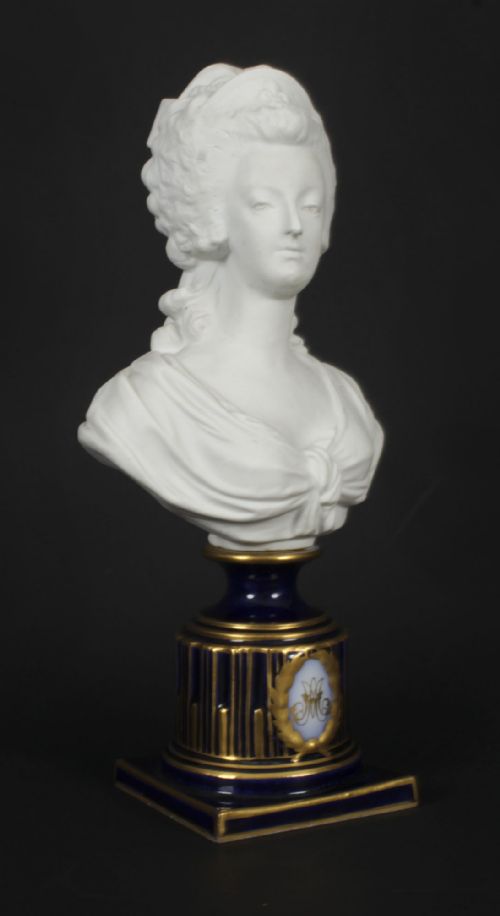
This bust depicts one of the most important figures in French history, and will make an elegant addition to any home.
Provenance: from a private Worcestershire collection.
Condition:
In excellent condition, with no chips, cracks or repairs, please see photos for confirmation.
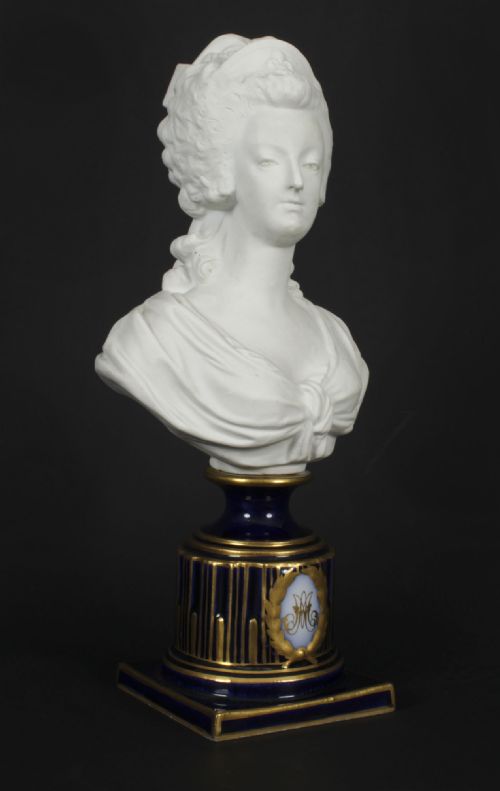
Dimensions in cm:
Height 35 cm x Width 18 cm x Depth 14 cm
Dimensions in inches:
Height 1 foot, 2 inches x Width 7 inches x Depth 5 inches
Marie Antoinette
was the last queen of France prior to the French Revolution. She was born an archduchess of Austria, and was the penultimate child and youngest daughter of Empress Maria Theresa and Emperor Francis I.
Bisque,
French for 'biscuit', is a technique where the porcelain is left unglazed. In its pristine white state, the moulded porcelain resembles pure marble. This style of porcelain was invented by the Sèvres factory, who used it to create small sculptures to replace the white sugar figurines that were used to decorate dining room tables in the 18th Century.
Sevres Porcelain
traces its roots in France to early craftsmen who had small manufacturing operations in such places as Lille, Rouen. St. Cloud, and most notably Chantilly. It is from Chantilly that a cadre of workers migrated to the Chateau de Vincennes near Paris to form a larger porcelain manufactory in 1738.
French King Louis XV, perhaps inspired by his rumoured relationship with mistress Madame de Pompadour, took an intense interest in porcelain and moved the operation in 1756 to even larger quarters in the Paris suburb of Sevres. Sevres was also conveniently near the home of Madame de Pompadour and the King's own Palace at Versailles.
From the outset the king's clear aim was to produce Sevres Porcelain that surpassed the established Saxony works of Meissen and Dresden. Though the French lacked an ample supply of kaolin, a required ingredient for hard-paste porcelain (pate dure), their soft-paste porcelain (pate tendre) was fired at a lower temperature and was thus compatible with a wider variety of colours and glazes that in many cases were also richer and more vivid. Unglazed white Sevres Porcelain "biscuit" figurines were also a great success. However, soft-paste Sevres Porcelain was more easily broken. Therefore, early pieces of Sevres Porcelain that remain intact have become rare indeed.
The Sevres Porcelain manufactory always seemed to be in dire financial straits despite the incredibly fine works it produced. In fact, the king's insistence that only the finest items be created may have contributed to the difficulties. Only a limited number of European nobility could afford the extravagant prices demanded for such works. King Louis XV and eventually his heir, the ill-fated Louis XVI, were obliged t
Regent Antiques has dated this Sevres Bisque Porcelain Bust to the 19th Century.
We specialise in english and continental furniture, silver, porcelain and decorative items.
You can view the stock and full dealer information on the Regent Antiques Profile Page
Regent Antiques is a registered member of LAPADA CINOA
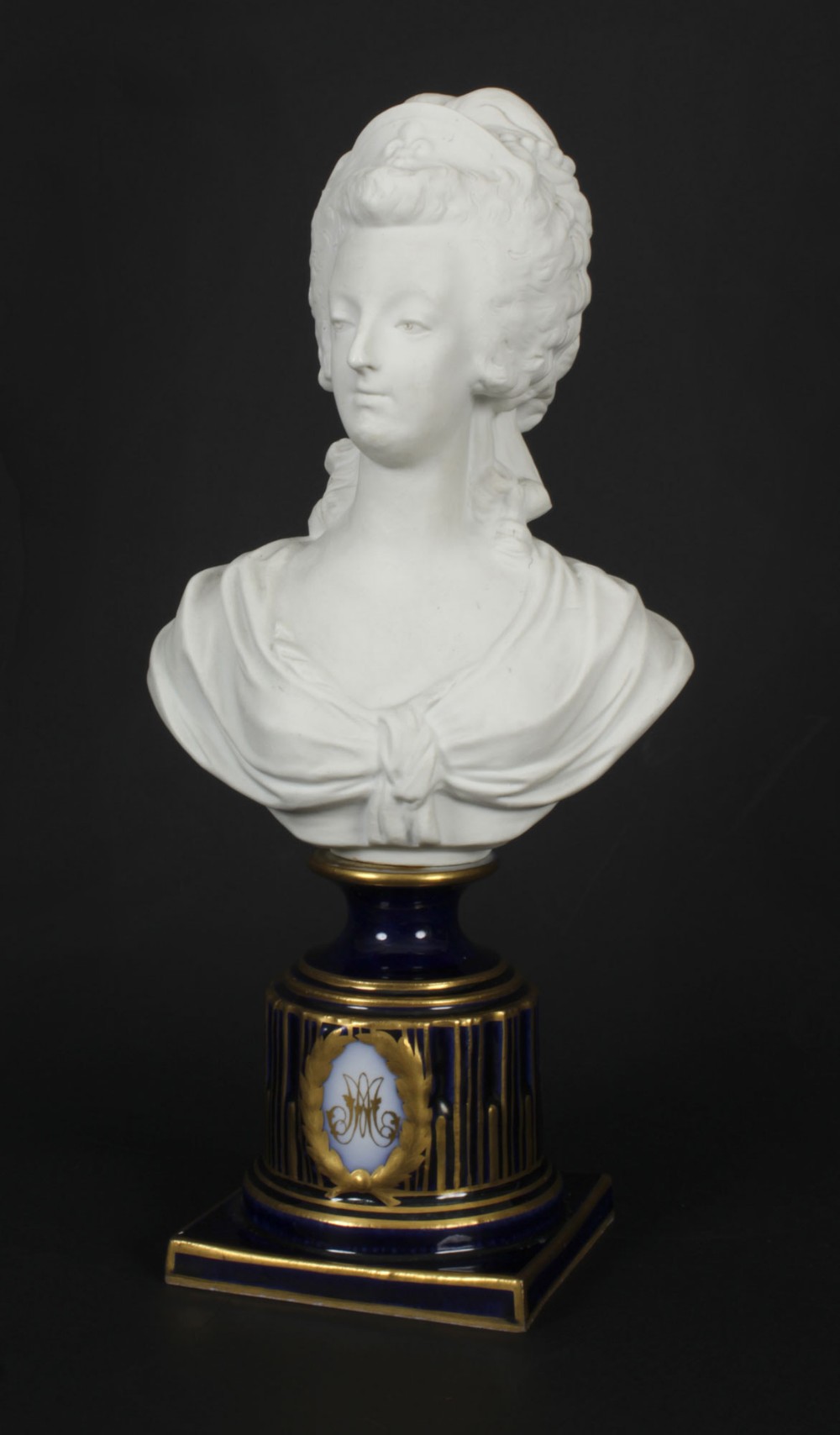
Antique Sevres Bisque Porcelain Bust Marie Antoinette 19th C