
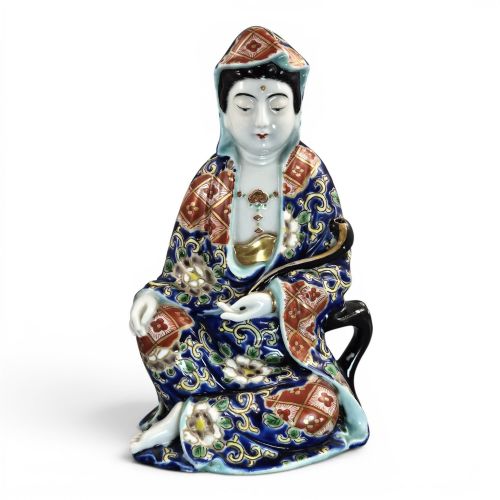


Cobalt Blue Porcelain Statue
A cobalt blue porcelain statue brings rich colour and figurative form to a room, drawing the eye with detailed modelling and glossy finishes.
Cobalt Blue Porcelain Statue
When buyers search for a cobalt blue porcelain statue, they encounter a range of nineteenth-century ceramic figures, portrait busts and sculptural groups. These pieces originate from diverse traditions, spanning English factories, French workshops and Japanese kilns.
Makers in this category include historic houses such as Derby and Sevres, alongside Staffordshire potteries and Japanese regional kilns. Collectors find both single figures and balanced pairs representing human subjects and animals.
Materials and methods
The pieces on this page are formed from porcelain, earthenware and bisque porcelain, shaped by hand or in moulds before firing. Glazes provide the primary surface coat, while cobalt blue pigments create deep tonal colour beneath or within the glaze.
Listings feature nineteenth-century items created using porcelain, earthenware, enamel and gold leaf across Victorian and Japanese styles.
Assessing quality and execution
Quality in these figurative ceramics rests upon the crispness of the moulding and the delicacy of the hand-painted details. Superior pieces display finely delineated facial expressions and precise application of enamel colours and gilt lines.
The depth and consistency of the cobalt blue glaze also distinguish finer works from standard production items. Well-executed pieces maintain clean separation between the blue ground areas and surrounding polychrome or gilt decoration.
Samson Paris·Sevres·Derby
The Cobalt Blue Porcelain Statue Glossary
- Bisque porcelain
- Unglazed porcelain fired once to produce a matte, biscuit-like surface suited to detailed portrait busts. This finish mimics carved marble.
- Enamel
- Opaque glass-like pigments fused to the ceramic surface during a secondary low-temperature firing. These colours provide bright hues on top of the glaze.
- Gilt
- A thin layer of gold applied to the porcelain surface for decorative highlights. It often defines borders, clothing details and bases.
- Staffordshire
- A major English pottery-producing region known for earthenware figures and animal groups. Pieces often feature hand-painted or sponged colour decoration.
Cobalt Blue Porcelain Statue: Frequently Asked Questions
How do I clean my porcelain statue?
Dust the surface gently with a soft, dry brush to prevent particle buildup. Avoid harsh chemical cleaners that might damage delicate gilt or enamel highlights.
Keep figures away from direct sunlight to preserve the vibrancy of the cobalt blue glaze and painted details over time.
Are these figures glazed or unglazed?
Most pieces feature a glossy protective glaze over the ceramic body, which seals the material and deepens the cobalt blue colour. Some specific items, such as portrait busts, utilise unglazed bisque porcelain for a matte, sculptural texture.
Glazed surfaces reflect light differently than matte bisque, altering how the rich blue tones appear in a room.
Can I display these statues in a sunny room?
Extended exposure to direct sunlight can fade applied enamel colours and gold leaf highlights on nineteenth-century ceramics. Position statues away from windows to maintain the integrity of the painted decoration.
Ambient room light is sufficient to appreciate the depth of the cobalt blue glaze without risking sun damage.
How do I identify nineteenth-century figures?
Examine the base and underside of the piece for factory marks, impressed numbers or hand-painted signatures. Stylistic clues, such as Victorian dress or Neoclassical motifs, also help narrow down the period of manufacture.
Comparing the modelling style to documented works from makers like Derby or Sevres provides further confirmation of age.