


Nineteenth Century Japanese Porcelain
Nineteenth century japanese porcelain brings rich palettes and intricate hand painting into a room, offering striking decorative presence for any interior.
Nineteenth Century Japanese Porcelain
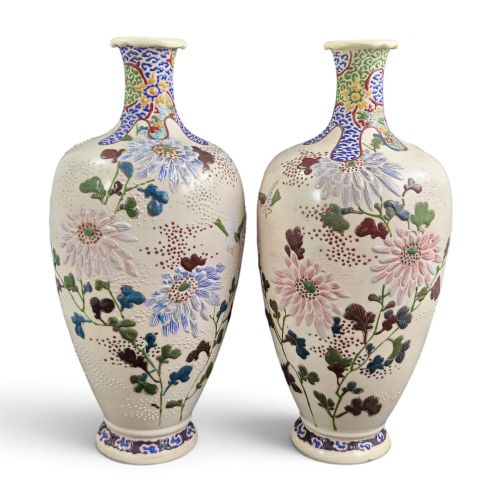
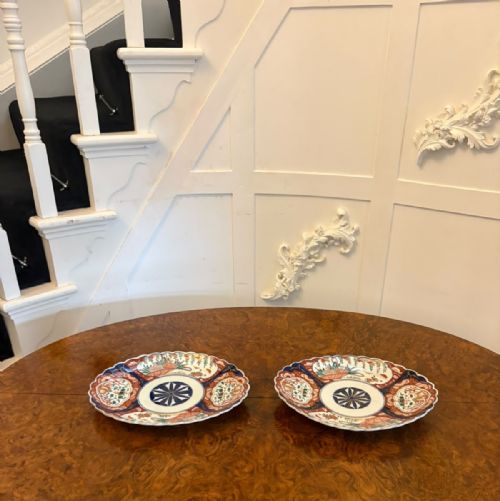
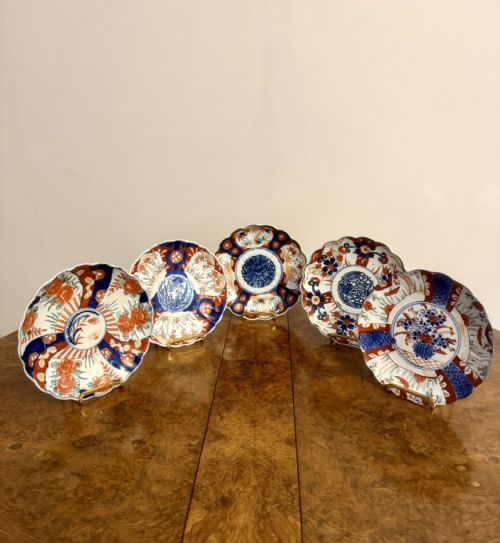
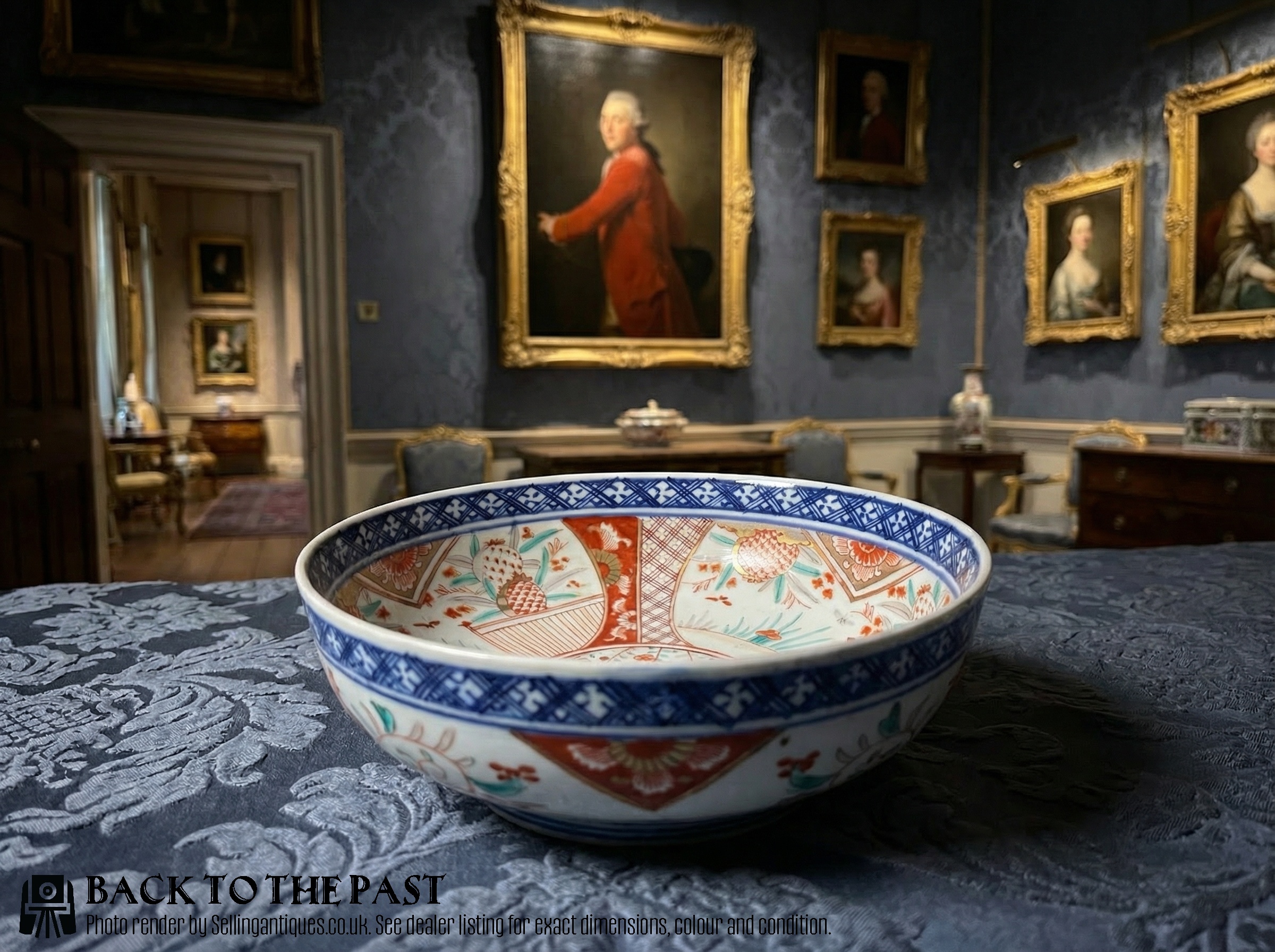
Nineteenth century japanese porcelain encompasses a wide variety of domestic and decorative objects made during the Edo and Meiji periods. Buyers searching this phrase encounter chargers, plates, vases, and bowls created for both home use and export markets.
The pieces on this page span the 19th century into the early 20th century, with notable representation from the Meiji period around 1890 and the Edo period around 1850. Imari chargers, Kutani ware bowls, and Satsuma vases dominate the selection available to collectors.
Forms range from miniature bowls and small hand painted vases to massive floor vases and large lidded koros standing over seventy centimetres high. Blue and white jars, jardinières, and figural representations of figures like a bijin with a drum also appear among the objects.
Materials and Techniques
Makers shaped fine porcelain clay and earthenware bodies before applying complex underglaze and overglaze decorations. Cobalt blue pigment, enamel colours, and gold leaf or gilt detailing frequently combine across the surface of plates and vases.
Many items utilise raised moriage decoration to create textured surfaces on cobalt grounds, while others incorporate lacquer panels or wood stands. Hand painting remains a defining characteristic, executed with precision across Imari palettes and Kutani wares.
Nineteenth Century Japanese Porcelain Retail Price Guide 2026
Typical asking prices for nineteenth century japanese porcelain among the pieces listed under this phrase on Sellingantiques today, from the lower quarter to the upper quarter. They describe what is for sale here now, not the wider market.
Listings feature porcelain, earthenware, enamel, gold leaf, and lacquer across objects attributed to the 19th century, Victorian era, and Meiji period.
Execution and Detail
Quality rests in the precision of the hand painting and the depth of the palette, particularly where cobalt blue meets extensive gilt and enamel work. Superior examples display crisp definition in court figures, floral motifs, and geometric borders.
Scale and ambition separate standard vessels from exceptional works, such as very large pairs of vases or heavily detailed lidded koros. Signed pieces and those associated with specific workshops or makers add a layer of distinction to the finished object.
Nanzan mark·Kinkozan Kyoto·Kinrin Workshop
The Nineteenth Century Japanese Porcelain Glossary
- Imari
- A style of Japanese porcelain decorated in underglaze blue, iron red, and gold, named after the port from which it was shipped to the West.
- Kutani
- Japanese porcelain and pottery characterised by vibrant colour palettes, often featuring extensive red and gold overglaze painting.
- Satsuma
- An earthenware type with a crackle-glaze ivory body, typically decorated with intricate enamel patterns and gilt court figures.
- Moriage
- A decorative technique using slip applied in dots or lines to create a raised, tactile surface on ceramics.
- Charger
- A large decorative plate intended for display on a wall or sideboard rather than for dining use.
- Koro
- A traditional Japanese incense burner, often lidded and tripod-mounted, produced in porcelain or bronze for interior use.
Nineteenth Century Japanese Porcelain: Frequently Asked Questions
How do I display a large charger safely?
Large chargers require sturdy wall hangers specifically rated for heavy porcelain or specialist wire stands with a secure base. Ensure the weight is evenly distributed to prevent slipping.
Keep display pieces away from high-traffic areas and direct sunlight to protect the enamel and gold leaf decorations over time.
What is the difference between Imari and Kutani ware?
Imari pieces traditionally utilise a distinctive palette of underglaze blue combined with iron red and gilt highlights on a crisp porcelain body. They often feature geometric and floral panelling.
Kutani ware relies on bolder, more painterly overglaze enamels, frequently showcasing figural scenes or intricate bird and flower motifs in reds, greens, and gold.
Can I use these vases for fresh flowers?
Most antique vases and jardinières are best kept as decorative display objects rather than utilised for holding water and fresh stems. Historic bodies and interior glazes can be porous or vulnerable to moisture damage.
If you do place florals inside, utilise a discreet glass or plastic liner inside the vessel to protect the antique interior from dampness and mineral deposits.