

Antique Stoneware
Stoneware is clay fired hot enough to vitrify, giving a hard, non-porous body used for storage, drink and the table long before Victorian potteries turned it to decorative ends.
Antique Stoneware
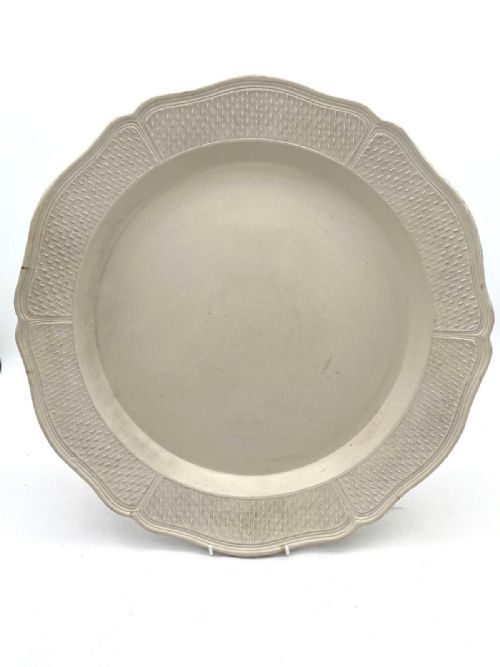
The body is fired hot enough to hold liquid without a glaze. Much of what appears under this heading is salt-glazed, where salt thrown into the kiln at peak temperature leaves the pitted "orange peel" surface the material is known for. It was made across Europe and Asia for centuries.
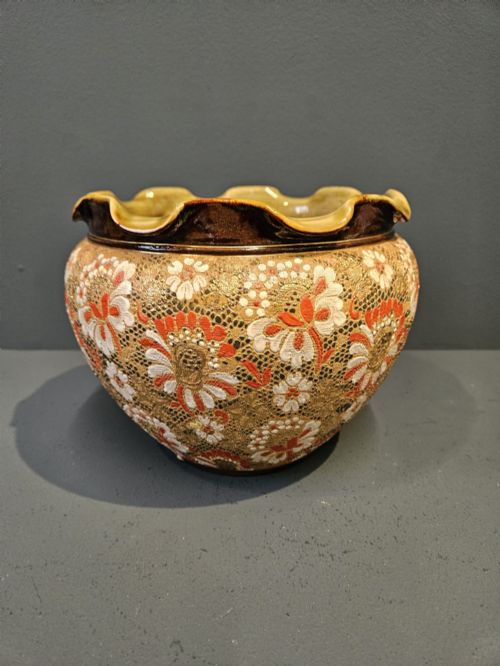
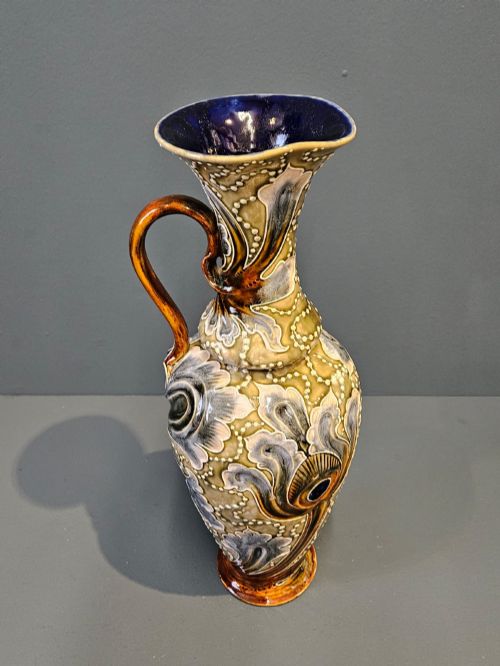
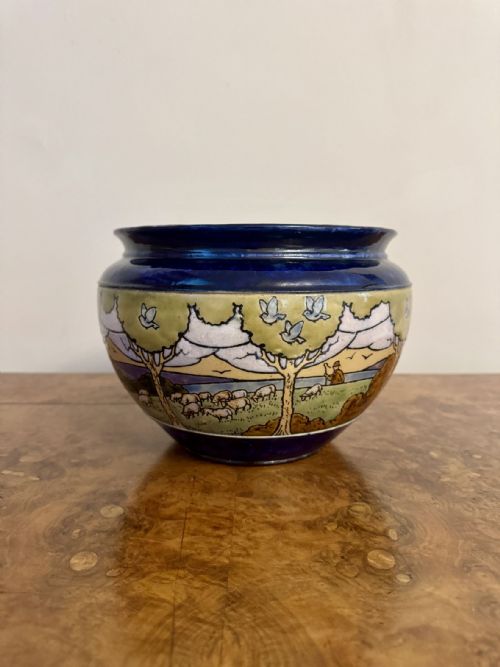
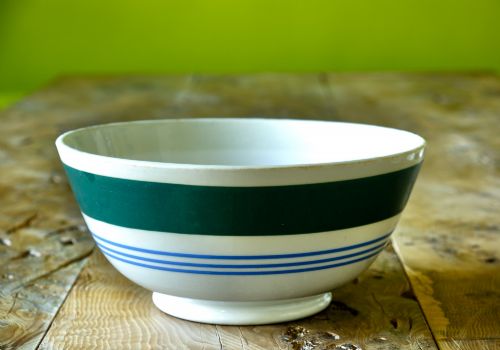
On Sellingantiques the category leans hard towards 19th-century English work, and within that towards Doulton Lambeth and Royal Doulton art stoneware, named in 40 of 176 titles. Jardinieres, jars, bowls, teapots and barrels are the recurring vessels. "Large" turns up in 25 titles and "pair" in 14, so garden-scale pieces and matched pairs are ordinary rather than unusual.
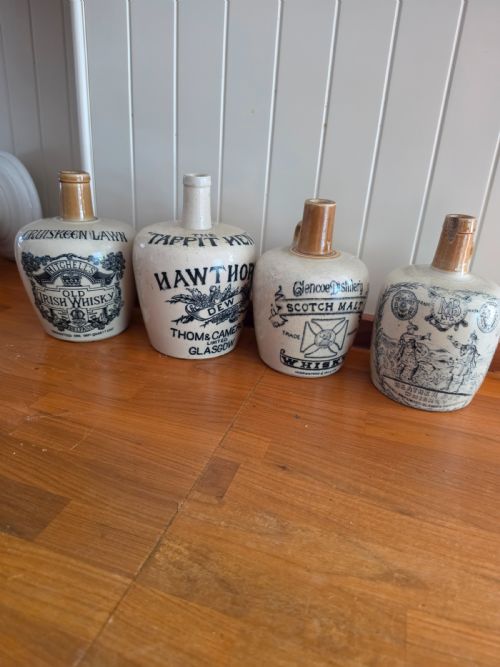
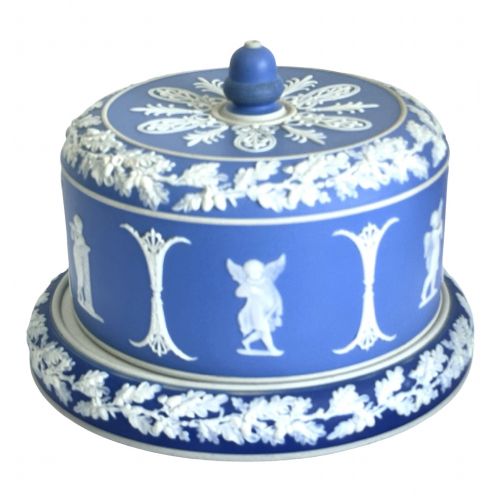
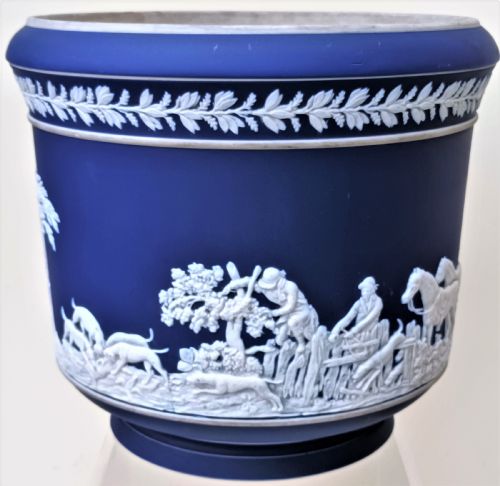
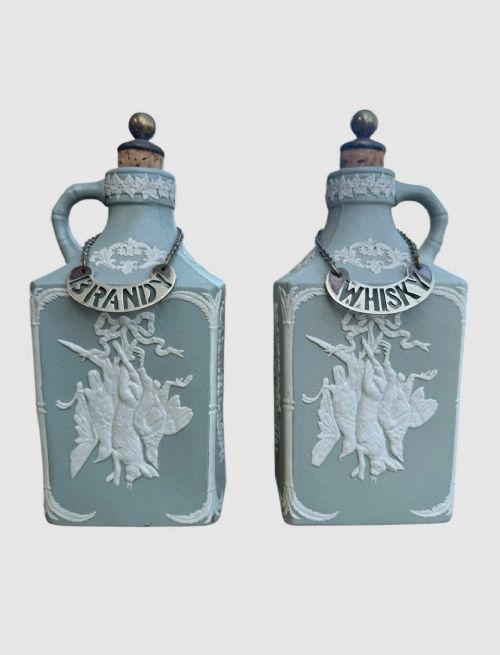
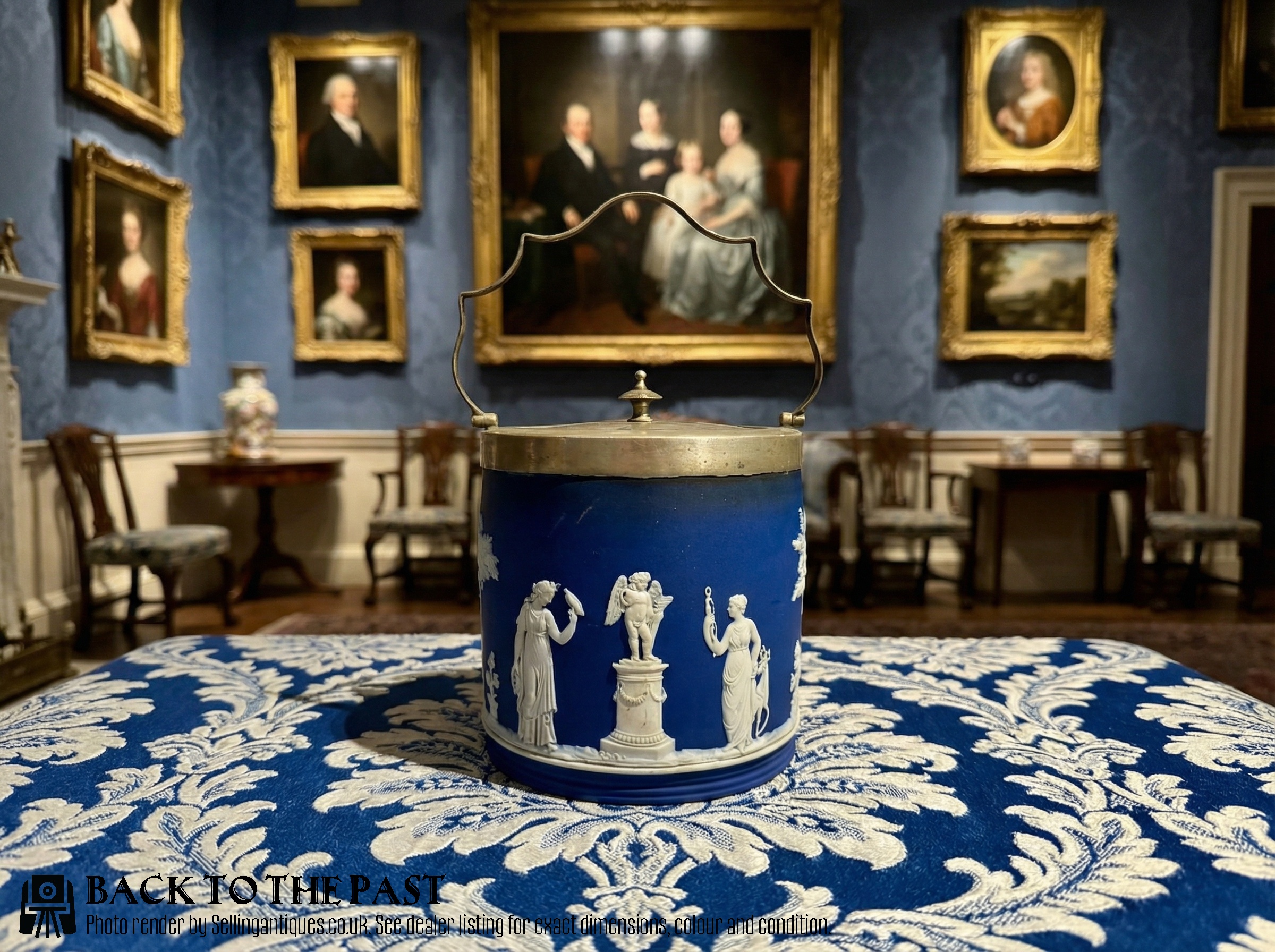
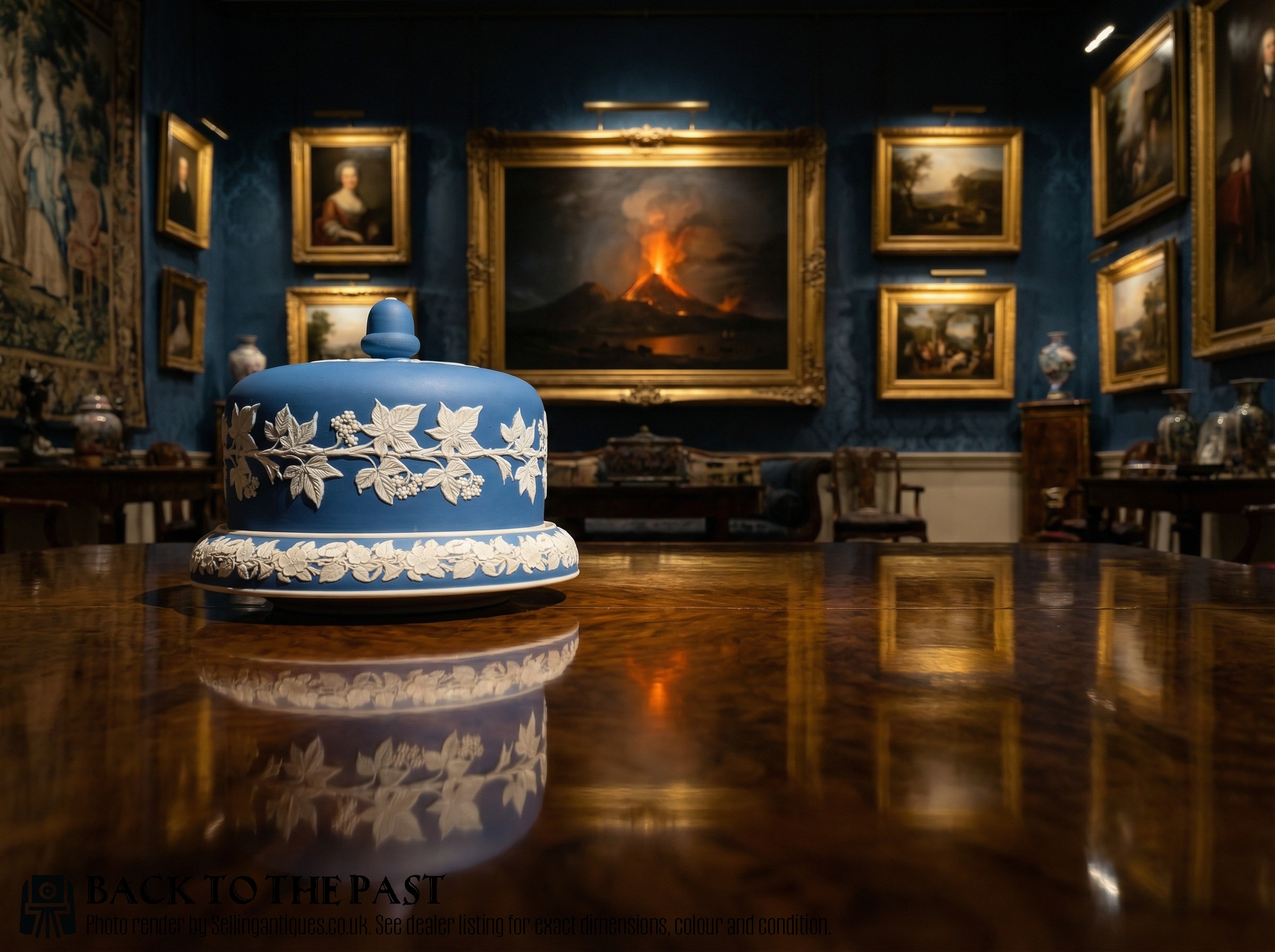
Behind that sits a block of Wedgwood jasperware, caneware and black basalt, named in 18 titles, mostly in current stock: biscuit barrels, campana urns, game pie dishes, teapots and trinket boxes. A substantial minority is plain utility and commercial salt-glaze, from gallon jars and spirit casks to jelly moulds, water filters, salt pigs and advertising bottles.
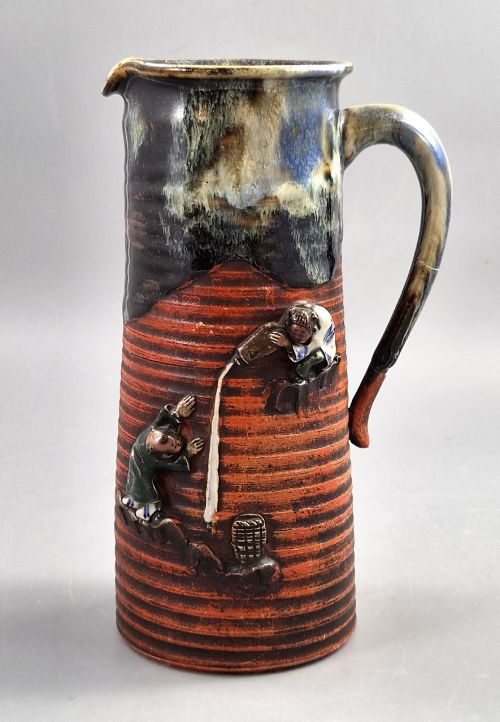
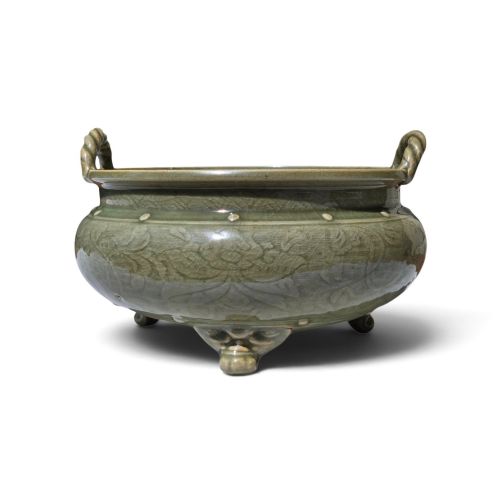
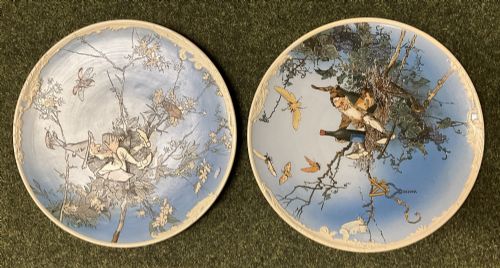
Continental stoneware runs through as well, with Westerwald tankards, bellarmines, Mettlach steins and plaques, German jardinieres and French confit and walnut oil jars. Asian pieces are a small slice: Yixing teapots, Shiwan and celadon wares, Japanese Sumida Gawa and Meiji figures. Dating is often broad, with "19th Century" the single largest bucket at 44 listings.
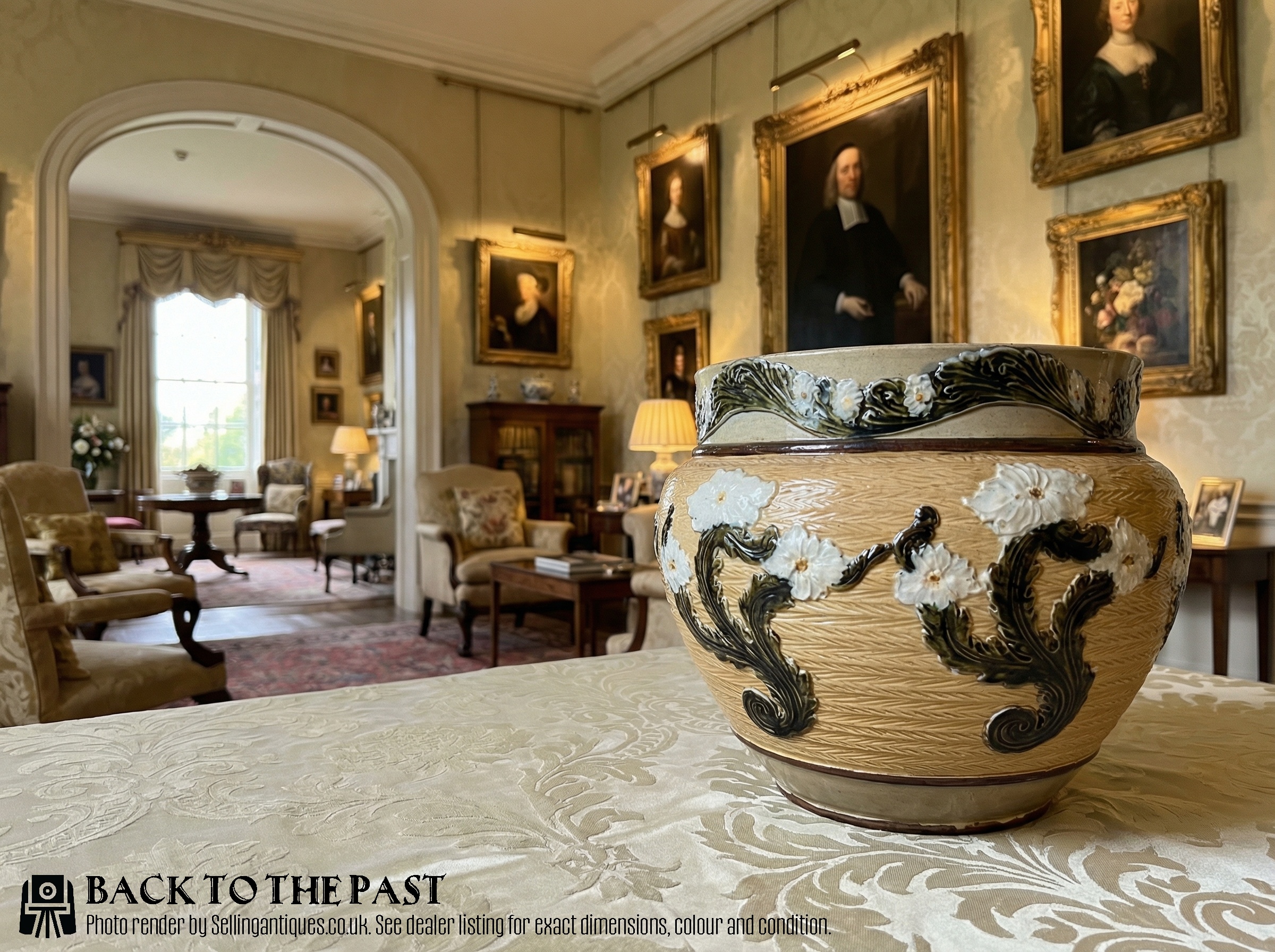
Where The Range Splits
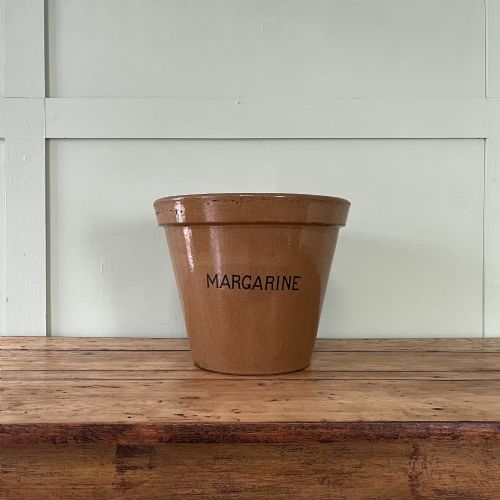
The bottom of the range is undecorated utility ware, and it survives in quantity: margarine pails, jelly moulds, filters, plain gallon jars. Nothing is wrong with them, they were simply made by the thousand and made to work rather than to look at. Decoration, and the hand behind it, is what lifts a piece off that floor.
At Lambeth, a decorator's name does the most work. Titles naming Frank Butler, Florence E. Barlow, Ethel Beard or Maud Bowden sit at the upper end, while a generic Lambeth jardiniere sits mid-range. Those names surface only a handful of times across the whole archive. Silver and plated rims, collars and mounts also push a form above its plain equivalent.
Then there's sheer size and completeness. Garden lions on bases, a 69cm tian bowl, an orangery planter and paired shipping-line alcohol jars carry the words "monumental", "massive" and "huge", and pairs of lions, urns, tygs and plaques cluster well above single equivalents. Early dates do the same: 17th-century Rhenish wine jars, 18th-century attributions and early Asian celadon occupy the top half.
Antique Stoneware Retail Price Guide 2026
Typical UK retail prices for stoneware, calculated from the Sellingantiques database of over a million retail prices indexed since 2003. This retail price guide relies exclusively on Sellingantiques data; no external sources or auction records are used, so the figures do not describe the wider market.
One-offs from the archive: a stoneware model of a lady's shoe, a rugby ball inkwell and a salt-glazed unicorn.
The Antique Stoneware Glossary
- Salt glaze
- The glassy, slightly pitted surface made by throwing salt into the kiln at high temperature. Salt appears in 11 titles and glazed in 12.
- Jardiniere
- An ornamental planter or plant holder, sometimes with a matching stand. The single most common vessel word in the category, in 16 titles.
- Jasperware
- Matte unglazed coloured stoneware with applied white relief, usually blue. Recurs in Wedgwood and Adams titles.
- Caneware
- Buff-coloured stoneware imitating pastry crust, used for game pie dishes. Basalt is its opposite number: dense black unglazed stoneware, seen here as a teapot.
- Tyg
- A drinking cup with three or more handles. Several turn up in the Lambeth material, sometimes in pairs.
- Bellarmine
- A Rhenish wine jar with a bearded mask on the neck, also called a Bartmann. The earliest things in the archive are of this type.
Antique Stoneware: Frequently Asked Questions
Which makers dominate the category?
Doulton is the persistent thread, named in 40 of 176 titles, with Lambeth in 19 and Royal Doulton in 14. It covers everything from a match striker to a jardiniere on stand and a silver-mounted salad bowl.
Wedgwood is the second name, in 18 titles, concentrated in current stock and attached to jasperware, caneware and basalt.
Beyond those two, names appear singly rather than in runs.
How old is most antique stoneware for sale?
The dated field runs 1800 to 1940, with 74 of 176 listings carrying a clean year. "19th Century" is the largest single bucket at 44 listings, with Victorian at 20 alongside it, so a great many pieces are placed only within a hundred-year band.
Where dealers commit to a decade, the 1880s stand out, then the 1920s and 1900s. Eighteenth-century attributions number 12, and a handful of pieces reach back further still.
What forms turn up most often?
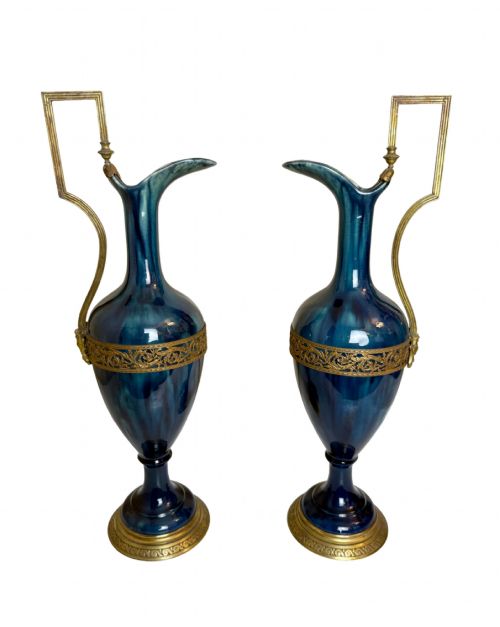
Jardinieres, jars, bowls, teapots and barrels are the recurring vessels. Around them sit storage flagons, jelly moulds, tea sets, jam pots, tygs, ewers and match strikers.
Scale swings wide. "Large" is in 25 titles, and the sampled stock includes garden lions on bases, an orangery tree planner and a pair of shipping-line alcohol jars.
Are there unusual one-off stoneware pieces?
Yes, and they are genuinely one-offs. A model of a lady's shoe, a rugby ball inkwell, a toast rack, a spittoon, a faux bois strawberry planter and a salt-glazed unicorn each appear once in the archive and nowhere else.
The rarest origins are Asian: a Sukhothai fish dish from the Si Satchanalai kilns and a Song dynasty celadon jar are single examples, and both sit near the top of the range.
Do stoneware sets and pairs come up?
Pairs are ordinary rather than exceptional, with "pair" in 14 titles, mostly lions, urns, tygs and plaques.
Larger sets appear occasionally and can be substantial. One lot runs to twenty-five French confit pots, another to a matched group of four 17th-century wine jars.
How much stoneware comes up on Sellingantiques?
Around 21 pieces come to market in a year.
Eighty-eight different dealers have listed one, so almost every dealer who handles stoneware has offered a single item rather than a run of them.