


Antique Kangxi
Chinese porcelain dated to the Kangxi reign of 1662-1722, or made later in its manner: tablewares, dishes and small vessels, with blue-and-white the palette you meet most.
Antique Kangxi
The category is held together by a dating claim rather than by a shape. Of 60 listings, 46 titles say "chinese" and 24 say "porcelain", while the forms run from saucer dishes and bowls through teapots, jars, brush pots and censers. What they share is the reign.
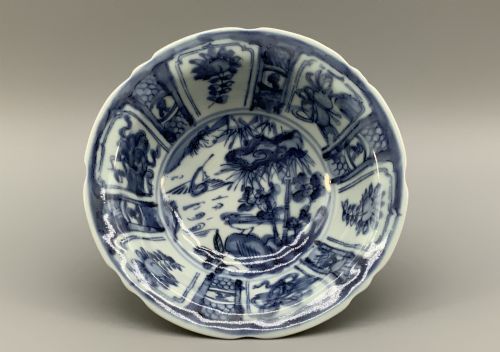
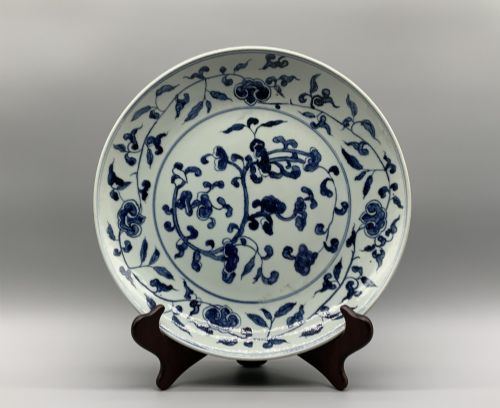
The piece you're most likely to meet is a blue-and-white dish or plate, anywhere from saucer size up to charger size. "Blue" appears in 22 titles, "white" in 19, and "dish" in 13, making dishes the commonest named form. Ten titles print the reign dates in the title itself, and ten offer pairs.
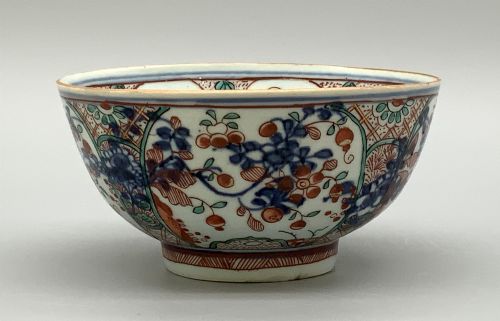
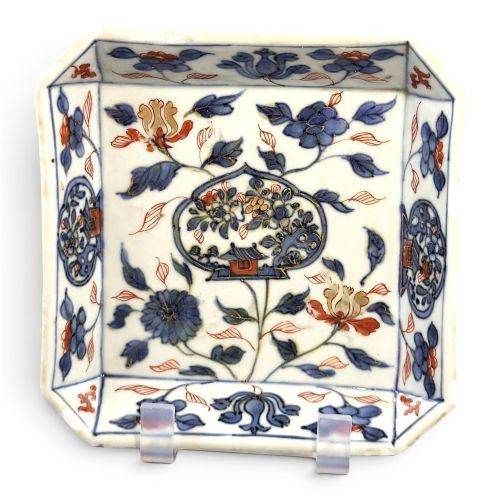
Around that core sit four smaller groups. Chinese Imari, underglaze blue with iron-red and gilding, runs to nine titles across bowls, mugs, decanters and dished chargers. Famille verte and wucai enamels turn up on teapots, brush pots and figures. Monochromes and blanc de chine make a handful, concentrated at the upper end.
The reign covered the rebuilding of the kilns after the late Ming collapse, and its wares were made for the Chinese market and for export to Europe in quantity. They were copied for centuries afterwards, which is why about one listing in eight here is a 19th- or early 20th-century piece described as Kangxi style or carrying a Kangxi mark. Style, mark and period are three separate claims.
What Sets Them Apart
The first division is the dating claim itself. Titles reading "Kangxi mark and of the period" sit well above those reading "Kangxi Style 19th Century" or a Kangxi mark on a 19th-century body. Everything else in the category is read against that line, and the period field alone won't settle it: because the reign straddles 1700, dealers file the same wares as 17th Century and 18th Century in near-equal numbers.
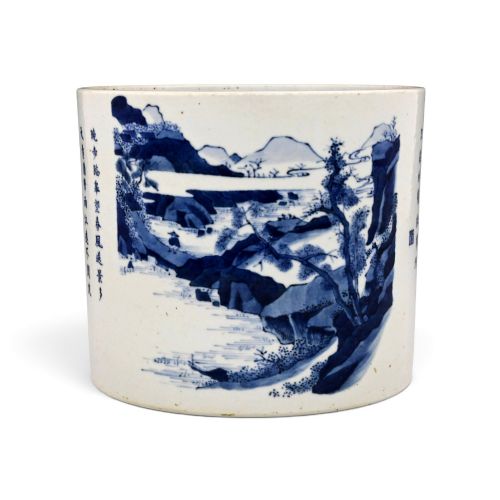
After that, form and palette do the work. Small saucer dishes and plain blue-and-white plates cluster at the bottom; brush pots, censers, ewers, lidded jars and figures cluster at the top, and scholar's objects are a persistent minority throughout. Unusual glazes carry the same lift, with powder-blue, Lángyáohóng, turquoise, yellow-glazed crackle and wucai each recorded once.
Scale and number move things up too. "Large" appears in nine titles, attached to chargers, ginger jars, mugs and brush pots, and the biggest named objects sit near the top. Pairs account for ten titles, with one trio of Imari dished chargers the only larger set. Named prior ownership appears once, on a charger at the very top of the range.
Antique Kangxi Retail Price Guide 2026
Typical UK retail prices for kangxi, calculated from the Sellingantiques database of over a million retail prices indexed since 2003. This retail price guide relies exclusively on Sellingantiques data; no external sources or auction records are used, so the figures do not describe the wider market.
Kangxi pieces have been listed on Sellingantiques since 2016.
The Antique Kangxi Glossary
- Kangxi period
- The reign of 1662-1722. Ten titles print the dates in full, and they don't agree with each other: 1661-1722, 1644-1722 and 1622-1722 all appear.
- Mark and period
- The claim that a piece carries the reign mark and was made in the reign, as against a later piece bearing the same mark.
- Kangxi style
- A later piece made in the manner of the reign, used in this archive with 19th-century and c.1890 dates.
- Chinese Imari
- Underglaze blue with overglaze iron-red and gilding, named in nine titles across bowls, mugs, decanters and chargers.
- Klapmuts
- A bowl with a broad flattened rim, made for the Dutch market. One appears here, among the export shapes recorded once each.
- Bitong
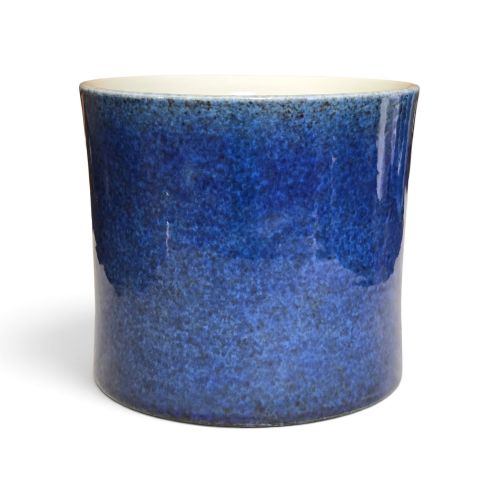
- A scholar's cylindrical brush pot. Five brush pots or holders appear in the category, two of them named by the Chinese term.
Antique Kangxi: Frequently Asked Questions
Why are these listed as both 17th and 18th century?
The reign runs from 1662 to 1722, so it sits either side of 1700 and the broad date buckets split it. Fifteen listings are filed as 17th Century, 22 as 18th Century, and three as Before 1700.
Only 10 of the 60 listings carry a clean year. The bucket on its own doesn't tell you where in the reign a piece falls.
What does Kangxi style mean in a title?
It means a later piece made in the manner of the reign rather than during it. The wares were copied and re-issued repeatedly after 1722.
On Sellingantiques these run to about one listing in eight, with dates including 19th Century, c.1890, 1910 and 1930. They sit below the reign-period pieces in the range.
Which forms turn up most often?
Dishes, by a clear margin. Thirteen titles name one, running from small saucer dishes through 12-sided and barbed-rim moulded dishes up to chargers.
Bowls, teapots, jars, brush pots and censers make up much of the rest. Export shapes recorded once each include a klapmuts bowl, a kendi, rosewater sprinklers, a tea caddy, decanters and a covered ecuelle.
Does a Kangxi mark mean the piece is Kangxi?
Not on its own. Listings distinguish "mark and period" from a Kangxi mark on a 19th-century body, and both appear in this archive.
Marks from other reigns turn up too. One dish here carries a four-character earlier mark yet is offered as Kangxi, the only such case in the category.
How many come to market?
Around five pieces a year. Eighteen different dealers have listed in the category, so the whole population turns over slowly.
Pairs are a regular feature, accounting for ten titles, and one trio of Imari dished chargers is the only set larger than two.
Are there named makers for this porcelain?
No. The listings identify pieces by reign, palette and form, and no maker, workshop or decorator is named anywhere in the archive.
What stands in for a maker name is provenance, and that appears once: a charger with a recorded London dealer lineage. A single dish carries shipwreck provenance, given to the Ca Mau wreck around 1700.