



A 2026 Guide by Sellingantiques
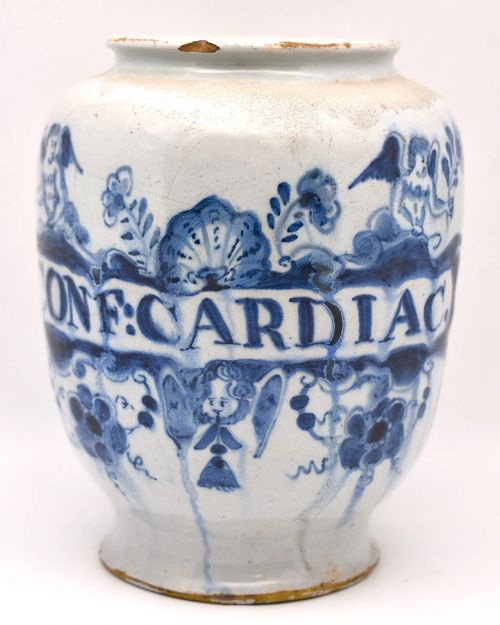
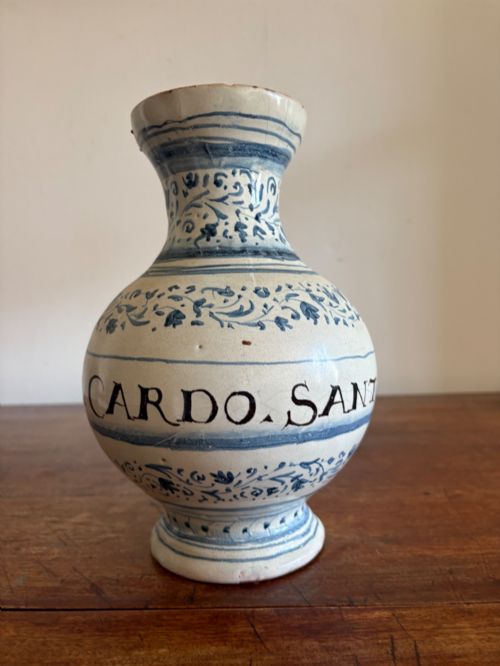
Large 18th C Delft Apothecary Jar, 18th Century
Priced at £425 from Mytton Antiques - Jerrard Nares
European chemists needed standard storage vessels for their growing stock of raw drugs.
Tin-glazed earthenware offered a dense, opaque body. This kept sunlight away from delicate organic compounds.
Glass became standard in the nineteenth century when manufactured chemicals began replacing traditional herbal remedies.
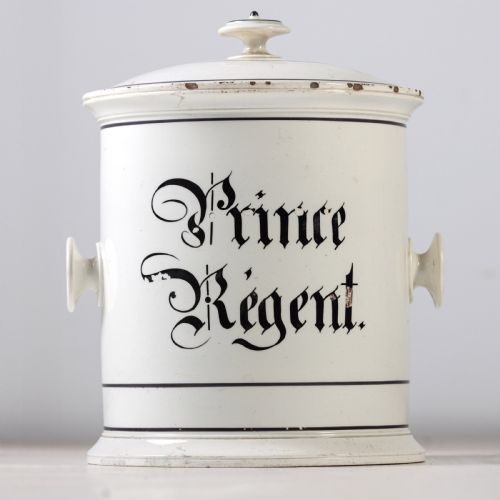
Check the labels. Painted text fired right onto the surface of antique apothecary jars survived frequent handling far better than paper.
York Glass Company operated throughout the late nineteenth century. They produced vast numbers of stoppered flint glass vessels for the medical trade.
W.T. Copeland supplied white earthenware versions in Staffordshire. Their pieces turn up often in British collections.
Finding a maker's mark is rare. The majority of early antique apothecary jars came from regional bottle glasshouses that left their work unsigned.
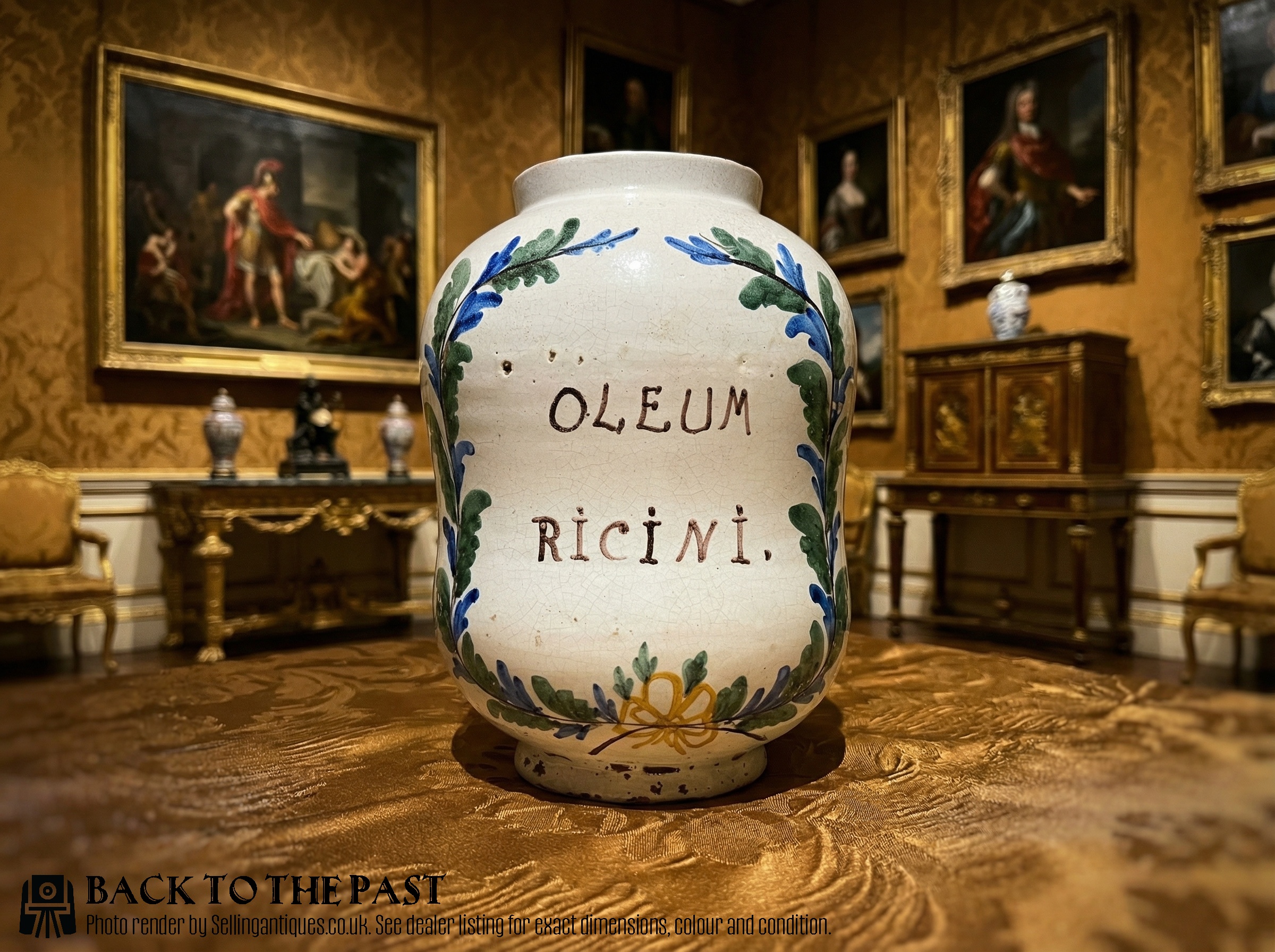
C. 1850 Large Pair Italian Delft Faience Apothecary Pharmacy Albarello Drug Jars, 19th Century
Priced at £495 from Artsonline
The 2026 retail price guide for Antique Apothecary Jars is drawn from a proprietary archive of over 1.1 million retail prices indexed by Sellingantiques since 2003. This guide relies exclusively on their own internal data; no external sources or auction records are used.
Analysing nearly 25 years of UK antique market history alongside current retail values, the data indicates that typical UK retail prices for Antique Apothecary Jars range between £200 and £1,300. Entry-level prices generally fall under £200 and premium examples upwards of £1,300.
Most have a recess at the neck to seat a stopper.
Read the painted cartouche on the front. These labels usually show abbreviated Latin names for the stored drugs.
Pontil marks sit rough on the base of blown glass jars.
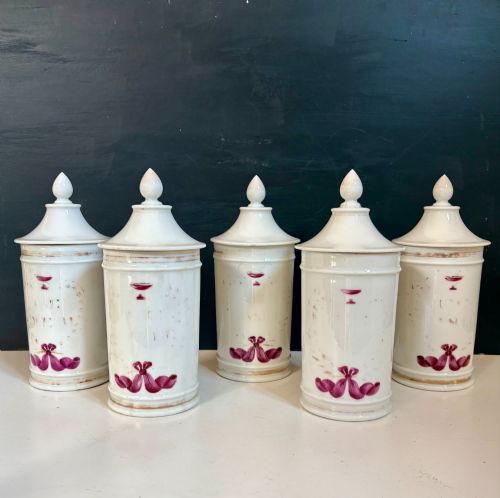
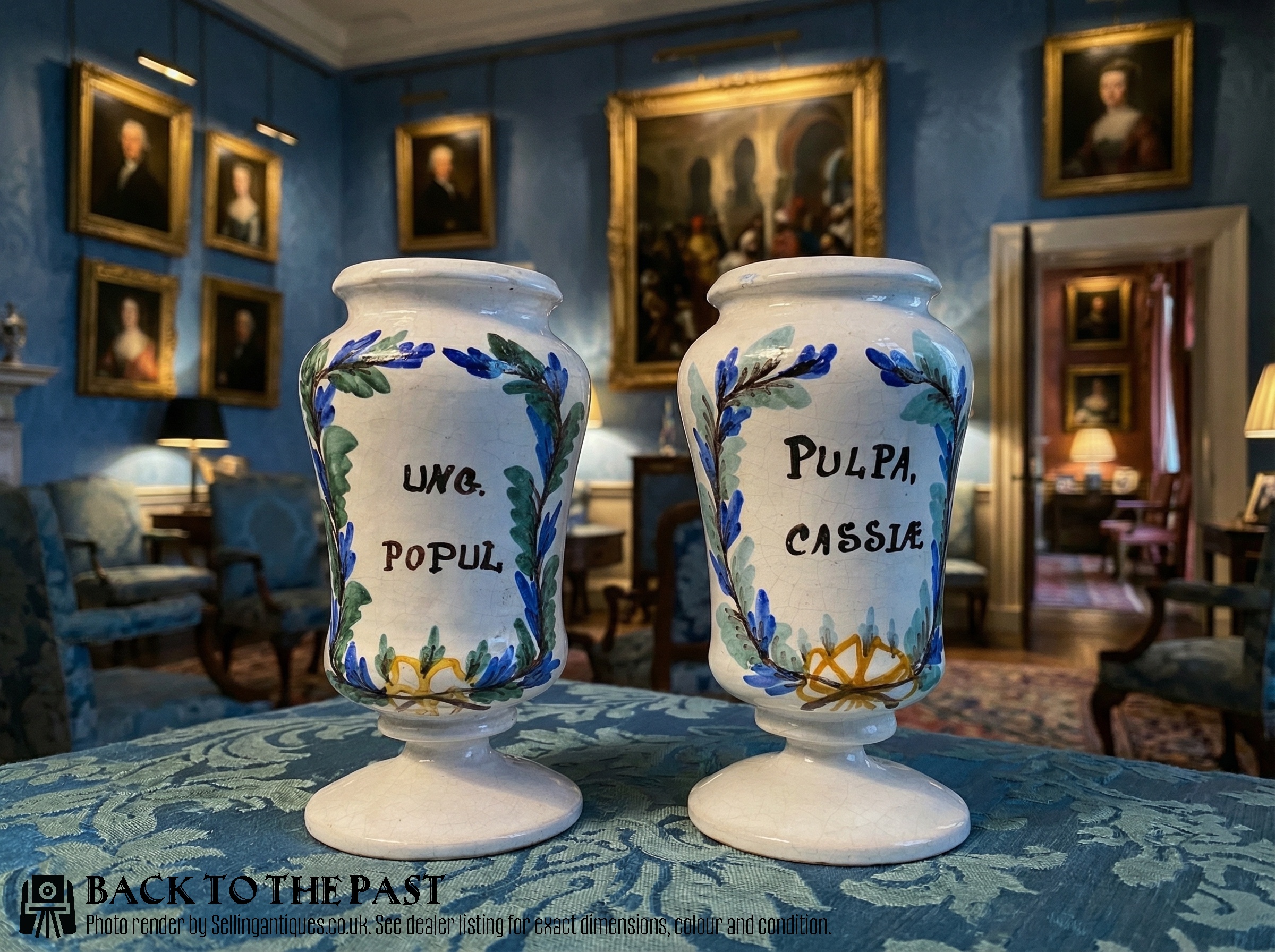
Pair of 18th C Tin Glaze Apothecary Jars, 18th Century
Priced at £470 from Mytton Antiques - Jerrard Nares
Potters threw early ceramic jars by hand on a wheel. You'll feel the internal throwing rings if you run your fingers inside.
Free-blown glass gave way to mould-blown techniques. Later nineteenth-century examples show faint seam lines down the sides.
Hand-painted enamel labels eventually lost out to cheaper recessed glass labels backed with gold leaf.
"Waisted albarello shapes allow for a very firm grip. A chemist handling wet herbs could easily lift these from high shelves."
"Matching stoppers were ground individually to fit just one jar. They rarely sit correctly if swapped to a different vessel."
"Pharmacies often treated their tin-glazed wares as shop signage. The most heavily decorated examples sat right in the front window displays."
Based on almost 25 years of Sellingantiques UK antique market data, Antique Apothecary Jars appeared 310 times (out of 1,100,000 antiques) which gives it a rarity score of 94/100.
This score measures scarcity within the Sellingantiques archive only and is not a survey of the entire antiques market, so these statistics may not be indicative of the general availability of Antique Apothecary Jars elsewhere.
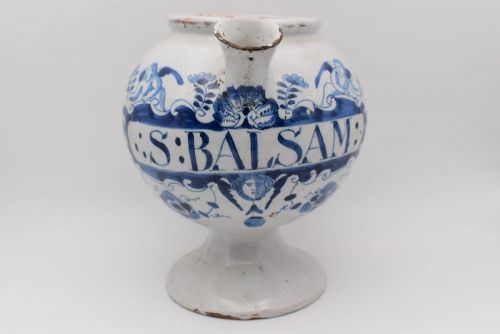
This is an abbreviation for syrupus, the Latin word for syrup. Pharmacists used standard Latin abbreviations across Europe to avoid prescribing errors.
You'll often find it followed by the name of a specific plant or compound. Jars marked this way usually have wider mouths to handle the thick, sticky liquids.
Start by working out if the label is painted under the glass or applied to the surface. If it's on the outside, you need to keep it dry during cleaning.
Swill warm water and mild dish soap inside the jar. Don't use hot water, as old glass cracks easily under sudden temperature changes.
If the clove smell persists, leave a handful of baking soda inside the dry jar for a few days with the stopper in place. This absorbs lingering odours safely.
Dried compounds often glue the glass joints together over time.
Try wrapping a warm, damp cloth around the neck. The mild heat expands the glass slightly, which usually breaks the seal without forcing it.
That hole indicates the vessel is actually a leech jar rather than a standard apothecary jar. Pharmacists kept live leeches for bloodletting, and they needed oxygen to survive in storage.
The small holes provided necessary ventilation. You usually find them near the top rim, but lower holes appear on certain regional variations.
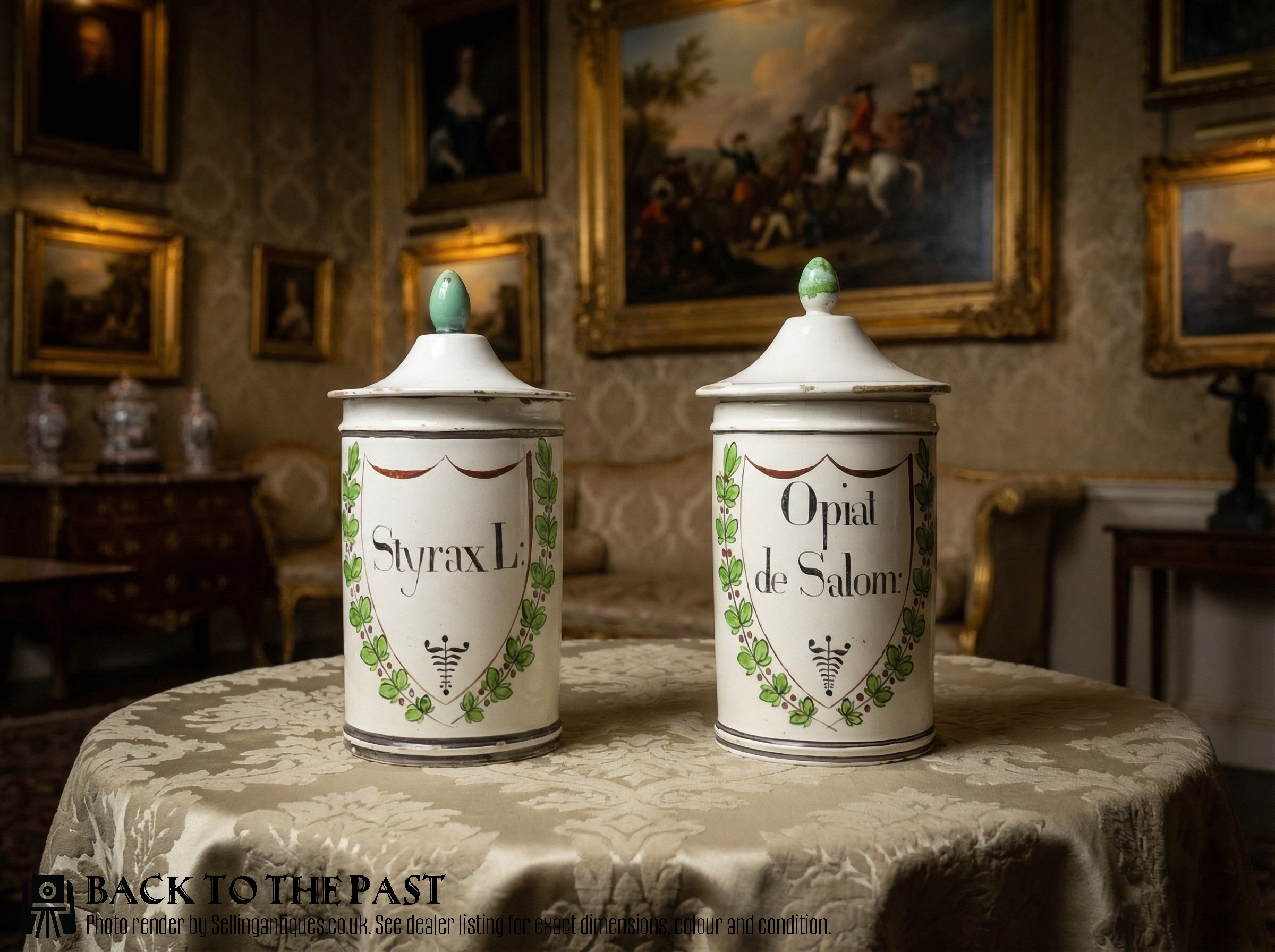
They're often large, shaped ceramic pieces. They feature domed lids and sturdy handles, setting them apart from the plain cylindrical stock jars.
Please note: This Antique Apothecary Jars guide and its associated pricing data are provided for general informational purposes only. It does not constitute formal financial, investment, or appraisal advice and should not be relied upon as the sole basis for any commercial activity, purchasing, or sales decisions. Sellingantiques.co.uk accepts no liability for any actions taken in reliance on this information. Always consult with a qualified professional or independent appraiser.
