


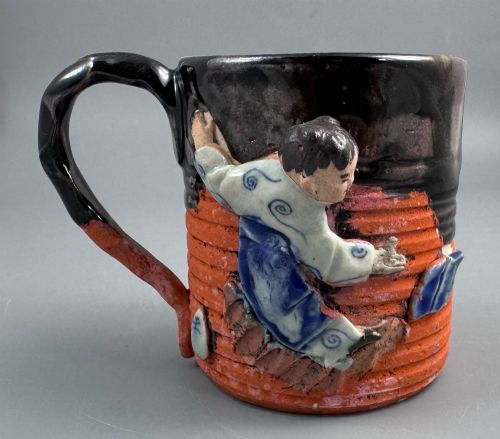


A 2026 Guide by Sellingantiques
Evolved from simple wooden mugs. Early sixteenth-century examples often featured hinged lids.
Silver versions appeared later for wealthier households. These signaled social standing when guests came to dine.
Look at the sheer volume of surviving pewter pieces. Taverns ordered them by the dozen during the Georgian period to serve daily customers.
Standardised capacities arrived with local trading laws. Stamped marks confirmed the vessel held a true pint or quart.
Glass bottoms became popular in the nineteenth century. Drinkers wanted to judge the clarity of their ale and check for sediment before taking a sip.
Hester Bateman produced silver tankards in eighteenth-century London. Her workshop focused on plain, unadorned domestic forms.
Provincial pewterers supplied most tavern pieces. Bristol and York had thriving local trades.
Look for touchmarks struck near the rim or on the base. These small stamps identify specific regional guilds and their individual members.
The 2026 retail price guide for Antique Tankards is drawn from a proprietary archive of over 1.1 million retail prices indexed by Sellingantiques since 2003. This guide relies exclusively on their own internal data; no external sources or auction records are used.
Analysing nearly 25 years of UK antique market history alongside current retail values, the data indicates that typical UK retail prices for Antique Tankards range between £200 and £1,800. Entry-level prices generally fall under £200 and premium examples upwards of £1,800.
A sturdy sweeping handle. Cast thick to balance the heavy weight of a full quart.
Hinged covers feature on most early examples. These sit flush with the rim to keep flies away from the drink during summer months.
Notice the thumbpiece on top of the handle. You press this down to lever the heavy lid open with one hand.
Pewter drums were cast in brass moulds. The maker then turned them on a lathe.
Silversmiths hammered flat sheets over an iron anvil. Raising the drum took serious time and required constant annealing over a hot fire.
Handles were cast separately. Workers soldered these onto the finished body using a low-melting alloy.
"Look inside a peg tankard. Drinkers used the small internal pins to measure their fair share."
"Some lids double as a flat base. You can stand them upside down to hold spirits."
"Whistle handles exist on certain pieces. The hollow cast terminal lets you blow a sharp note to signal the tavern keeper for a refill."
Based on almost 25 years of Sellingantiques UK antique market data, Antique Tankards appeared 2185 times (out of 1,100,000 antiques) which gives it a rarity score of 65/100.
This score measures scarcity within the Sellingantiques archive only and is not a survey of the entire antiques market, so these statistics may not be indicative of the general availability of Antique Tankards elsewhere.
A touchmark is the maker's stamp. Pewterers struck these small dies into the metal before selling the piece.
They function like a silver hallmark. Guilds used them to track who made the item and ensure the alloy met local standards.
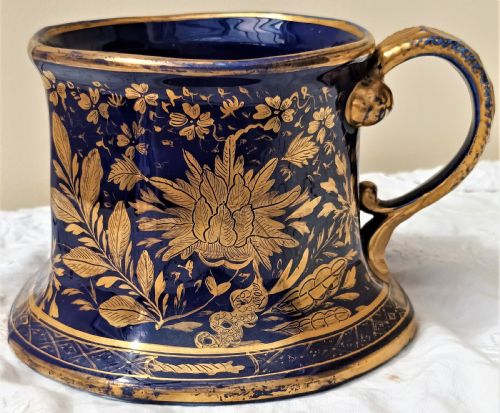
That gold layer is called gilding. Silversmiths often applied a thin wash of gold to the interior of silver drinking vessels.
Silver reacts badly with acidic liquids like wine or stale ale. The gilding stops the metal from tarnishing and prevents the drink from developing a metallic taste.
Glass bottoms let you inspect the ale before drinking.
The clear base made it easy to check the liquid for cloudy sediment.
You have a peg tankard. These were shared drinking vessels passed around a table.
The pins act as a measuring system. Each person was supposed to drink exactly down to the next peg before handing it over to the person sitting beside them.
Please note: This Antique Tankards guide and its associated pricing data are provided for general informational purposes only. It does not constitute formal financial, investment, or appraisal advice and should not be relied upon as the sole basis for any commercial activity, purchasing, or sales decisions. Sellingantiques.co.uk accepts no liability for any actions taken in reliance on this information. Always consult with a qualified professional or independent appraiser.
