


Antique Buckets
An open-topped vessel with handles, made to carry peat, plates, coal or water, or to stand by the hearth and cool a bottle.
What Are Antique Buckets?
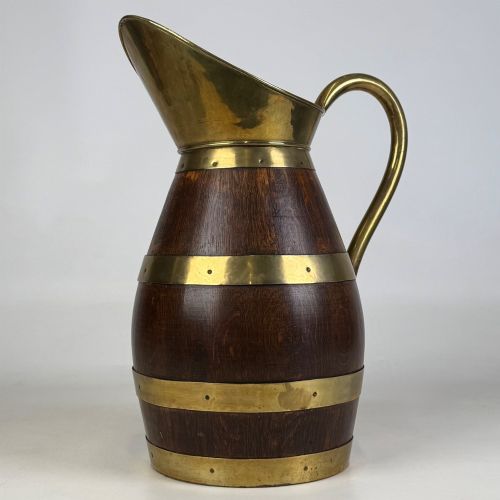
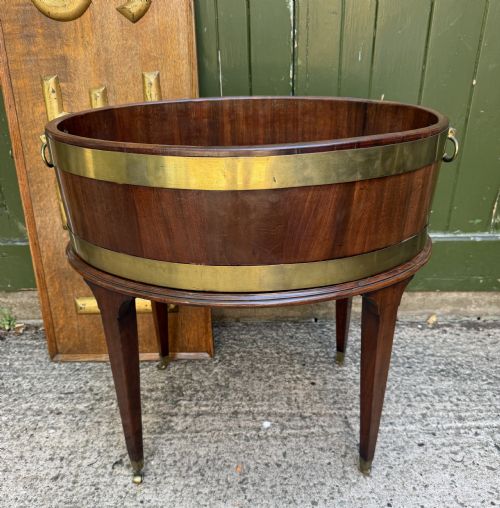
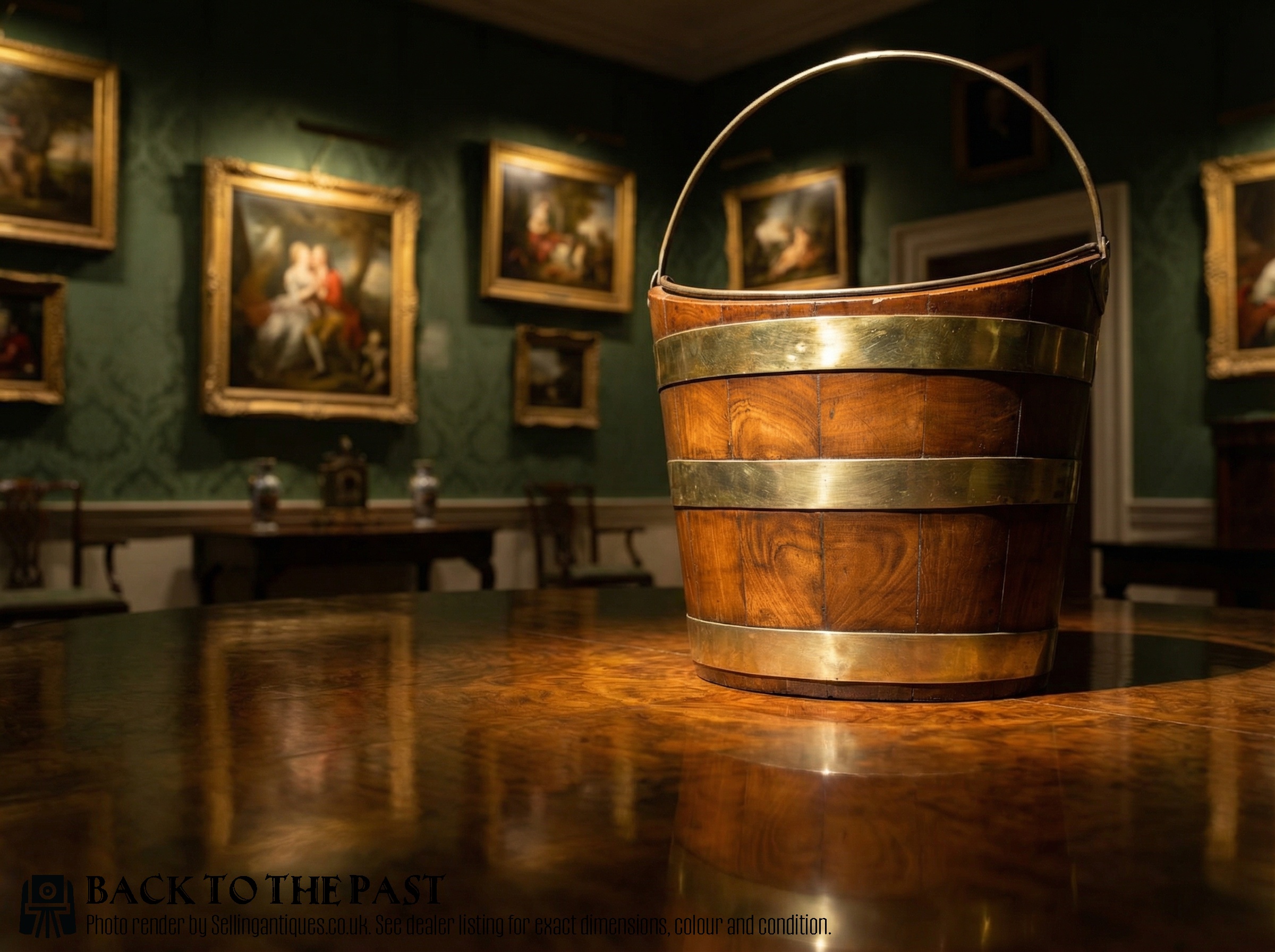
One form dominates: the brass-bound mahogany bucket of the Georgian and 19th-century house. Mahogany appears in 125 titles, brass in 114, and the phrase 'brass bound' in 71. Coopered construction, shaped staves held by hoops, runs through the wooden group.
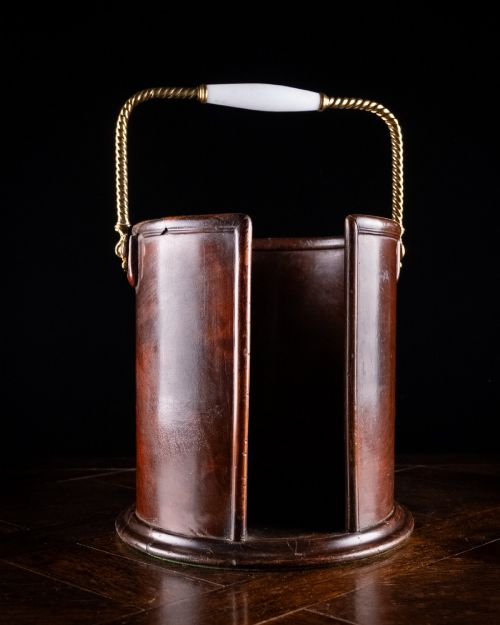
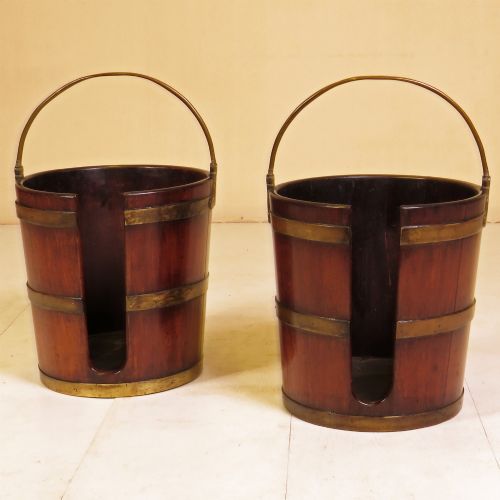
Two named uses lead on those bound wooden bodies. Peat buckets, for carrying fuel to the fire, appear in 50 titles. Plate buckets, slit down one side so warmed plates could be carried from kitchen to dining room, appear in 24. Irish attribution turns up on ten.
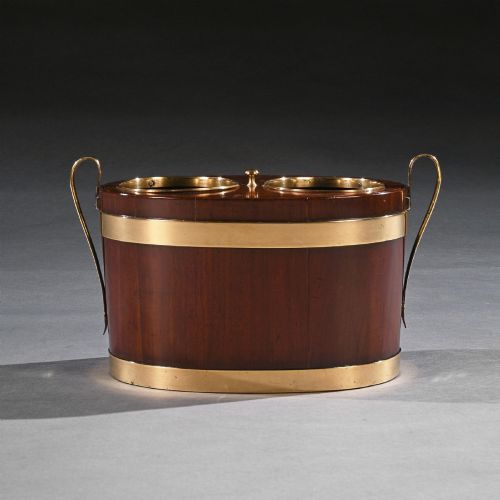
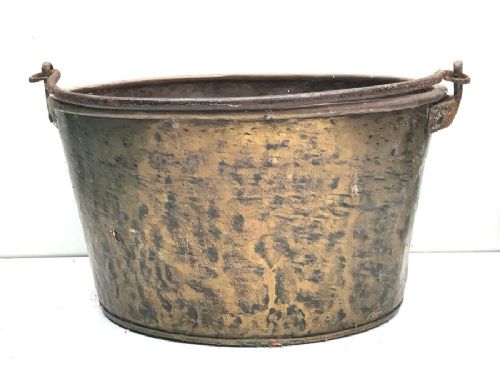
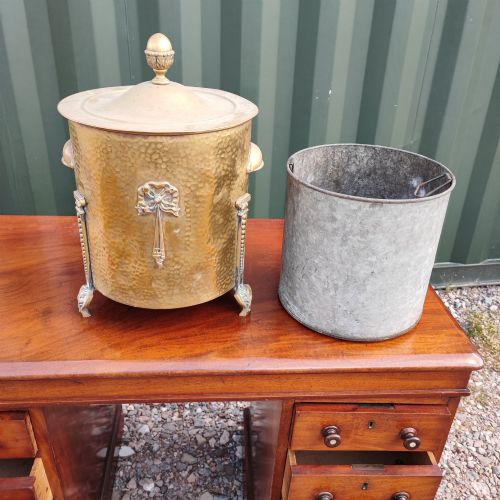
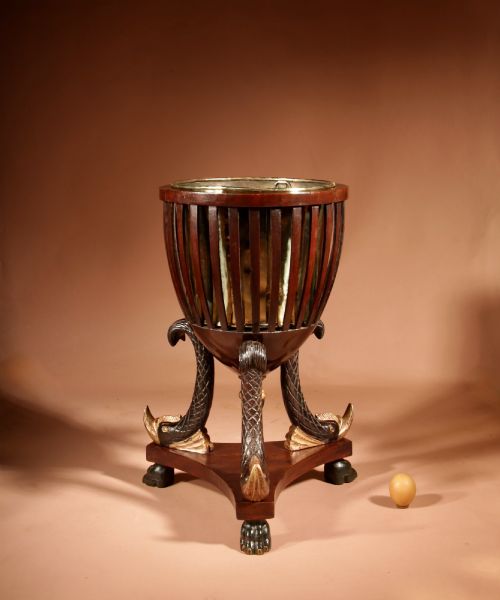
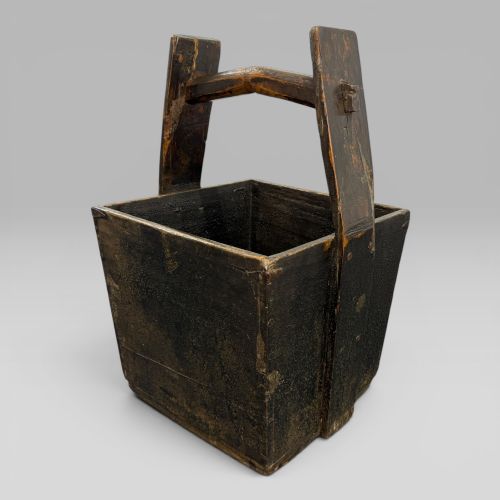
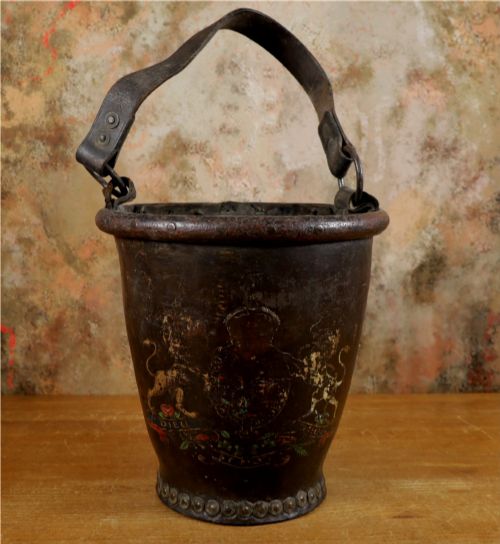
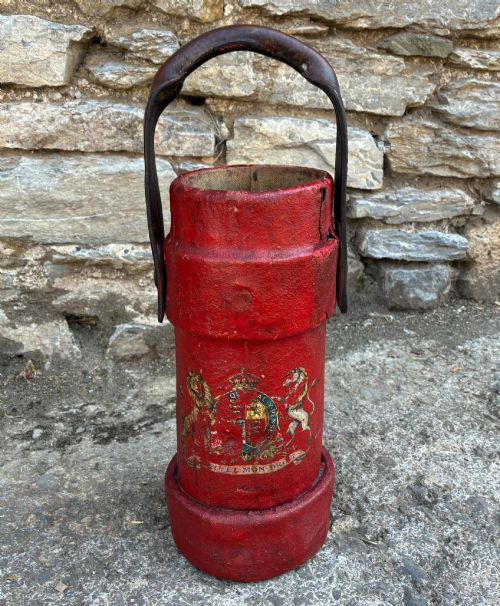
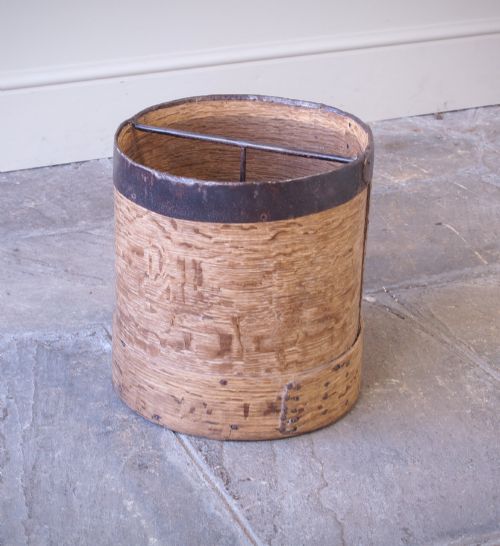
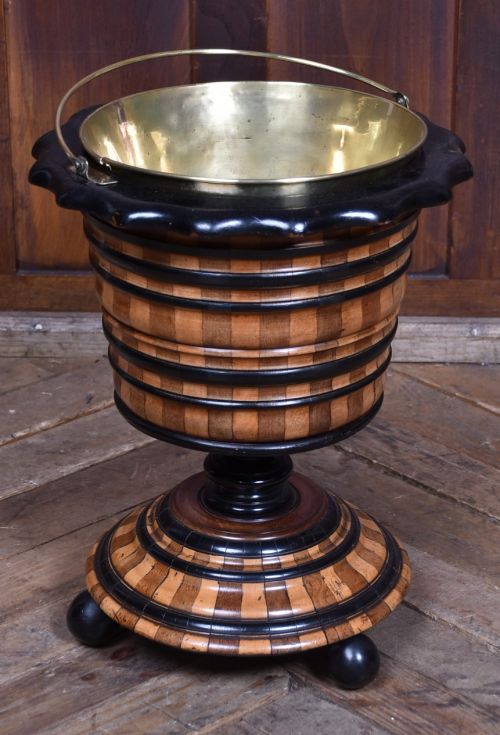
Around them sit four smaller strands. Leather fire buckets, riveted and often painted with arms, including naval, institutional and powder examples. Coopered oak and copper household buckets, housemaid's, dairy, well and coal. Wine coolers and ice buckets, oval or sarcophagus form, some on their own stands. And a Dutch corner of tea-stove buckets, jardinières and planters, with parquetry and walnut bodies among them.
Dating is loose. Only 110 of 389 listings carry a clean year, the rest broad labels, and '19th Century' behaves as a catch-all: titles tagged that way often say Georgian or George III in the same breath. Georgian and 18th-century labelling together outnumber Victorian, which is unusual for a utility form. Sizes run from miniature to large floor-standing, many on separate stands, and a fair number come as pairs.

Where The Range Splits
Material and binding set the floor and the ceiling. Mahogany with brass hoops concentrates at the top of the range; plain oak, pine, tin, zinc, enamel and painted metal cluster at the bottom. The wood carries the value, and the brass confirms it.
A named use lifts a bucket above a generic one. Plate buckets, wine coolers and peat buckets recur through the upper half of the sampled range, while an untitled 'bucket' sits lower. Refinement adds to that: a brass or copper liner, satinwood inlay, parquetry, lion-mask ring handles, an oval or ribbed body rather than a plain cylinder.
Pairs are a real feature and push upward. 'Pair' appears in 20 titles, matched plate and peat buckets occupy the very top, and one set of three leather fire buckets sold together. On leather and metal examples, an identified provenance does the same work, with painted armorials and named institutions running through that group.
Retail Price Guide 2026
Typical UK retail prices for buckets, calculated from the Sellingantiques database of over a million retail prices indexed since 2003. This retail price guide relies exclusively on Sellingantiques data; no external sources or auction records are used, so the figures do not describe the wider market.
19th Century is the period label used most on Sellingantiques for buckets, with Georgian next and 18th Century third.
The Antique Buckets Glossary
- Brass bound
- Encircled by brass hoops or bands over a wooden body, and the single commonest descriptor in the category, used in 71 titles.
- Coopered
- Built from shaped vertical staves held by hoops, the way a barrel is made. Twenty-seven titles say so outright.
- Plate bucket
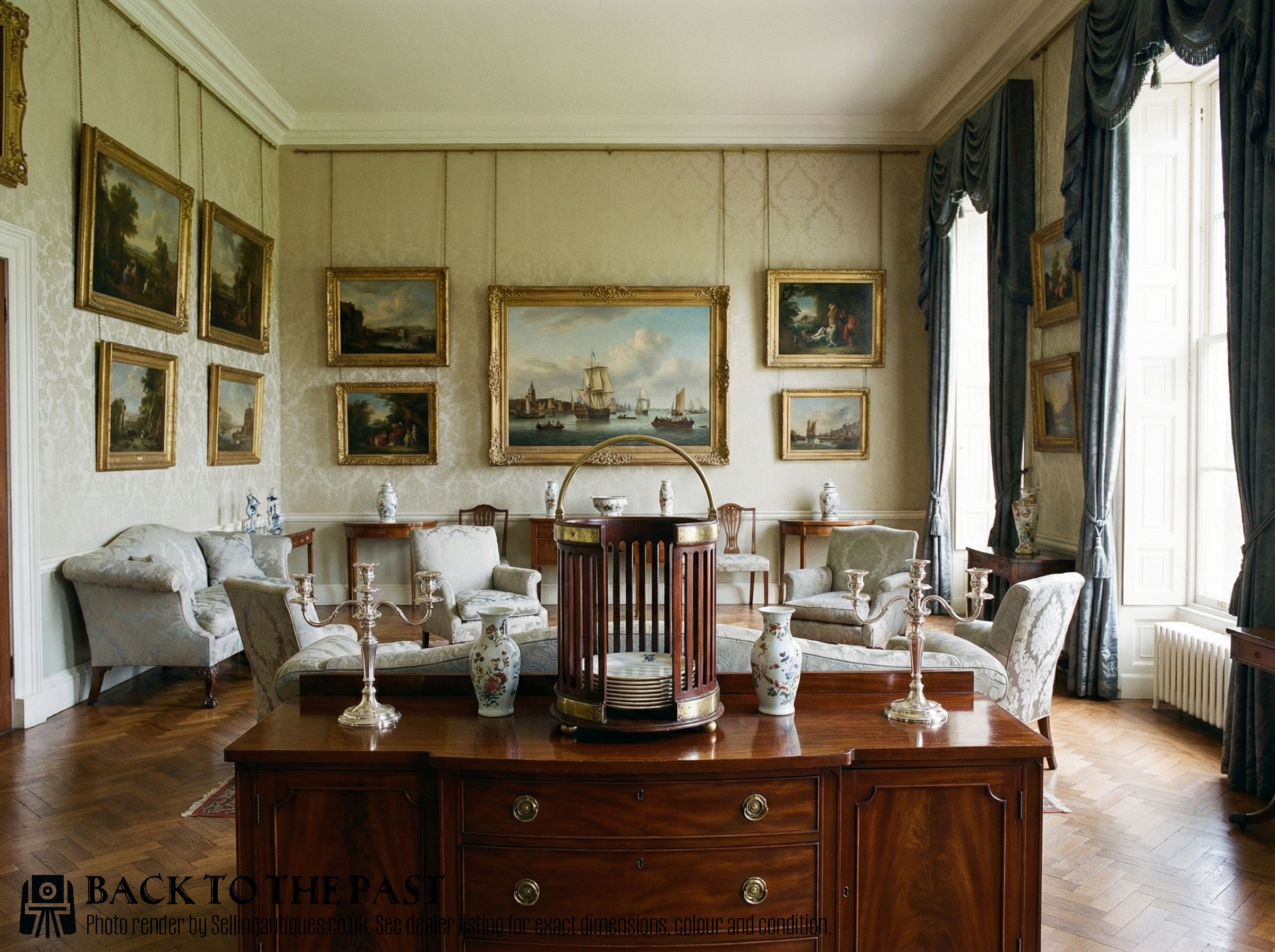
- A slit-sided bucket used to carry warmed plates between kitchen and dining room. Twenty-four titles.
- Liner
- A separate inner vessel, usually brass or copper, occasionally creamware, named in several titles and a mark of the better-fitted examples.
- Teestoof
- A Dutch tea-stove bucket, sometimes boat-shaped, or schuitje. Eight titles use the word, within a Dutch group of 32.
- Boiled leather
- Hardened riveted leather used for fire and powder buckets, often painted with a coat of arms.
Frequently Asked Questions
What is a peat bucket?
A bucket for carrying peat fuel to the fire, and the commonest named use in this category, in 50 titles.
It is usually a brass-bound hardwood body, mahogany more often than not, sometimes with a brass liner and sometimes standing on its own base.
Why are plate buckets slit down the side?
The slit let warmed plates be slid in and lifted out, so a servant could carry them from the kitchen to the dining room in one trip.
Plate buckets appear in 24 titles on Sellingantiques, most on brass-bound mahogany bodies, and matched pairs of them sit at the top of the range.
How old are most of these?
The dealer dating runs from 1750 to 1930, though only 110 of 389 listings give a clean year. The rest carry broad period labels.
Georgian appears in 62 titles and 18th Century in 43, together outnumbering Victorian at 27. The 20th-century tail is small: some 1900s and 1920s pieces, a few Edwardian, a handful of 1930s ice buckets.
Are leather fire buckets common?
They form about a tenth of the category. Leather appears in 41 titles, fire in 42, and the two together in 17.
Riveted and boiled leather bodies recur, frequently painted with arms. Naval, institutional and military examples run through the group, including cordite and powder buckets, with 'royal' in nine titles.
Why is one bucket called three different things?
Because the same vessel suits several jobs, and dealers list it under all of them. One title offers a single object as planter, jardinière and wine cooler; another as peat bucket, tea stove, knitting basket and jardinière.
A brass-bound wooden body of similar construction turns up as peat bucket, plate bucket, oyster bucket, log bucket and cooler across the archive.
Which buckets came from outside Britain?
Holland is the largest non-British strand, with 32 Dutch titles covering tea-stove buckets, boat-shaped bodies, parquetry ribbed forms and walnut with ebony.
France follows with 13, including the hotte, a grape-harvesting back carrier. Ireland accounts for ten. Beyond that, single Chinese elm, Indian teak, Swedish and Scandinavian pine pieces are about the whole of it.