

Antique Scales
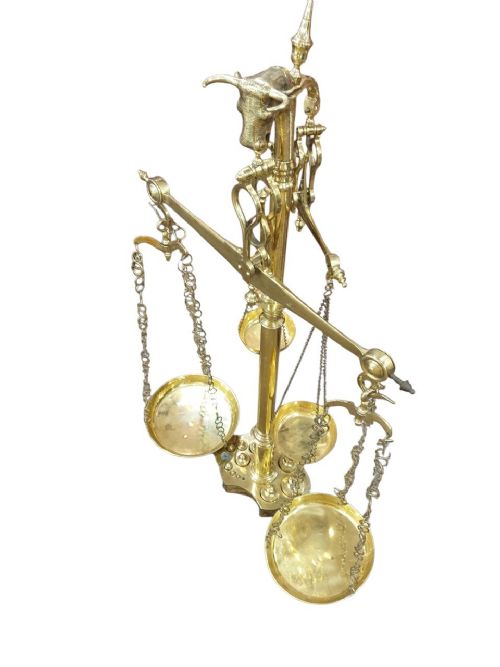
Weighing instruments from the working trade: brass and mahogany postal scales with their weights, shop and dairy beam scales, apothecary balances, and floor-standing oak jockey and doctors' scales.
Antique Scales
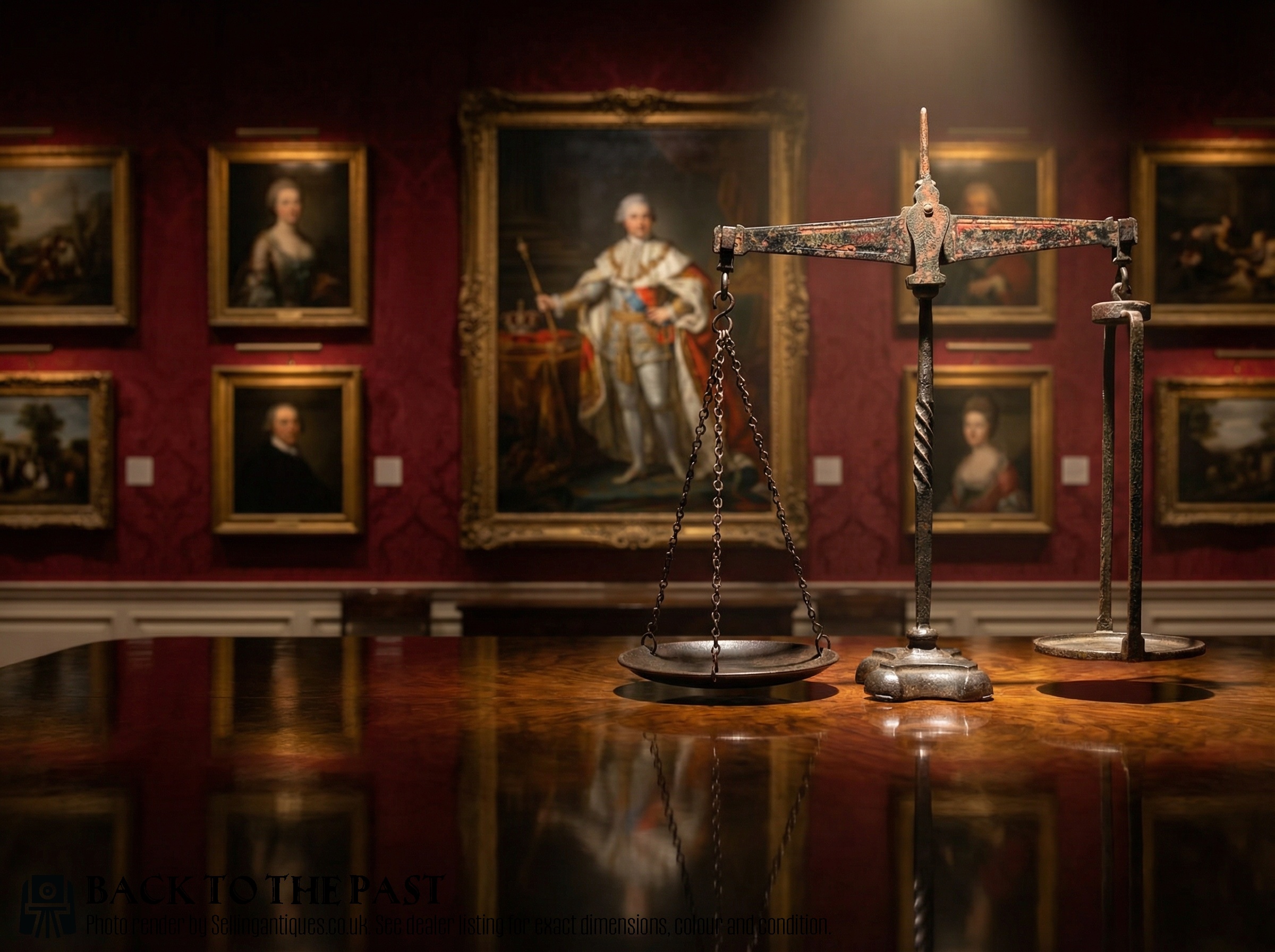
The heading is dominated by British 19th- and early 20th-century balances. Brass is the material named most often, and a set of graduated weights comes with the scale often enough that dealers put the weights in the title. Victorian is the commonest period label, with Edwardian behind it.
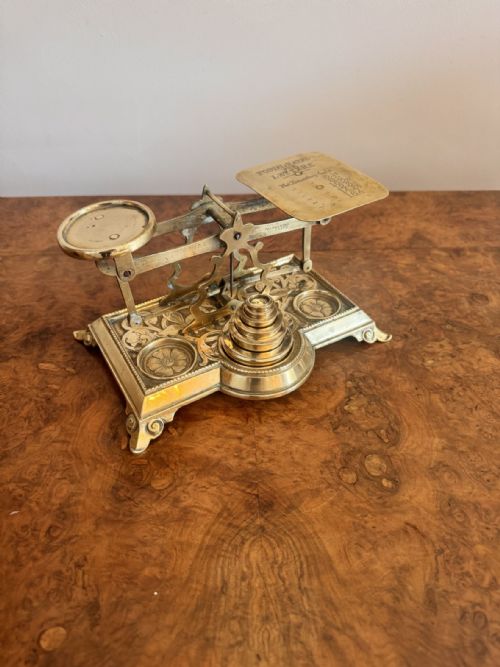
Postal and letter weighing is the largest single use. These are desk balances, brass or brass on a wooden base, with a small graduated set of weights beside them. Candlestick stems, boulle, walnut, malachite and mahogany bases all turn up. Small letter scales followed the uniform penny post of 1840, when weight set the postage.
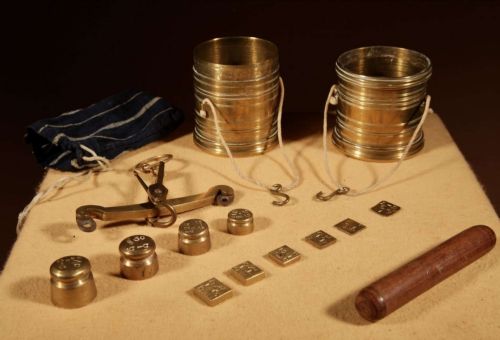
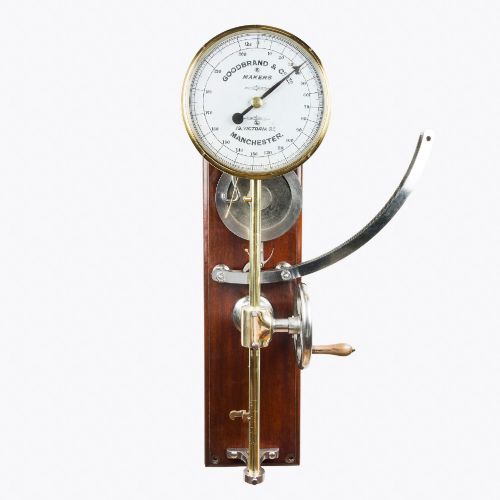
Next come the trade scales: shop, grocers, butchers, dairy, cheese and market balances in cast iron or brass, usually with nested bell weights. Apothecary, chemist and jewellers' balances form a smaller steady band, along with folding sovereign scales for gold coin. At the other end of the room sit floor-standing jockey, doctors' and personal weighing scales in oak or mahogany with brass fittings.
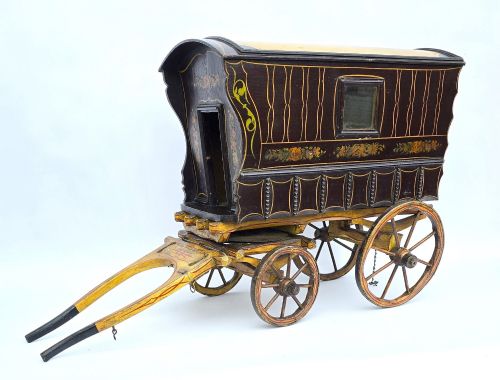
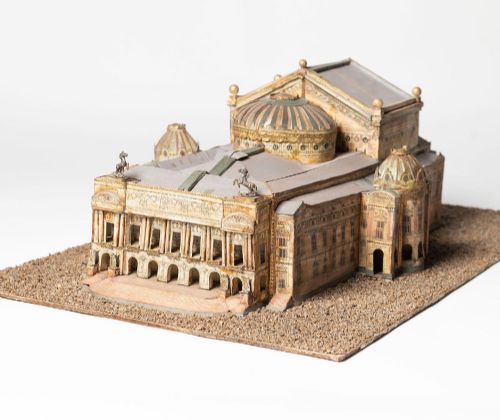
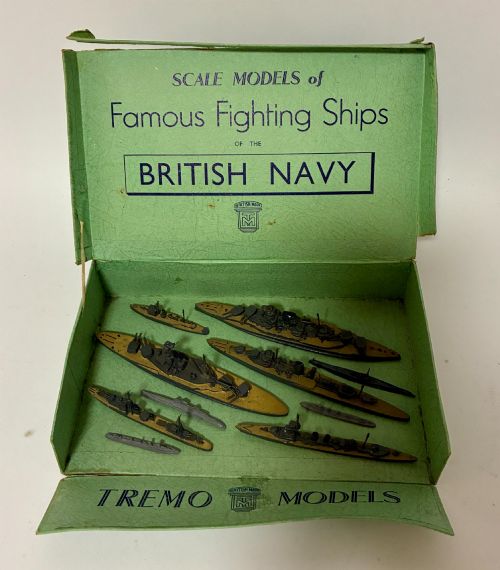
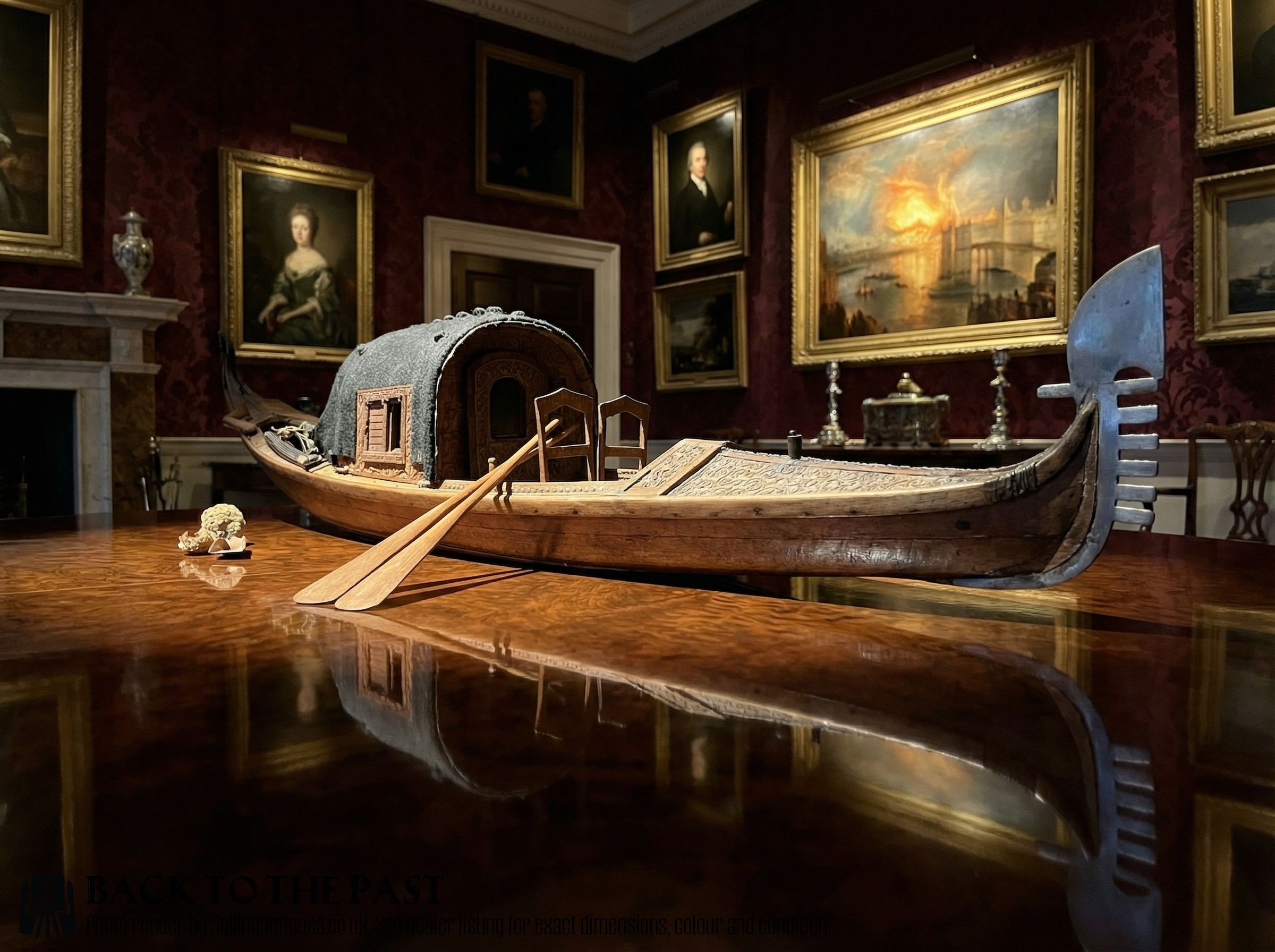
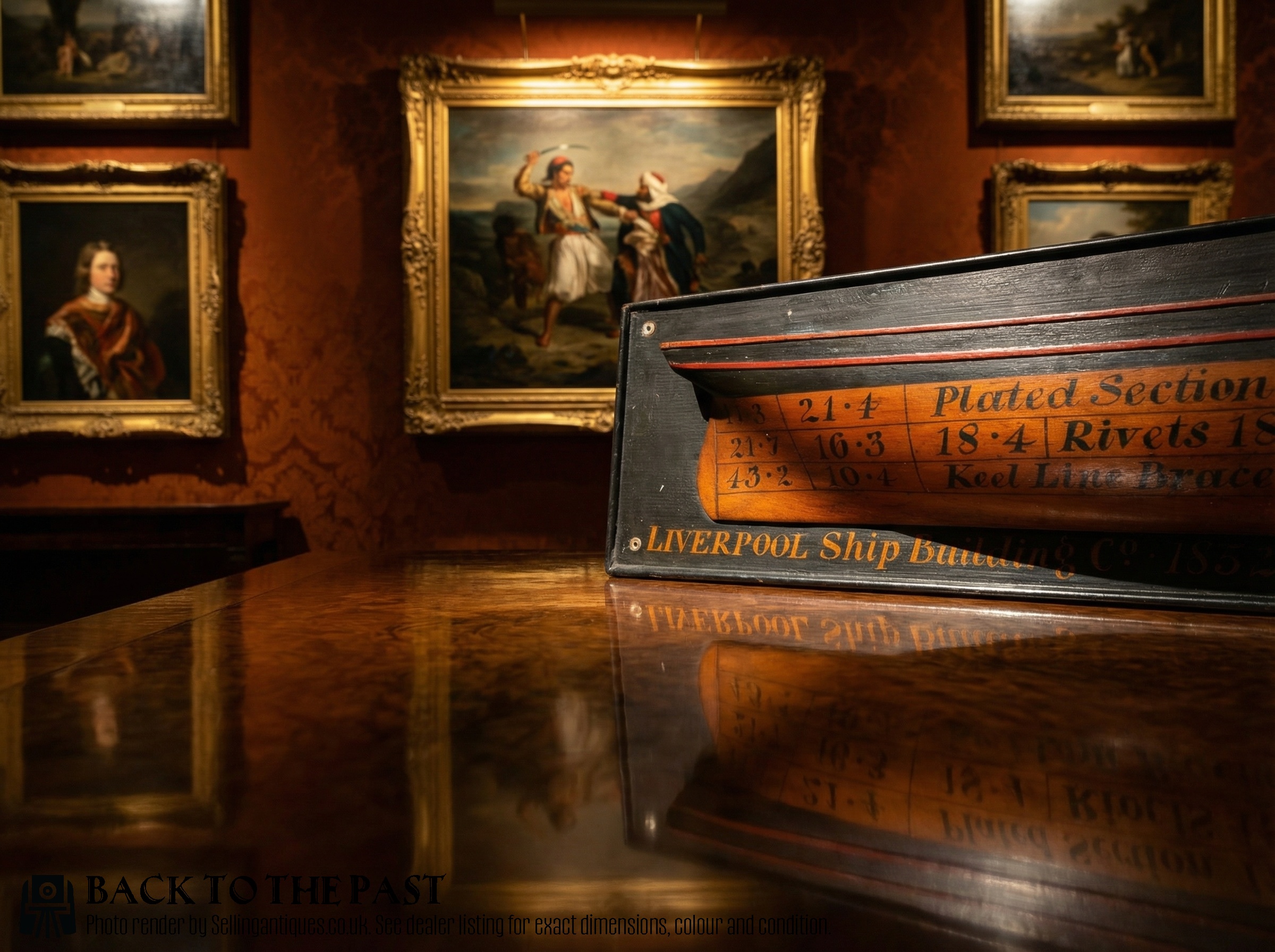
One thing to know about the index: the word 'scale' also pulls in listings that are not weighing instruments at all. Ship, locomotive and architectural models described as 'scale models', and furniture or vases described as 'of large scale', make up a good part of current stock under this heading.
Where The Range Splits
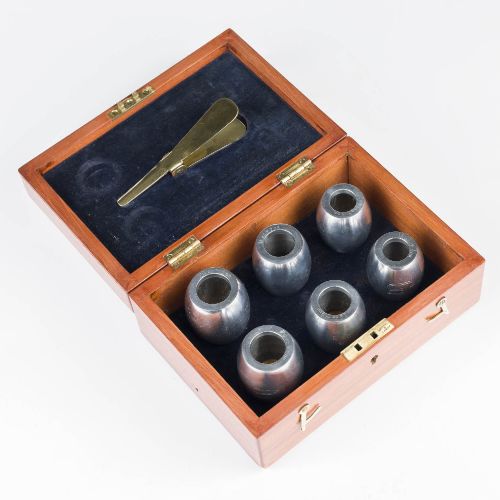
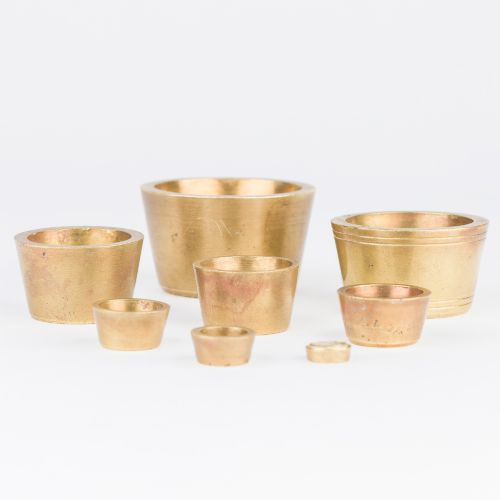
Weights decide a great deal. A balance with its original graduated set, or a full nest of bell weights, sits above the same balance orphaned, and dealers say so in the title because the words earn their space there.
Size and material carry the rest. One in six titles on Sellingantiques opens with 'large', and the top of the range is held by floor-standing oak and mahogany weighing machines rather than anything that fits on a desk. Among the postal scales, the ones on burr walnut, coromandel, boulle, malachite or onyx bases sit above plain brass.
A name helps too, whether it's a maker or a place of use. Sampled higher listings carry a Birmingham or London firm, a racecourse, a borough, a co-operative store. The lower end is generically titled and stays anonymous.
Antique Scales Retail Price Guide 2026
Typical UK retail prices for scales, calculated from the Sellingantiques database of over a million retail prices indexed since 2003. This retail price guide relies exclusively on Sellingantiques data; no external sources or auction records are used, so the figures do not describe the wider market.
The top sale of the last year on Sellingantiques was a late 18th century carved stone scale replica of a castle wall, nineteen feet long, sold in June 2026.
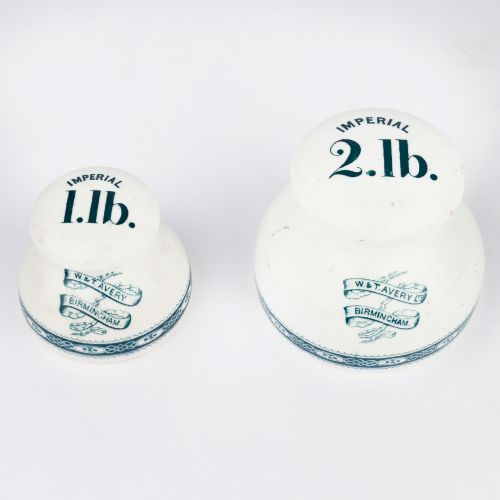
W & T Avery
The Antique Scales Glossary
- Beam scale
- A balance with a horizontal beam and a pan hung at each end. The word appears in fifteen titles here.
- Bell weights
- Graduated bell-shaped brass weights that nest into one another, sold as a set with shop and dairy balances.
- Dump weights
- Squat cylindrical brass weights, often described as waisted, used with postal scales.
- Candlestick scale
- A postal scale built on a turned columnar stem, the shape giving it the name.
- Jockey scales
- Chair or platform scales for weighing riders, usually oak or mahogany with brass fittings.
- Chondrometer
- A portable balance for measuring the bushel weight of corn. One turns up in the samples.
Antique Scales: Frequently Asked Questions
What kind of scales come up most often?
Postal and letter scales lead. Fifty-nine titles say postal and twenty-eight say letter, typically a brass or brass-and-mahogany desk balance with its graduated weights.
Behind them sit shop, dairy and butchers' scales, then apothecary and jewellers' balances, then the floor-standing jockey and personal weighing machines.
How old are most antique scales for sale?
The dealer-entered dates run from 1750 to 1960, though only 215 of 385 listings carry a clean year. The commonest entry is simply '19th Century'.
Where decades are given they cluster in the 1880s and 1920s, with the 1890s and 1910s close behind. Anything before 1800 is exceptional.
Why do model ships appear under this heading?
The word 'scale' does double duty. Forty-eight titles use 'model' and twenty-six use 'large scale', so scale models of ships, locomotives and buildings sit in the same index as the balances.
Items described as 'of large scale', including vases, tapestries and furniture, arrive the same way.
Are the weights usually still with the scale?
Weights get named in fifty-nine titles, with phrases like 'complete with weights' and 'full set of bell weights' doing the selling.
When a set survives, dealers say so up front. It's a short title, and the weights still earn a mention.
Which makers turn up on antique scales?
Only one firm is carried by more than a couple of dealers: a Birmingham maker named in twenty-seven titles. Everything else is effectively anonymous or a single-dealer attribution.
Names appear stamped on the beam or bed, on a printed plate, or in the listing as an attribution rather than a mark.
Do foreign scales appear in this category?
It's a thin seam. French shows up in eight titles, with single Dutch, Frisian, Portuguese, Italian and Scottish pieces scattered across the range.
The bulk of what sells on Sellingantiques under this heading is British trade, post-office and domestic equipment.