

Antique Inkwells
A pot of ink for a dip pen, sometimes standing alone, more often set on a tray with a pen rest, made for the writing desk between about 1800 and 1940.
What Are Antique Inkwells?
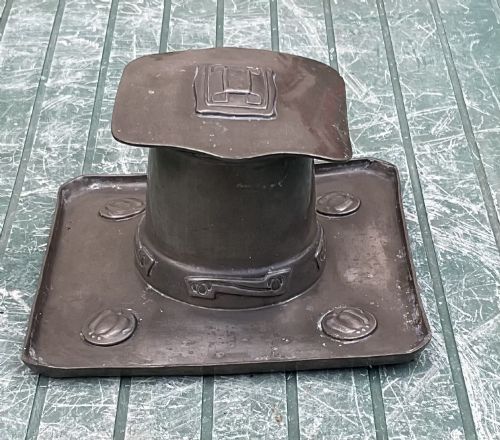
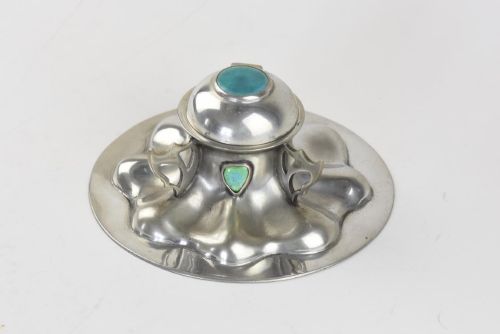
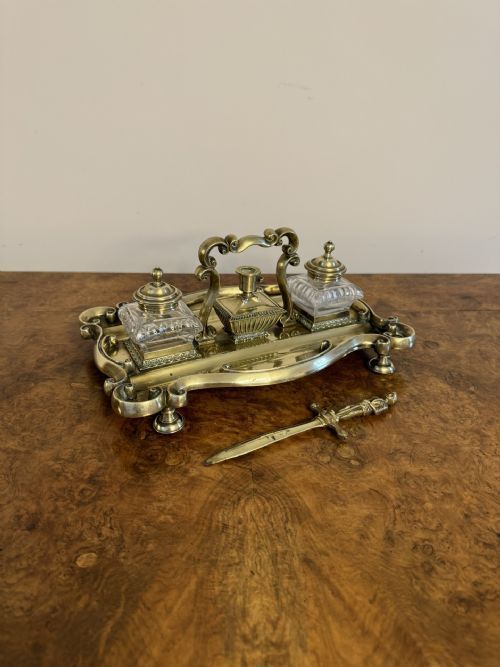
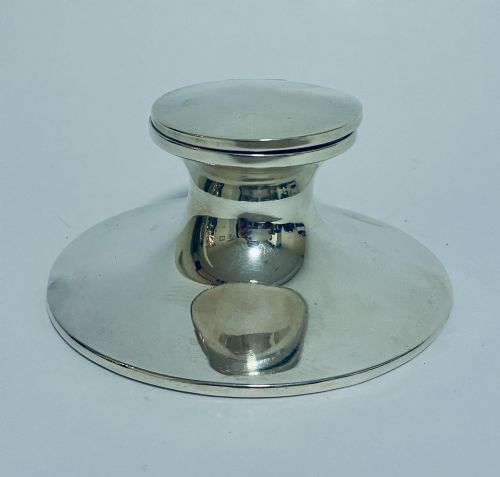
Free-standing ink containers became a standard writing-desk fitting once dip pens and bottled ink were part of ordinary domestic life. Three shapes turn up on Sellingantiques: the single well, the well mounted on a tray or base, and the matched desk set sold as one lot.
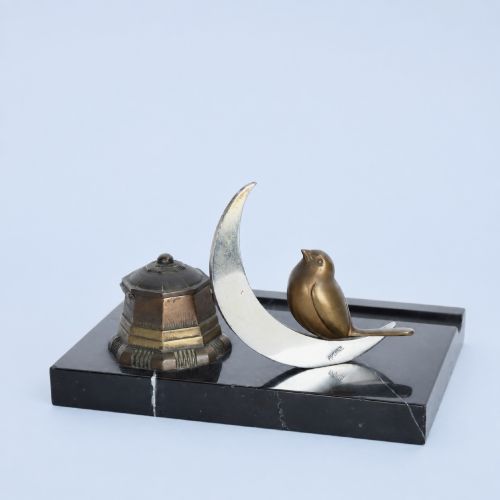
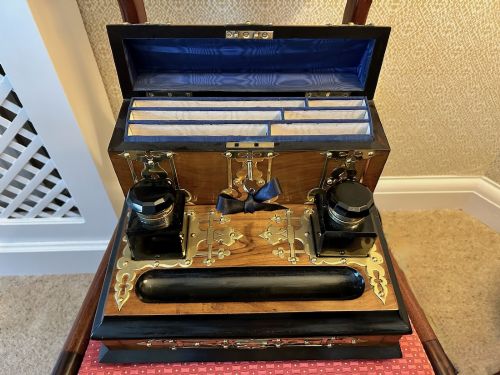
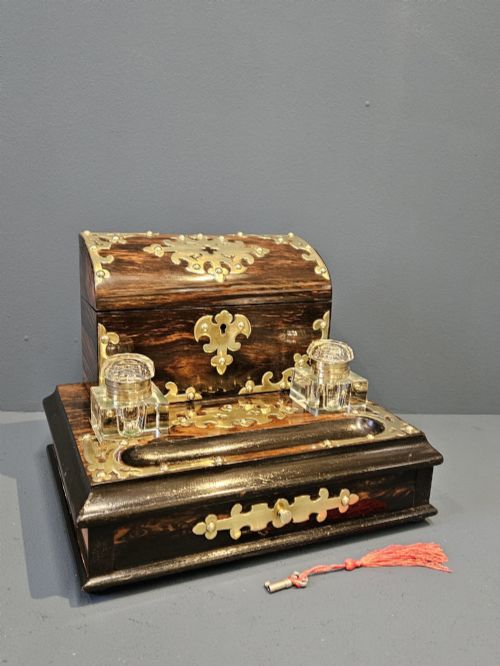
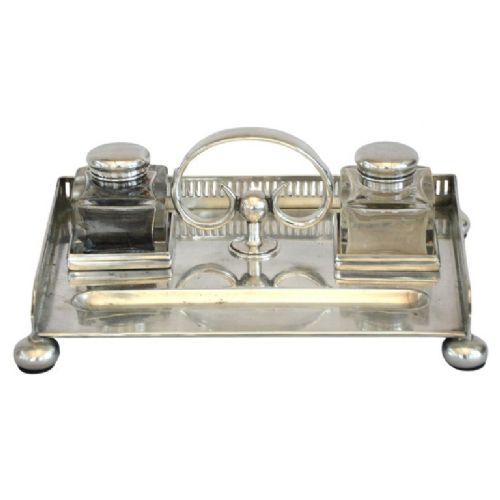
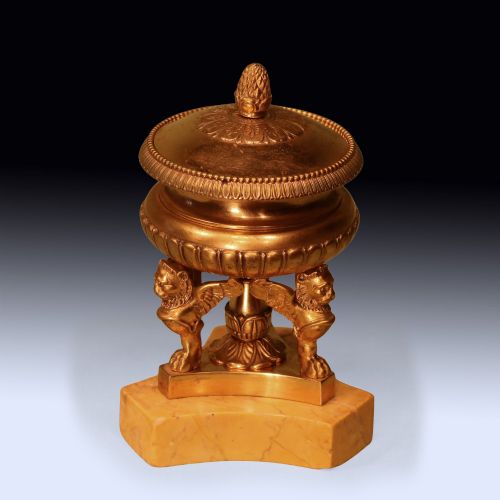
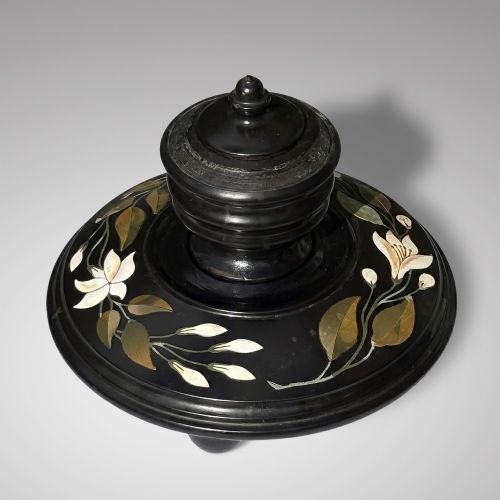
Metal dominates. Brass and bronze together account for the largest share of titles, usually a 19th-century English or French well on a tray with a pen rest, dated by dealers to the 1880s through the 1900s. Glass wells and liners follow, then stone bases in marble, onyx and malachite.
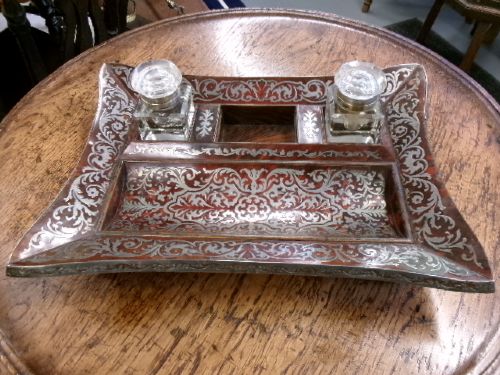
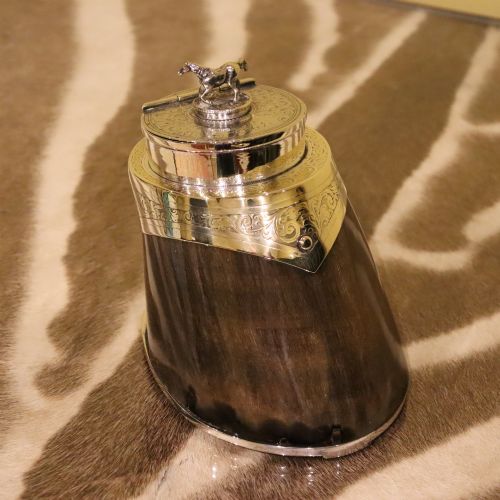
The other half of the category is decoration rather than plumbing. Novelty and figural pieces modelled as dogs, owls, horses, boots, helmets and books make up roughly a fifth of what comes to market, and a carved-wood Black Forest group of bears, cats-in-boots, owls and hares runs alongside them at about one in eleven. A smaller thread of travelling wells in leather-covered cases, and desk sets in boulle, coromandel and inlaid cabinet-work, fill out the rest.
Dating is better recorded here than in most miscellaneous forms, though often loose: roughly two in five listings give a period label such as 19th Century, Victorian or Edwardian rather than a year. Where a decade is named, the 1880s lead by a clear margin. Around 32 pieces come to market in a year, and 122 different dealers have listed one, so this is a category almost every general dealer touches.
What Sets Them Apart
Modelling is the main divider. Plain glass wells, silver-plated pots and leather-cased travelling boxes sit at the bottom of the range; the top is almost entirely figural, with bulldogs, hares, owls, parrots and dolphins among the sampled pieces. A pot that looks like something other than a pot carries the money.
Material and finishing detail sort the rest. Bronze, ormolu mounts, boulle and specimen stone recur at the upper end, while pressed glass, spelter and plated wares sit low. Glass eyes are the single most consistently flagged detail in the whole category, named in around one in twenty titles, and they cluster in the dearer carved and cast animals.
Scale and completeness both push upward. The words large and grand appear in titles near the top of the range rather than the bottom, and a stand keeping its original glass liners, ink bottles, pen tray or matching candlesticks stands above a bare well on its own.
Retail Price Guide 2026
Typical UK retail prices for inkwells, calculated from the Sellingantiques database of over a million retail prices indexed since 2003. This retail price guide relies exclusively on Sellingantiques data; no external sources or auction records are used, so the figures do not describe the wider market.
The most expensive inkwell ever sold on Sellingantiques was a gilded bronze hare, dated about 1880, sold in January 2025.

The Antique Inkwells Glossary
- Inkwell
- The pot itself, holding ink for a dip pen. It may be loose, or seated in a base.
- Inkstand
- A tray or base carrying one or more wells, commonly with a pen rest. Some dealers write it as two words, ink stand.
- Desk stand
- The trade's near-synonym for inkstand, and a phrase used in its own right across a run of listings.
- Desk tidy
- A stand combining a well with compartments for pens, stamps or letters.
- Novelty
- Modelled as something other than a pot, the trade's own heading for boots, helmets, books and animals.
- Encrier
- The French word for an inkwell, used in several French listings.
- Pounce pot
- The companion vessel for the powder used to blot or size paper. It surfaces only twice in the whole sample.
Frequently Asked Questions
What are most antique inkwells made from?
Metal leads the category. Brass and bronze together account for the largest share of titles, followed by glass wells and liners, then stone bases in marble, onyx and malachite.
Carved wood forms a distinct group of its own in the Black Forest animals. Ceramic wells turn up only a handful of times.
Which period do they mostly date from?
The dated field runs from 1800 to 1940, and the centre of gravity is firmly late Victorian. The 1880s account for more listings than any other decade, with the 1900s and 1890s next.
Roughly two in five listings give a period label rather than a year, so 19th Century, Victorian and Edwardian appear often in place of a date.
What is a Black Forest inkwell?
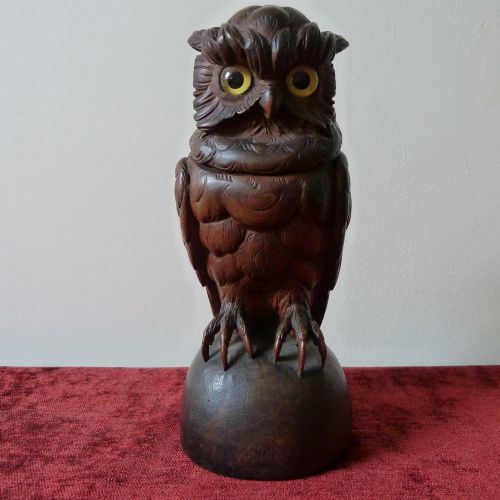
Carved wood animal work of Alpine type, applied to inkwells and stands. Bears, dogs, cats-in-boots, owls and hares recur across the listings.
It makes up about one in eleven pieces on Sellingantiques, and many of the carvings carry inset glass eyes.
Are figural and animal inkwells common?
Yes. Novelty and figural pieces together make up roughly a fifth of the category, and they take up most of the upper range.
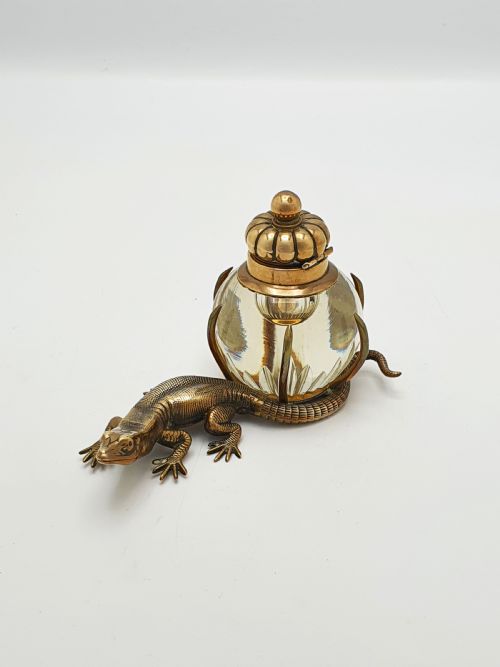
Dogs and owls are the two animals that recur most. Lizards, hares, parrots, ostriches, a crocodile, a lobster and a dolphin each turn up only once or twice.
How do travelling inkwells differ?
They were made to be carried and closed, rather than to sit on a desk. Leather-covered cases are the usual form.
They run as a small persistent thread through the listings, and the shapes get inventive: a miniature Gladstone bag, a terrestrial globe, a post office directory and boot forms all appear.
Do inkwells from outside England and France appear?
Rarely. The body of the category is English and French desk work of the 19th and early 20th centuries.
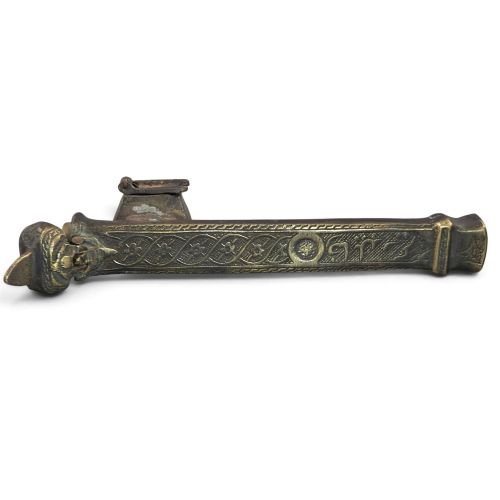
Ottoman and Armenian scribe's pen boxes with attached wells, a Japanese Meiji silver elephant and a Russian gilt-bronze sleigh each appear once.