


Antique Rocking Horses
A carved and painted wooden horse, usually dapple grey, mounted on a trestle stand or curved rockers, made to be ridden by a child.
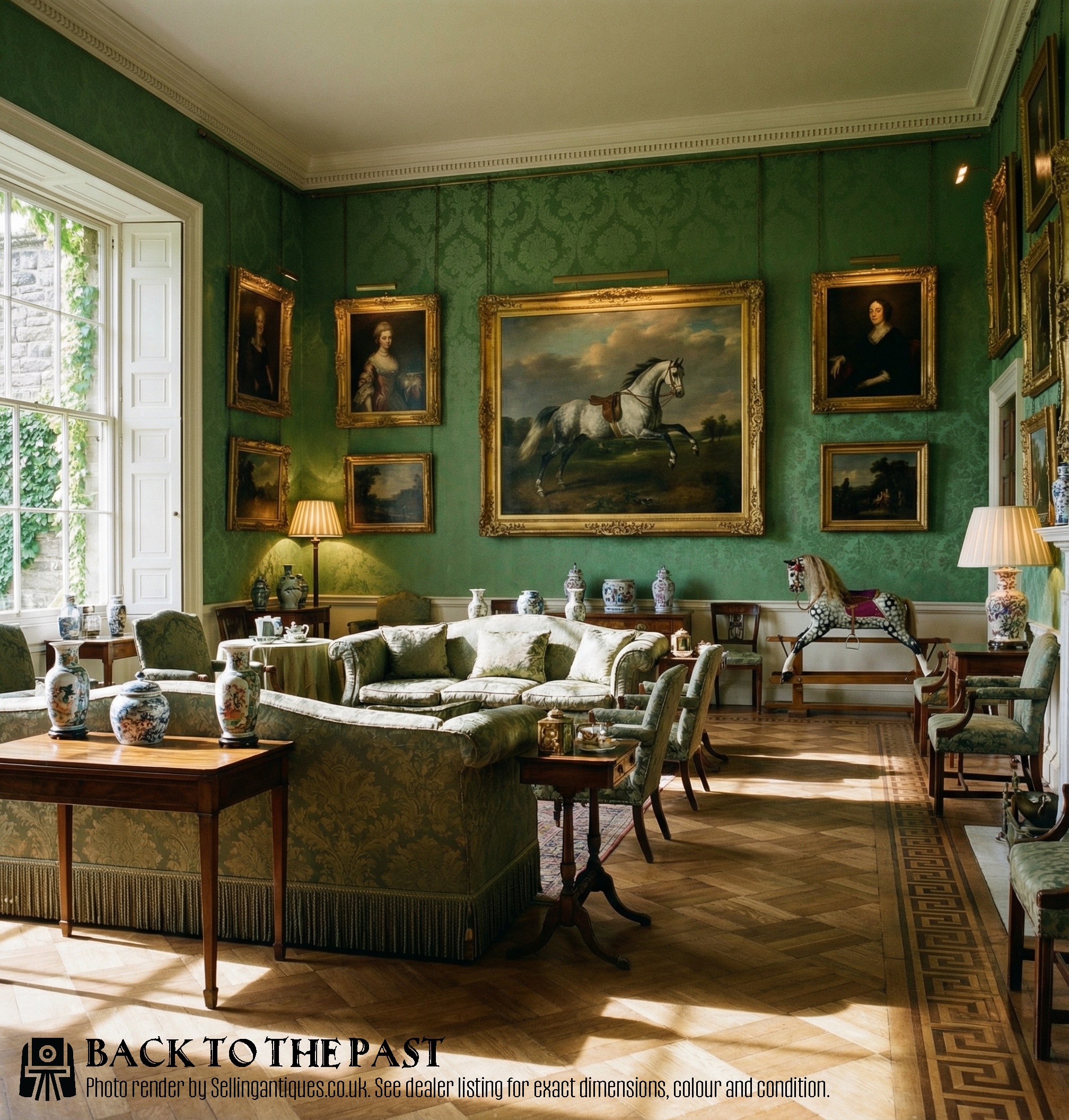
Antique Rocking Horses
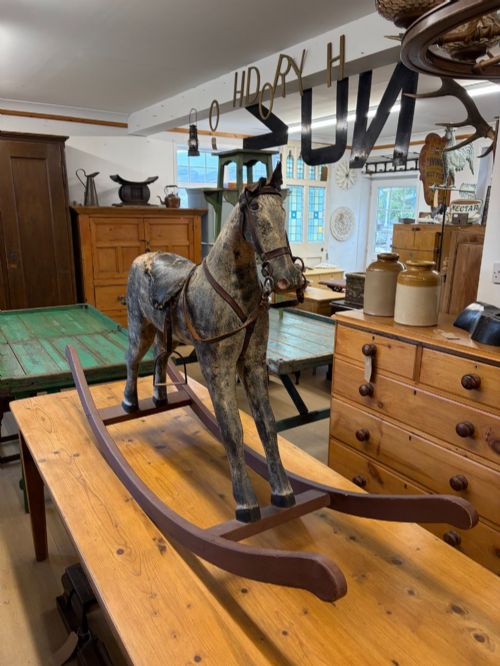
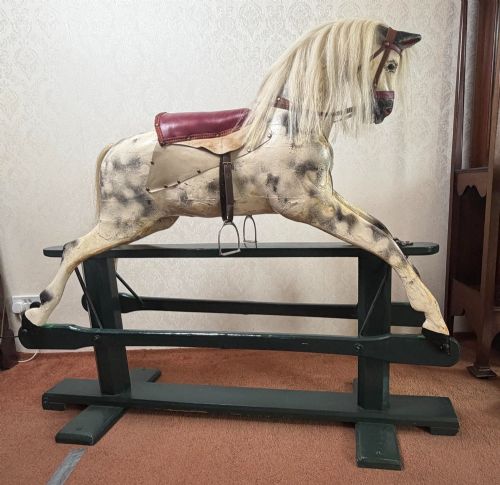
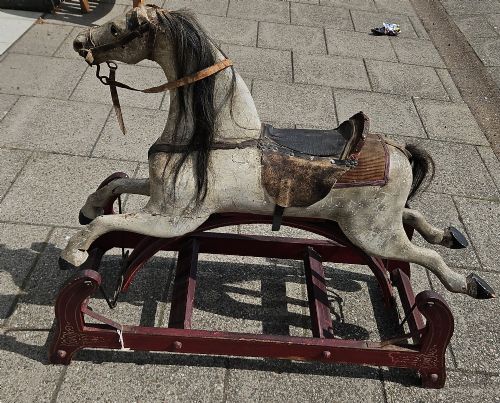
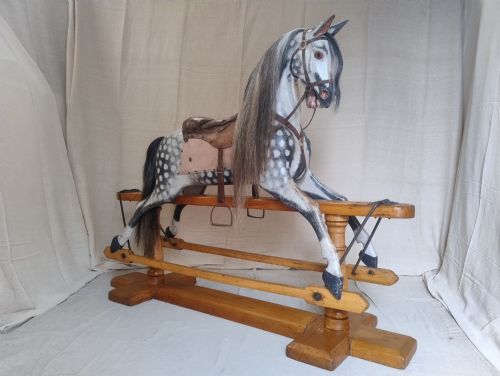
The horse you'll meet most often is a carved wooden body, painted dapple grey, swinging on iron brackets from a fixed A-frame stand. Softwood or beech carving under gesso and paint, sold by size: small, medium, large, and occasionally extra large. "Wooden" and "carved" run through the titles more than any other words.
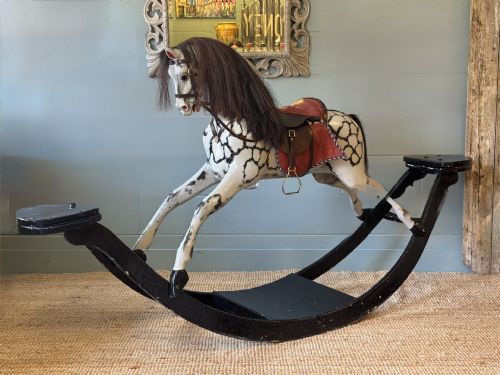
The safety or trestle stand took over from the older bow rocker from the mid-19th century, and horses were then made in quantity by commercial toy firms well into the 20th. That history shows in the dating. Despite the Victorian reputation, the 1920s and 1930s together account for more of the dated listings on Sellingantiques than the whole of the 19th century as recorded here, and the dated field runs 1860 to 1950.
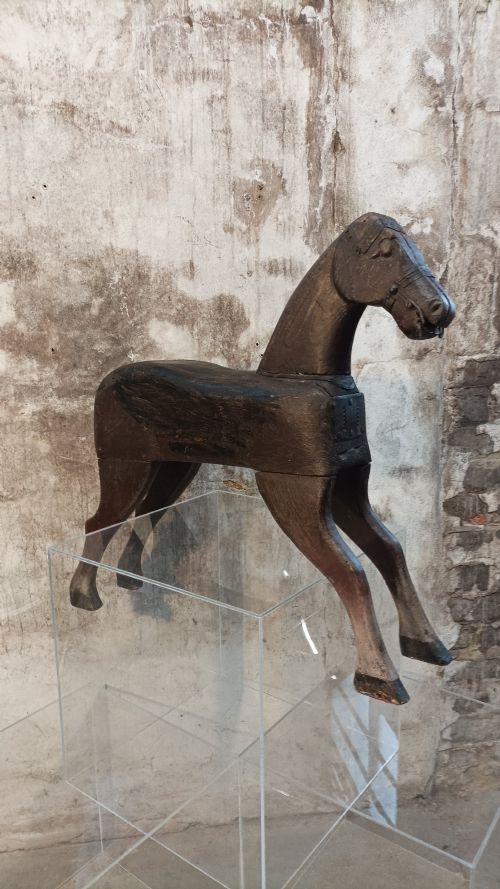
Roughly a quarter of listings carry a maker's name, most of them on trestle stands. Beside those sit unattributed dapple greys, and a smaller distinct group described as folk art, naive or primitive: simply carved, flatly painted, without the modelled dapples of the commercial horses. Stand types recorded run to at least five kinds, from trestle and pine trestle base to oak base, curved wooden rockers and a single pillar stand.
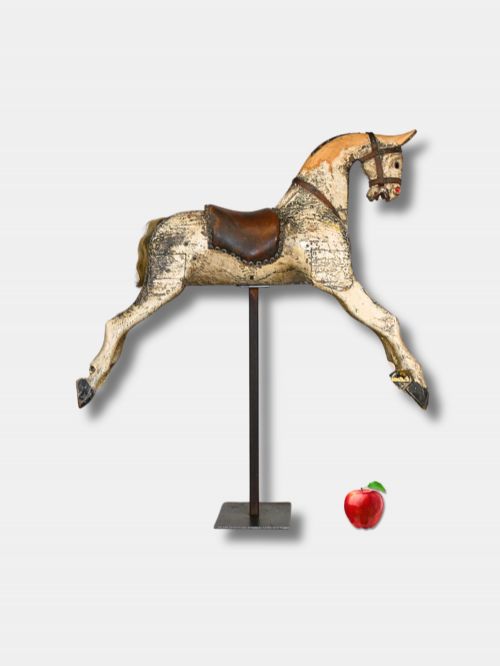
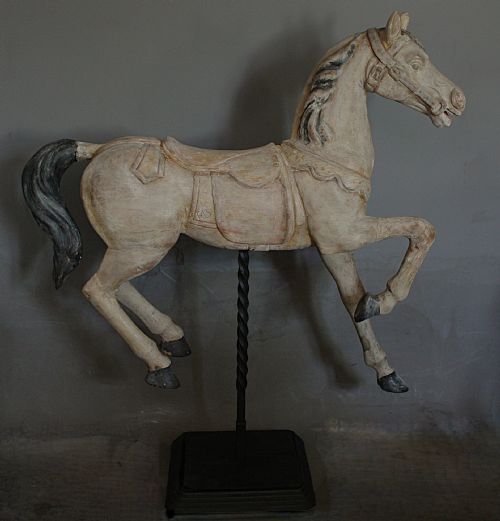
A few things in the category never rocked. A carousel horse, a French chain-driven horse tricycle, a carved wooden horse sculpture and a chess set whose pieces are called rocking horses have all passed through. Non-British horses are the exception: one Spanish naive painted example, one American.
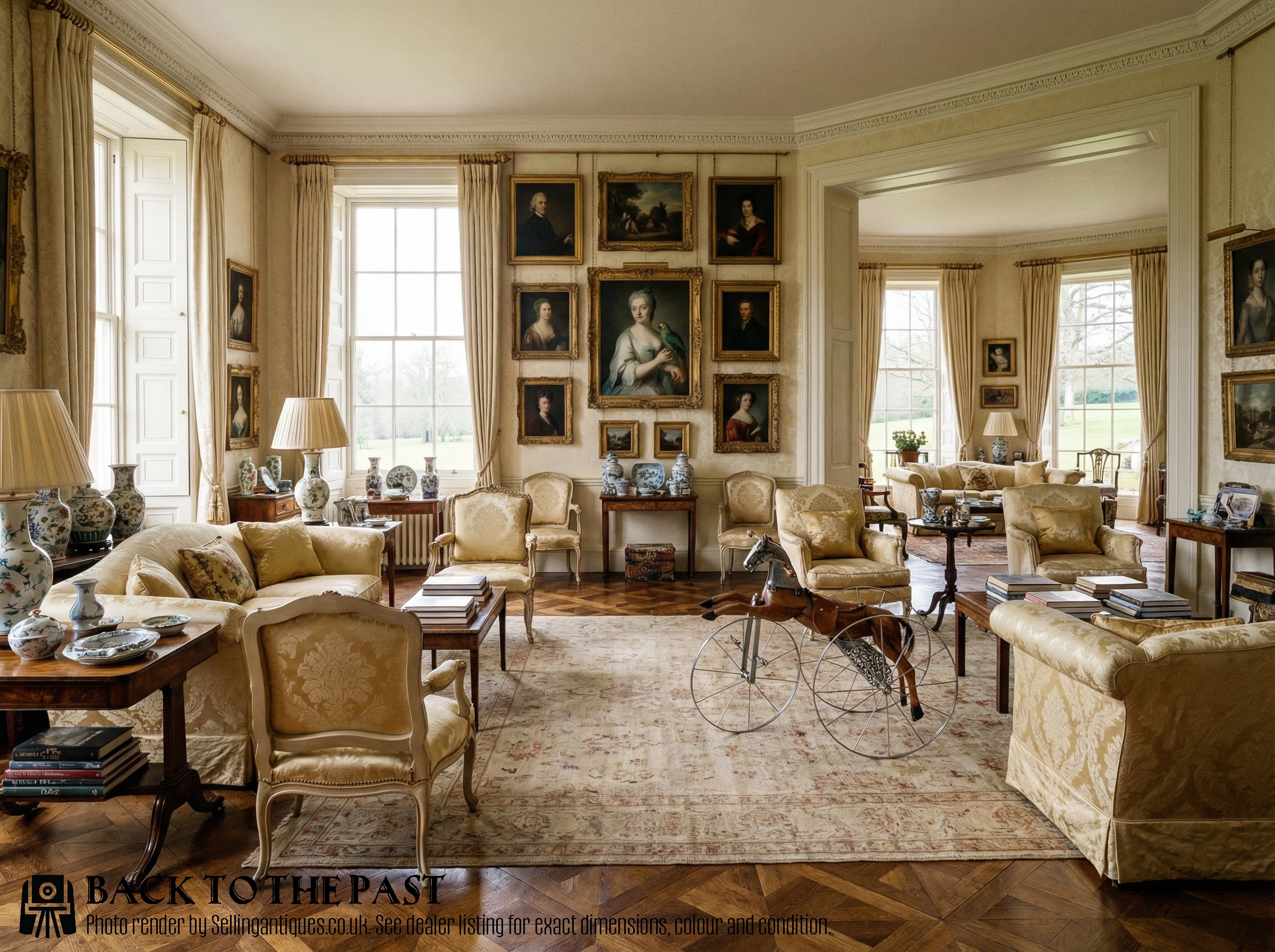
Where The Range Splits
Name and size do most of the work. The upper reaches of the sampled range are dominated by attributed horses, while unnamed and folk-art examples sit at the bottom. Size pulls the same way: "large", "very large" and "extra large size" cluster in the dearer half, with small and medium titles lower down. The largest recorded, described simply as very large and dated to the 1880s, sits several times above the next horse.
Carving is the other divide. Modelled bodies with painted dapples recur on the higher listings; the flat, plain painting of the folk art, naive and primitive horses sits in the cheapest quarter. Those are trade terms for a different kind of object rather than a lesser version of the same one. Stand type reads similarly, with curved rockers and pillar stands appearing near the top and ordinary stands and bases spread throughout.
Surface is treated as a choice, not a grade. Titles advertise original unrestored condition, original paint, playworn and distressed as readily as they advertise restored, and both states turn up across the range. Dealers put them forward as two different propositions. Pony skin, a hide covering in place of paint, appears just twice in the whole archive, both on Victorian horses of the 1880s and 90s.
Antique Rocking Horses Retail Price Guide 2026
Typical UK retail prices for rocking horses, calculated from the Sellingantiques database of over a million retail prices indexed since 2003. This retail price guide relies exclusively on Sellingantiques data; no external sources or auction records are used, so the figures do not describe the wider market.
Two horses that never rocked have passed through the archive: a carousel horse and a carved wooden horse sculpture.
Lines Brothers·Collinson of Liverpool·F. H. Ayres
The Antique Rocking Horses Glossary
- Trestle stand
- A fixed A-frame base with a bar at each end, sometimes spelled tressle in titles. The horse swings from it rather than tipping.
- Swing iron
- The sprung metal bracket that hangs the horse from a trestle stand.
- Dapple grey
- The standard finish: a grey or white body with darker grey spots, painted or applied.
- Bow rocker
- The older solid curved runners the horse sits on directly, listed here as curved wooden rockers.
- Push-along
- A horse on a wheeled platform instead of rockers, made for the smallest riders. A pillar stand, using turned uprights, is another of the less common bases.
- Sportiboy SP1, SP2
- Model designations that appear on Lines horses, and the only model numbers quoted in these titles.
- Gesso
- The chalk-and-glue ground laid over the carving before painting. It's what carries the dapples.
Antique Rocking Horses: Frequently Asked Questions
How old are most antique rocking horses?
The dated listings run from 1860 to 1950. The clustering is interwar rather than Victorian, with the 1920s and 1930s together outnumbering everything else.
A good number carry only a reign or century label instead of a year: "19th Century", "Victorian", "Edwardian". Titles and dated fields sometimes disagree, a horse titled 19th century filed under 1930.
Nothing in the archive is securely earlier than 1860.
What does a trestle stand mean?
It's the fixed A-frame base with a bar at each end. The horse hangs from it on sprung iron brackets and swings, rather than tipping the way a horse on solid curved rockers does.
The safety stand largely replaced the bow rocker from the mid-19th century, and it's the base type that dominates the listings.
Other bases recorded include oak bases, pine trestle bases and a single pillar stand on turned uprights.
Which makers turn up on these horses?
Lines, in its various forms, appears most often, followed by Collinson of Liverpool and F. H. Ayres. Names arrive stamped, on a paper label, or simply as "attributed to" in the description.
Around a quarter of listings carry a maker at all. The rest are unattributed, and the evidence here won't tell you which firm made one of those.
The Lines horses sometimes keep a model designation, SP1 or SP2 Sportiboy.
Why are some described as folk art or naive?
They're trade terms for simply carved horses with flat painted decoration, rather than the modelled body and painted dapples of a commercial toy-firm horse.
"Folk art", "naive" and "primitive" appear in a small but distinct set of titles, including a Spanish painted example, and they sit in the lower part of the range.
The earliest dated entry in the archive is a primitive horse of 1860.
Does original paint matter in these listings?
Dealers state it deliberately. Original paint, original unrestored condition, playworn and distressed all appear in titles, and so does restored.
Both states turn up across the range, so they read as two different propositions rather than one being the default.
Pony skin, used instead of paint on a couple of Victorian horses, shows up only twice in the whole archive.
How many come up for sale each year?
About twelve reach this market annually. Sixty-one different dealers have listed one on Sellingantiques.
That spread means most dealers who handle them handle a single horse rather than a stable of them.