

Antique Suitcases
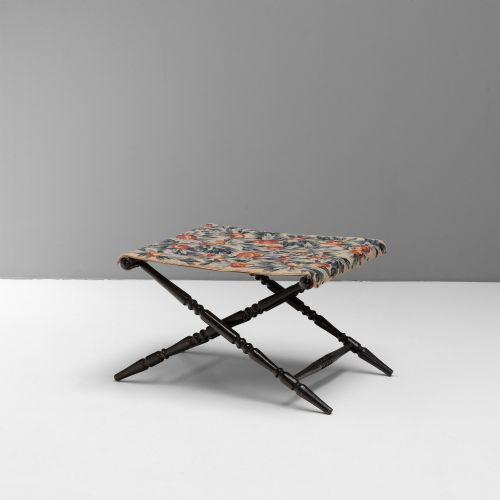
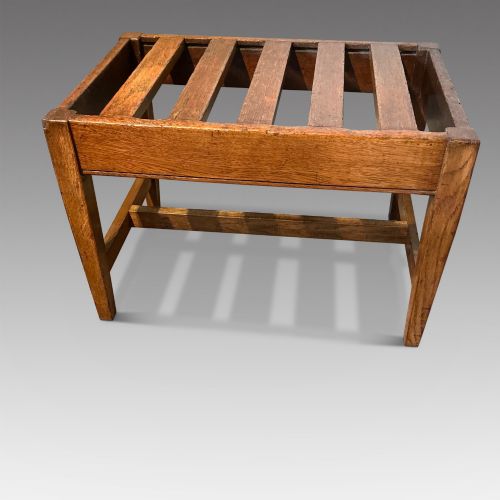
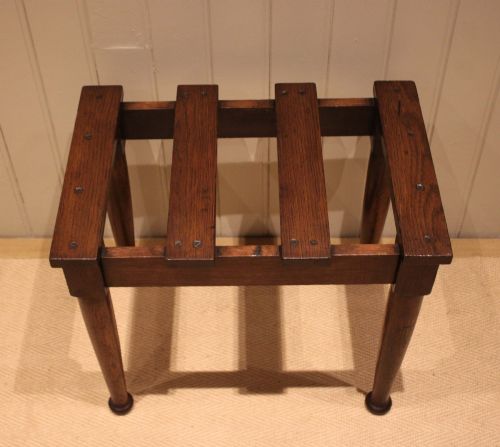
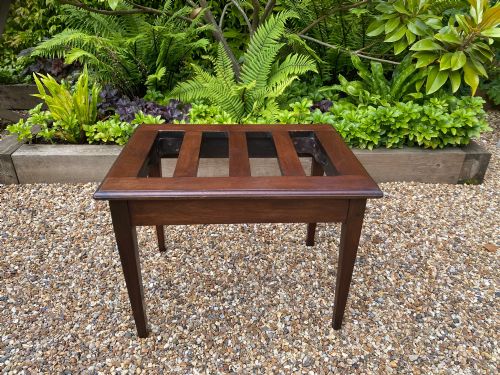
Flat, hinged leather cases made for rail and steamship travel, along with the folding wooden stands they were set down on while being packed.
Antique Suitcases
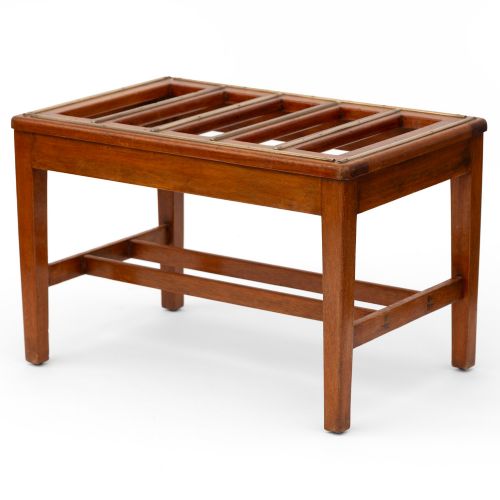
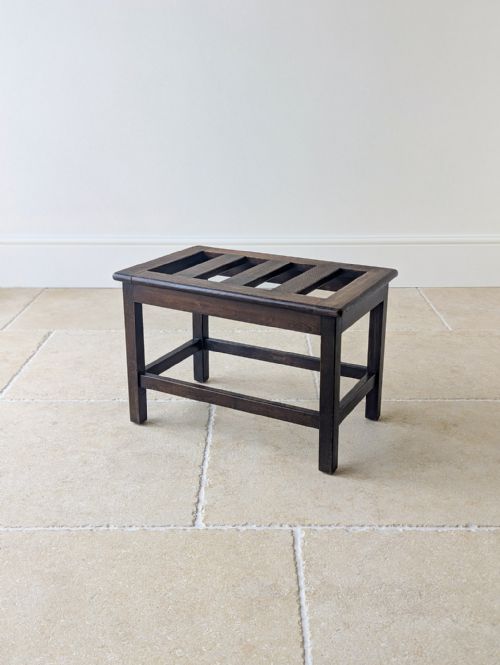
Two things sit under this heading. Of 105 listings on Sellingantiques, 51 mention leather and 41 mention luggage, while 29 carry the word "stand" and 17 "rack". So roughly a third of the category is furniture rather than luggage: wooden folding frames made to keep a case off the floor.
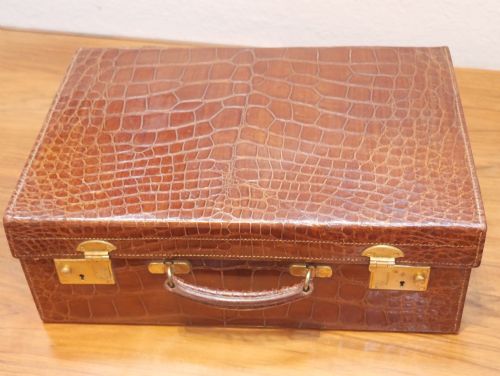
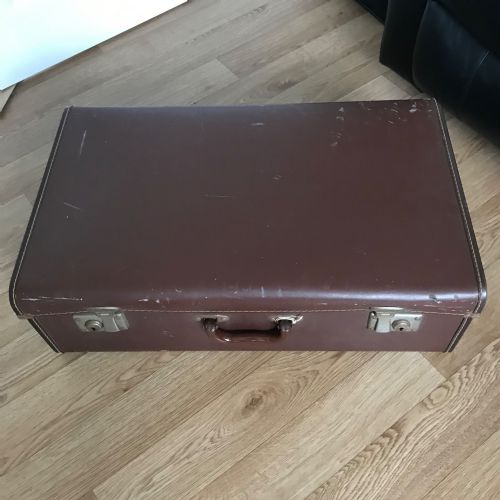
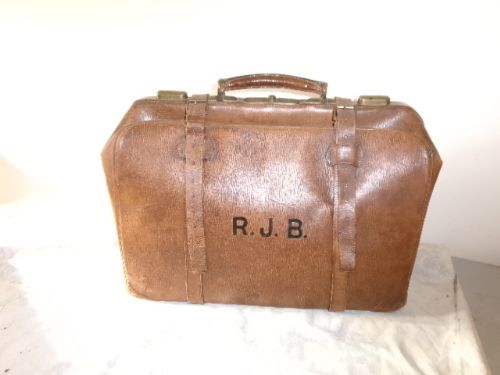
The case you're most likely to meet is a brown leather gentleman's travelling or overnight case, English, Edwardian to 1920s. "Leather" appears in 51 titles, "case" in 24, "Edwardian" in 24 and "English" in 19. Where sizes are stated at all they are modest, 46cm and 66cm being the two figures given, so this is hand luggage rather than hold baggage.
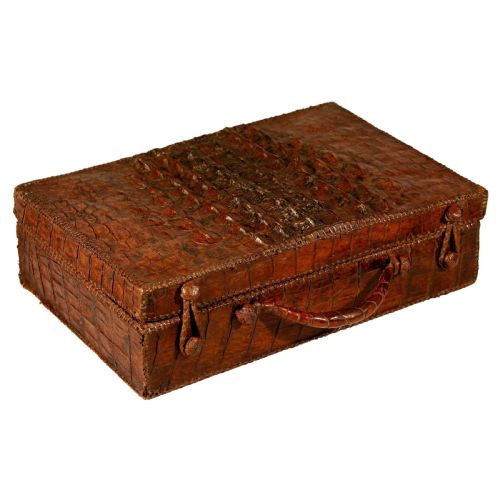
The flat, rigid, hinged-lid case came in during the later nineteenth century, when rail and steamship travel replaced the domed trunk with something a passenger could carry and stack. Large steamer trunks barely feature. Occupational cases are a quiet theme: salesman's, banker's, officer's, clerk's, valet and sample cases all turn up, and crocodile appears in 12 titles, stretching to alligator and one hornback cut.
Dealer dating runs 1850 to 1930, with 64 listings carrying a clean year. The 1920s are the largest single bucket at 28, then Edwardian at 18. Period labels often sit oddly against those years, with several items called Edwardian dated around 1920, so a single date reads as the dealer's opinion rather than a documented one.
Where The Range Splits
Hide does most of the work. Crocodile and alligator cluster in the upper half of the sampled range, plain leather sits in the middle, and canvas and painted wood fall to the bottom. An interior that has been fitted, whether with straps and bottles, silver-topped vanity pieces or jewellery-box compartments, lifts a case well above the plain leather listings.
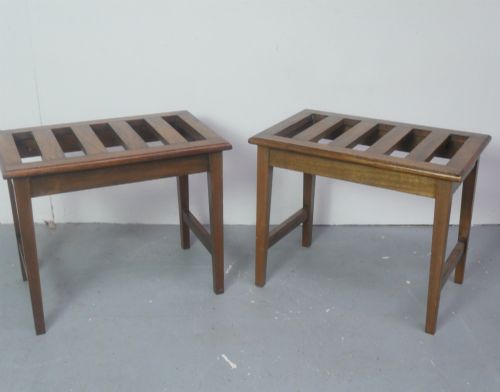
A named London or provincial retailer in the title also carries a case upward, though no single name reached three dealers across the archive, so these read as one-off finds rather than a collectable house. Sets do the same: graduated sets of three, stacks and pairs of racks come in above comparable singles.
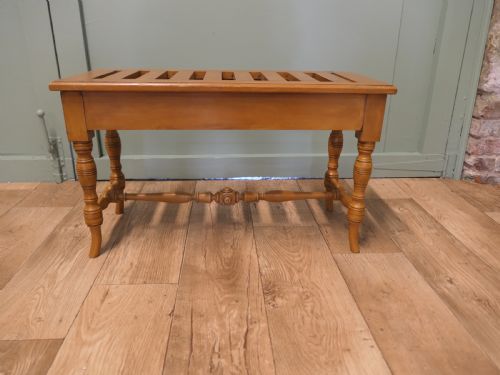
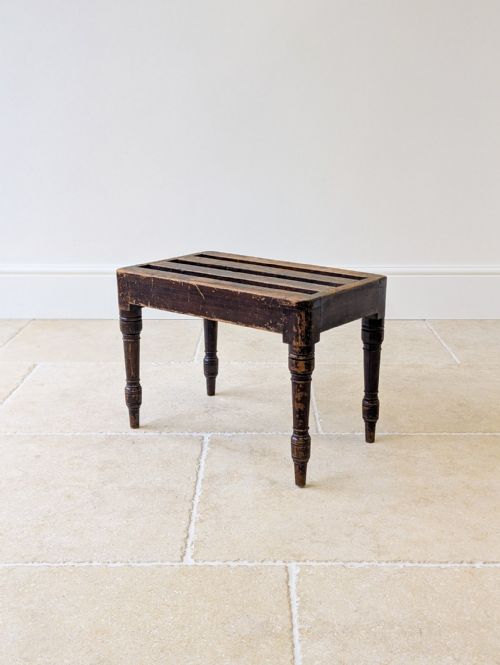
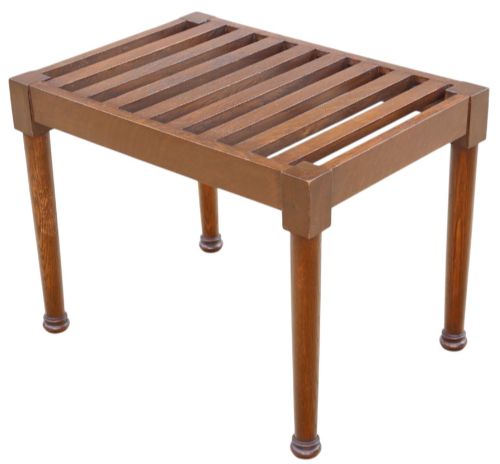
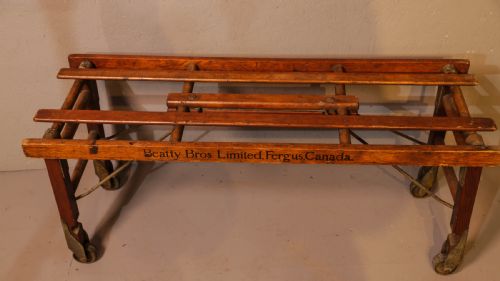
Among the stands, timber and design decide it. Rattan and painted pine sit at the bottom, oak and mahogany are the staples at 14 and 9 titles, and yew, walnut, ash and Arts and Crafts oak with brass push higher. The top of the whole category is a mid-nineteenth-century mahogany country-house luggage stand dated 1850.
Antique Suitcases Retail Price Guide 2026
Typical UK retail prices for suitcases, calculated from the Sellingantiques database of over a million retail prices indexed since 2003. This retail price guide relies exclusively on Sellingantiques data; no external sources or auction records are used, so the figures do not describe the wider market.
One-offs from the archive: a set of dummy suitcases made for shop display, a leather top hat travelling case, and a French folding easel called an artist's suitcase.
The Antique Suitcases Glossary
- Luggage stand / luggage rack
- A wooden frame, often folding, made to support a case. The two words are used interchangeably in these titles.
- Fitted
- An interior divided or equipped with straps, bottles or brushes rather than left plain. It is one of the things that lifts a case up the range.
- Attaché case
- A shallow flat case for papers, appearing in this category as a leather clerk's example.
- Hornback
- Crocodile skin cut to include the raised bony ridge of the back, left visible on the finished case. One example in the archive.
- Vellum leather
- A pale, smooth leather finish, named in more than one case title.
- Travel labels
- Paper hotel and shipping line stickers left on the outside, noted as extensive on one graduated set of three.
Antique Suitcases: Frequently Asked Questions
How many come up for sale each year?
About eight a year across Sellingantiques, from an archive of 105 listings.
Forty-nine different dealers have listed one, so most of them have handled a single example rather than stocking luggage as a field.
Why are luggage stands in a suitcase category?
Because the stand and the case belong together. The folding wooden rack is a hotel and country-house fitting of the same era, made to hold a case off the floor while it was packed or unpacked.
In the numbers, 29 titles carry "stand" and 17 "rack", so this branch runs to about a third of the heading.
What woods were the stands made from?
Oak leads with 14 titles and mahogany follows with 9. Those two are the staples.
Walnut, ash, beech, pine, rattan and one yew wood rack turn up singly. Golden oak is a phrase used repeatedly for the warmer-toned examples.
Which periods do these cases date from?
The dealers' own dating spans 1850 to 1930 and does not run outside it. The 1920s are the largest group at 28 listings, then Edwardian at 18, the 1910s at 14, then the 1900s and Victorian at 12 each.
Only six are dated to the 1930s. Among them is a polished aluminium case, the only metal-bodied one in the archive.
Are crocodile cases common in this category?
Crocodile is the specialist skin here, named in 12 titles, roughly one in ten.
Dealers also write croc skin and alligator for much the same material, and one case is cut hornback, keeping the raised ridge of the back on show.
What unusual pieces have appeared under this heading?
A set of dummy suitcases made for display, a leather top hat travelling case, and a crocodile jewellery box catalogued as a suitcase.
There's also a French folding easel with palette, described as an artist's suitcase. Geography is narrow: 19 titles say English, with one each Scottish, French, Canadian and Indian colonial.