




Antique Pistols
Muzzle-loading handguns of the flint and percussion eras, made short enough to fire one-handed for cavalry, travellers and personal defence.
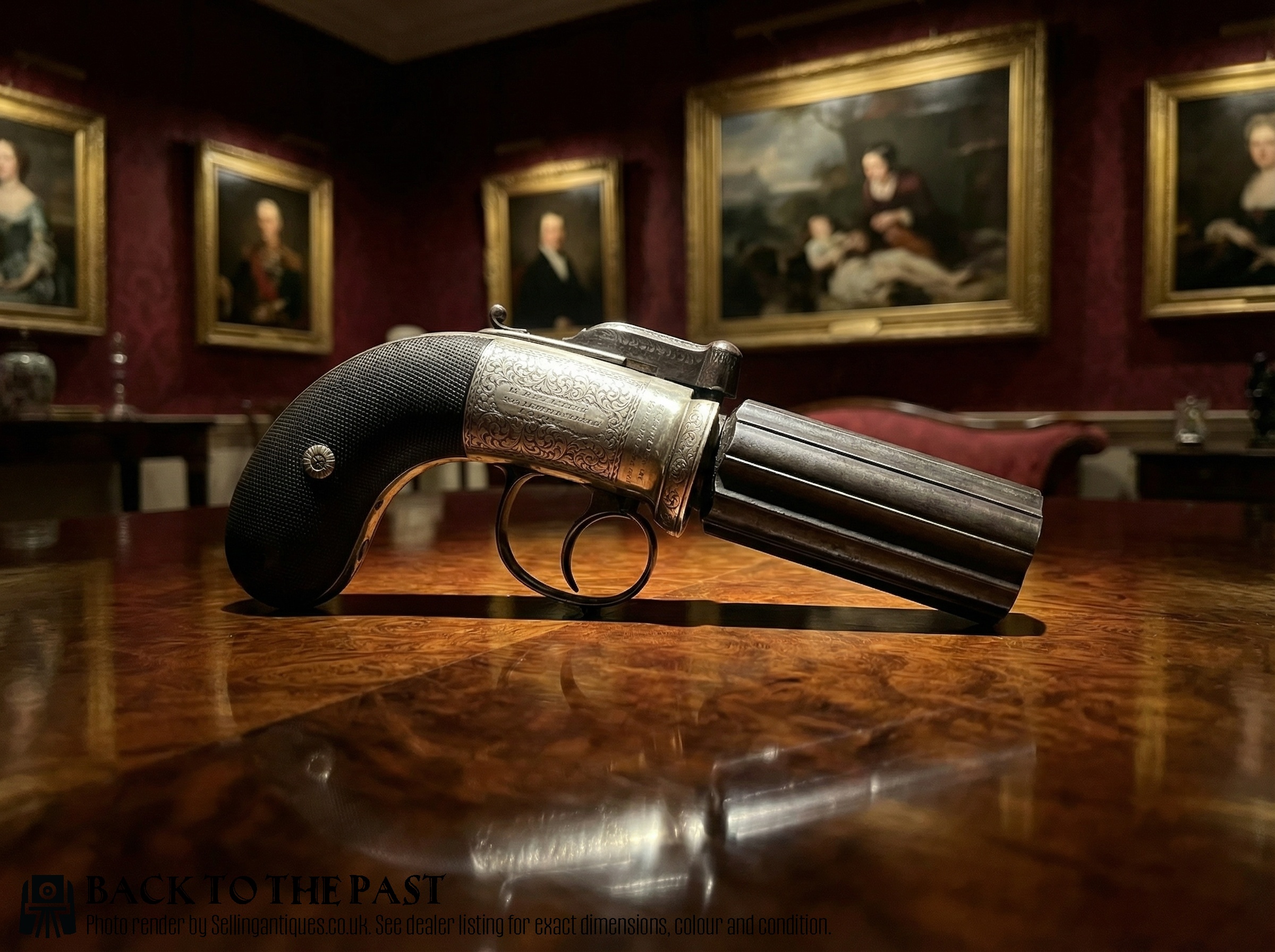
What Antique Pistols Are
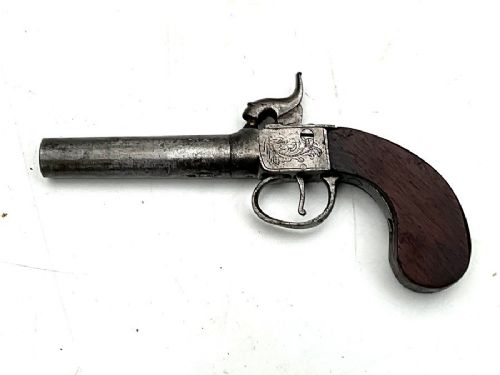
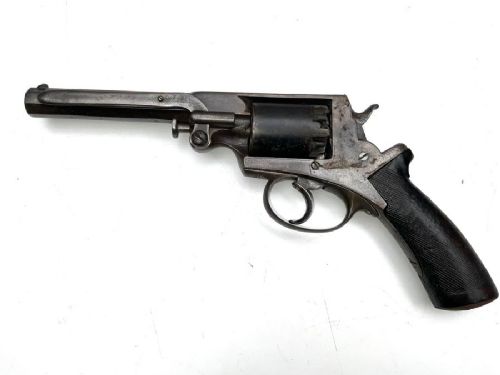
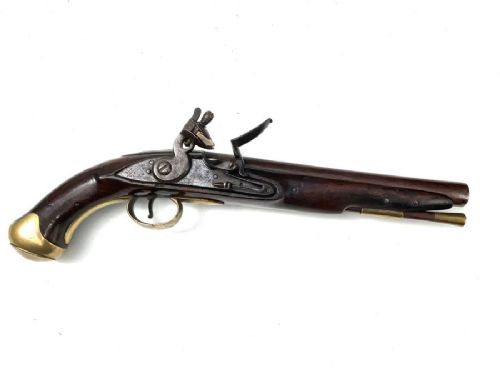
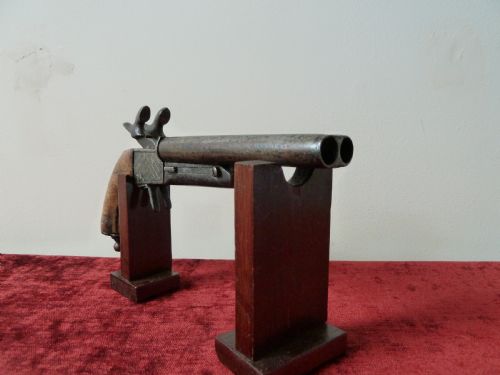
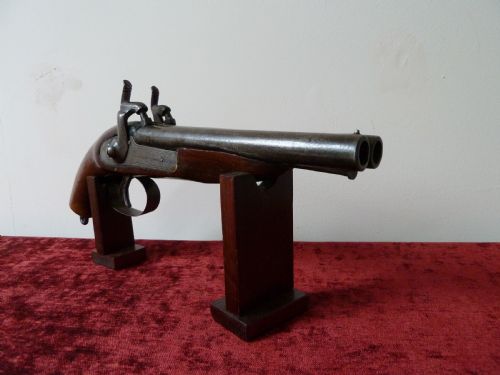
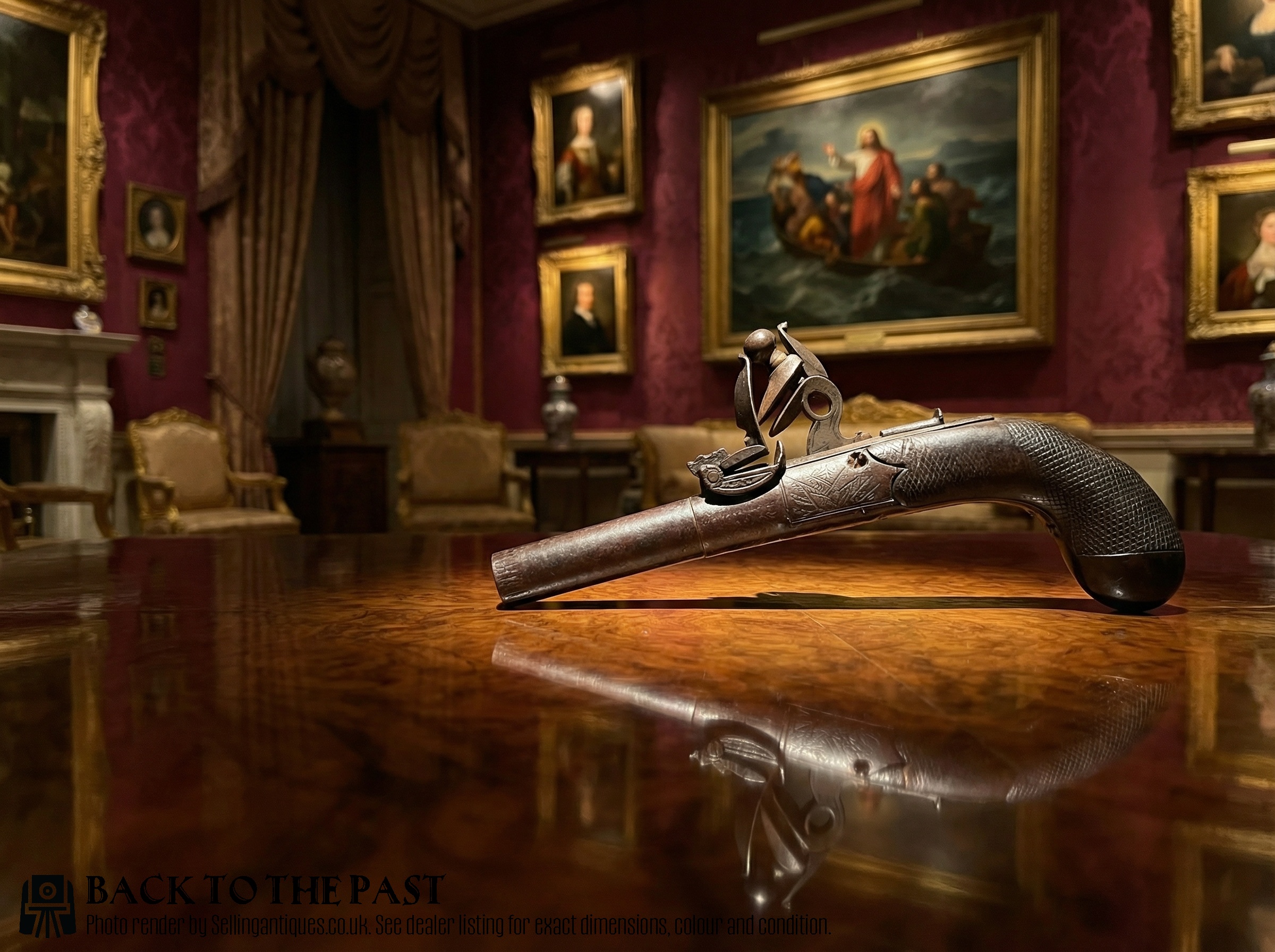
The pistol took shape in the sixteenth century as a firearm short enough for one hand. It stayed a muzzle-loader for three hundred years, ignited first by flint striking steel over a priming pan, then from the early nineteenth century by a copper percussion cap. Purpose-built duelling and pocket patterns emerged in the eighteenth century.
What you'll meet on Sellingantiques is a single pistol titled by its ignition system and a broad date. Flintlock leads the titles, percussion follows, and 'flintlock pistol' and 'percussion pistol' are the two standard title constructions. Bodies are wood-stocked with brass or steel furniture; silver mounts or wire inlay turn up in a smaller run of titles.
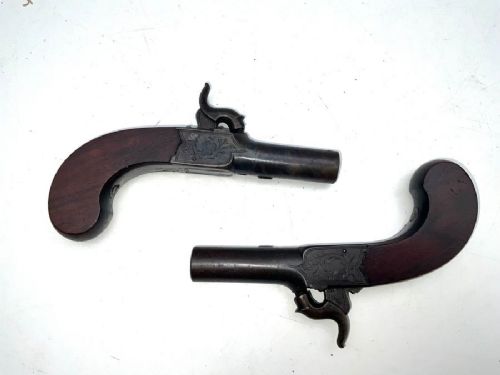
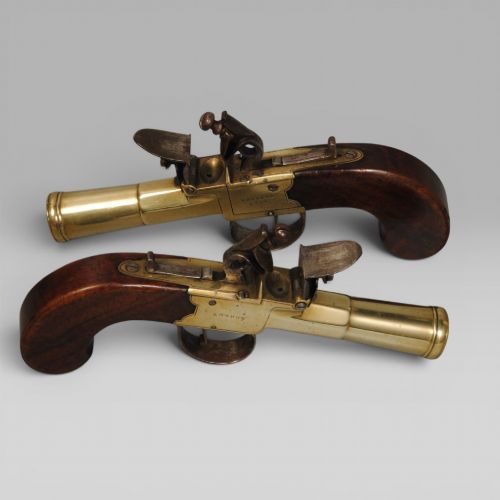
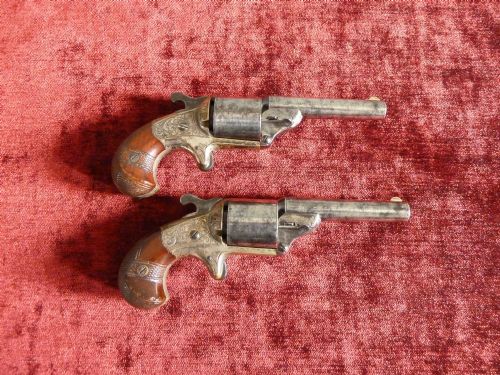
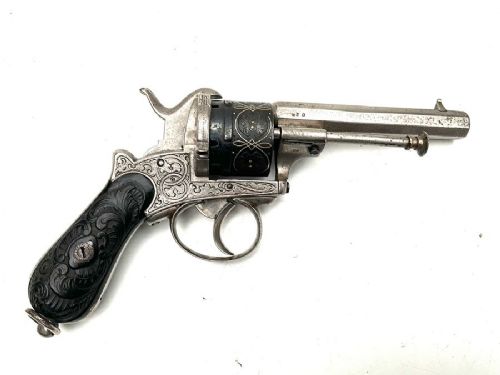
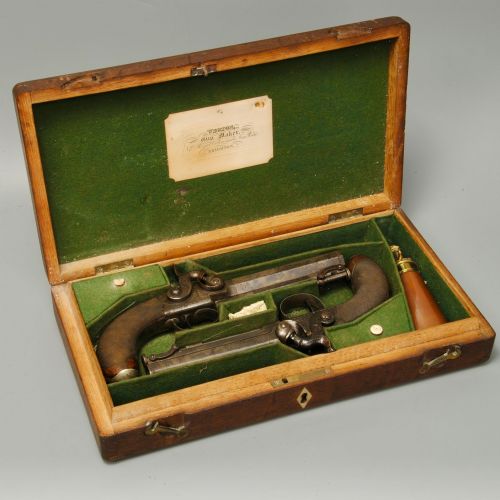
Around a sixth of titles offer a matched pair, and cased sets are scarce, eleven titles in two hundred and eighty-two, almost all of them pairs. Beyond the mainstream British and European work sits an Ottoman, Balkan and Afghan strand of seventeen titles, using miquelet, snaphaunce, rat-tail butts and mother-of-pearl. A thin tail of pinfire and rimfire revolvers follows the cartridge era.
Dating is coarse. '19th Century' and '18th Century' are the two largest buckets, and only 86 of 282 listings carry a clean year, spanning 1750 to 1930, with one sampled title claiming 1650. Treat a precise date in a title as the dealer's own estimate unless a lock or proof mark is quoted. Many pistols carry no maker at all.
Where The Range Splits
Pairs do most of the work at the top. Singles run the whole length of the category, but pairs by named London makers, cased duelling sets and silver-mounted pairs occupy almost the entire upper half. A case with its accessories intact pushes the same way, and cased singles barely exist.
Attribution is the other divide. The lower half of the sample is largely unattributed, titled simply as an antique percussion pistol or an eighteenth-century flintlock. Higher up, titles name a maker, a town and London or Birmingham proof marks. Silver mounting, wire inlay and silver butt caps sit well above plain brass furniture.
Purpose matters too. Duelling and target pistols, built as precision objects, all sit in the upper part of the range. Pocket and muff pistols, the commonest form after the plain single-shot, run from the very bottom upward. Scottish scroll-butt work is the rarest national type in the samples and effectively the ceiling.
Retail Price Guide 2026
Typical UK retail prices for pistols, calculated from the Sellingantiques database of over a million retail prices indexed since 2003. This retail price guide relies exclusively on Sellingantiques data; no external sources or auction records are used, so the figures do not describe the wider market.
Antique pistols have been listed on Sellingantiques since 2011.
The Antique Pistols Glossary
- Flintlock
- Ignition by flint struck against a steel frizzen, throwing sparks into a priming pan. The commonest lock type named in titles.
- Percussion
- Later ignition by a copper cap struck by the hammer, found on converted and purpose-built pistols alike.
- Boxlock
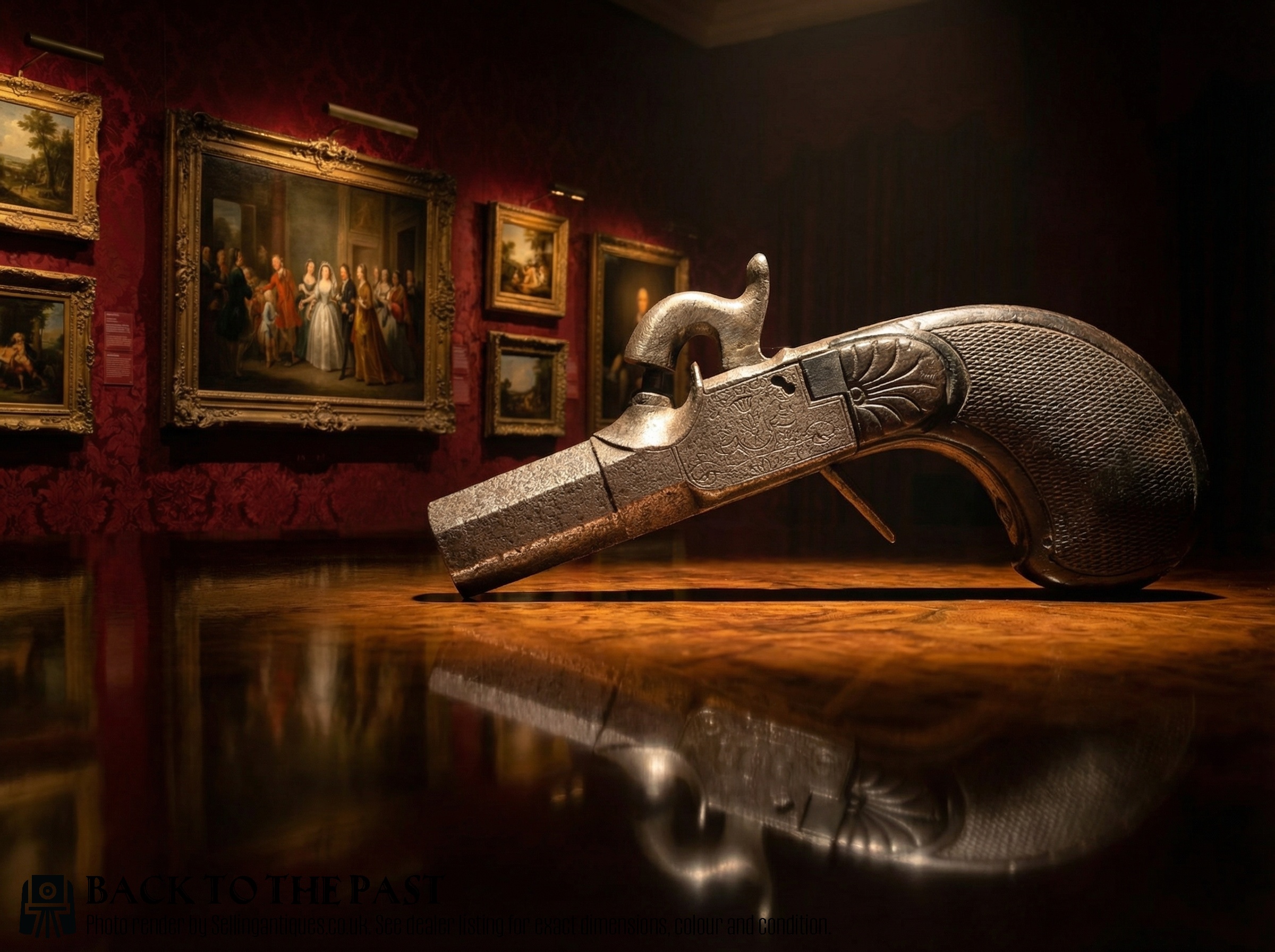
- Lock mechanism enclosed centrally in the breech rather than on a side plate. Written boxlock or box lock in the titles.
- Turn-off barrel
- The barrel unscrews so the ball can be loaded at the breech. Usually paired with Queen Anne pocket pistols in these listings.
- Bore
- Barrel size given as balls to the pound, from 12 bore down to 50, with 16, 18 and 40 recurring. Roughly one listing in fourteen states it.
- Pepperbox
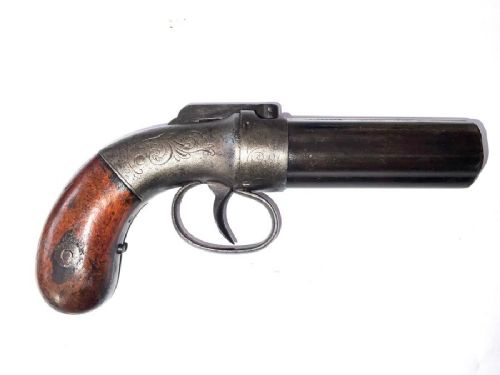
- Multi-barrelled pistol with a revolving cluster of barrels, usually six-shot percussion.
- Tower
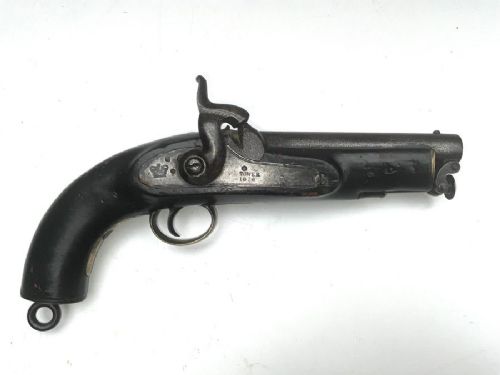
- Mark of the Tower of London ordnance store, found on British service arms and named in ten titles.
Frequently Asked Questions
How many antique pistols come up each year?
About thirty-six reach this marketplace in a year, spread across twenty-five different dealers. No single dealer defines the category.
That spread means the mix shifts. Plain single-shot flintlock and percussion pistols dominate throughout, with pairs and Ottoman work appearing steadily behind them.
What's the difference between a holster and a pocket pistol?
A holster pistol is the larger horseman's arm, carried in a saddle holster. Eighteen titles use the term.
Pocket or muff pistols are small, made for a coat pocket or a lady's muff, and pocket appears in twenty-nine titles. Belt pistols sit between the two, with a belt hook or simply thrust into a belt.
Dragoon, cavalry, sea service and light dragoon types turn up as service patterns on both flint and percussion locks.
Why do so many listings give only a century?
The dealer date field is coarse across this category. '19th Century' and '18th Century' are the two biggest buckets, and only 86 of 282 listings carry a clean year.
Decade tags cluster on the 1850s and 1800s, with the 1750s thinner behind. Georgian and Victorian appear as ruler labels on a handful.
Are non-European pistols found in this category?
Yes. Ottoman, Balkan and Afghan work is the recurring non-Western strand, seventeen titles in all, citing Turkey, Bosnia, Sarajevo and Adriatic origins.
These use vocabulary found nowhere else in the category: miquelet and snaphaunce locks, rat-tail butts, silver and mother-of-pearl inlay. A Japanese late-Edo miniature matchlock teppo turns up exactly once, the only matchlock in the archive.
Do cartridge revolvers appear alongside muzzle-loaders?
A small number do. Revolver appears in ten titles, with pinfire and rimfire examples among them, and that strand is growing in live stock.
The latest datable pieces are oddities rather than fighting arms, including a 1930 starting pistol and a pinfire pocket pistol of about 1890.
What accessories are filed under this heading?
Powder flasks, turnscrews and shot measures sit inside the category as pistol-adjacent lots, some with ivory handles.
Curiosities appear too: a conjuror's dart pistol and pistol-grip walking sticks. Cased pistols sometimes arrive boxed with their accessories, though cased titles number only eleven in two hundred and eighty-two.