


Antique Cake Stands
A tiered stand for handing round cake and bread and butter at afternoon tea, commonly built to fold flat when the table was cleared.
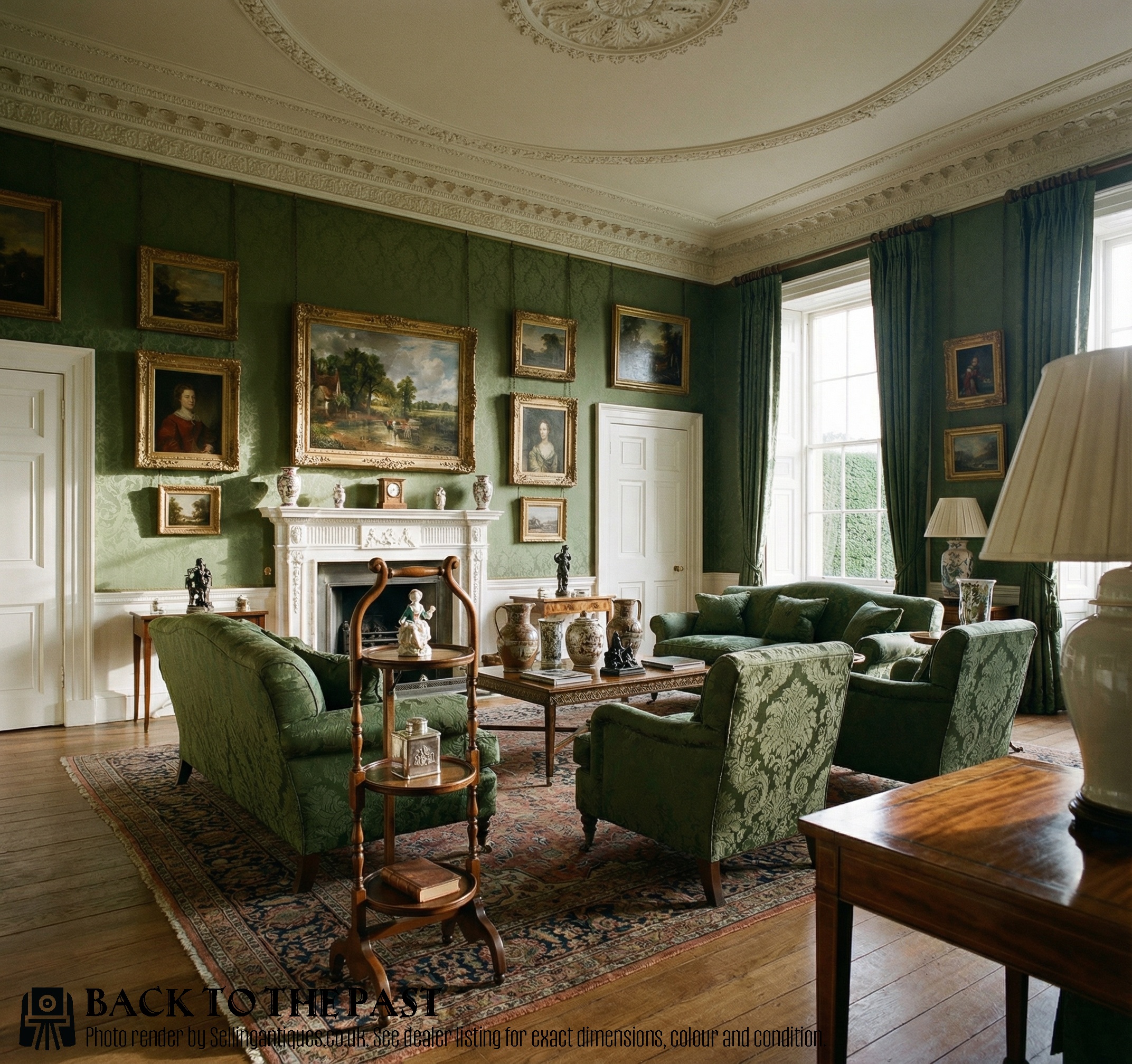
What Are Antique Cake Stands?
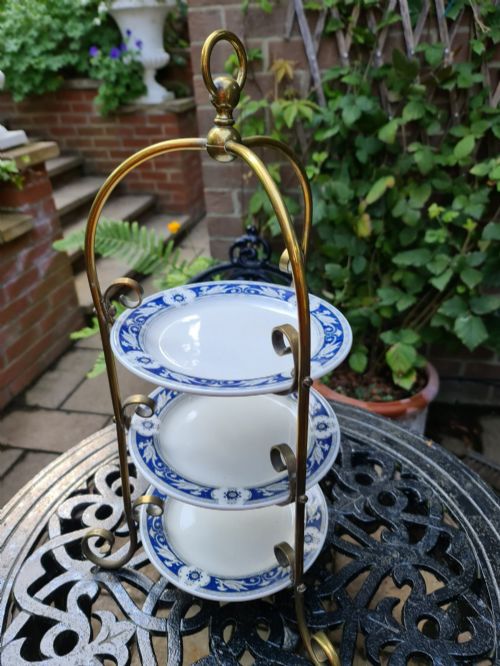
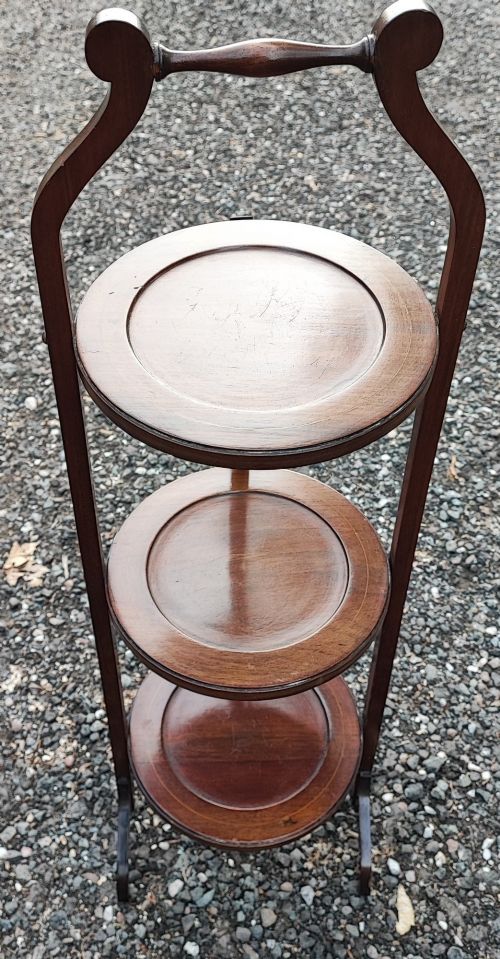
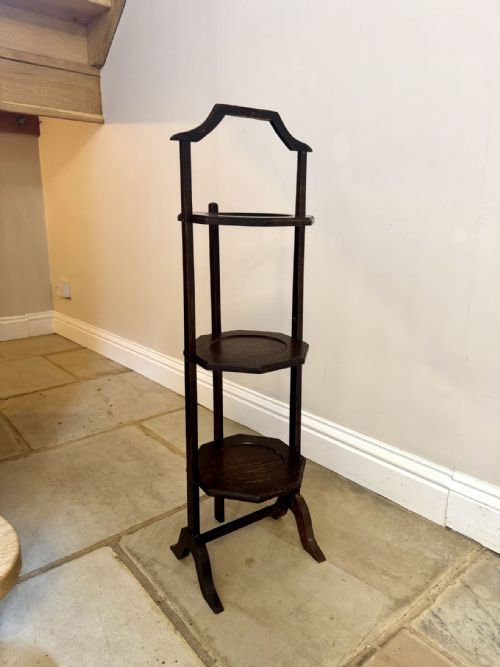
Tiered serving stands, either free-standing or made to sit on a table. Wood dominates: mahogany appears in 55 of 124 titles on Sellingantiques, with oak and walnut behind it. The tier is the defining feature, and 37 titles name it.
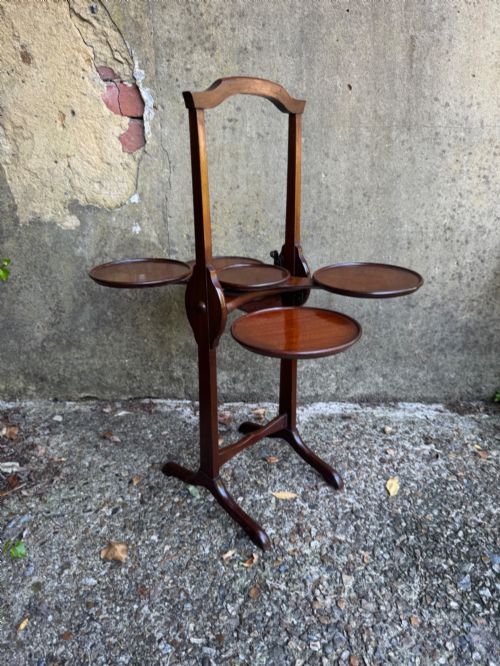
The version you are most likely to meet is an Edwardian three-tier folding mahogany stand, often with inlaid banding. Edwardian shows up in 43 titles, folding in 27, inlaid in 19. Plain uninlaid mahogany and oak sit at the bottom of the range, inlaid work further up.
Tiered stands became part of the English afternoon tea service in the second half of the nineteenth century, and folding frames were made so the stand could be stowed flat between meals. Dealer dating runs 1850 to 1930, with the weight around the turn of the century and a thinner run through the 1920s and 1930s.
Alongside the wood sits a smaller metal and mirror group: brass in ten titles, plus silver plate, copper and mirrored plateau forms. Art Deco stands account for about one in twelve, including bakelite and oak examples, and lacquered chinoiserie stands turn up in the sold archive.
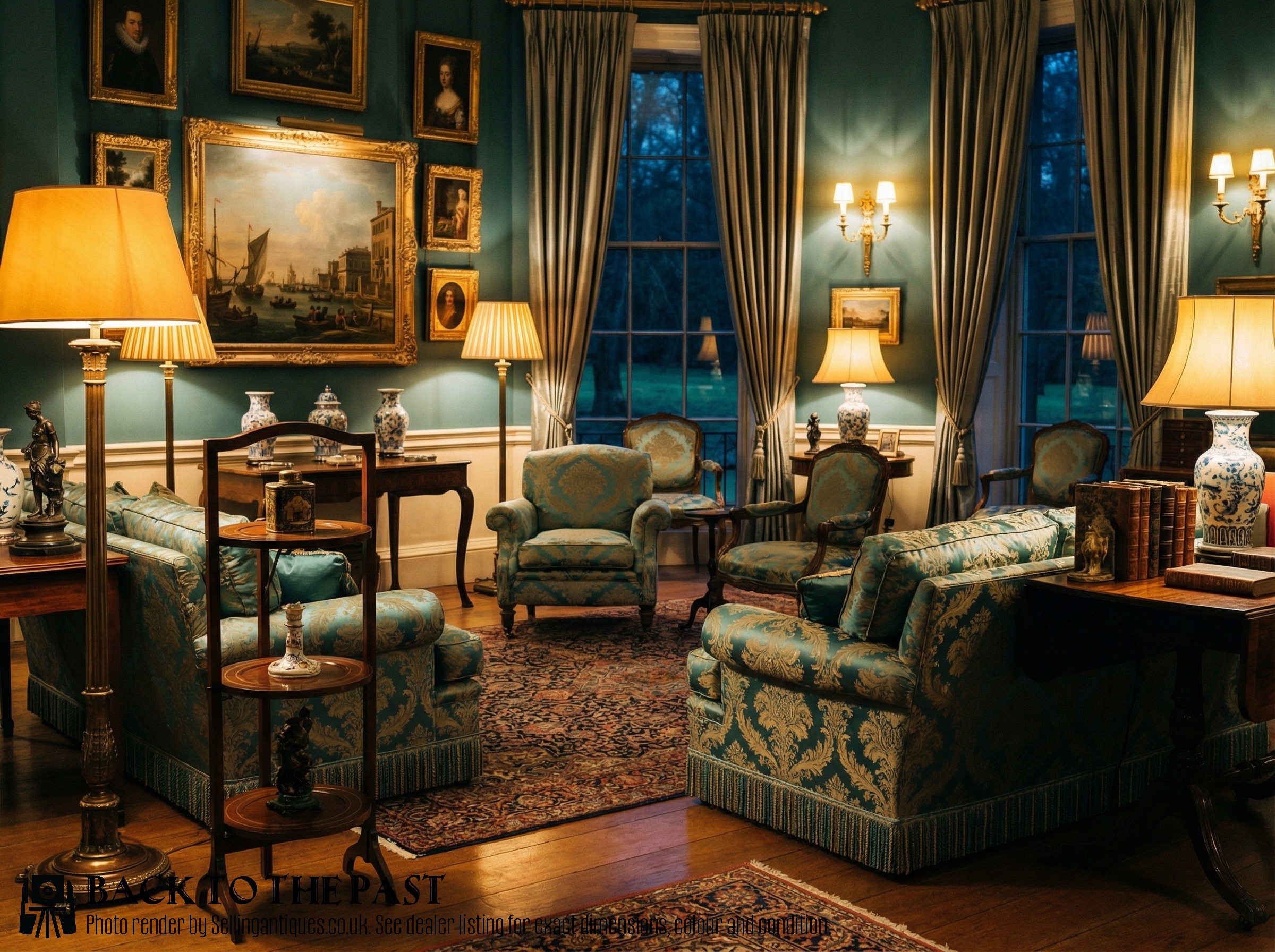
Where The Range Widens
Surface decoration does most of the work in the wooden group. Plain mahogany and oak stands sit low in the sample, while inlaid mahogany clusters in the upper half and the two satinwood stands both sit well up. Light, inlaid neoclassical forms are described as revival taste in three listings.
Material shifts the whole thing. Silver plate, mirrored plateau, brass and copper stands are concentrated in the upper portion of the sampled range, with wooden three-tier stands filling the lower and middle. Scale pushes the same way: the biggest pieces, a gueridon-form stand and a large dumb waiter, sit at the very top.
Two smaller things lift a stand. A named or patented folding mechanism is one, and the Monoplane and Monopole types are the only branded folding names the titles record. Pairs are the other: Art Deco, Anglo-Indian, mahogany folding and mirrored plated pairs all sit above the middle.
Retail Price Guide 2026
Typical UK retail prices for cake stands, calculated from the Sellingantiques database of over a million retail prices indexed since 2003. This retail price guide relies exclusively on Sellingantiques data; no external sources or auction records are used, so the figures do not describe the wider market.
Stands from outside England are rare on Sellingantiques: an Anglo-Indian pair, a Hoshiarpur tiered stand, a French three-tier and a German mirrored gateau centrepiece, one each.
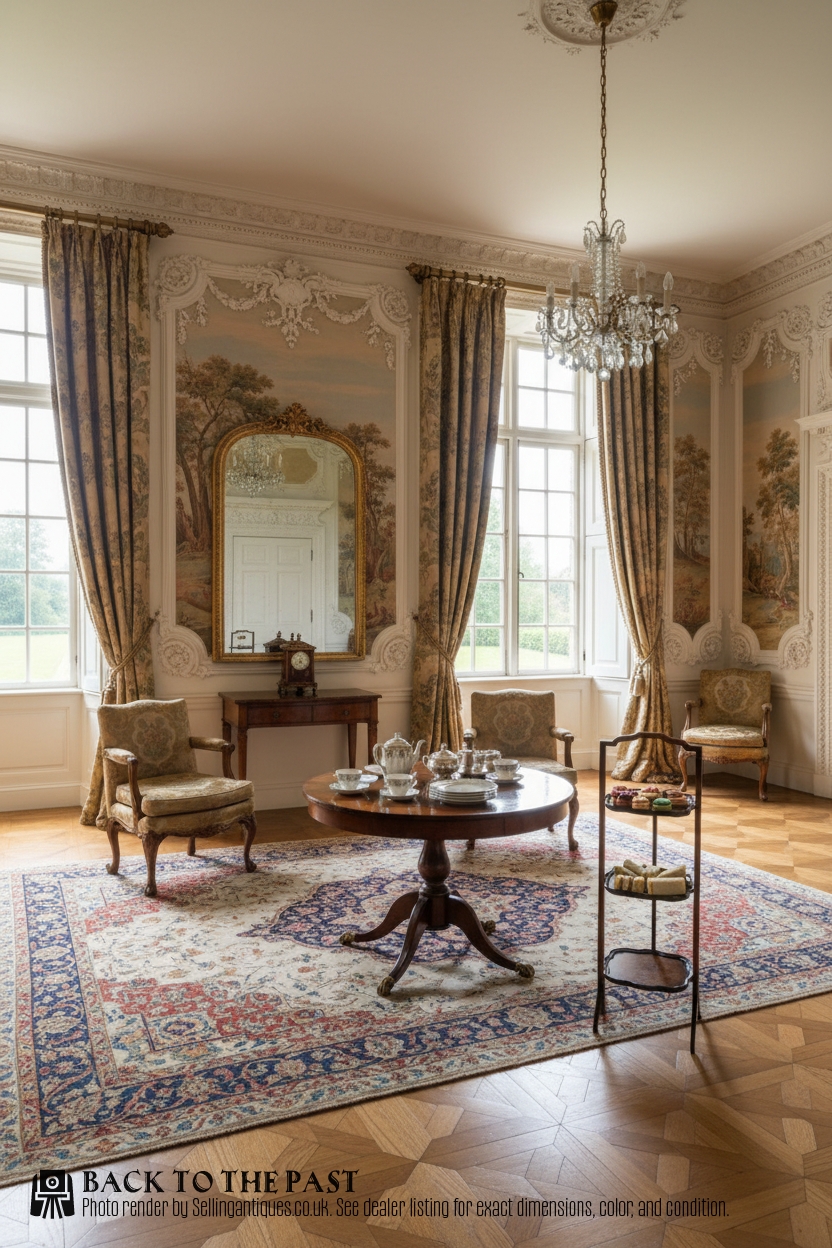
The Antique Cake Stands Glossary
- Tier
- One of the stacked levels. Three tiers is the commonest arrangement, with two-tier, four-tier and single-platform plateau forms also turning up.
- Folding
- A frame that collapses flat for storage, named in a fifth of titles, sometimes as patent folding, collapsable or folding swivel.
- Inlaid
- Banding or stringing of contrasting wood let into the surface, usually on mahogany or satinwood.
- Cakestand
- The one-word spelling, used in some titles, so it pays to search both ways.
- Dumb waiter
- A tiered serving stand, revolving or static. Several listings use the term interchangeably with cake stand.
- Plateau
- A low mirrored table centrepiece used as a base for a cake, appearing in the silver-plate group.
Frequently Asked Questions
How many tiers do these stands usually have?
Three is the norm. Fifteen titles say "three tier" outright, and the tier itself is named in 37 of 124 listings.
Two-tier and four-tier stands both appear, and the mirrored plateau forms are a single platform rather than a stack.
What wood are they made from?
Mahogany, more often than anything else. It appears in 55 of 124 titles, which is more than any period word in the category.
Oak comes next with eight titles, and walnut turns up behind that. Satinwood appears twice, both times well up the range.
Why do so many fold flat?
Because they were made to. Folding frames let the stand be stowed away between meals rather than left standing in the room.
Folding appears in 27 titles, and the current stock leans that way more than the sold archive does. Patent folding, collapsable and folding swivel all describe the same idea.
Are there any branded or named types?
Two. The titles record "The Monoplane" and "Monopole", both folding stands, and nothing else carries a trade name.
The Monoplane examples reach the upper part of the sampled range.
What periods do these cake stands cover?
Dealer dating runs from 1850 to 1930, with 72 of the 124 listings giving a clean year rather than an era label.
The weight sits at the turn of the century: Edwardian and 1900s each account for 28 listings. The 1910s, 1920s and 1930s each hold about a dozen, and Victorian eleven.
Only four listings sit before 1870.
Which unusual examples turn up in the archive?
The one-offs include a bakelite folding stand, a blackthorn stand, a beadwork "tea fancies" stand and a cane-and-mahogany example.
Origins outside England are thin on the ground: an Anglo-Indian pair, a Hoshiarpur tiered stand, a French three-tier and a German mirrored gateau centrepiece, one each.
Eight listings describe lacquered or hand-painted chinoiserie, all of them in the sold archive.