



Antique Steps
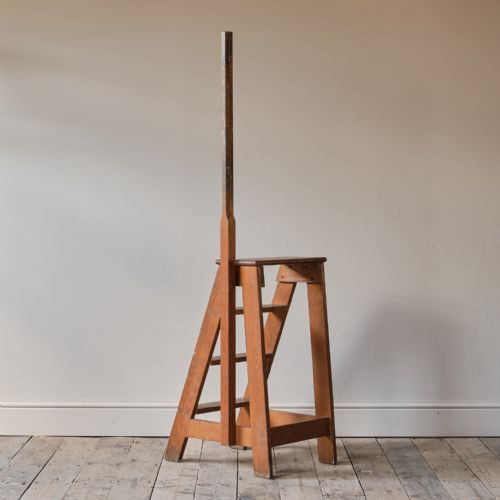
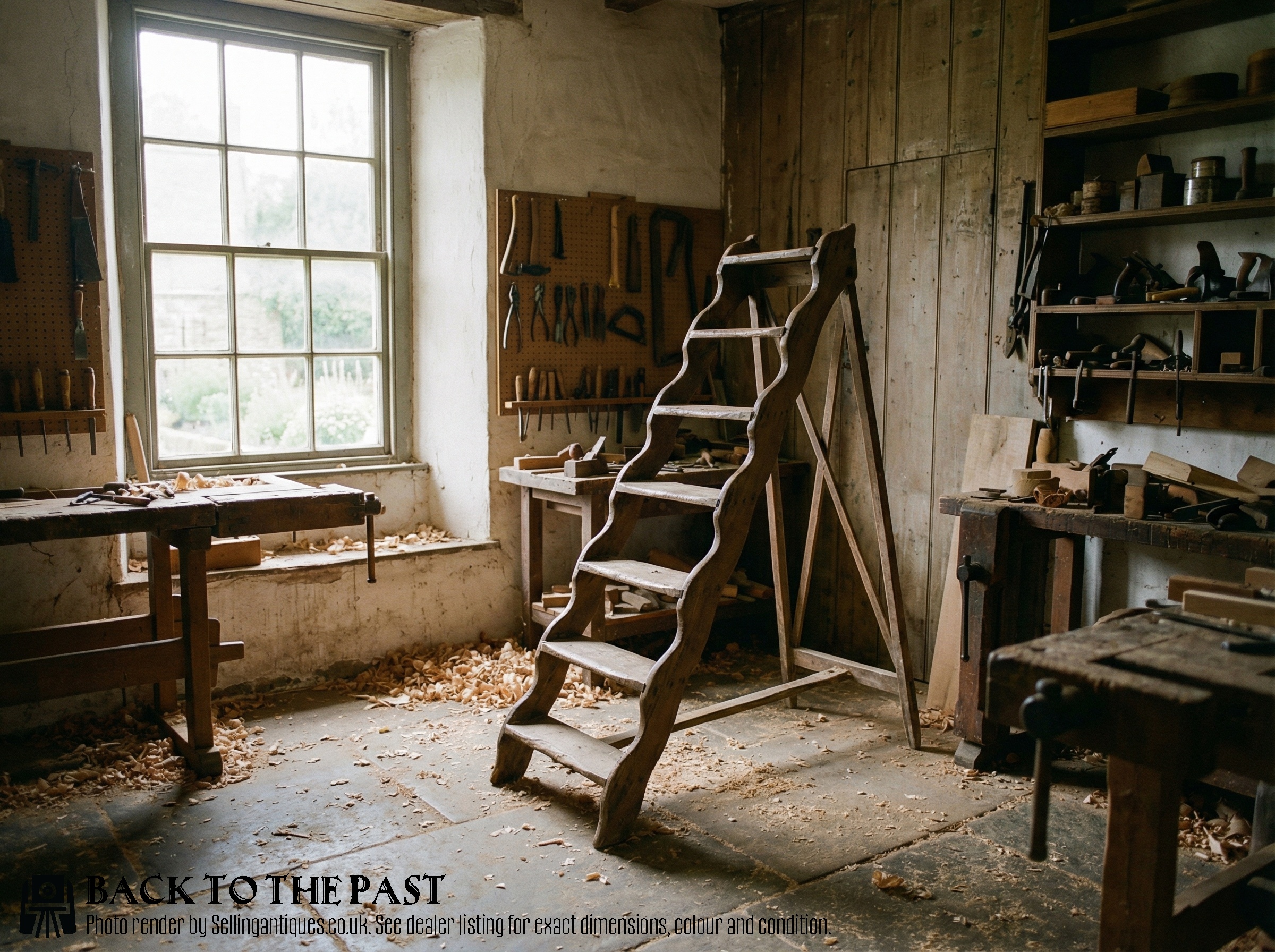
A free-standing flight of wooden treads, usually three or more on a frame with a handrail or pole, made to reach the top shelves of a library.
What Are Antique Steps?
The word library carries this category. It appears in 233 of the 330 titles on Sellingantiques, and mahogany in 107, so the piece you are most likely to meet is a set of mahogany library steps described by wood and period and little else. Oak follows, then pine. Leather-topped treads are noted in sixteen titles.
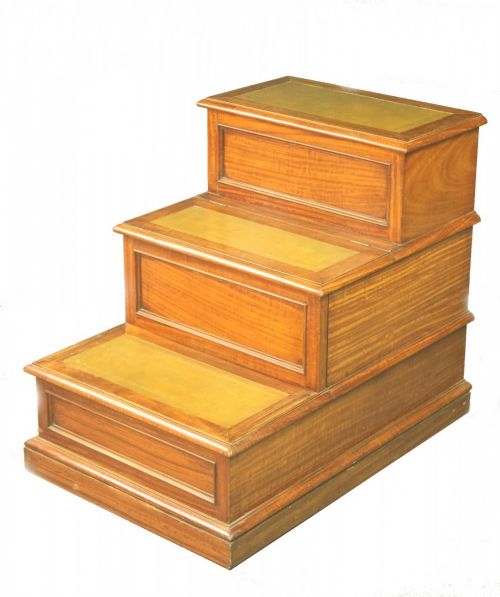
Free-standing steps became standard library furniture in Britain during the eighteenth century, and low steps were made at the same time for climbing into tall beds. Within the library group the sampled forms run from a simple three-tread flight to A-frame, box and spiral designs, the last winding round a central post.
Beyond the library flights sit four smaller groups. Folding step ladders made for kitchen, pantry, scullery and shop use are the largest of them. Then metamorphic steps that invert or fold into a chair or stool, low bed and chamber steps, and step commodes with a pot concealed under a hinged tread.
Dating runs from 1750 to 1930, and 152 listings carry a clean year. Ninety are placed only in the nineteenth century, more than twice any single decade. After that the profile splits: Victorian, Regency and Georgian at one end, and the 1900s through to the 1930s at the other, in similar numbers. Nothing is dated later than 1930.
Where The Range Splits
Timber does most of the sorting. Golden oak, flame mahogany, yew, walnut, satinwood and fruitwood sit at the top of the sampled range, and pine takes the bottom, whether plain folding pine or stained pine library steps. The highest-priced entries are large golden oak and flame mahogany flights rather than anything early, and the lowest are plain folding pine and shop ladders of the 1920s and 1930s.
Size and completeness pull the same way. Titles that say large, tall or of large proportions sit high, and so do pairs: matched George III mahogany pairs and Regency pairs are among the top entries, while a title noting a pair missing its poles records what absence does.
Then design. Spiral flights recur at the top, with turned supports, polished treads or leather-topped treads. Gothic Revival mahogany, Gothic oak, serpentine-fronted mahogany and line-inlaid chamber steps all sit well above the plain utility ladder, and leather-inset treads recur through the upper half.
Retail Price Guide 2026
Typical UK retail prices for steps, calculated from the Sellingantiques database of over a million retail prices indexed since 2003. This retail price guide relies exclusively on Sellingantiques data; no external sources or auction records are used, so the figures do not describe the wider market.
About thirty-two sets of steps are listed on Sellingantiques each year, and 106 different dealers have listed them - so almost nobody carries them in quantity.
The Antique Steps Glossary
- Set of steps
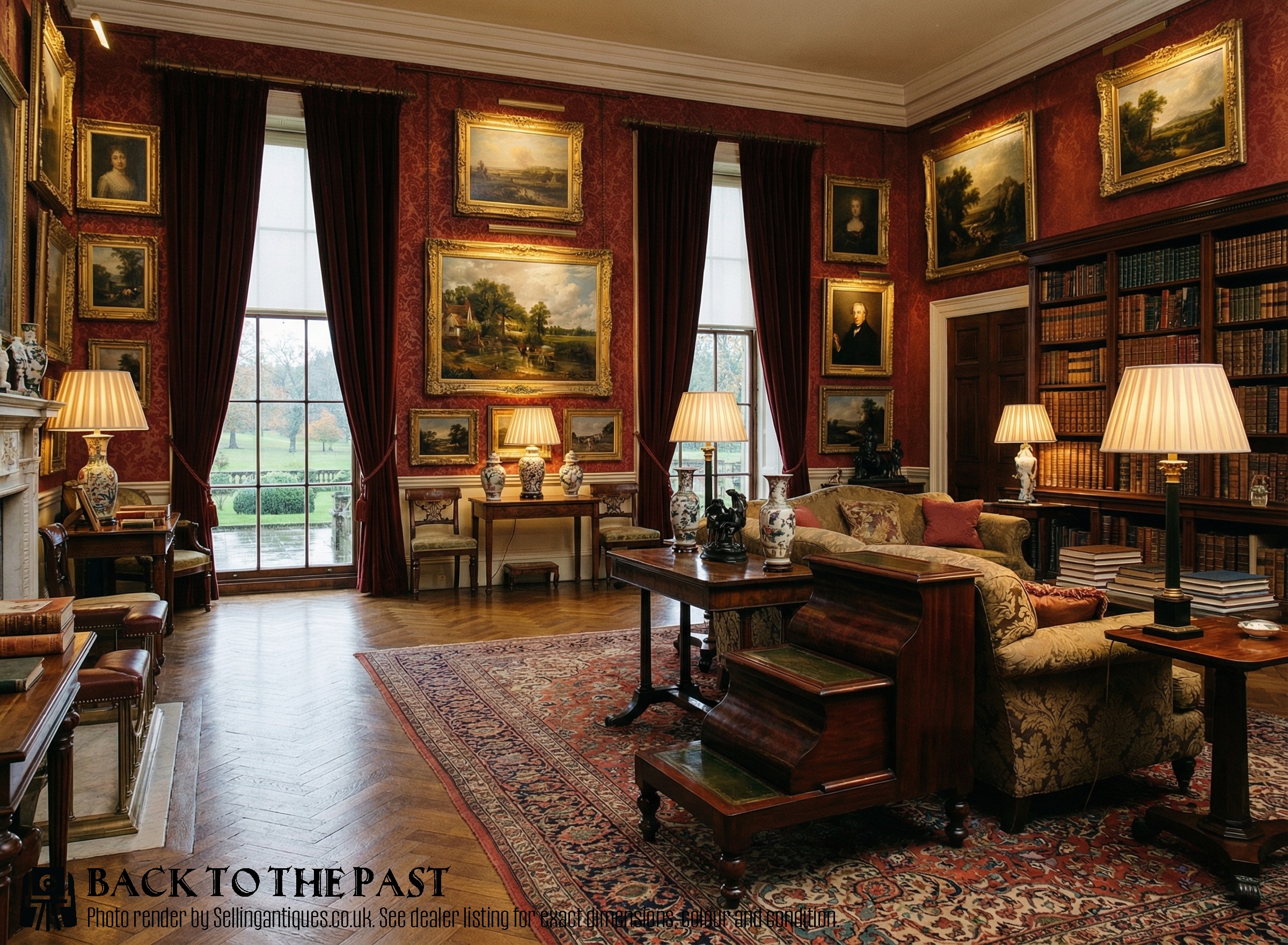
- The trade phrasing for one complete flight, not a pair. A listing offering a pair says pair, and fourteen titles do.
- Tread
- The flat surface you stand on. Counts are often given in the title, as in three-tread.
- Pole
- The upright handrail post on library steps, sometimes doubling as the piece's handle.
- Metamorphic
- Steps that fold or invert into another piece of furniture. Seventeen titles use the word, and the samples turn into a chair, a side chair, a stool and one combined easel.
- Step commode
- Bed or library steps with a chamber pot concealed beneath a hinged tread. Twelve titles carry the term.
- A-frame
- Steps hinged at the top so the two sides splay open, as in Georgian oak A-frame library steps.
Frequently Asked Questions
How many sets come up for sale each year?
Around 32 sets come to market on Sellingantiques in a year, and 106 different dealers have listed them across the archive.
That works out at close to one dealer per three listings, so almost nobody carries them in quantity. They turn up singly, from general stock.
What wood are library steps usually made from?
Mahogany leads, in 107 of 330 titles, with oak in 47 and pine in 34. The pairing mahogany library alone accounts for 66 titles.
Other timbers surface once or twice each rather than as a group: yew, elm, camphor wood, ash, fruitwood, satinwood and pitch pine all appear in the archive.
Are metamorphic steps common in this category?
They are a persistent minority. Seventeen titles say metamorphic, thirteen of those metamorphic library, and nine mention a chair.
The sampled examples convert into a chair, a side chair, a stool, and in one case a combined easel.
Why are so many just dated 19th century?
Ninety listings carry that description and nothing more, which is over twice the count of any single decade. It is the commonest thing a buyer is told about age.
Of the 152 listings with a clean year, the spread is bimodal: Victorian, Regency and Georgian at one end, and the 1900s to 1930s at the other.
Do bed steps and library steps differ?
Bed steps are low, two or three stages, made for climbing into a high bed. Library steps are a taller flight, often with a handrail or pole.
Thirteen titles mention bed, including three-heights bed steps and a George III mahogany and line-inlaid set described as chamber steps.
Were any sets made outside Britain?
Foreign origins are uncommon in the archive. Eight titles say French, one of them an epicerie shop step.
The outliers include a Japanese folding step ladder, a Japanese kaidan tansu step chest, and a set that came from a railway company.