



Antique Garden Tables
Small iron-framed tables made for gardens, terraces and conservatories, usually round, often painted, and frequently sold with their matching chairs.
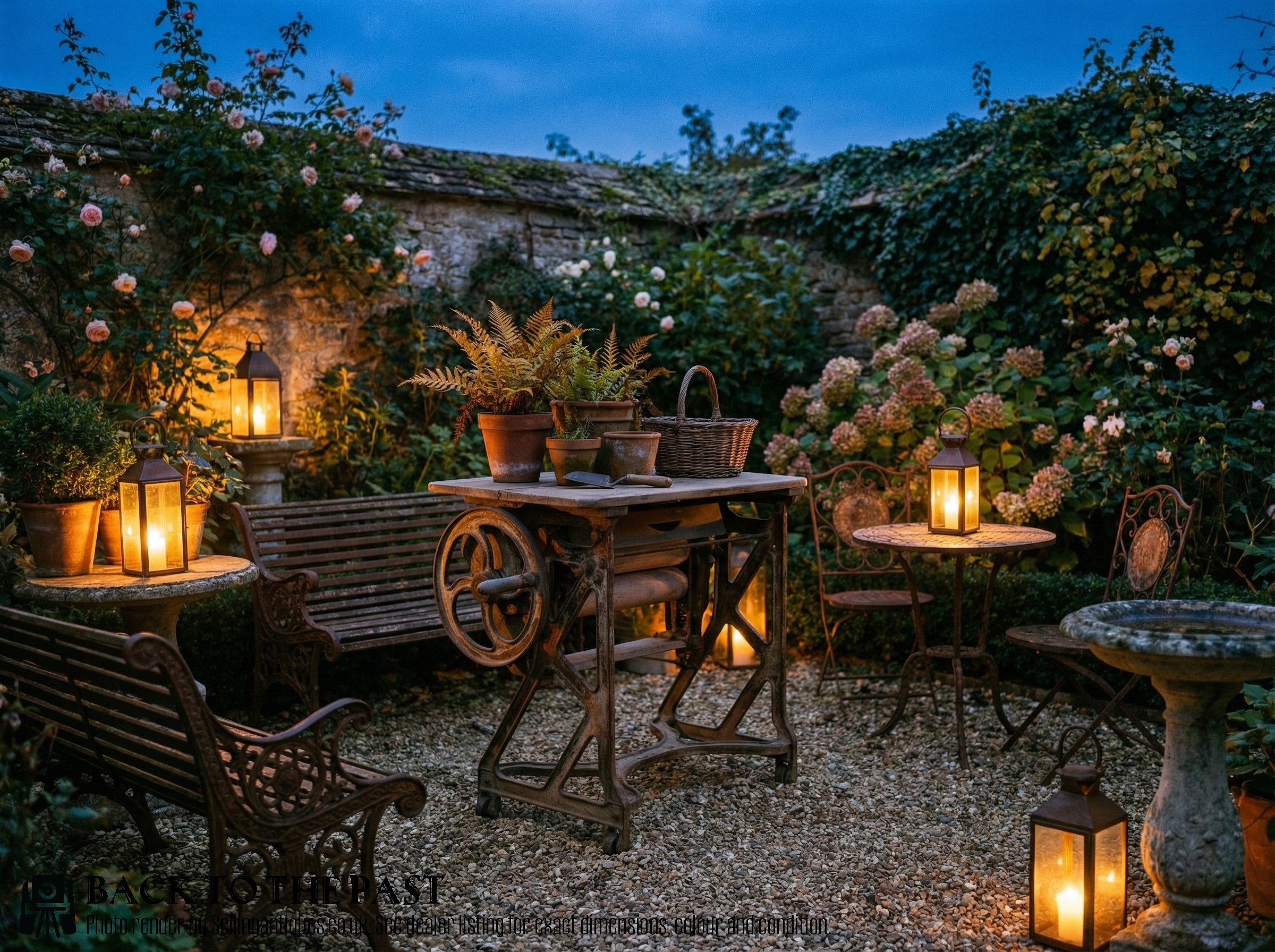
What Are Garden Tables?
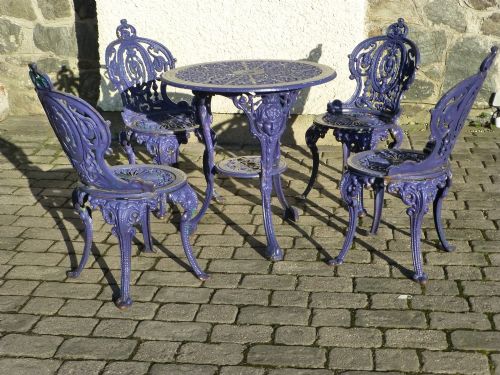
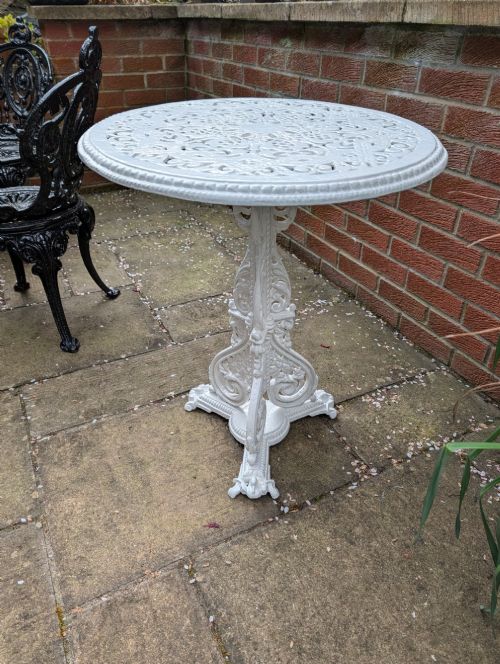
Iron dominates. Fifteen of the 28 listings on Sellingantiques say iron in the title and 11 of those say cast iron, so the table you are most likely to meet is a cast-iron one, painted more often than not, standing on ornamental legs with a round or oval top.
Foundry casting made ornamental outdoor furniture cheap enough for ordinary gardens through the nineteenth century, and the lighter café forms followed after. That history shows in the archive: five titles use the word bistro, and six are for a table with four matching chairs, a bistro set or a complete suite rather than a table alone.
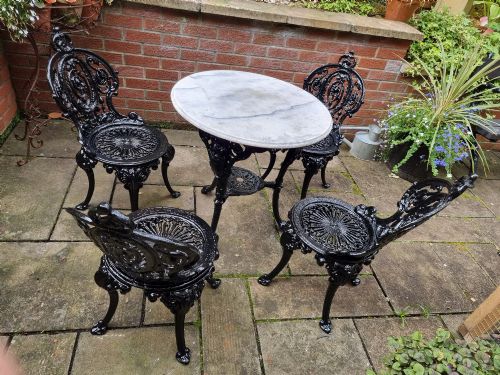
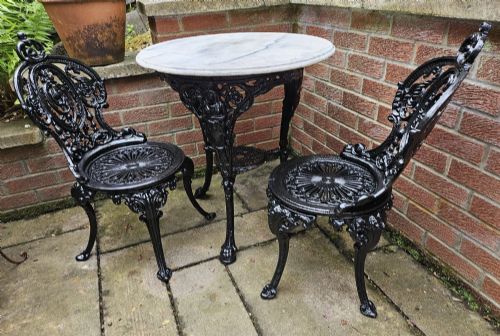
Around the iron core sits a scatter of other things. Painted timber turns up in four titles, including a two-tier cottage table and a rustic pine tray table for the garden room. Two teak dining sets, each a table with four chairs, and two marble-topped iron frames make up the rest of the material range. Wrought iron and wirework account for a handful more.
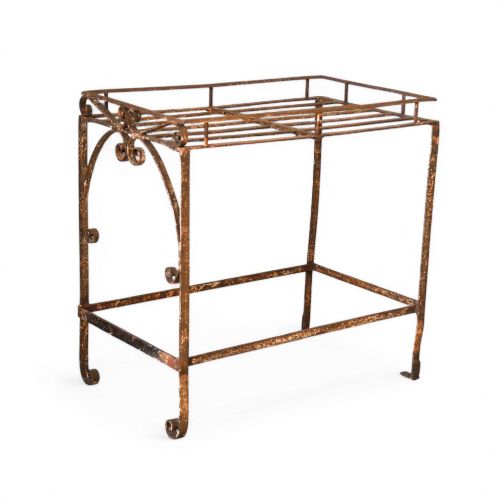
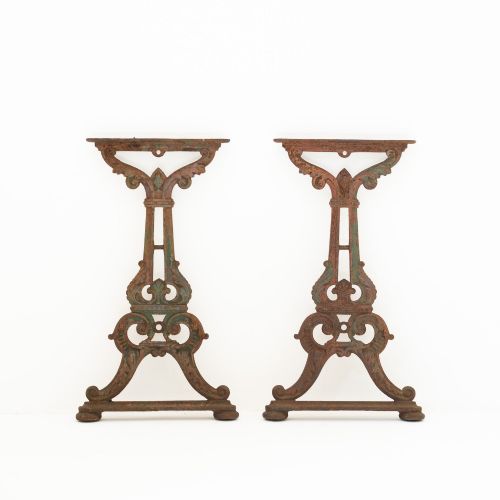
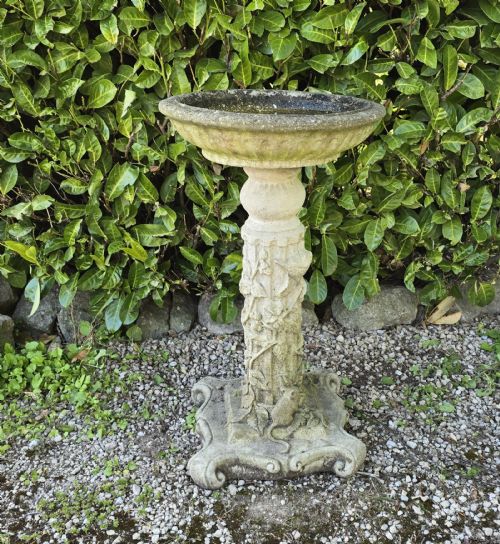
The heading takes in a few pieces that are not tables. Plant stands, a plant console, a wrought iron rack, a bird bath and two bare table bases sold without tops all sit under it. Dating runs from 1860 to 1930 where a year is given, though '19th Century' is the commonest entry of all, and six listings carry no date.
Where Value Sits
Completeness does most of the work. A table with its four matching chairs, or a full bistro suite, sits at the top of the range, and the completest set in the archive tops it outright. At the other end are the bases sold without tops, listed honestly as bases and priced accordingly.
Material separates the middle. Both marble-topped iron tables and both teak dining sets fall in the upper half, while painted timber and plain painted iron sit low. Weight counts too: heavy castings read higher, and heaviness is about the only quality word these titles volunteer for themselves.
A named cast pattern lifts a piece. The single table described by its medallion pattern is the highest-priced cast-iron thing in the archive. Only three titles in 28 name a foundry or a designer, so attribution is the exception rather than a thread running through the category.
Retail Price Guide 2026
Typical UK retail prices for garden tables, calculated from the Sellingantiques database of over a million retail prices indexed since 2003. This retail price guide relies exclusively on Sellingantiques data; no external sources or auction records are used, so the figures do not describe the wider market.
19th Century is the period label used most for garden tables on Sellingantiques, with the 1930s next and the 1920s third.
The Antique Garden Tables Glossary
- Cast iron
- Iron poured into a mould, which gives the crisp repeated ornament these tables are known for. It appears in 11 of the 28 titles.
- Wrought iron
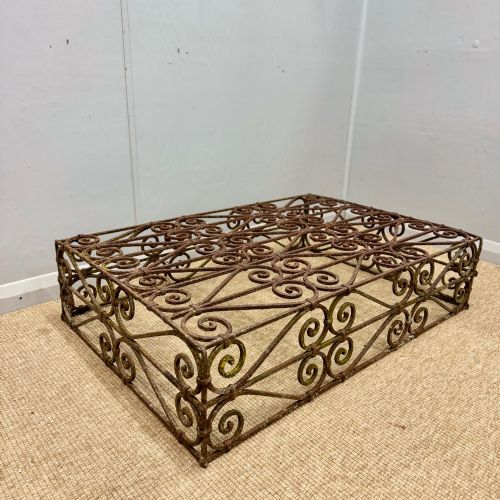
- Iron worked by hand at the forge rather than cast. Two titles use it, one French low table and one estate-made piece.
- Bistro table
- A small round café table, usually iron-framed. Five titles use the word, sometimes extended to bistro set or bistro suite.
- Table base
- The frame or standard sold without a top. Two listings in the archive are bases only, described as such.
- Wirework
- Furniture built from bent and joined iron wire instead of solid bar or castings, seen here on a conservatory plant stand and a table and chairs.
- Estate made
- Made on the property by its own smith rather than bought in from a foundry, a description attached to one wrought iron piece.
Frequently Asked Questions
What are antique garden tables usually made of?
Iron, more often than anything else. Fifteen of the 28 listings name iron in the title, and cast iron accounts for 11 of those.
The remainder covers painted timber, two teak dining sets, marble tops set into iron frames, and wirework.
Are they sold with chairs?
Often. Six titles are for a table with four matching chairs, a bistro set or a complete suite rather than a table on its own.
Those complete groups sit at the top of the range. Single tables and bare bases sit below them.
How old are these tables?
The dated field runs from 1860 to 1930, with 11 of the 28 listings carrying a clean year.
Dating is loose more often than precise. '19th Century' is the commonest entry, ahead of any decade, with Victorian and Edwardian also used as periods. Six titles carry no date at all.
Where years do appear they cluster at the two ends, the 1860s and 1880s at one, the 1920s and 1930s at the other.
Why are plant stands listed under garden tables?
The heading absorbs adjacent conservatory and garden furniture. A wirework plant stand, a plant console, a pair of conservatory stands, a wrought iron rack and a weathered bird bath all appear.
About one listing in five is something of this kind rather than a table proper.
Do many come up for sale?
Only around two a year on Sellingantiques. Nineteen separate dealers have listed one, so almost nobody handles them twice.
That scatter is why the category reads as a run of individual pieces rather than a settled type.
Is anything here not European?
One piece. A carved Chinese hongmu and mother-of-pearl barrel-shaped table is the only non-European entry in the archive.
It is the highest-priced thing in the category after the complete cast-iron suite.