
Antique Wine Coolers
A wine cooler is a lidded or open wooden vessel, usually mahogany and often metal-lined, made to hold bottles in iced water beside the dining table or to store them under the sideboard.
Antique Wine Coolers
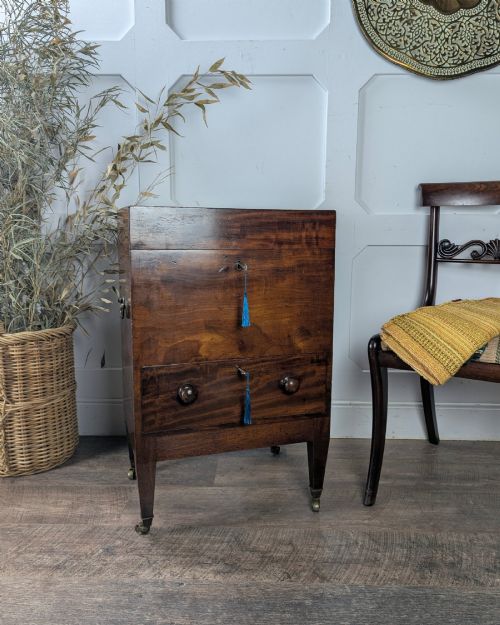
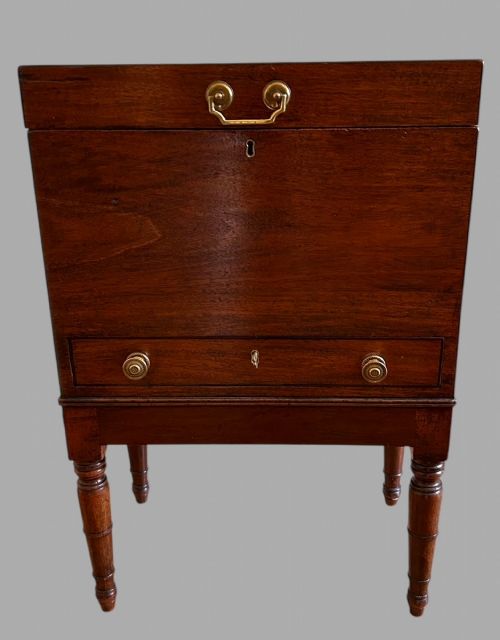
Purpose-built coolers and cellarettes came in with the 18th-century dining room, where the sideboard arrangement wanted a vessel for bottles. Open coolers, sometimes called cisterns, stood under or beside the sideboard and were filled with ice and water. Lidded cellarettes held bottles upright in divided compartments and could be locked.
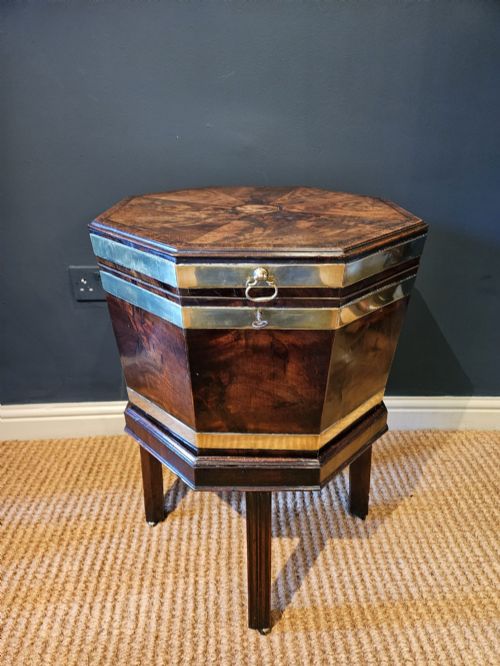
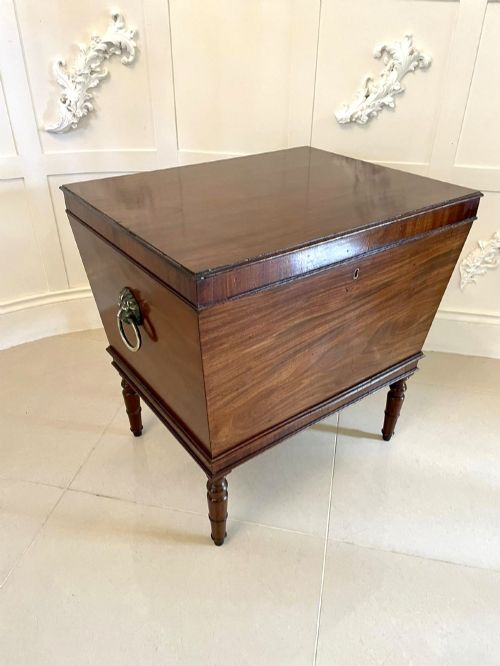
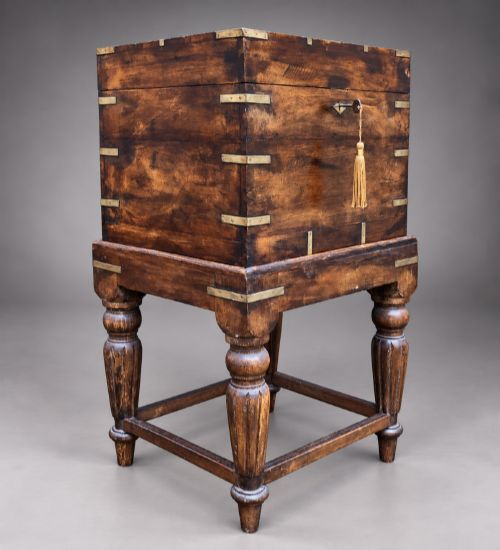
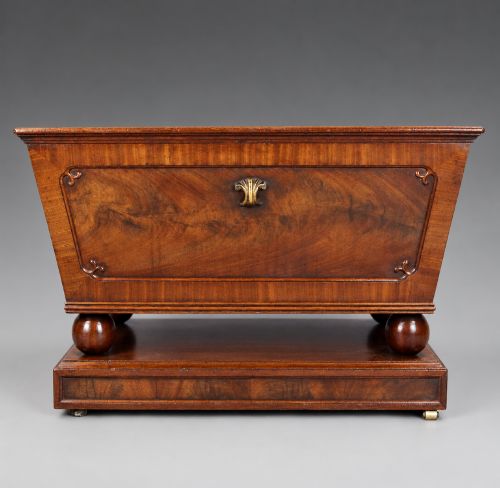
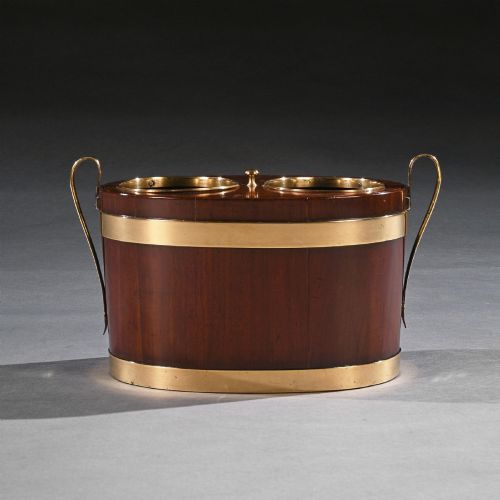
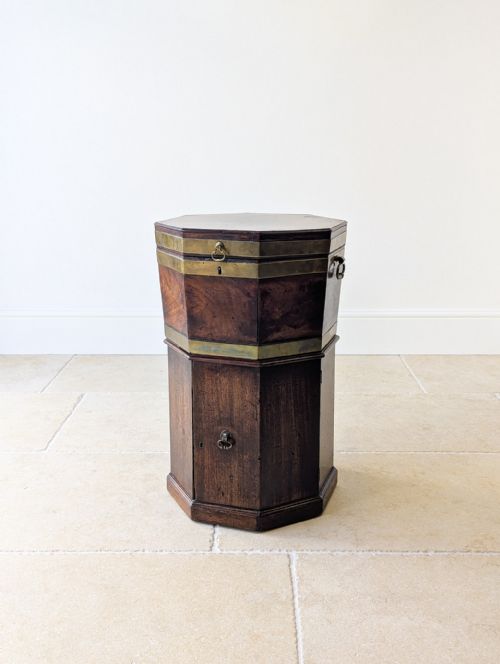
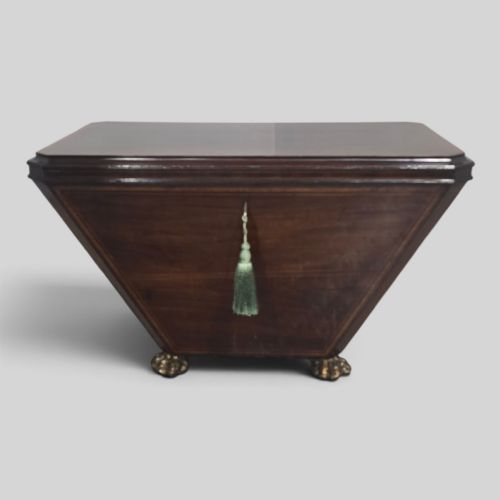
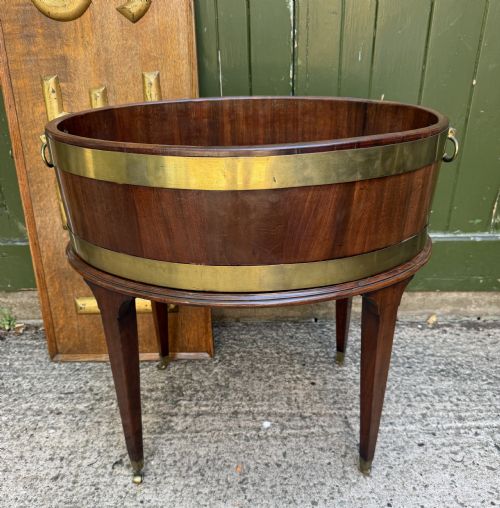
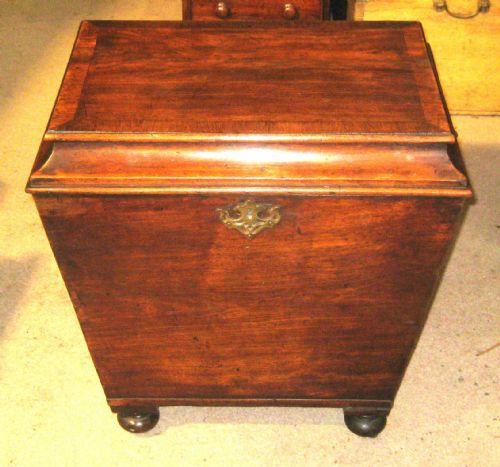
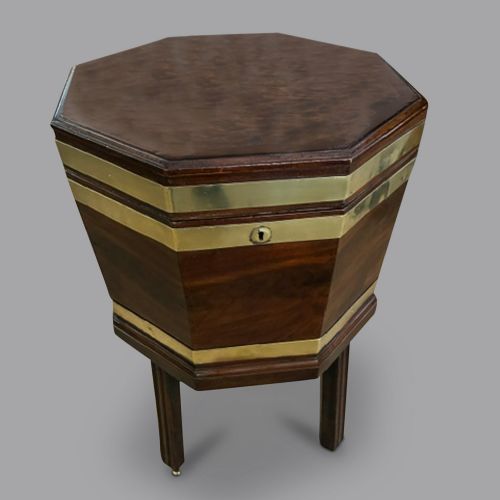
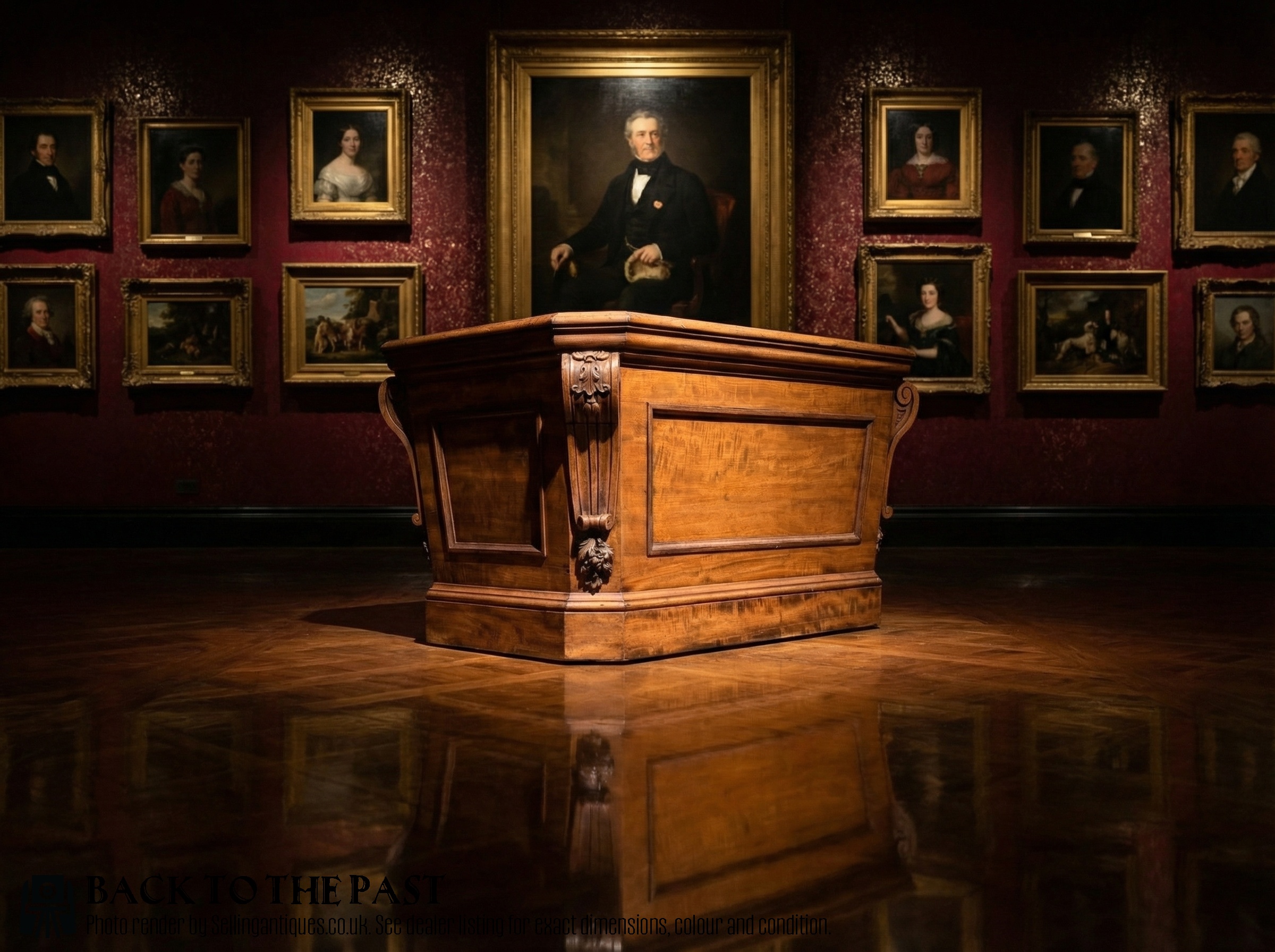
Mahogany is close to a definition rather than a variant: 335 of 494 titles name it, and no other timber reaches one in twenty. The single likeliest encounter is a Georgian or Regency mahogany piece, either brass-bound and oval or octagonal, frequently sitting in its own four-legged stand, or of tapering sarcophagus form on paw or bracket feet. Titles sort them by geometry more than anything else, so hexagonal, boat-shaped, serpentine and plain box forms all turn up.
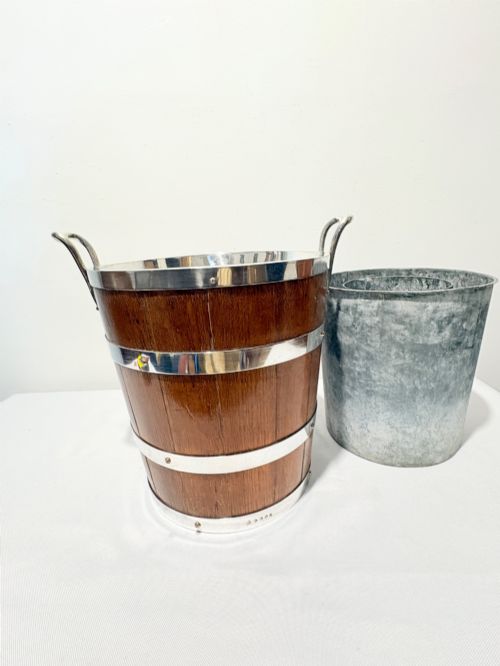
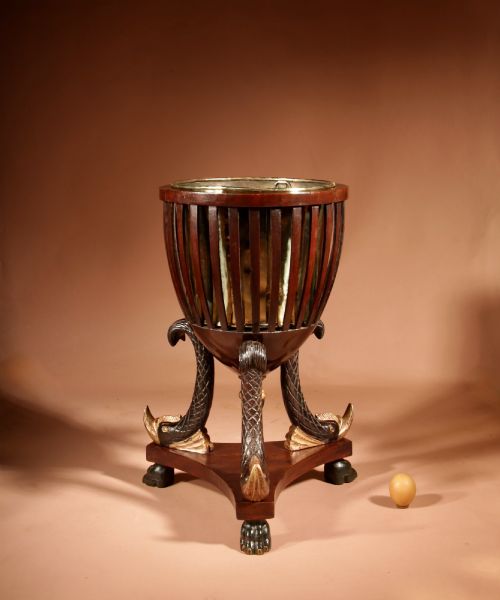
The heading also carries three neighbours. "Cellarette" appears in 109 titles and is used interchangeably with "wine cooler". Coopered buckets built from staves and hoops sit here too, including Dutch teestoof and tea-stove forms, peat, plate and oyster buckets, alongside brass and copper ice buckets. Jardinieres and planters make up another group, often the same object offered under either name.
Dates run from 1750 to 1930, though most listings give a period label rather than a year: 19th Century, Georgian, 18th Century and Regency each cover broad ground, so a listing marked only that way says little about the decade. Where a title reads c.1820 or circa 1790 the dealer is being more precise. A revival tail sits at the late end, described as Regency Style, Georgian Revival or period-style, carrying dates from the 1860s through the 1930s.
Where The Range Widens
Timber does the first sorting. Plain mahogany is the baseline, and the upper reaches are where the titles start naming flame or figured mahogany, satinwood, rosewood, walnut, partridge wood, burr elm, padouk and teak. Decorative work follows the same line: inlay, satinwood banding, marquetry, carving and painted satinwood cluster in the higher-priced titles rather than the plain ones.
Brass is the other lifting factor. Bands and hoops over the carcass appear in fifty titles and gather around the oval and octagonal coolers; bronze, ormolu and gilt mounts sit above that. Completeness counts as well, since coolers made to sit in a stand were often parted from it, and titles that specify the original stand, the original interior or a lead or copper liner are describing something less common than a bare carcass.
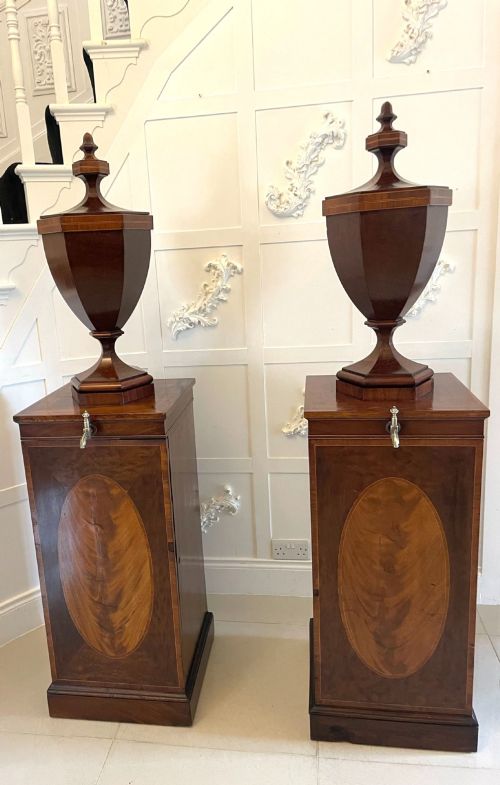
Making and period fix the ends. Gillows is the one name carried by more than a couple of dealers, and pairs are a genuine rarity at eight titles in 494, with pairs of George III brass-bound coolers and inlaid cellarettes near the top. At the other end sit the later revivals in the Regency and George II taste, honest work but low to mid-range.
Antique Wine Coolers Retail Price Guide 2026
Typical UK retail prices for wine coolers, calculated from the Sellingantiques database of over a million retail prices indexed since 2003. This retail price guide relies exclusively on Sellingantiques data; no external sources or auction records are used, so the figures do not describe the wider market.
19th Century is the period label used most on Sellingantiques for wine coolers, with Georgian next and 18th Century third.

Gillows of Lancaster and London
The Antique Wine Coolers Glossary
- Cellarette
- A lidded, usually compartmented case for bottles. Used in 109 titles, and treated as another word for wine cooler rather than a separate thing.
- Brass bound
- Encircled by brass bands or hoops running over the body of the carcass. It appears in fifty titles and concentrates on the oval and octagonal coolers.
- Sarcophagus form
- A tapering, coffin-shaped body with a lid, commonly raised on paw or bracket feet. Forty titles use the term.
- Liner
- The inner vessel that held the ice and water. Titles record lead, copper, brass and creamware liners, and note when the original one is still there.
- On stand
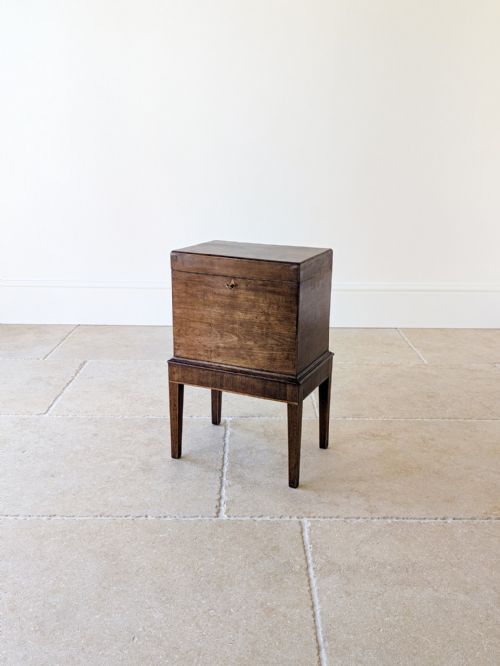
- A separate four-legged base the cooler drops into, named in twenty-five titles. The two were made together and are not always still together.
- Coopered
- Built from staves and hoops like a barrel rather than joined as a box. Sixteen titles, covering peat, plate and oyster buckets and the Dutch teestoof.
Antique Wine Coolers: Frequently Asked Questions
What is the difference between a wine cooler and a cellarette?
In principle a cooler is open and filled with ice and water, while a cellarette is lidded and divided inside to hold bottles upright. Ten titles say open, and a few use the older word cistern.
In practice the archive treats the two as near-interchangeable. "Cellarette" or "cellaret" appears in 109 of 494 titles, often on pieces a different dealer would have called a wine cooler.
Which wood are most wine coolers made from?
Mahogany, and by a long way. It is named in 335 of 494 titles, roughly two thirds, and no other timber reaches one in twenty.
The rest spread thin: oak, walnut, satinwood, rosewood, elm, padouk and teak all turn up, usually on pieces where the timber is the point.
How old are these pieces likely to be?
The dated field spans 1750 to 1930, with 129 listings carrying a clean year. The rest use period labels, led by 19th Century, Georgian, 18th Century and Regency.
Georgian and 19th Century each cover about a hundred years, so on their own they place a piece only broadly. Titles reading c.1820 or circa 1790 are the ones being specific.
The 1920s and 1930s end is revival work in the Regency and George II taste.
Why are jardinieres listed as wine coolers?
Jardiniere appears in thirty-two titles and planter in nineteen, and many titles pair the two names. Coolers with their liners removed took plants well, and the two descriptions have travelled together ever since.
The same overlap brings in coopered buckets and brass and copper ice buckets under the same heading.
Are pairs of wine coolers common?
No. Eight titles in 494 describe a pair.
Where they do appear, pairs of George III brass-bound coolers and inlaid cellarettes sit near the top of the range.
Were wine coolers made outside England?
Mostly not, though other origins are real. Dutch pieces account for twelve titles and French for eight, with single Irish, Danish, Anglo-Indian, Indian padouk and Anglo-Dutch entries.
The Dutch presence is largely coopered: teestoof and tea-stove buckets, and one miniature mahogany jardiniere.
About fifty-one wine coolers are listed a year on Sellingantiques, offered by 143 different dealers over the archive.