
Antique Swords
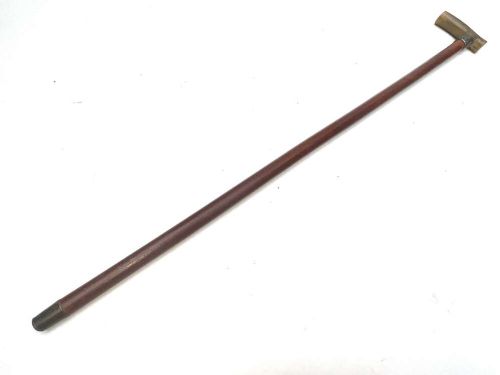
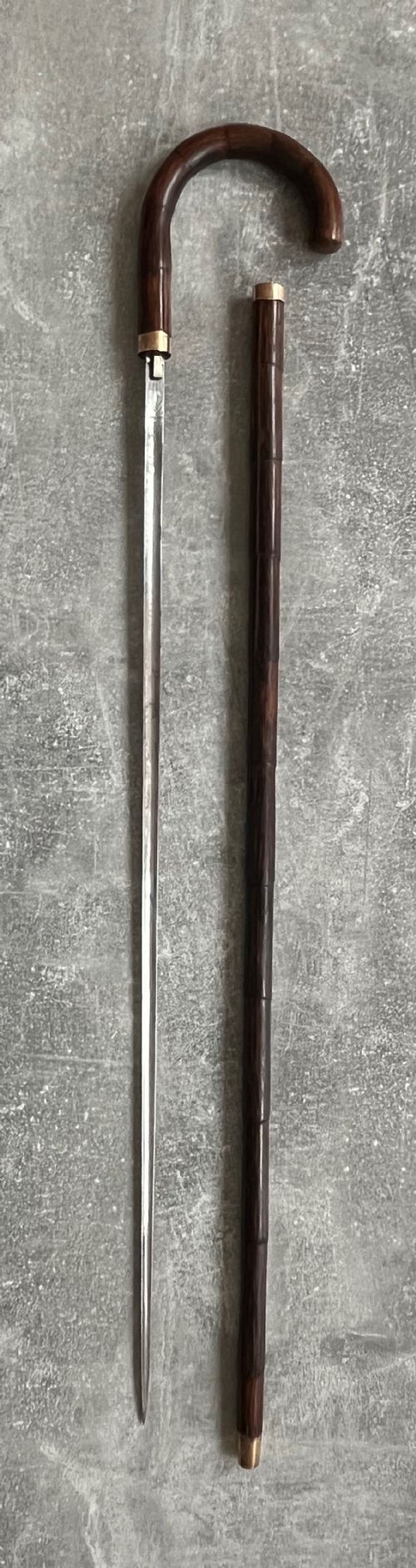
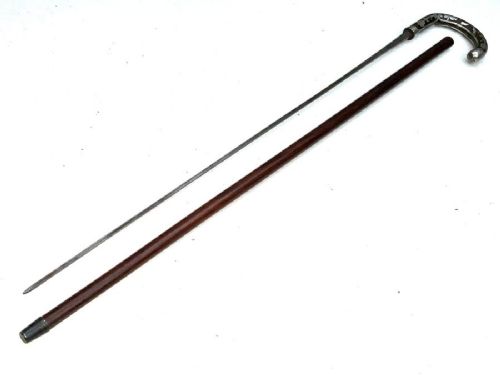
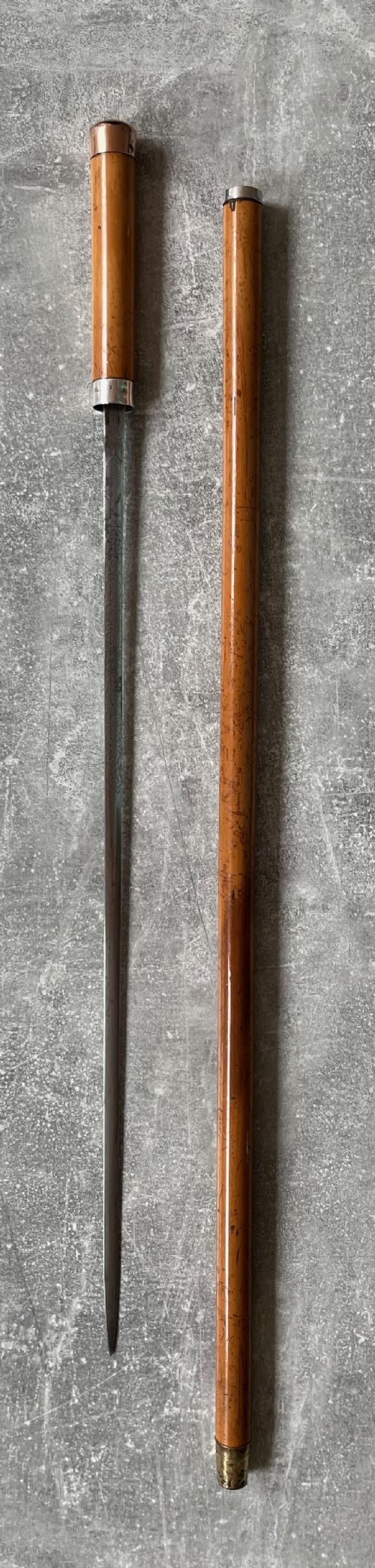
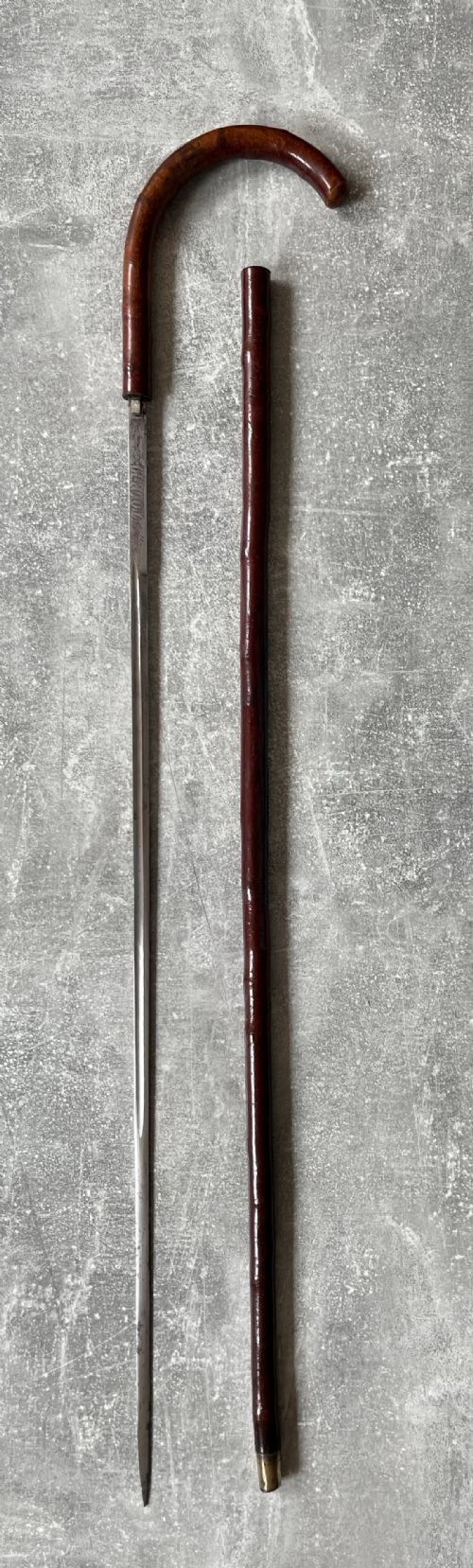
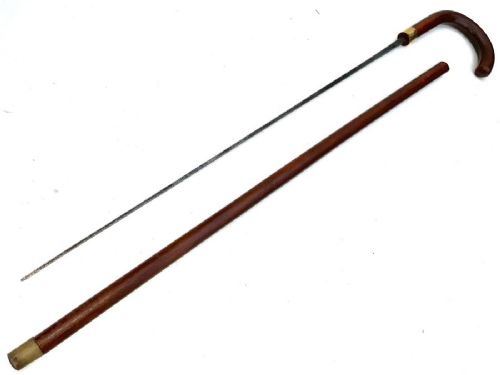
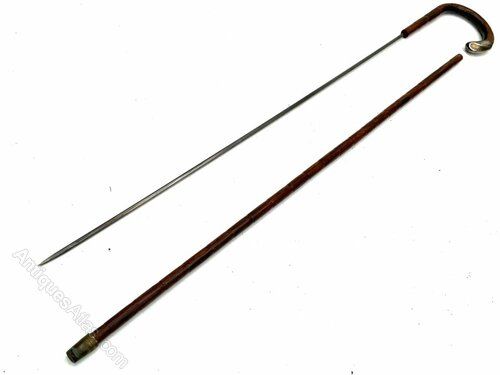
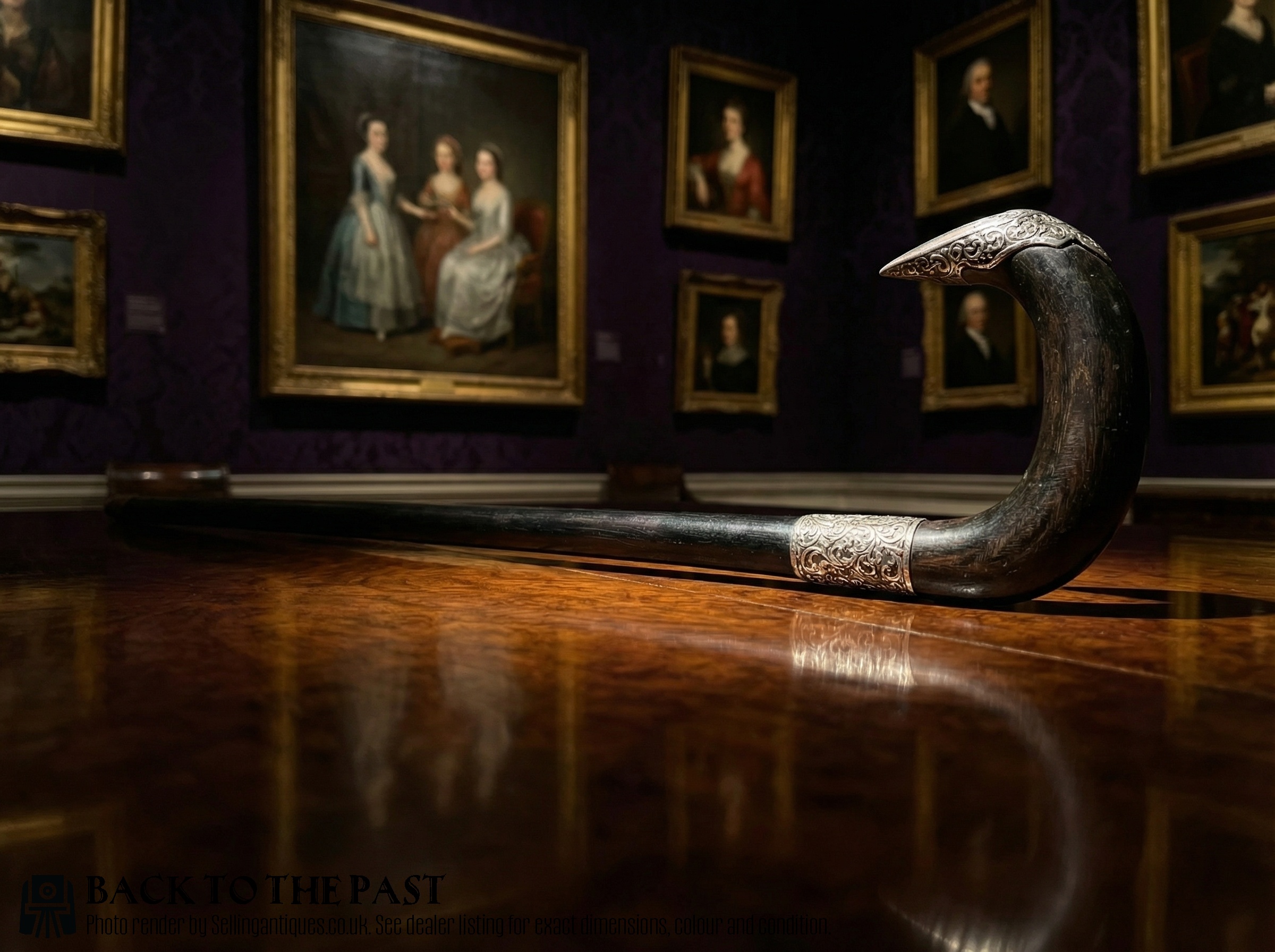
A sword stick is a walking cane with a slim blade hidden in the shaft, released by a collar or a push button, and carried as everyday personal defence when a cane was ordinary dress.

Antique Swords
The heading says swords, but the category is dominated by sword sticks and sword canes. "Stick" appears in 312 of 405 titles, "walking stick" in 143, and "gentleman" in 84. Actual military and edged weapons form the tail rather than the body of it.
The piece you are most likely to meet is a gentleman's walking-stick sword stick of roughly 1880 to 1930. Malacca is the shaft named more often than any other, in 73 titles, with Irish blackthorn a distant second. Bamboo, ebony, palmwood, hazel, cherry and briar all turn up as well.
Silver is named in 103 titles, usually as a collar, a mount or a top, and hallmark towns and years are often quoted in the title itself: London dates from 1846 to 1923, Birmingham from 1876 to 1923, a single Chester 1922. Blades run from plain to fullered, etched or attributed to Toledo.
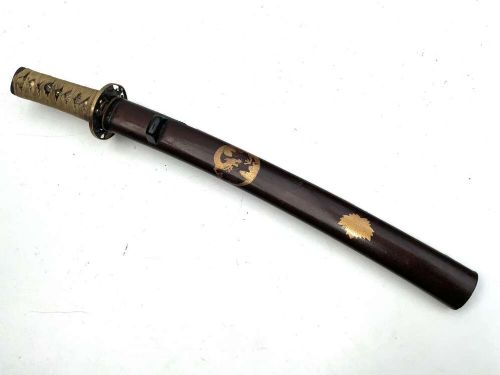
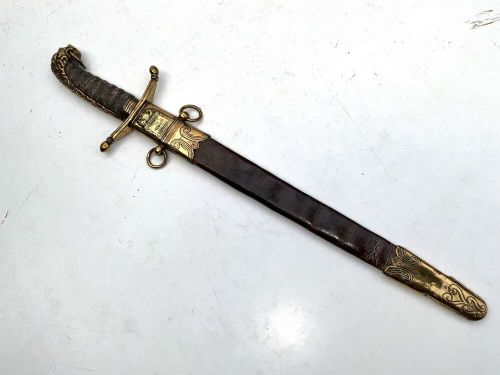
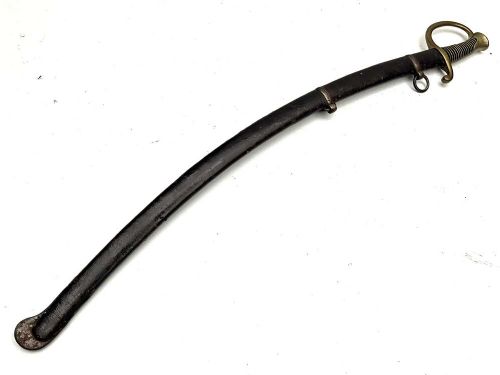
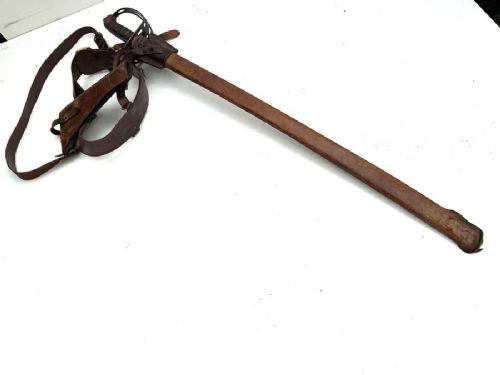
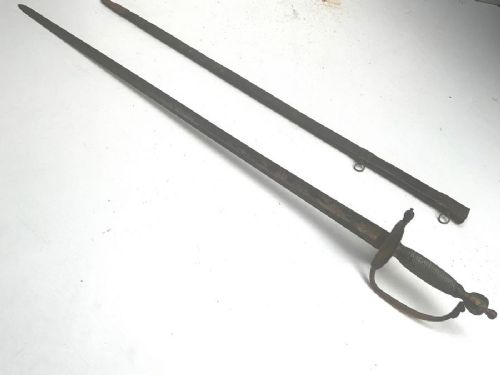
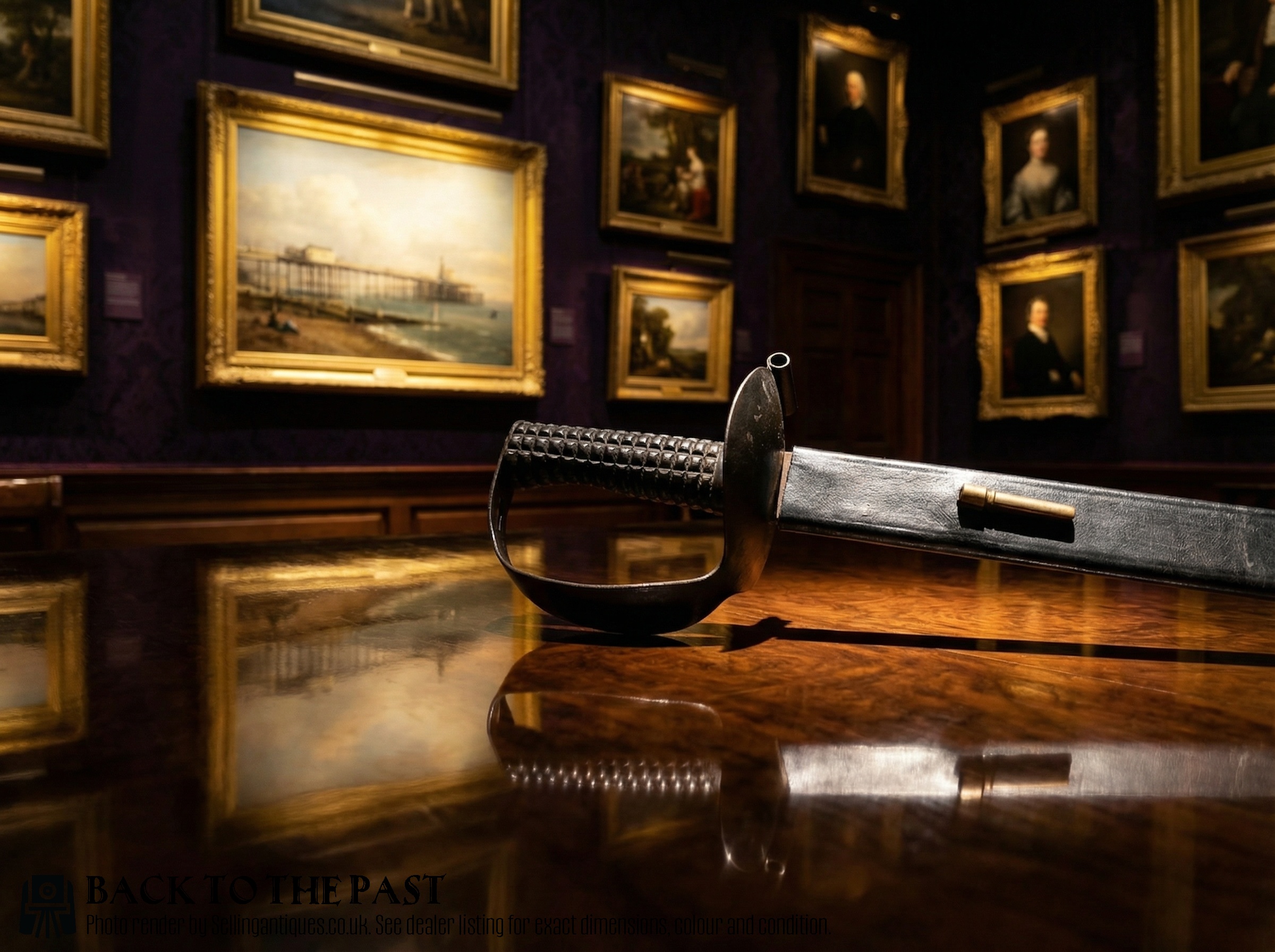
Beyond the sticks sit officers' swords and sabres of the 1796 to 1899 patterns, court and dress swords, bayonets and swagger sticks, then a small group of non-European weapons: katana, wakizashi and tachi, tulwars, kora, kindjal and pesh kabz. Dates run 1700 to 1940, but named reigns are dealer shorthand, so treat any single year as an attribution.
Where The Range Sits
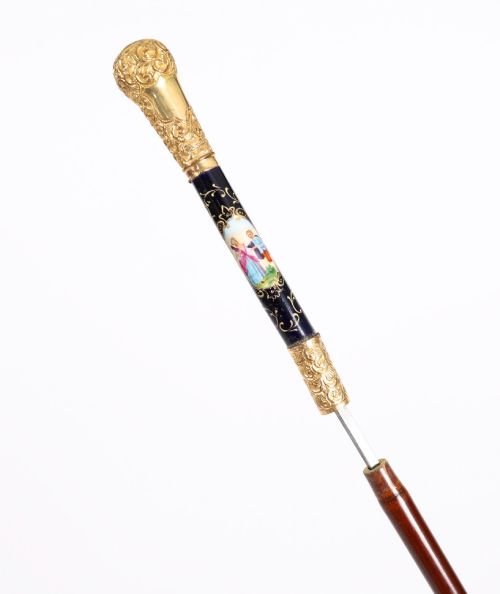
Mounts do most of the work. A stick with a hallmarked silver collar, knop or top, with the assay town and year quoted, sits well up the range against one with a plain metal band. Gold mounts appear in only nine titles, and they appear at the upper end.
The blade is the other lever. Toledo is claimed in 27 titles and Wilkinson named in 16, and blade attribution is one of the few things sellers reliably put in the title. Blades further described as etched, blued and gilded, fullered, double-edged or fitted with sprung quillons sit above those left undescribed.
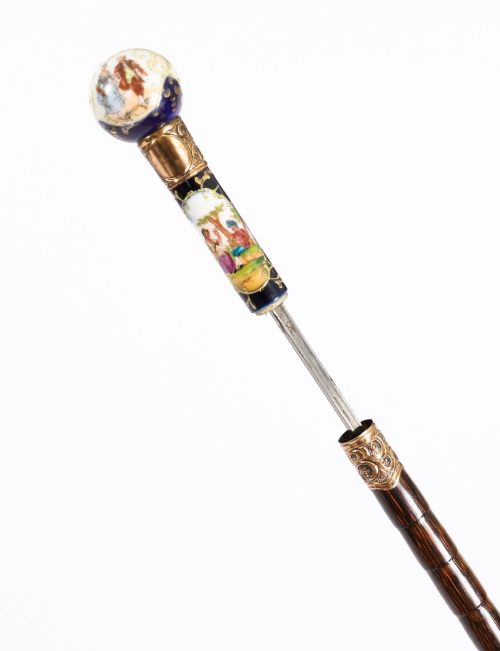
Then handle and shaft. Antler, stag and ram's horn, bone, porcelain, tortoiseshell, agate, niello and carved animal heads all climb above a plain top, as do the timbers named once or twice rather than by the dozen. Unusual mechanisms lift a piece too, and at the very top the category stops being sticks: signed Japanese blades, a Shah Abbas-period sword, an 18th-century suit of armour.
Antique Swords Retail Price Guide 2026
Typical UK retail prices for swords, calculated from the Sellingantiques database of over a million retail prices indexed since 2003. This retail price guide relies exclusively on Sellingantiques data; no external sources or auction records are used, so the figures do not describe the wider market.
The top sale of the last year on Sellingantiques was a Jawhar sword with calligraphy, from the period of Shah Abbas, 17th century, in February 2026.
The Antique Swords Glossary
- Sword stick / sword cane
- A walking stick with a blade concealed in the shaft. Both wordings are used interchangeably in titles and mean the same thing.
- Collar
- The metal band at the joint where the blade is drawn. Frequently silver, and frequently hallmarked, which is why assay towns and years show up in titles.
- Malacca
- Mottled tropical rattan cane, the shaft named more often than any other in this category, in 73 titles.
- Knop
- The rounded terminal or top of the handle. Often silver, sometimes bone or lignum vitae. A crook handle is the curved shepherd's-crook top instead, named in 12 titles.
- Toledo blade
- A blade attributed to the Spanish steel town, claimed in 27 titles. Fullered means the blade carries a lengthwise groove to lighten it.
- Quillons
- Short cross-guards, here sprung or fold-out so they deploy as the blade comes free. They appear in only four titles across the whole archive.
Antique Swords: Frequently Asked Questions
How many come up for sale each year?
Around 45 pieces come to market on Sellingantiques in a year, and 39 different dealers have listed in the category.
That spread means the category sits across the general trade rather than being held by a handful of specialists.
What period do most of these date from?
The dealer-supplied dates run from 1700 to 1940, with 243 listings carrying a clean year. The profile clusters hard in the late Victorian to inter-war window, and the 1890s is the densest single decade.
A large block, 49 listings, is dated only "19th Century". Labels like Victorian, Edwardian and Georgian are dealer shorthand rather than precise years.
Earlier material appears only in the weapons tail: a 17th-century sword and one civil war group.
Which shaft timbers turn up most often?
Malacca leads by a distance, named in 73 titles. Blackthorn follows with 32, of which 26 are specifically Irish blackthorn.
After those come bamboo, ebony and a long tail of one-offs: palmwood, partridge wood, hazel, cherrywood, chestnut, briar, thornwood, holly, oak, mahogany, rosewood.
Are military swords part of this category?
Yes, but as a modest minority. Officers' swords appear in 23 titles, with cavalry sabres, court and dress swords, bayonets and swagger sticks alongside them.
Pattern numbers quoted include 1796, 1821, 1825, 1831, 1845, 1854, 1856, 1888 and 1899.
Why do so many titles quote hallmark dates?
Because silver is named in 103 titles, usually as the collar, mount or top, and a hallmark gives a town and a year that a dealer can put straight in the title.
London dates run from 1846 to 1923 and Birmingham from 1876 to 1923, with a single Chester 1922. The assay evidence is often on the shelf label rather than buried in the description.
What are the unusual pieces in this category?
Odd one-offs turn up throughout. A gravity-fed flick-out mechanism, a three-section steel niello stick, a blue porcelain handle, a stick made from Joshua tree wood and a snakeskin-covered haft have all been listed.
Masonic association is recorded in ten titles, attaching to blackthorn, malacca and ebony sticks alike, including a Masonic sword inside a silver-bound malacca cane.
A small run of French gold-plated Sèvres porcelain-handled sword canes is the only group with lengths stated, at 84 to 91 cm.