


Antique Brackets
A bracket is a small support fixed to a wall to carry a clock, bust, vase, lamp or ornament, and the heading also covers the architectural corbels and capitals dealers list beside them.
Antique Brackets
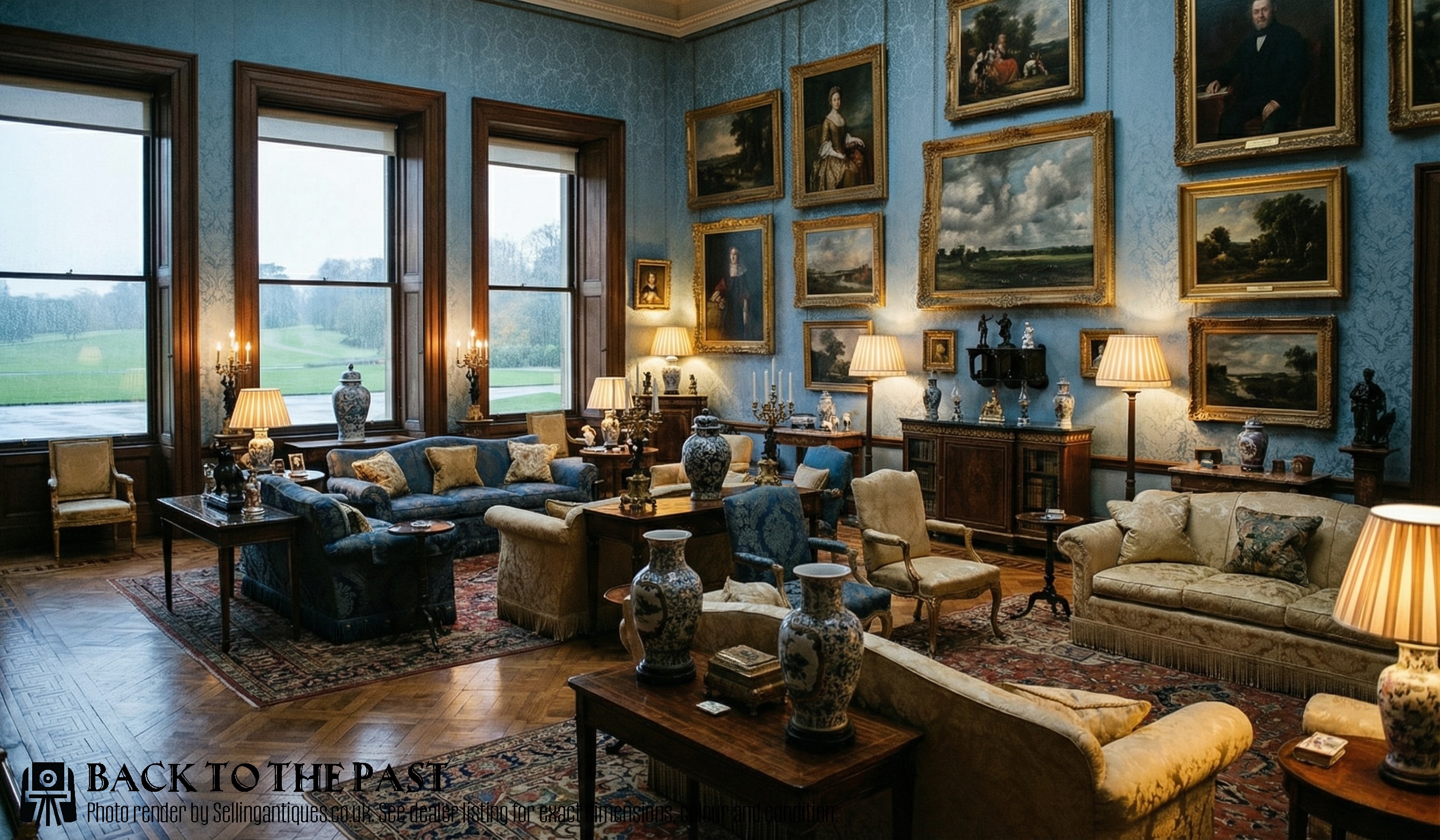
Wall brackets are projecting shelves fixed to a wall to hold something up for display. They grew out of architectural corbels and were in common domestic use in Europe from the 17th and 18th centuries on. By the 19th century they were being made in quantity, in carved wood, gilded wood and moulded materials, for ordinary rooms.
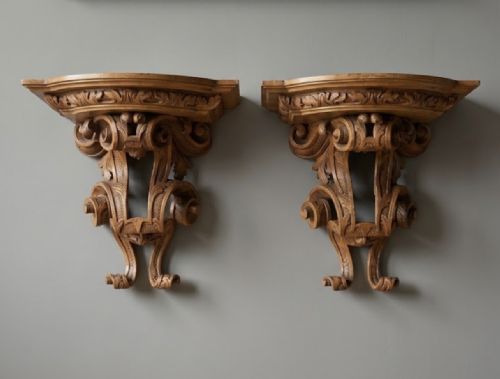
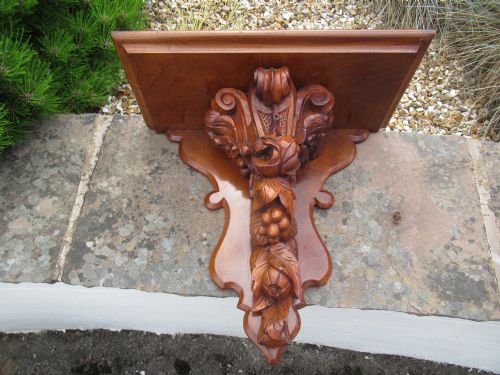
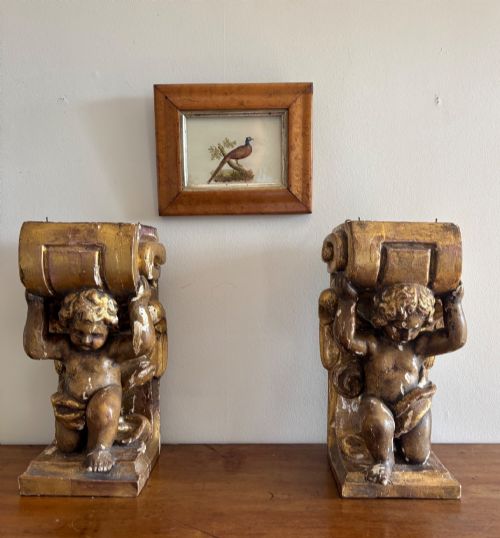
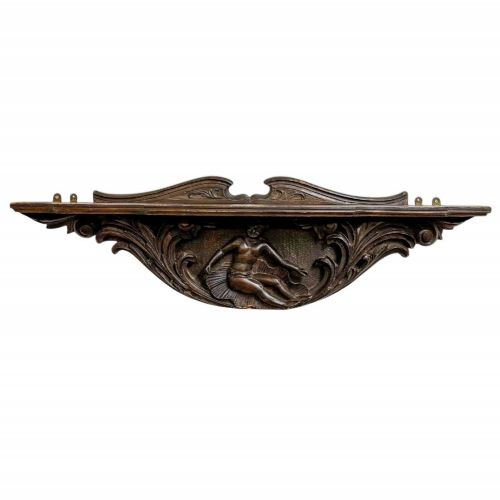
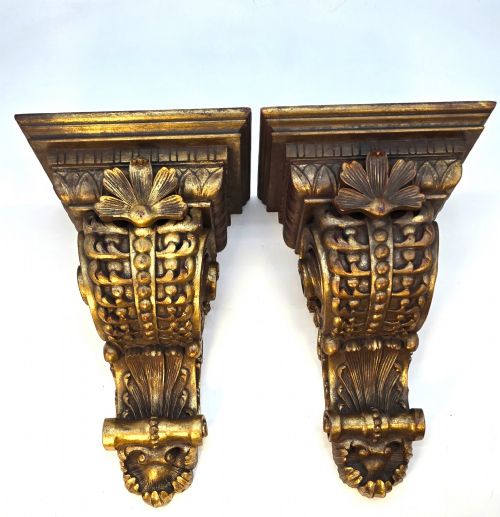
The version you'll meet most often is a carved wooden wall bracket sold as a pair. Two thirds of titles say "wall", and "pair" and "carved" both turn up in large numbers. Oak leads the woods, with mahogany and walnut behind it, and rosewood, limewood, pine and fruitwood in smaller numbers. A typical listing reads "Pair of 19th Century Carved Oak Wall Brackets".
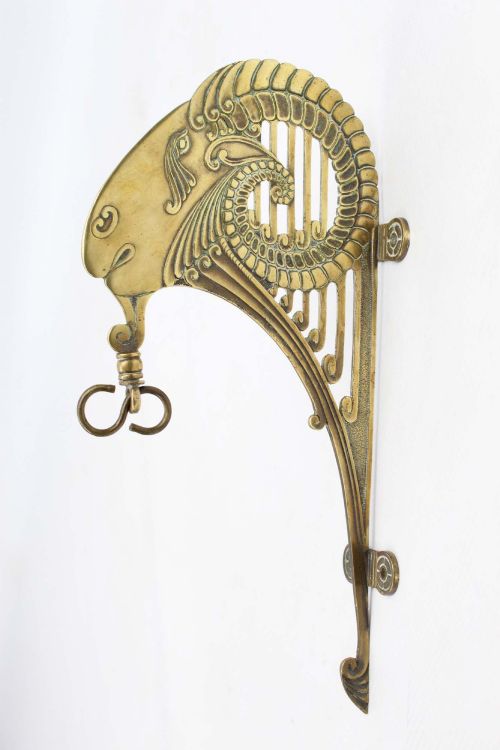
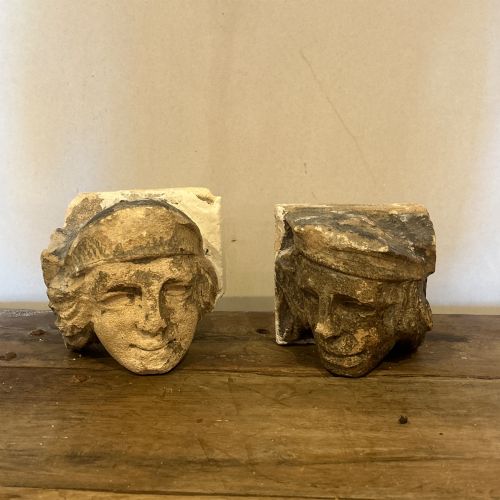
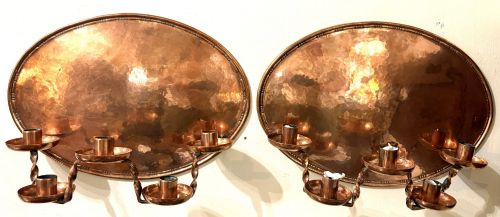
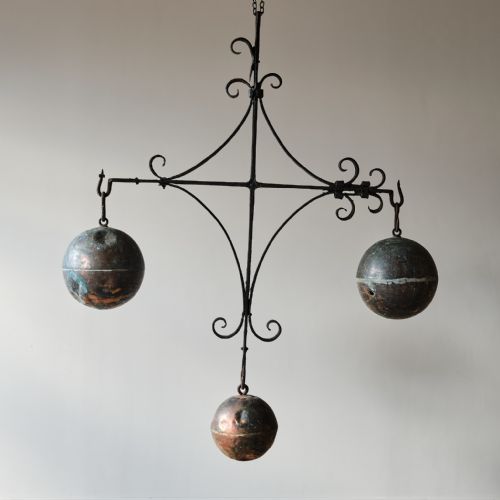
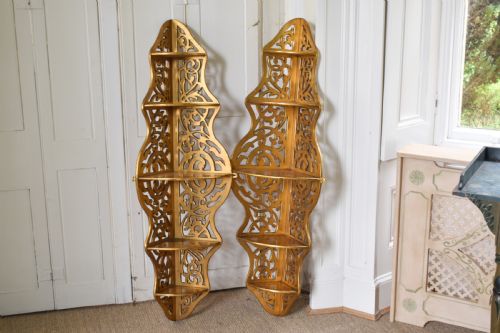
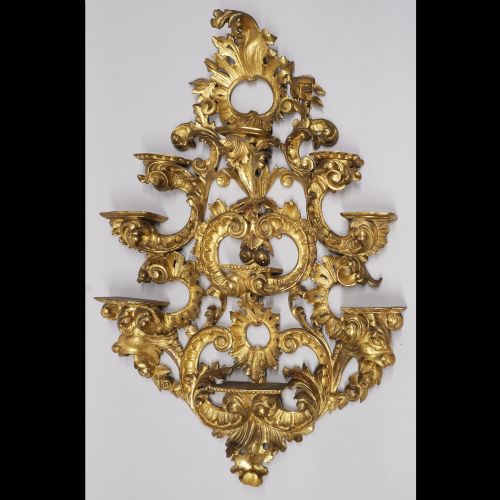
Running alongside is a gilded group, about a fifth of the category: giltwood, gilded gesso, parcel-gilt and Florentine gilt, some of it rococo in manner. Then the architectural side, corbels and capitals in oak, plaster, stone and Chinese carved wood, sold loose and often re-purposed. Metal brackets are roughly one in ten and rising in live stock, taking in curtain-pole, bell, sign and cast-iron shelf supports. Terracotta, parian, porcelain, majolica, stoneware, plaster and papier mâché make up a small recurring group.
Dating is mostly broad. "19th Century" on its own accounts for 83 entries and "Victorian" another 31, so a century label rather than a year is the norm. Named decades are thin and scattered across the 1860s to the 1930s. The dated field runs 1750 to 1930, and a handful of samples reach back to the 17th and 16th centuries.
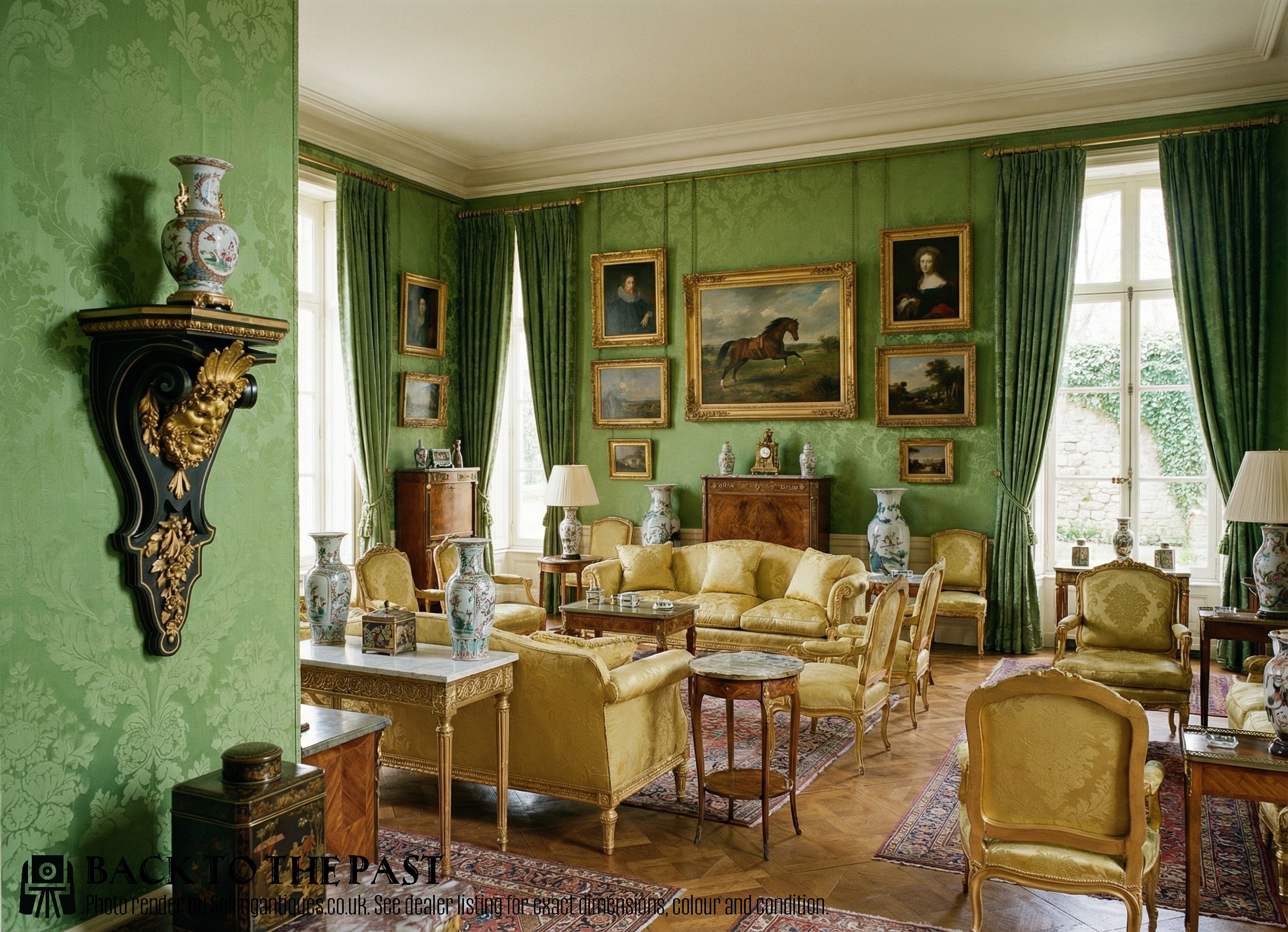
Where The Range Splits
Pairs sit above singles, and that is the first thing the archive shows: the matched pair is the commonest single object in the category, and sets of three, four and five appear too. A bracket made to work with a partner has usually lost half its point once separated.
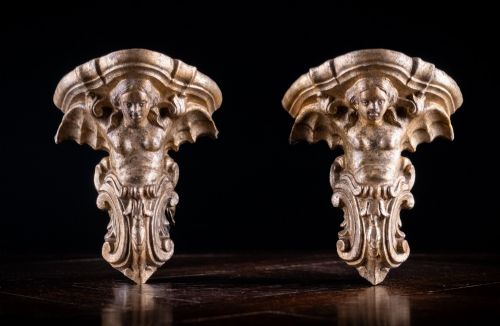
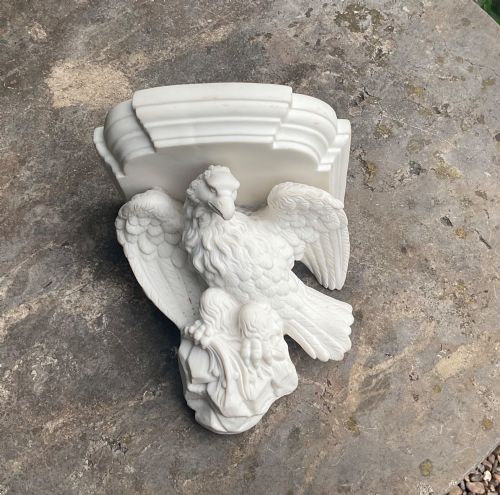
After that it comes down to carving and surface. Figural work carries the upper end, and the subjects recur: eagles, putti and cherubs, caryatids, mermaids, satyrs, dragons, lions, commedia dell'arte figures, plus the naturalistic birds and foliage of Black Forest work. Plain, undescribed brackets sit at the bottom. Gilding lifts a piece as well, and titles single out original gilt, gilded gesso and parcel-gilt rather than leaving the finish unsaid.
Size counts, with "large" claimed in 31 titles and extra large, huge and large scale recurring at the top. Age and origin do the rest. The 17th and 16th century oak, the Chinese corbels dated before 1700, and Ottoman, Moorish, Syrian mother-of-pearl inlaid and Ceylonese ebony brackets sit above the routine English, French and Italian supply.
Antique Brackets Retail Price Guide 2026
Typical UK retail prices for brackets, calculated from the Sellingantiques database of over a million retail prices indexed since 2003. This retail price guide relies exclusively on Sellingantiques data; no external sources or auction records are used, so the figures do not describe the wider market.
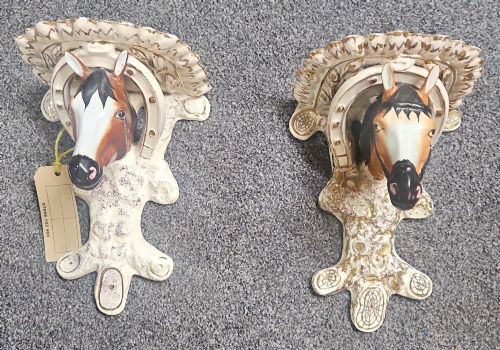
The heaviest brackets on Sellingantiques tend to be the cast-iron ones, such as horse's head shelf brackets, along with 18th century plaster and stone corbels.
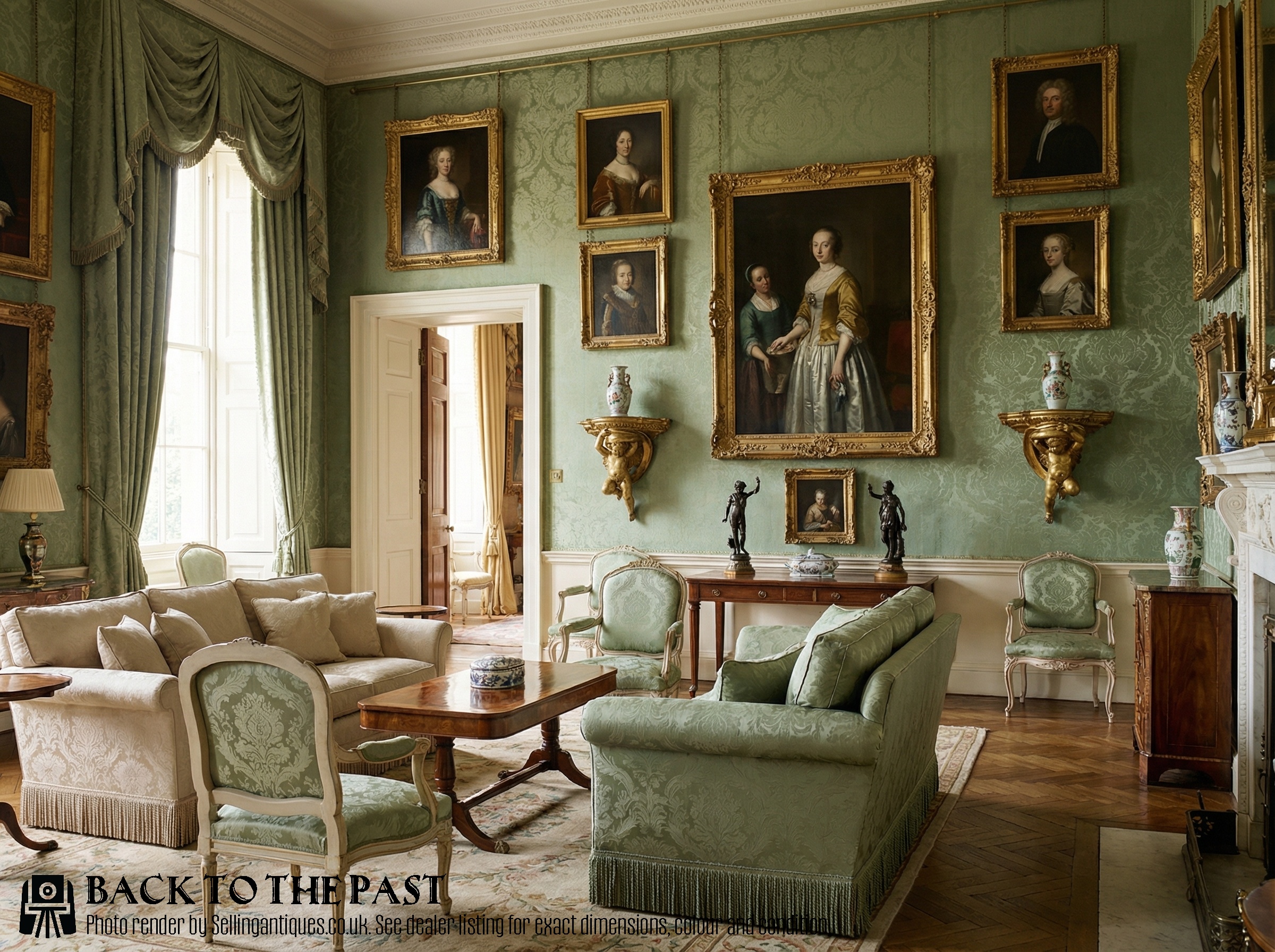
The Antique Brackets Glossary
- Wall bracket
- A support fixed to the wall to carry an object, and the core of the category, named in two thirds of titles.
- Corbel
- An architectural projecting support, often stone or heavy timber, sold loose here and re-purposed as a bracket.
- Giltwood
- Carved wood covered in gold leaf or gold paint over gesso, in 25 titles, with a further 31 saying simply gilt.
- Gesso
- The chalk-and-glue ground laid over carved wood before gilding, named in a few titles.
- Capital
- The carved head of a column or pilaster; several appear on their own, including Corinthian-style pairs.
- Parcel-gilt
- Partly gilded, with the gilding applied only to selected areas of a wooden bracket.
Antique Brackets: Frequently Asked Questions
How many brackets come up each year?
About 26 come to market on Sellingantiques in a year, so the category turns over slowly.
Spread across 122 different dealers who have listed one, that means most dealers who handle brackets do so only once or twice. They arrive as odd finds rather than regular stock.
What wood are they usually made from?
Oak leads, with mahogany next and walnut behind that. Rosewood, limewood, pine and fruitwood turn up in samples.
Beyond the common woods the archive holds olive wood, ebony and padouk. Materials also run well past timber altogether: terracotta, parian, porcelain, majolica, stoneware, plaster, papier mâché and cast iron all appear.
Why are so many sold in pairs?
Brackets were made to flank something, a mirror, a door, a chimneypiece, so they left the workshop in twos.
The matched pair is the commonest single object in the category. Sets of three, four and five also show up, including papier mâché sets, curtain rail brackets and heavy cast-iron shelf brackets.
What is the oldest bracket in the archive?
Chinese carved wooden corbels dated before 1700 are the oldest thing recorded, and also the top of the range.
Behind them sit 17th century oak wall brackets and corbels and a pair of 16th century oak building brackets. The dated field itself starts at 1750, with a set of carved capitals.
Are gilded brackets a separate group?
They make up about a fifth of the category. Gilt, giltwood and gilt wood together account for some 50 titles.
Within that group you'll find gilded gesso, parcel-gilt, silver gilt and Florentine gilt, and rococo turns up as a descriptor in eight titles.
Do curtain-pole and sign brackets count here?
Yes. The heading takes in any bracket-shaped fitting, so curtain-pole and curtain rail brackets, bell brackets, sign brackets and cast-iron sink and shelf supports all sit under it. Brass and wrought iron both appear.
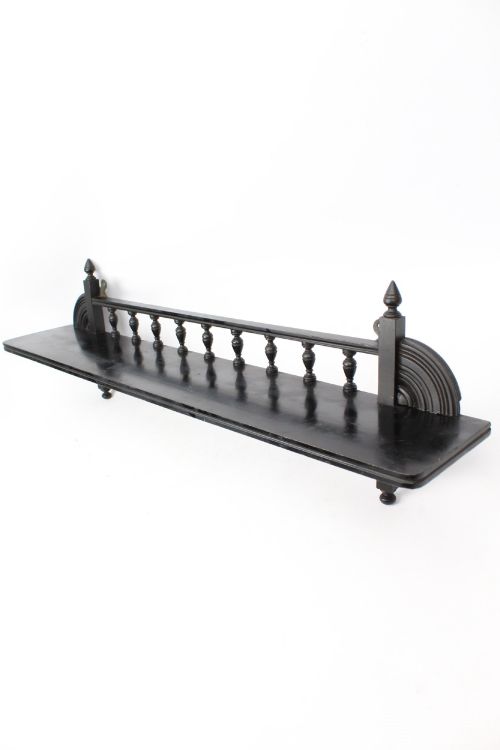
Occasionally something stranger lands in the category: a pawnbroker's trade sign, an apothecary's pestle-and-mortar sign, a diner gong, a plate rack, a miniature chest of drawers.