

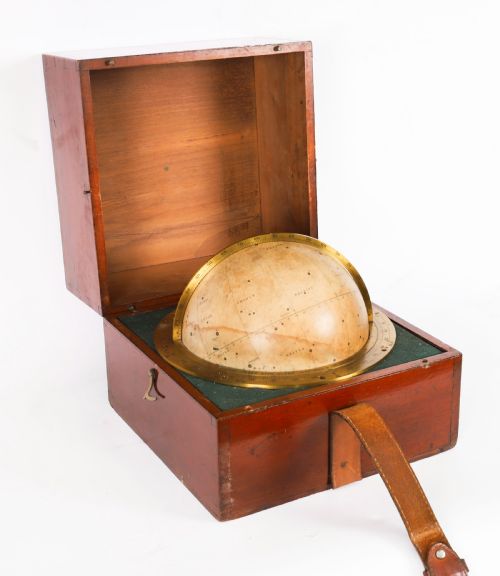


Antique Globes
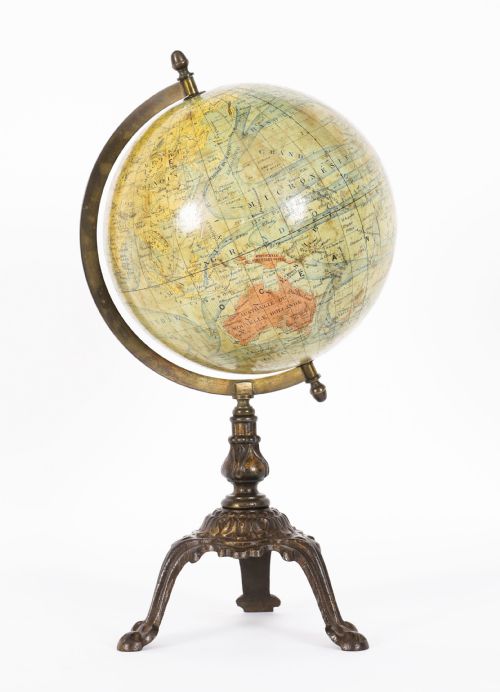
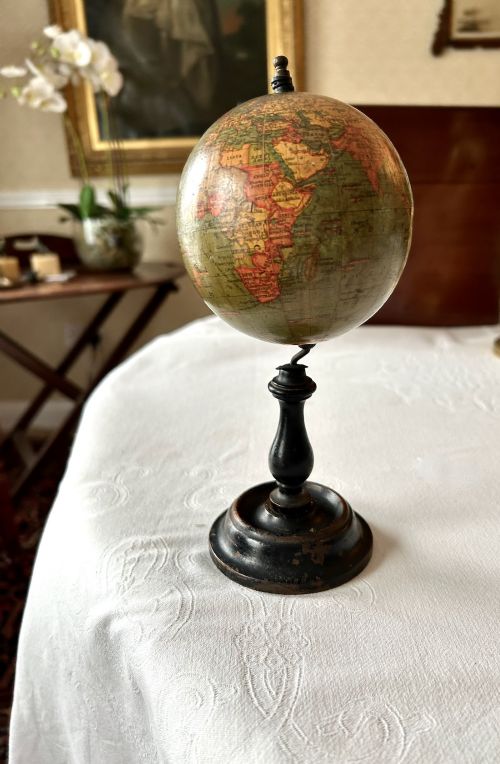
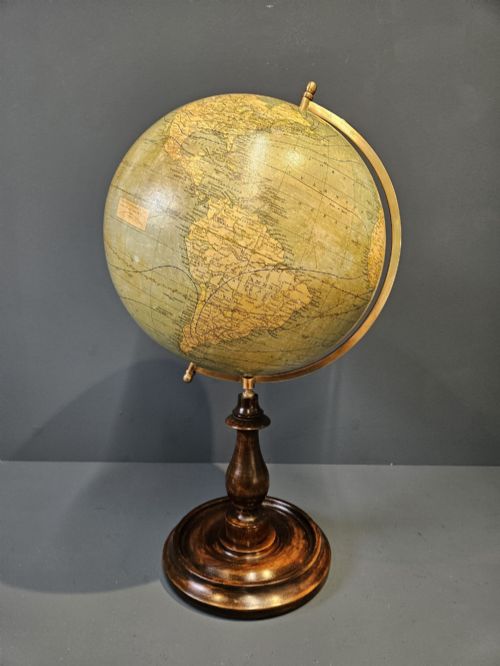
A printed paper map pasted in segments over a sphere, mounted to turn on an axis, made first for navigation and scholarship and later for teaching and for the desk, table or library floor.
What Are Antique Globes?
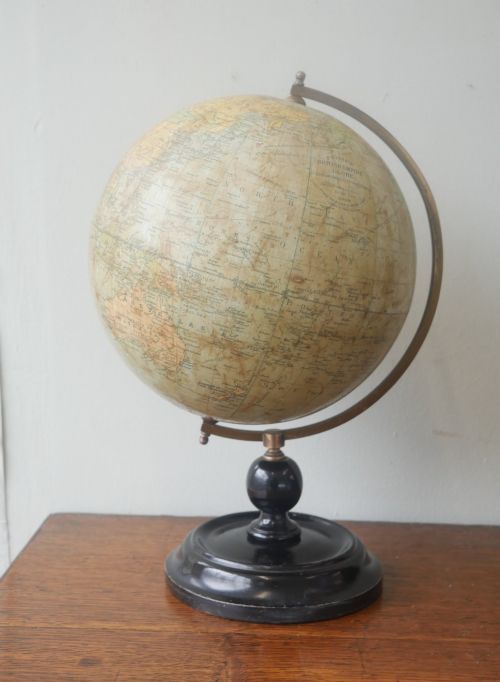
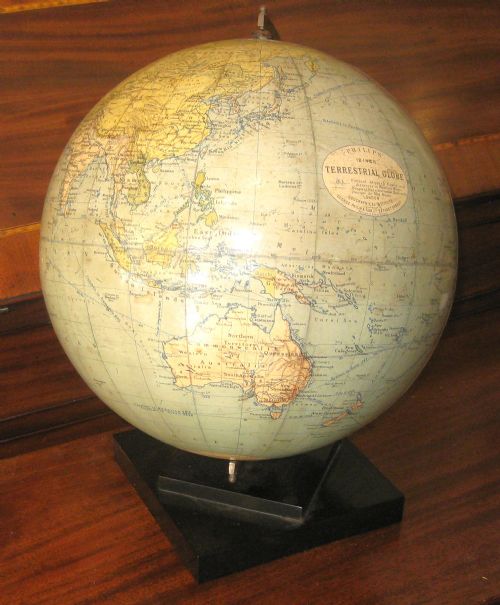
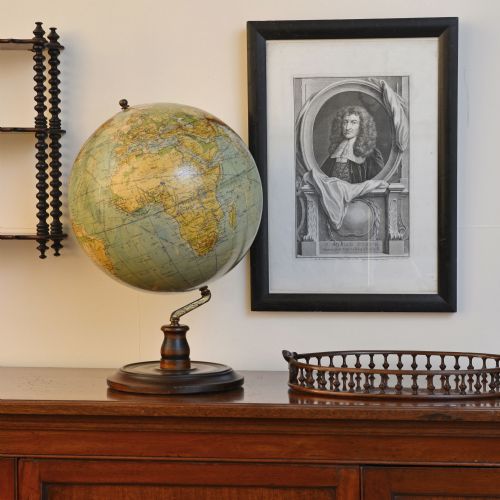
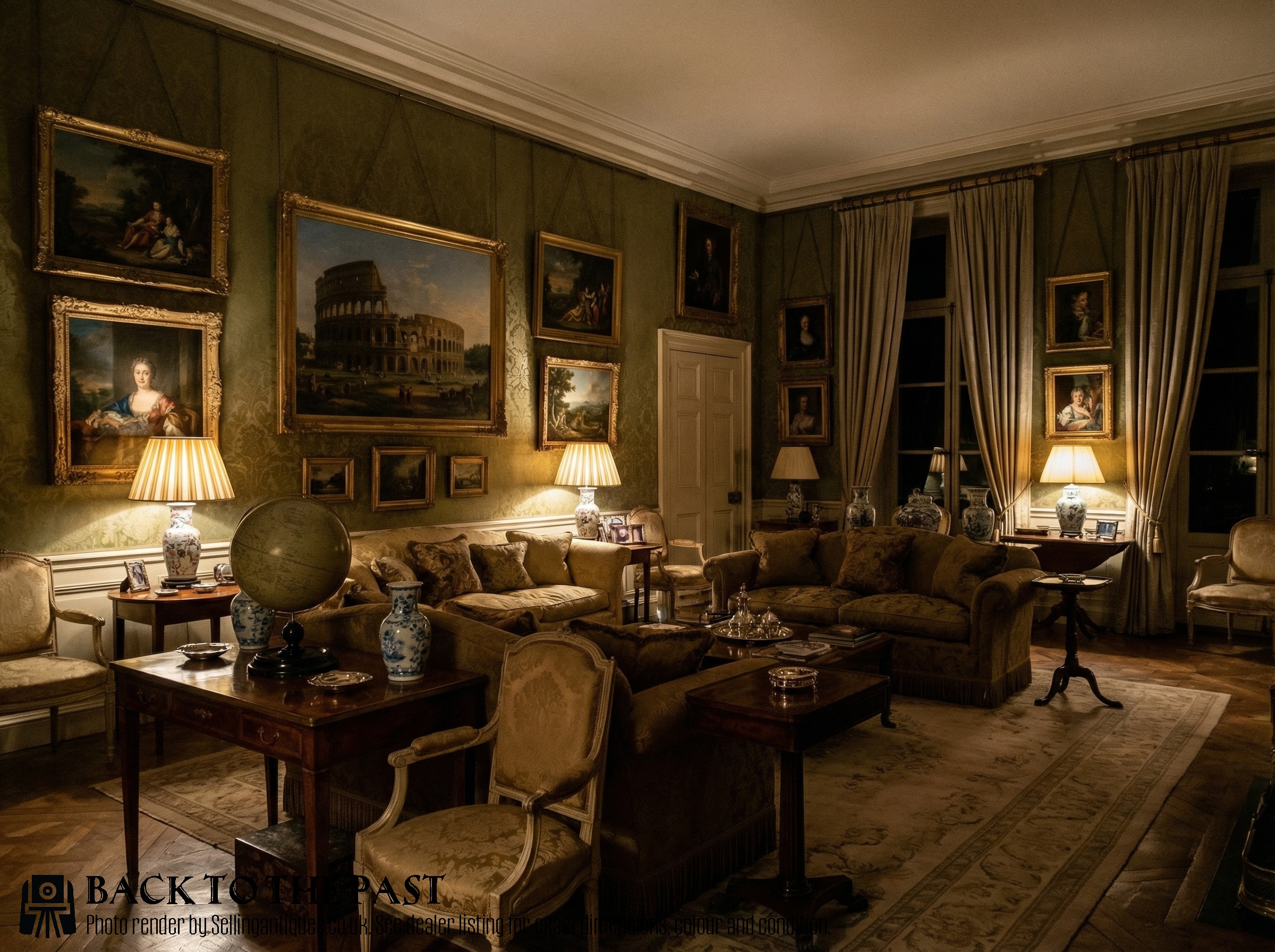
Nearly half of all titles on Sellingantiques say 'terrestrial' outright, and only a small fraction say 'celestial', so a globe in this category shows the earth unless the title says otherwise. The usual form is a single sphere of 6 to 14 inches on a small turned wood, bakelite or metal foot, meant to sit on furniture.
The weight of the category is interwar British. The dated field puts 122 listings in the 1930s and 90 in the 1920s, together well over half of everything, and the spheres under those printed maps are commonly paper-mache or plaster, named as such in a good share of titles. Stated diameters cluster at 6, 8, 9, 10, 12 and 14 inches, the trade sizes of the period.
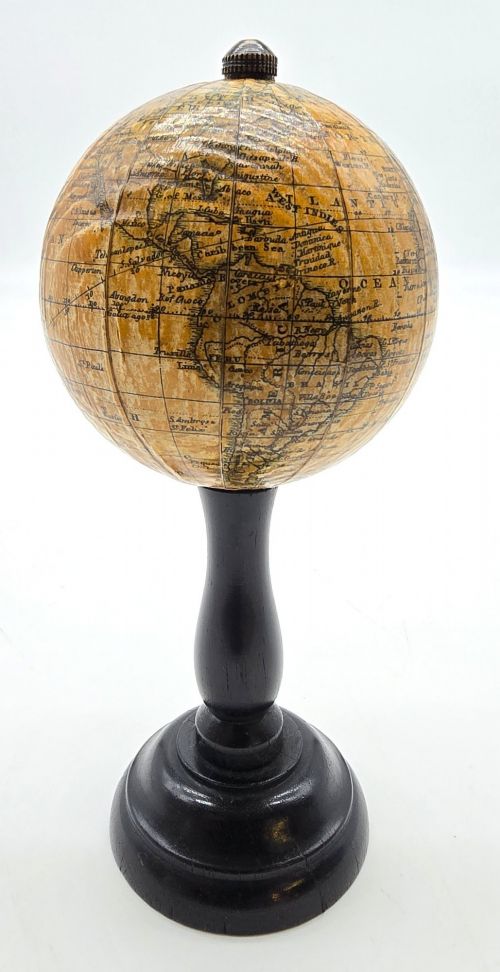
Above that sits a smaller tier of 18th and 19th century library, table and pocket globes. The dated field carries 41 listings as '19th Century', 15 as Victorian and 14 as Edwardian, which is dealer shorthand for a span rather than a year, with occasional Georgian and Regency entries and only a handful of pieces before 1800. Terrestrial-and-celestial pairs are a small group but a distinct one.
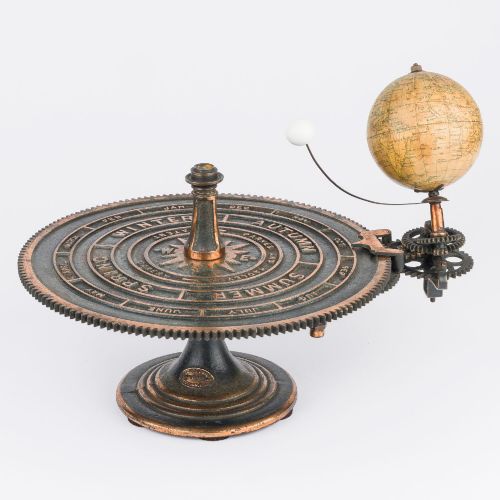
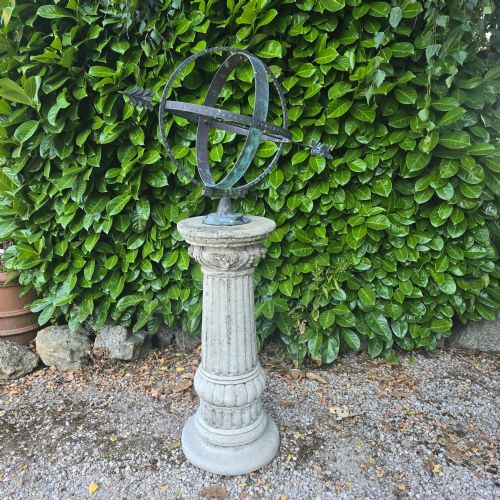
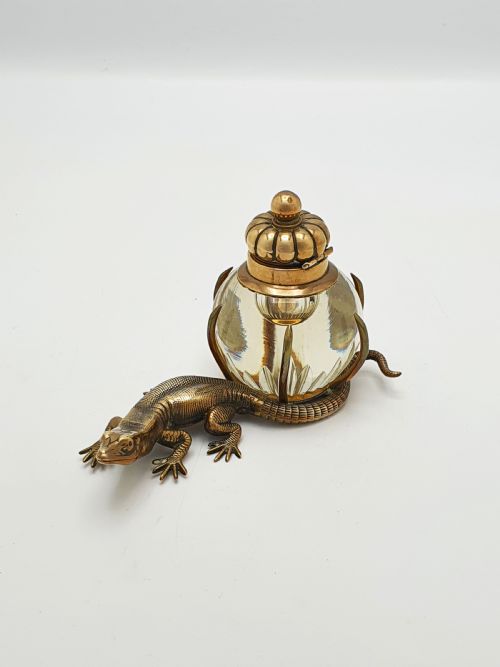
Continental and further-flung examples turn up sparingly: French most often, then single German, Swedish, Belgian, American and one Calcutta-made globe across the whole archive. Once in a while the heading takes in something globe-adjacent as well, such as an armillary sphere sundial, a patent orrery, a brass zodiac globe or a globe-form travel inkwell.
Where The Range Sits
Age does most of the work. The lower end of the sampled range is filled with 1920s and 1930s desk globes, generic 'desk top globe' and bakelite-based entries with no maker in the title. The upper end is Georgian, Regency and mid-19th-century, and the two 1754 pocket globes are among the highest-priced titles in the archive.
Size and mounting move a globe up. A small 6-inch desk globe sits low; 'large' appears in 24 titles, 'library' in 26 and 'floor standing' in 12, and the biggest named spheres run to 18 and 19 inches on their own floor or heavy table stands.
Two other things lift a piece. Celestial content is scarce, and celestial globes and combined terrestrial-and-celestial sets sit above plain terrestrial ones, with matched pairs accounting for most of the very top of the range. A named 18th or 19th century cartographer or publisher in the title does the same; unattributed interwar globes sit lowest.
Retail Price Guide 2026
Typical UK retail prices for globes, calculated from the Sellingantiques database of over a million retail prices indexed since 2003. This retail price guide relies exclusively on Sellingantiques data; no external sources or auction records are used, so the figures do not describe the wider market.
Stated diameters on Sellingantiques run from a 1.5-inch miniature up to a 19-inch table globe.
The Antique Globes Glossary
- Terrestrial
- A globe showing the earth. The default in this category, named in about half of all titles.
- Celestial
- A globe showing the constellations rather than the earth. Scarce, in only a small fraction of titles, and often half of a matched pair.
- Paper mache
- The moulded pulp sphere under the printed map, sometimes spelled papier mache. Named in a good number of interwar titles; plaster is the other body or coating you'll see stated.
- Inch
- The diameter of the sphere, and the standard size measure. Stated in 38 titles, running from a 1.5-inch miniature up to 19 inches.
- Gores
- The tapering printed map segments pasted over the sphere so a flat map wraps a curved surface.
- Meridian
- The graduated ring the sphere turns within. A gimbal, named once in the samples, is a pivoting mount that lets the globe swing.
Frequently Asked Questions
How many globes come up for sale each year?
Around 35 come to market on Sellingantiques in a year, and 86 different dealers have listed one.
That spread means the category is something most dealers handle occasionally rather than as a speciality.
What period do most of them date from?
The dated field runs from 1750 to 1960, but the weight is emphatically interwar: 122 listings in the 1930s and 90 in the 1920s.
By comparison the 1910s, 1900s, 1890s, 1880s and 1940s carry only a handful each. Nothing after 1960 appears.
Are celestial globes common in this category?
No. 'Celestial' appears in only 14 titles, against 'terrestrial' in 176.
Where a celestial globe does turn up it is often one half of a matched pair with a terrestrial, and those pairs make up most of the very top of the range.
What sizes do globes usually come in?
Stated diameters run from a 1.5-inch miniature to a 19-inch table globe, with 18-inch library globes the largest sphere size named.
Sizes cluster tightly at 6, 8, 9, 10, 12 and 14 inches, the interwar British trade sizes. Anything outside that run is unusual.
Which countries made the globes listed here?
Britain dominates, and French examples come next with 16 title mentions.
Beyond that, origins are sparse: single German, Swedish, Belgian and American globes, and one made in Calcutta, across the whole archive.
Why are some listings dated only as Victorian?
A large block of listings carries a loose date rather than a year: 41 say '19th Century', 15 Victorian, 14 Edwardian, with the odd Georgian and Regency.
Those labels are dealer shorthand for a span. In the samples a '19th Century' label sometimes sits beside a decade tag that doesn't match it.