



Antique Windows
Salvaged glazing, mostly late-Victorian to Edwardian painted and leaded panels taken out of houses, pubs, churches and shops, and sold loose rather than in their openings.
What Are Antique Windows?
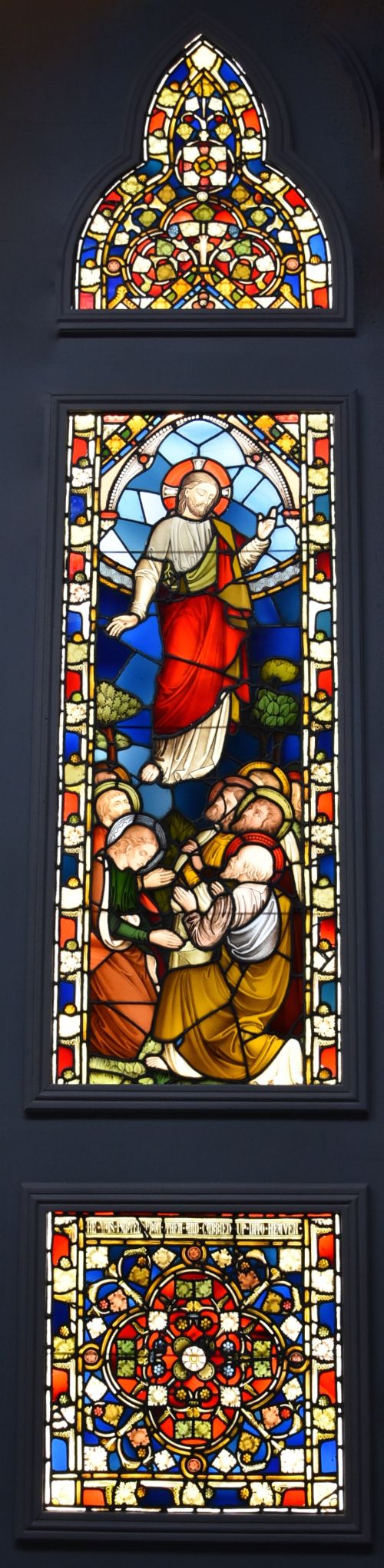
The heading is dominated by decorative glazing rather than joinery. Glass is named in over half of all titles, painted in about half, stained glass and leaded glass in smaller but steady shares. What you are usually looking at is one rectangular or arch-topped panel, out of its frame, ready to be hung or reglazed into a new opening.
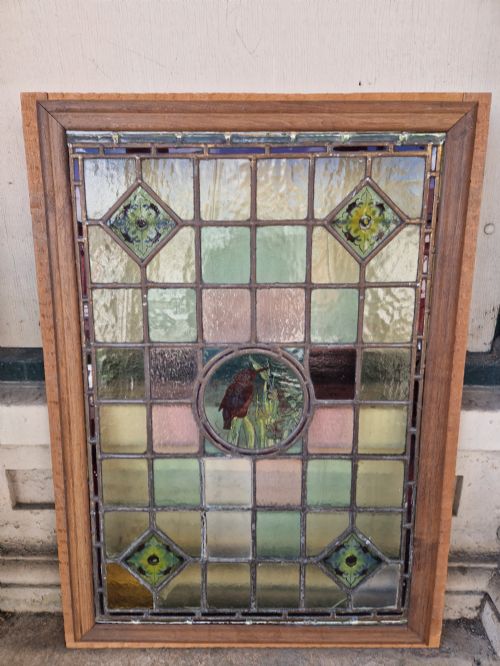
The single most common thing on Sellingantiques is a leaded or stained panel of about 1880 to 1920 with a hand-painted motif at its centre, and more often than not that motif is a bird. Flowers, fruit and small landscape scenes follow. The phrase 'painted bird to the centre' recurs across sampled panels almost as a house formula.
Coloured and leaded glazing has been made in Britain since the medieval period for churches, but these panels belong to the nineteenth-century revival, when cheap cylinder glass, lead came and enamel painting put stained and painted glass into ordinary houses, pubs and shops, as decoration and as a screen against being overlooked.
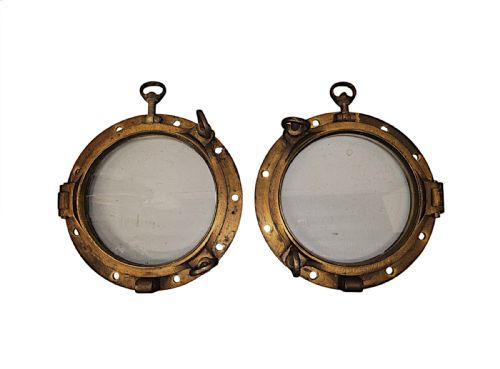
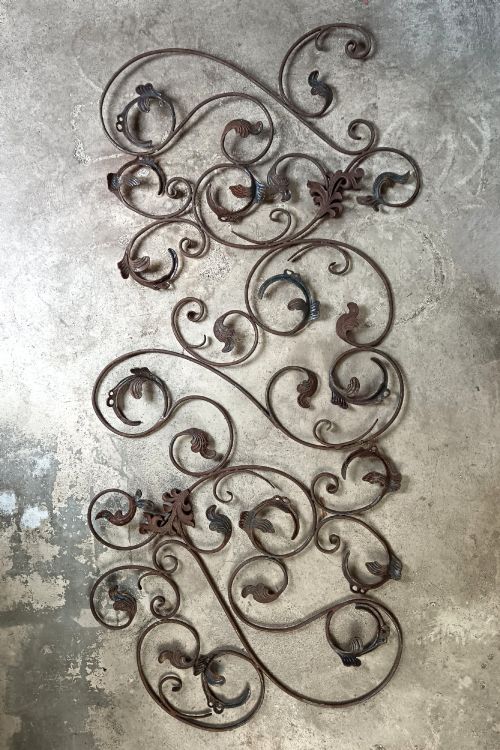
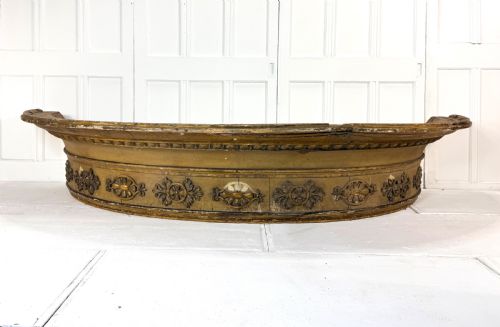
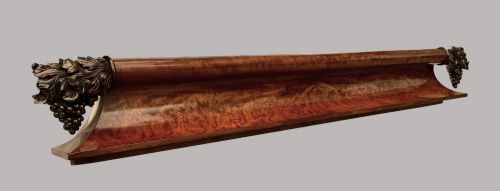
Around the edges sit smaller groups: acid-etched pub and shop glass lettered for wines, tobacco or confectionery; church, gothic and memorial windows; and a spread of things that are not glass at all, including iron and wooden grills, shutters, pelmets, curtain tie-backs, sash lifts, portholes and shop-display props. Origins reach past Britain to French chateau shutters, Danish cast iron, Moroccan and Nepalese shutters and Chinese carved screens.
Where The Range Splits
Subject does most of the work. A panel with a painted figure or scene, a knight in armour, a cricket match, a Dutch boy and girl, a lake district view, sits well above a plain stained glass panel with no painted content. Bird and flower panels fill the middle, which is where the bulk of the category lives.
Scale and number pull hard in the same direction. Large appears in dozens of titles, pair in dozens more, and the top of the sampled range is held by pairs of Victorian painted windows, a set of four arched sunburst panels, a set of three memorial windows and a triptych. Sets of five and nine have sold together.
Church, gothic and commemorative glass clusters at the upper end, domestic panels below it. Colour matters too: dealers reserve words like vibrant for the fuller stained glass rather than plain leaded lights. At the bottom sit the fittings, latches, sash rests, tie-backs and small grills, with the glazed panels beginning well above them.
Retail Price Guide 2026
Typical UK retail prices for windows, calculated from the Sellingantiques database of over a million retail prices indexed since 2003. This retail price guide relies exclusively on Sellingantiques data; no external sources or auction records are used, so the figures do not describe the wider market.
Victorian is the period label used most on Sellingantiques for windows, with 1900s next and 19th Century third.
The Antique Windows Glossary
- Leaded glass
- Small panes held in a grid of grooved lead came rather than bedded in putty. Also called a lead light, and named in a fifth of titles.
- Stained glass
- Glass coloured in the making or by applied stain. Dealers use it loosely for almost any coloured panel, and it turns up in close to a third of titles.
- Painted
- Decoration applied to the glass surface and fired. The most common word in the whole category, often written out as hand painted.
- Acid etched
- Pattern bitten into the surface of the glass with acid. The standard treatment on pub and shop windows, including lettered bar glass.
- Bullseye
- The thick swirled centre of a spun disc of crown glass, kept as a feature roundel. Recurs in sampled leaded panels in clear, amber and green.
- Tracery
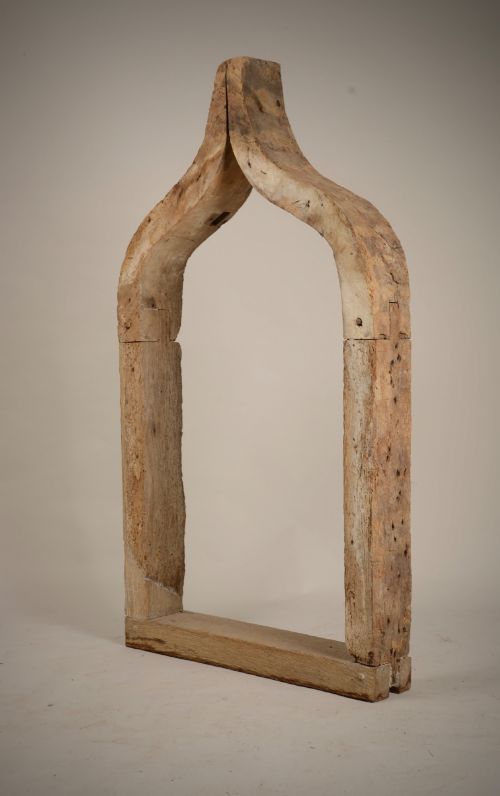
- The shaped stone or timber bars dividing the head of a gothic window, sampled here as a carved pine church panel.
Frequently Asked Questions
What period do most of these date from?
The dated listings run from 1800 to 1950, but the weight sits in the four decades either side of 1900. Victorian is the largest single label, with the 1900s and 1910s together accounting for a large block of entries.
A further group is logged only as 19th century, which is a bracket rather than a year. Anything earlier is a blue-moon event: a handful of seventeenth-century pieces and one eighteenth-century leaded panel.
Why are so many painted with birds?
Bird appears in around fifty titles, more than any other subject, and painted bird in about half of those. It was the stock motif for domestic glazing in the decades either side of 1900.
Flowers, fruit and small landscape scenes make up most of the rest of the painted subjects.
Are pairs and sets common?
Yes. Pair is in a substantial number of titles, and the samples include sets of three, four, five and nine windows sold together.
Sets sit at the upper end of the range. Pairs of Victorian painted windows, four arched sunburst panels and three memorial windows are among the highest sampled entries.
Can you find named makers or studios?
No. A scan of the descriptions returned no glass studio, workshop or designer names at all in this category.
Panels are described by subject, colour, date and origin instead, so a listing will tell you it is a painted bird panel of about 1900 rather than who made it.
What non-glass items are listed under this heading?
A visible minority is joinery, ironwork and fittings: shutters, iron and wooden window grills, pelmets, curtain tie-backs, sash lifts and latches, and brass ocean-liner portholes.
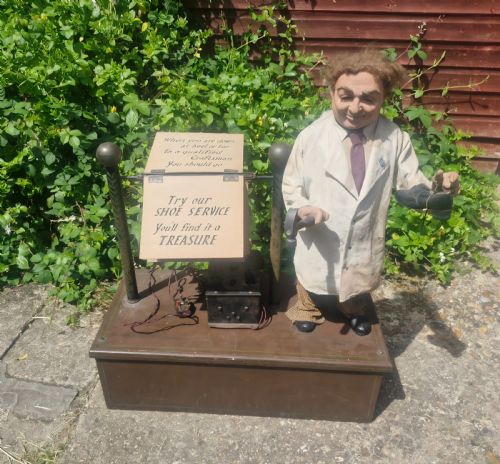
Stranger things turn up too. Butchers' and bakers' shop-display models, an automated cobbler's figure, a nativity camel and an architect's scale model of a sash window have all been filed here.
How much comes to market each year?
Around thirty pieces a year on Sellingantiques, listed by sixty-nine dealers over the life of the category.
That spread means no single dealer's stock sets the tone. What you see is a broad cross-section of what British salvage yields.