
Antique Needlework
Hand stitching in silk or wool on a cloth ground, almost always framed and hung as a picture, and made at home or at school rather than in a workshop.

Antique Needlework
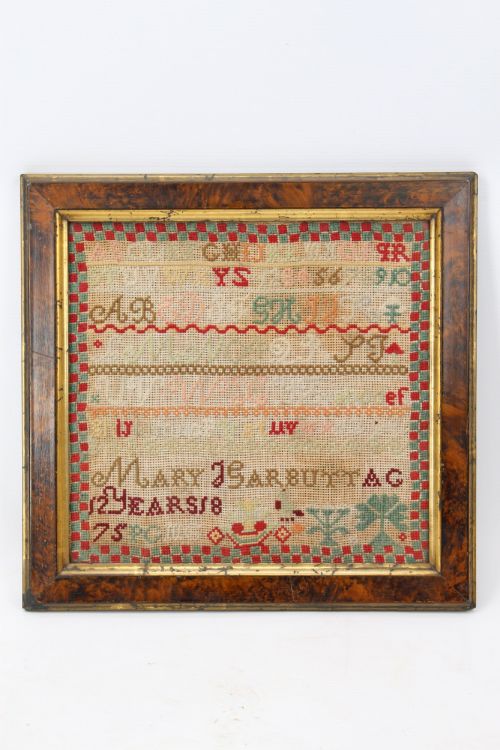
The heading covers several kinds of stitched textile, but one form dominates: the schoolgirl sampler. `Sampler` appears in 89 of 307 titles on Sellingantiques, and the shape is consistent - a girl's name worked into the cloth, often her age, often a year, alongside alphabets, numerals, borders or a verse.
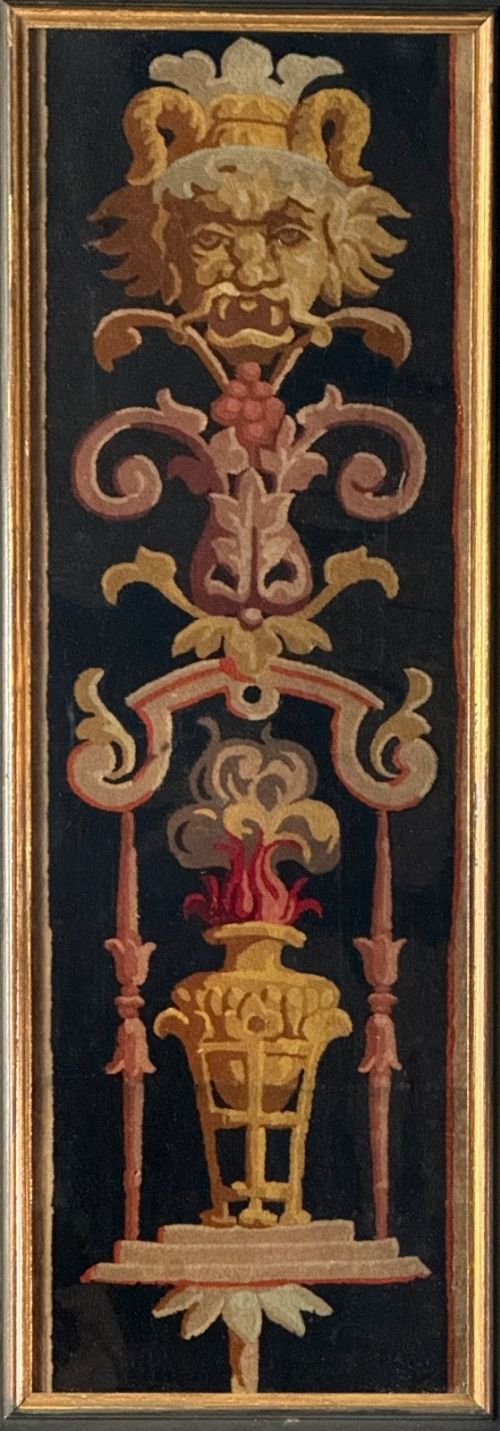
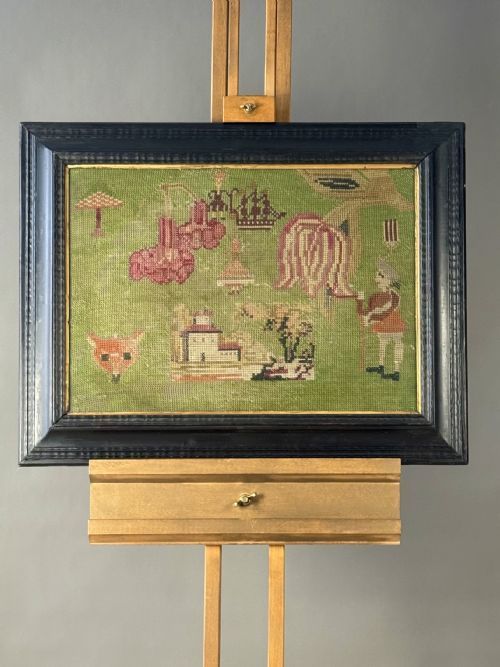
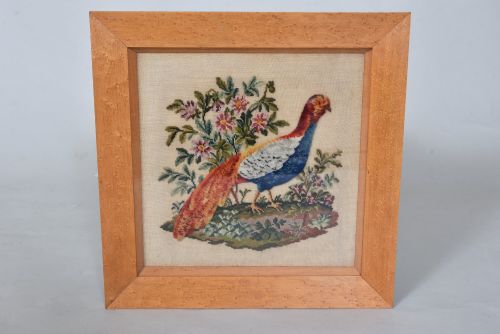
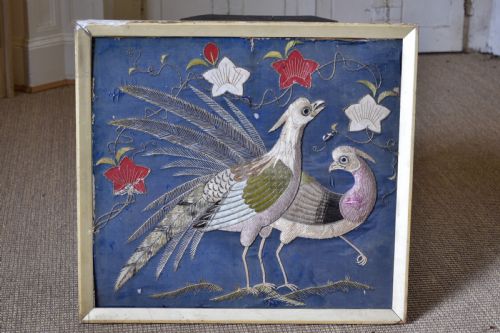
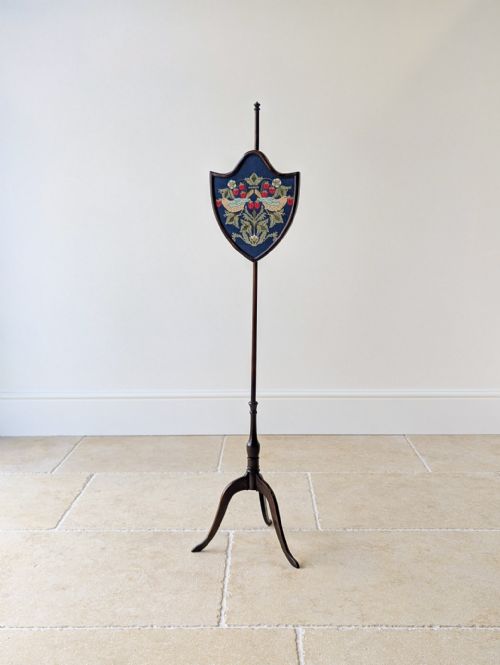
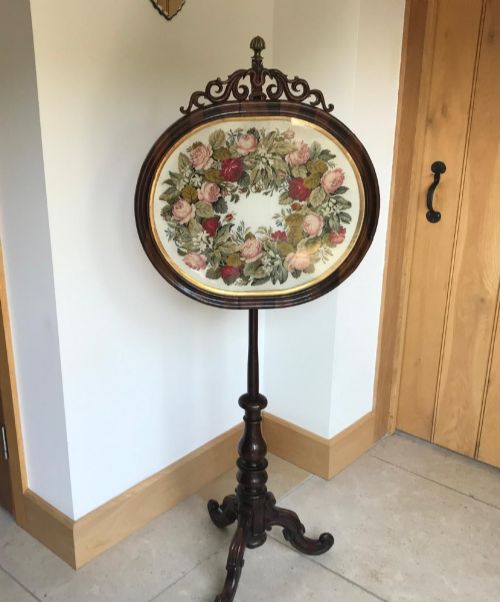
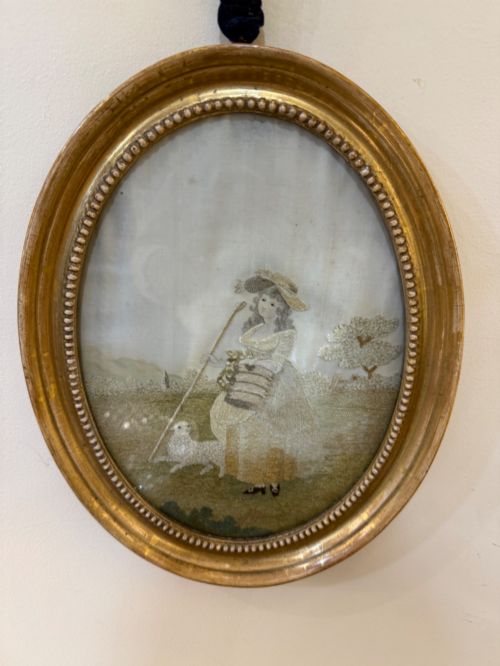
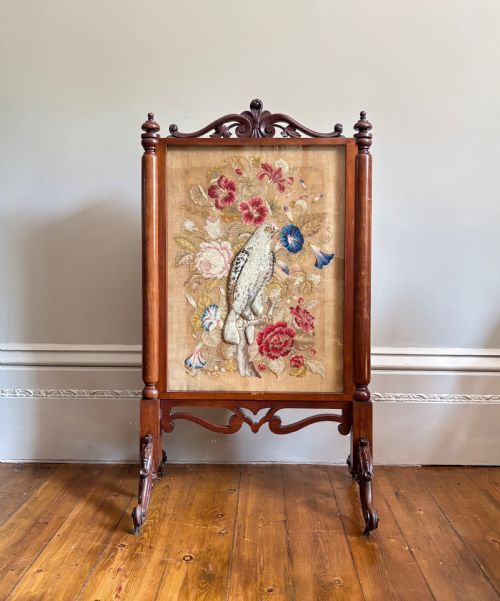
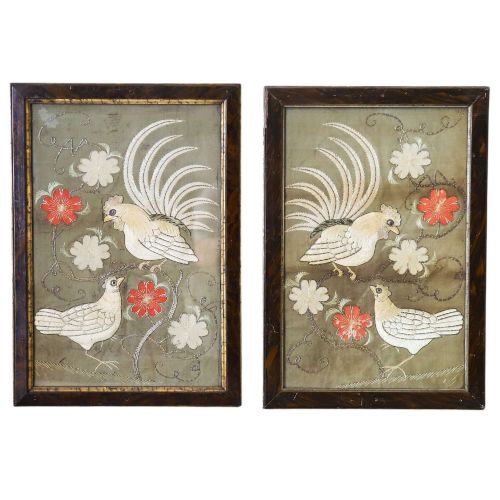
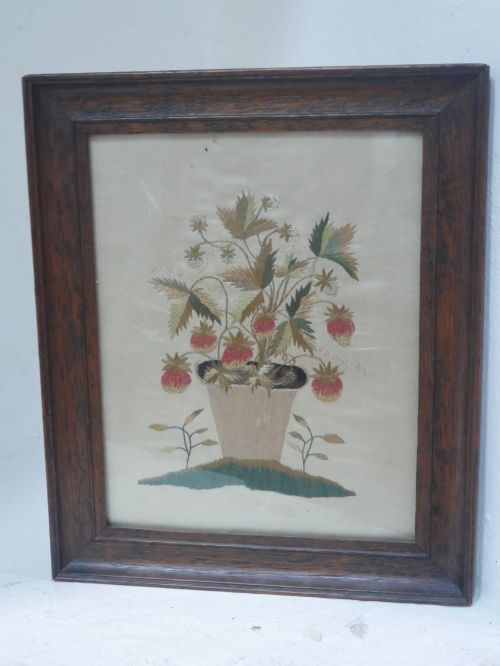
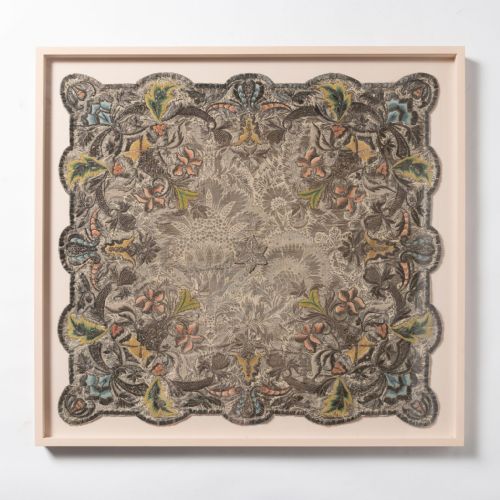
After the samplers come framed needlework pictures, in silk or wool, with birds, horses, dogs, butterflies, religious and classical subjects. Then panels and cushion covers, some of them large, and the furniture that carries needlework: pole screens on turned poles and tripod bases, fire and table screens, folding room screens in rosewood or mahogany.
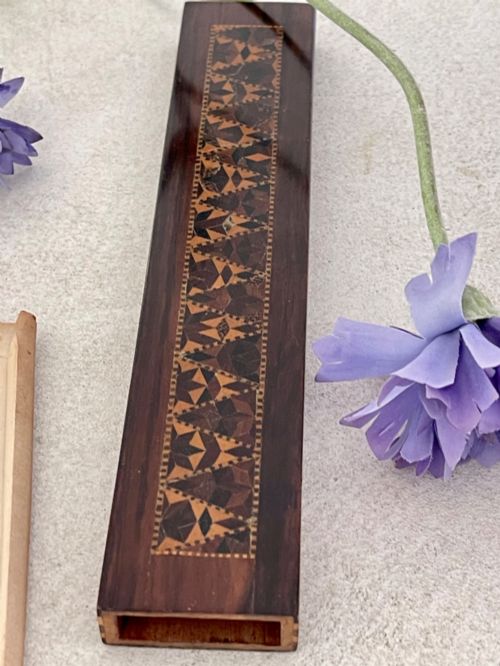
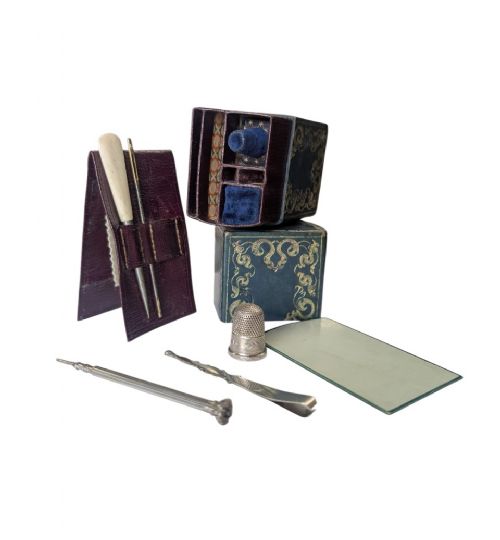
A smaller but steady strand is the equipment rather than the work. Etuis, scissors and their cases, pincushions, sewing clamps, skein holders, needlework boxes, cloth stretchers and tapestry frames all appear, made to hold thread, cloth and needles while the stitching went on.
Dating is loose. The recorded dates run from 1700 to 1930, but only 69 of 307 listings carry a clean year; the rest sit under labels like 19th Century, Victorian, Georgian or Regency, and those labels are applied inconsistently across the archive. Where a year is stitched into the textile itself, the title usually repeats it, and that is the firmer footing.
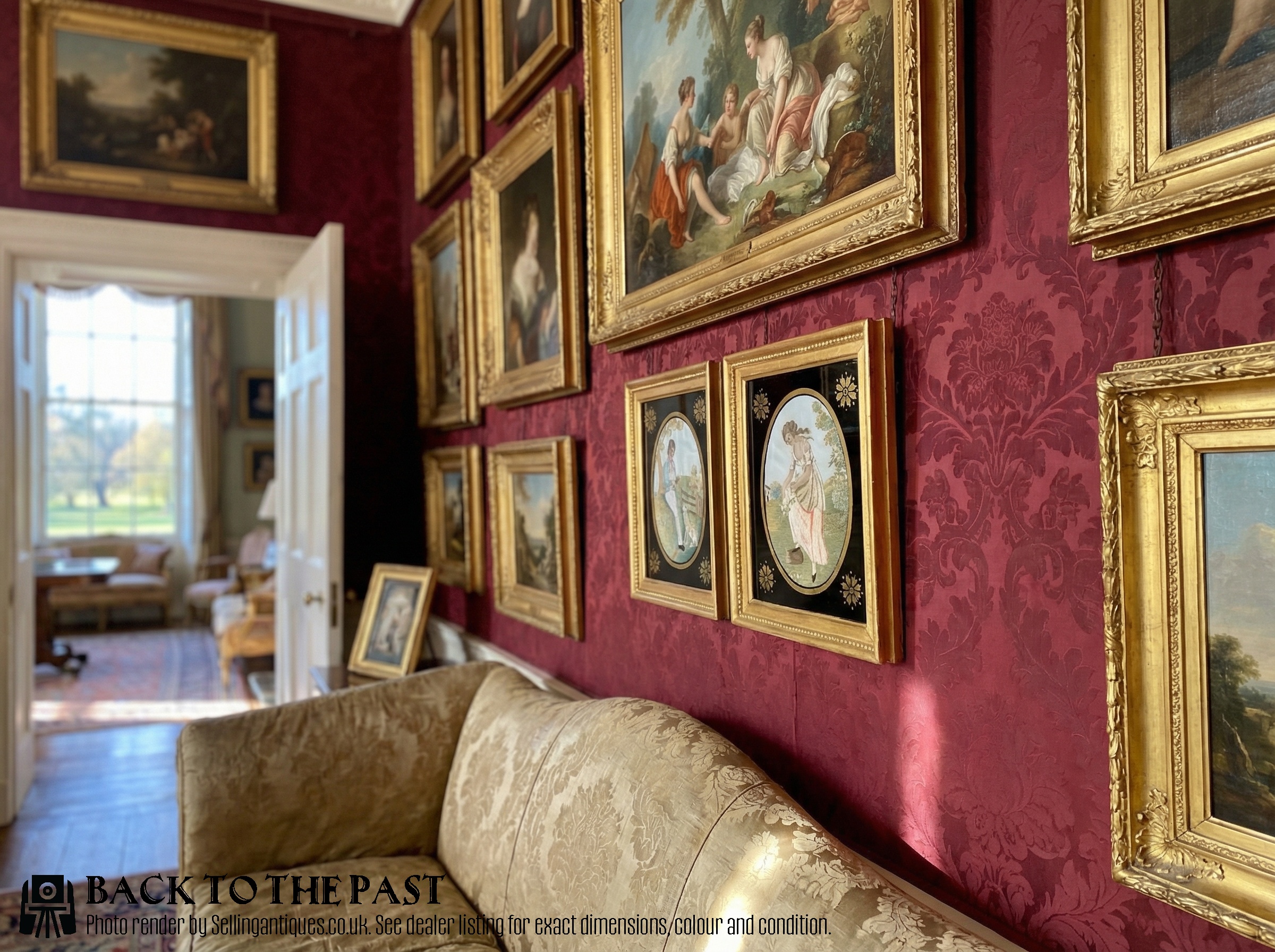
Where The Range Splits
Age sets the ceiling, and the top is held by 17th and early 18th-century work: English needlework panels, tapestry cushion covers, a Stuart stumpwork panel of Charles I and Henrietta Maria, an early 17th-century coif. Only nine listings carry a 17th Century label, with a few more filed as Before 1700, so that group is small.
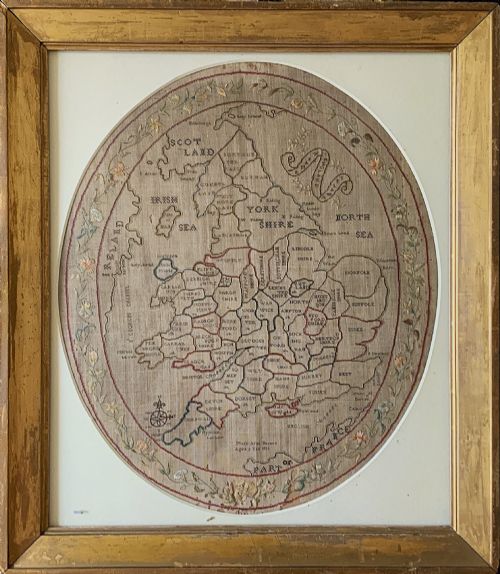
On samplers, the inscription does the work. A full name with an age and a legible year is the strong end; titles quote Martha Hoskins 1726, Ann Thursbeck 1783, Hannah Stobbs 1855. The plainer end reads "a 19th century sampler no name" or gives initials only. Named subjects lift a piece the same way - map samplers of England and Wales, the Lord's Prayer and Commandments, a George V Jubilee sampler, sailors' woolies.
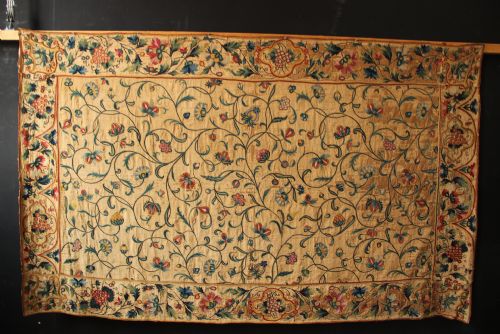
Scale and matching count too. `Large` turns up in 17 titles, and the biggest measured things are textiles rather than furniture, at 165 x 248cm and 224 x 136cm, with a 6'7" needlepoint room divider the tallest object; miniature and small samplers sit at the other end. `Pair` appears in 22 titles, and original frames get named in them: giltwood, water-gilded oval, verre degre glomis e, burr maple, faux tortoiseshell.
Antique Needlework Retail Price Guide 2026
Typical UK retail prices for needlework, calculated from the Sellingantiques database of over a million retail prices indexed since 2003. This retail price guide relies exclusively on Sellingantiques data; no external sources or auction records are used, so the figures do not describe the wider market.
Needlework has been listed on Sellingantiques since 2008.
The Antique Needlework Glossary
- Sampler
- A worked demonstration piece, usually carrying an alphabet, verse or motifs, and often the worker's name, age and the year she finished it.
- Pole screen
- An adjustable needlework panel on a turned pole and tripod base, made to shield a sitter from the fire; 14 titles use the term.
- Berlin work
- Mid-19th-century canvas work in coloured wools, named in titles as Berlin woolwork or Berlin work panels.
- Crewelwork
- Wool embroidery on linen, usually large flowering designs, appearing as panels and hangings.
- Map sampler
- A sampler stitched as a map, most often England and Wales. Several are in the archive, the earliest dated 1783.
- Stumpwork
- Raised, padded embroidery. One Stuart panel of Charles I and Henrietta Maria appears in this form.
Antique Needlework: Frequently Asked Questions
What is the most common type of antique needlework?
The framed sampler, by a clear margin. It is the single largest term in the titles on Sellingantiques, at 89 of 307.
Behind it come framed needlework pictures, then panels, then pole and fire screens. Sewing tools and boxes make up a small persistent slice.
Why do samplers have girls' names stitched into them?
The sampler began as an exercise. A girl demonstrated her alphabets, numerals, borders and verses, and signed the result.
That is why the second most common word in these titles, after `sampler`, is a personal name. Those names belong to the girls and women who did the stitching, not to any commercial maker.
How old is the oldest needlework on the site?
The recorded dates run from 1700 to 1930. Nine listings carry a 17th Century label, with a few more filed simply as Before 1700.
That early group includes English needlework panels, North German and English tapestry cushion covers, a Stuart stumpwork panel and an early 17th-century English coif.
Are there any named makers of antique needlework?
No. The category has no makers to speak of, and no dominant supplier either.
118 dealers have listed in it, so almost every piece arrives from a different hand. The personal names you read in titles are the stitchers.
What sizes does antique needlework come in?
From miniature framed pieces up to panels quoted at 165 x 248cm and 224 x 136cm, with a 6'7" needlepoint room divider the tallest object.
The largest measured things are textiles rather than furniture. `Large` appears in 17 titles.
Does needlework turn up on furniture?
Yes. `Screen` is in 24 titles, `pole` in 18, and `pole screen` in 14, with rosewood and mahogany the woods most often named.
Alongside the pole screens sit fire screens, table face screens, and folding and room screens. Cushion covers and larger hangings are a separate strand again.