



Antique Microscopes
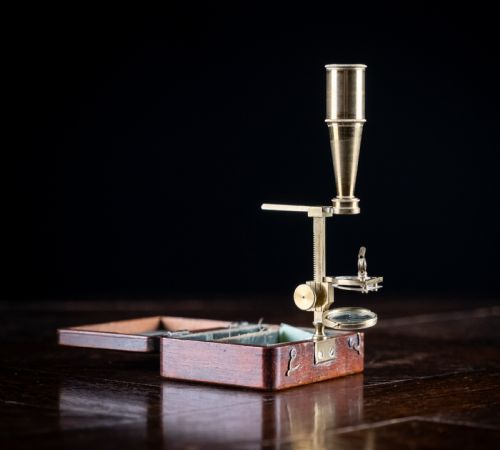
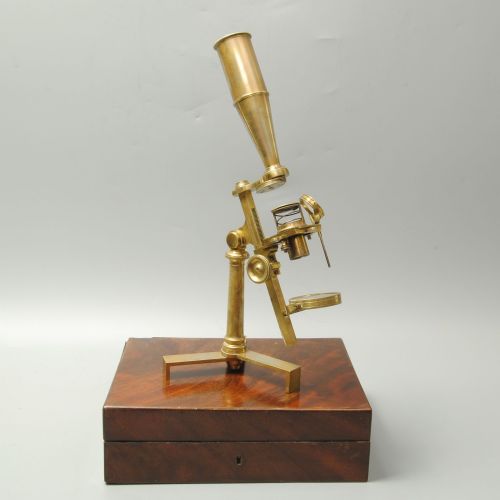
A microscope is an optical instrument for magnifying small specimens, made in quantity in brass for physicians, naturalists and students, and often sold in a fitted wooden box.

Antique Microscopes
Brass is the defining material, named in more than a quarter of titles, whether lacquered or polished. The range runs from palm-sized folding pocket instruments to full compound stands on bar-limb or drum bodies. Compound microscopes were developed in the seventeenth century and became standard scientific and teaching equipment through the eighteenth and nineteenth.
The version you are most likely to meet is a Victorian brass instrument in a fitted case. Victorian appears in 24 titles, cased or case in 25 between them, and London in 21. Boxes are mahogany or pine, commonly with compartments for spare lenses, slides and other accessories.
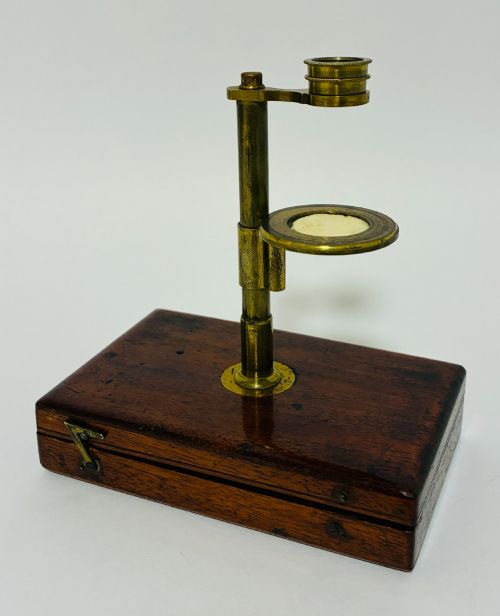
Within that, the bar-limb compound stand is the only body pattern named often enough to count as a type, in 8 titles. Pocket and field portables come next, with pocket in 11 titles and field in 9, including folding botanical forms. Drum microscopes recur in smaller numbers.
Dating is broad more often than precise. Nineteenth Century and Victorian together account for nearly half the periods given, and only 41 of 88 listings carry a clean year. Where dates tighten they cluster in the 1850s-1890s and again in the 1900s-1920s, the second group taking in German, French, Italian and American laboratory instruments alongside English ones.
Where The Range Splits
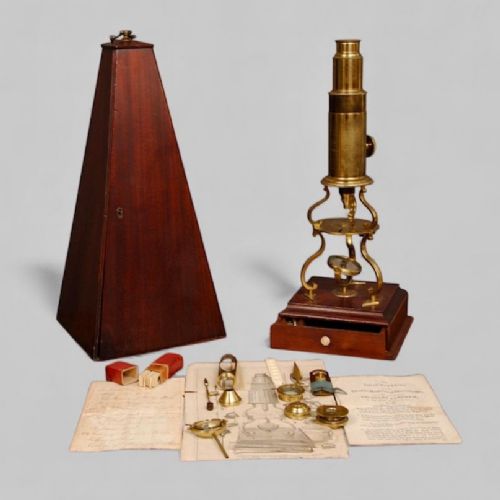
Age and pattern do most of the work. The top of the sampled range is held by early tripod-legged compound forms, one logged as 18th Century and another put at the Regency, with an early named improved pattern alongside them. Student and pocket instruments from the 1920s sit at the bottom, and the latest dated piece in the samples, a small cased pocket field microscope of 1950, sits lower still.
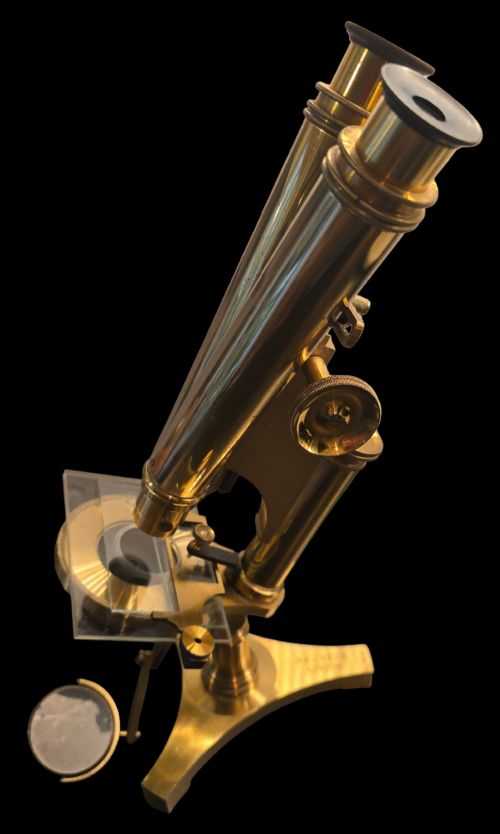
Size and completeness pull the same way. Large compound and laboratory stands sit far above the small portables. A named firm in the title, often with a serial number, marks the upper reaches, while titles that say only brass field microscope or student microscope sit lowest. Model designations turn up there too, and binocular instruments appear just twice across the samples, both well up the range.
The box counts. A fitted case is close to standard rather than a bonus, but the higher-placed listings specify what is in it: original mahogany case, spare lenses, a key, trade papers, or slides counted out by number, the largest instance being a Victorian instrument accompanied by seventy.
Antique Microscopes Retail Price Guide 2026
Typical UK retail prices for microscopes, calculated from the Sellingantiques database of over a million retail prices indexed since 2003. This retail price guide relies exclusively on Sellingantiques data; no external sources or auction records are used, so the figures do not describe the wider market.
The most expensive microscope ever sold on Sellingantiques was a fine example of the Most Improved pattern, in August 2023.
The Antique Microscopes Glossary
- Cased
- Supplied in its fitted wooden box, usually mahogany or pine, often with compartments for accessories.
- Bar limb
- A compound stand whose body tube is carried on a flat bar arm. The commonest named pattern in this category.
- Compound
- Magnifies through more than one lens system, an objective plus an eyepiece.
- Monocular
- One eyepiece. The overwhelming norm, against a couple of binocular instruments in the samples.
- Drum microscope
- A simple instrument with a cylindrical brass body on a base, focused by sliding the tube.
- Condenser
- A lens beneath the stage that concentrates light onto the specimen sitting above it.
Antique Microscopes: Frequently Asked Questions
How many microscopes are listed each year?
Around nine a year appear on Sellingantiques, and twenty different dealers have handled one.
That makes it a category spread thinly across many stocks rather than one held by a few specialists.
Are antique microscopes usually sold in a case?
Often, yes. Cased appears in 17 titles and case in 8 more, so a fitted wooden box is close to standard.
Mahogany and pine are both named. Boxes commonly hold spare lenses, slides or other accessories, and one example comes with its key.
What does bar limb mean on a microscope?
It describes a compound stand where the body tube is carried on a flat bar arm.
It is the only body pattern named often enough here to count as a type, in 8 titles, usually paired with brass and Victorian.
Which countries made the microscopes listed?
London is named in 21 titles and English in 8, so British instruments lead.
Continental and American makers are a real presence too. German, French, Italian and Buffalo-made examples all appear, mostly dated between 1880 and the 1920s, several with fitted cases and slides.
How old are the oldest examples?
The dated field runs from 1700 to 1950. The earliest end is a single tripod-legged compound instrument logged as 18th Century.
A second instrument of the same early pattern, dated to the Regency, sits just behind it. Nothing else in the samples reaches back that far.
Most listings sit under broader labels, with 19th Century and Victorian the two commonest.
Are all items in this category microscopes?
Not quite. A small part of the archive is microscopy accessories rather than instruments.
That includes a microscope oil lamp, a candle shade in its original case, and a double fan candle shade, used to light the stage. Each turns up only once or twice.