





Antique Telescopes
A brass draw-tube telescope collapses into its own barrel, and that portability is the point: these were made to be carried and used at sea, in the field and from a library window.
Antique Telescopes
Almost all are refractors, using a lens objective rather than a mirror. The body is brass, sometimes chromed or gilt, often sheathed in leather or barrelled in mahogany, rosewood, walnut or fruitwood, with sliding draw tubes that telescope back into the main barrel for carrying.
The draw-tube hand telescope dominates. "Draw" appears in 152 of 378 titles, and the single commonest listing a buyer will meet is a three-draw brass-and-leather or brass-and-mahogany English telescope, Victorian and London-signed. Draw counts run past three, though: five, six and even a seven-draw pocket telescope turn up in the samples.
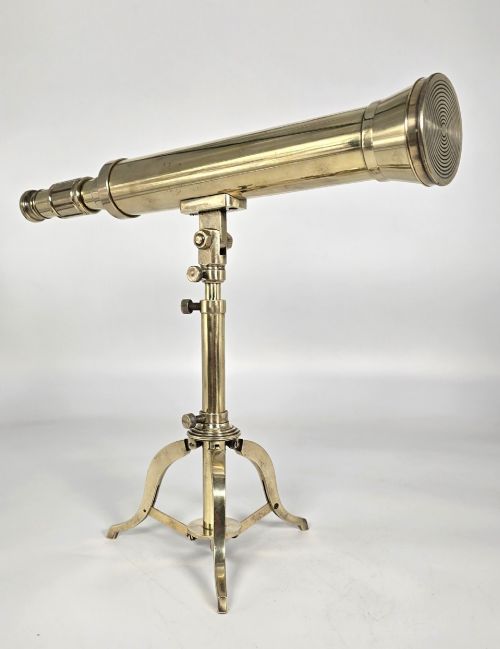
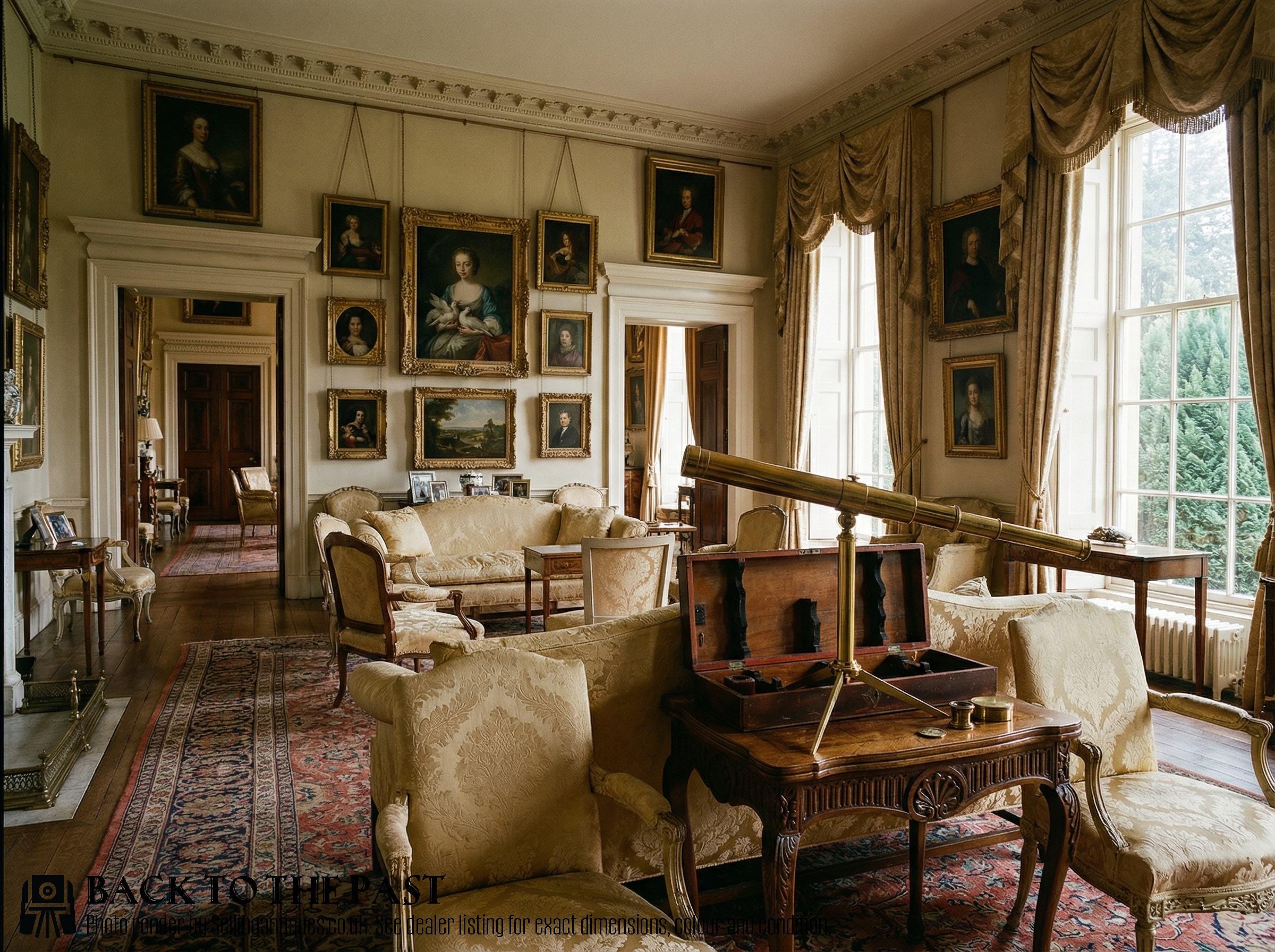
About one listing in ten is a larger library or table instrument on a folding brass or mahogany tripod, with apertures quoted from two inches up to four and a half. Then a narrower strand of marine and officer-of-the-watch deck scopes, military and signalling patterns marked MK VI, and day-or-night large-aperture pieces.
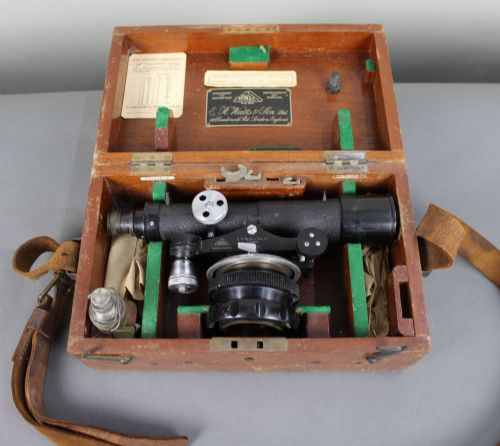
Dating is broad rather than precise. "19th Century" and "Victorian" between them cover more listings than any single decade, the dated field runs 1750 to 1940, and the bulk sits mid-Victorian to the First World War with a genuine Georgian tail and a thin run into the 1930s and 40s. Dealers also file adjacent instruments under this heading: theodolites, drainage and architect's levels, a portable transit instrument, an opera monocular, rangefinder binoculars.
Where The Range Splits
Scale does most of the work. A small pocket three-draw sits at the bottom; the top of the range is held by large library refractors, where aperture gets quoted because it matters, and the biggest figures recorded are four inches and four and a half. "Large" appears in 37 titles, and it usually comes with a tripod.
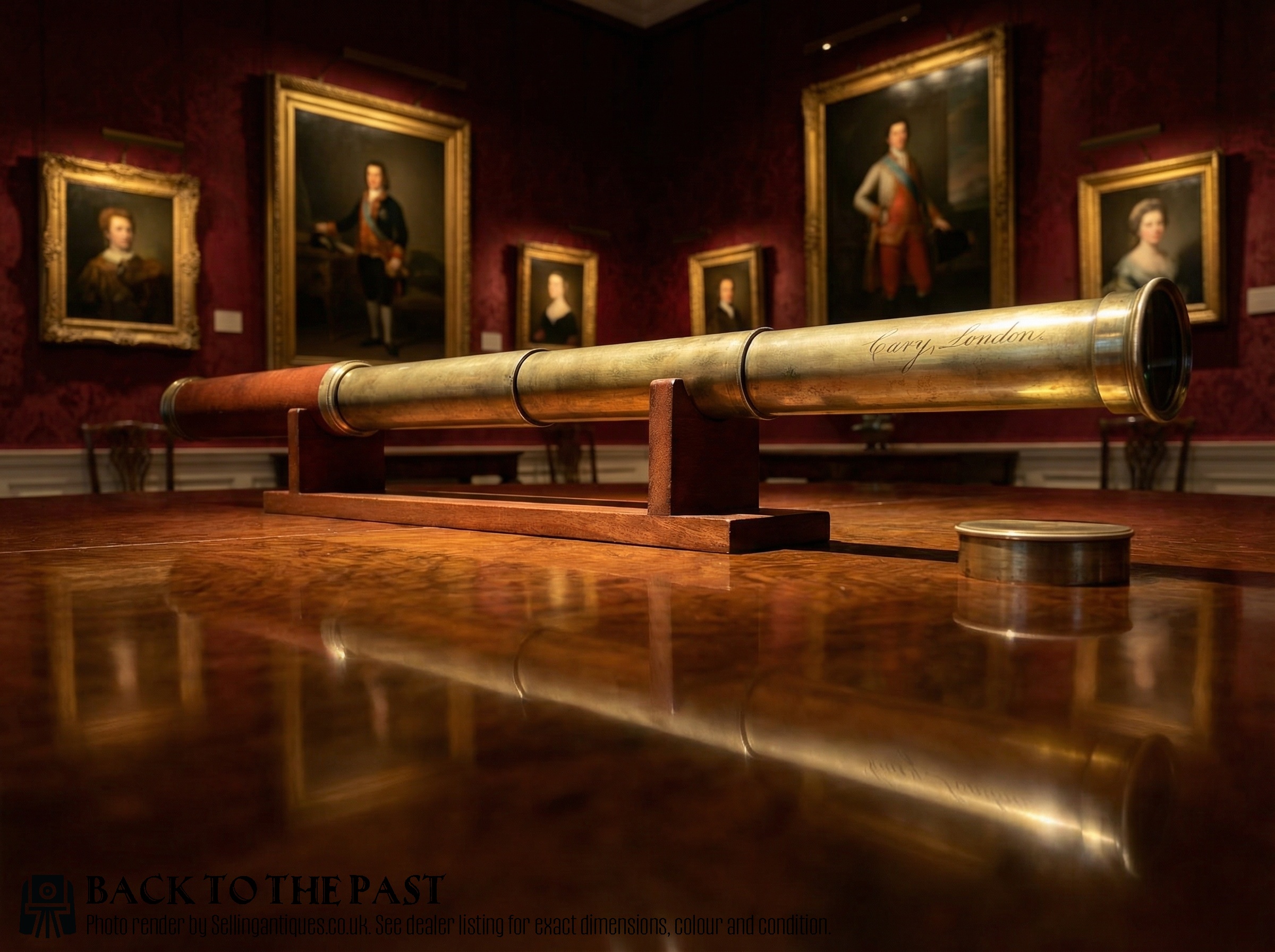
A signature lifts a barrel. London-signed titles run to 108, and the samples carry a long roll of engraved names, against plenty of telescopes with no name at all. Completeness works the same way: original tripod, original case, stand and case together, all push a piece upward, and cased and stand references recur throughout.
Age and optical type set the ceiling. Eighteenth-century barrels and the handful of Gregorian reflectors, mirror instruments among hundreds of refractors, occupy the highest sampled titles. Material counts at the finish end too, with figured timber and gilt brass sitting above plain leather sheathing.
Antique Telescopes Retail Price Guide 2026
Typical UK retail prices for telescopes, calculated from the Sellingantiques database of over a million retail prices indexed since 2003. This retail price guide relies exclusively on Sellingantiques data; no external sources or auction records are used, so the figures do not describe the wider market.
19th Century is the period label used most on Sellingantiques for telescopes, with 1800s next and Victorian third.
Broadhurst Clarkson & Co·Dollond
The Antique Telescopes Glossary
- Draw
- A sliding tube. A three-draw telescope has three tubes that extend from the main barrel, and the count is the first thing most titles give you.
- Terrestrial
- Optics giving an upright image, for land and sea viewing. It appears in 50 titles, often paired with astronomical.
- Astronomical
- An inverting eyepiece or an extra draw for sky use, named in 31 titles and commonly offered alongside a terrestrial arrangement.
- Library telescope
- A larger table or tripod-mounted refractor meant for indoor use, and the term behind most of the quoted apertures.
- Officer of the watch
- A stout naval deck scope of single-draw form, usually leather-clad and stubby in the hand.
- Achromatic
- An objective made of two glasses to correct colour fringing, the improvement from the mid-eighteenth century that made compact refractors practical.
Antique Telescopes: Frequently Asked Questions
What does three draw mean on a telescope?
Three sliding tubes that pull out from the main barrel and push back in for carrying. It's the commonest arrangement in this category, with "three draw" in 43 titles.
Higher counts exist. Four-draw examples appear regularly, and the samples run to five, six and a seven-draw pocket telescope.
Are antique telescopes mostly British?
Almost everything is British, and London-signed pieces account for 108 of 378 titles.
German, French, Irish, Scottish and Dublin-signed instruments do come through, but they are the exception under this heading.
How big do library telescopes get?
Aperture is quoted only on the larger instruments, and the figures given run two, two and three-quarter, three, three and a half, four and four and a half inches.
The four and four-and-a-half inch objectives sit at the very top of the range, and they come mounted on folding brass or mahogany tripods.
Do reflecting telescopes turn up?
Rarely. A handful of eighteenth-century Gregorian telescopes, which use a mirror in place of the object lens, are the only mirror instruments among hundreds of refractors.
They sit among the highest sampled titles.
Which periods do these telescopes come from?
The dated field stretches from 1750 to 1940. Much of the dating is broad, with "19th Century" and "Victorian" used more than any decade.
Where decades are given they cluster at the 1850s, 1880s, 1890s, 1910s and 1920s. So the bulk is mid-Victorian to the First World War, with a Georgian tail behind it.
What else gets listed as a telescope?
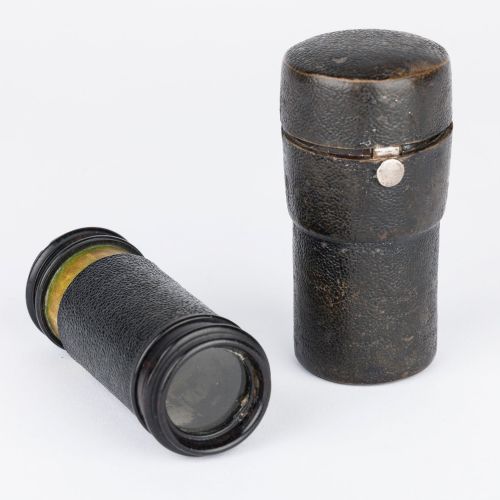
Dealers file related optical and survey instruments here: theodolites, a drainage level, an architect's level, a portable transit instrument, an opera monocular, a micro-telescope and rangefinder binoculars.
Telescopes concealed in walking sticks appear more than once, in bone and in plain cane, and they sit well up the range.